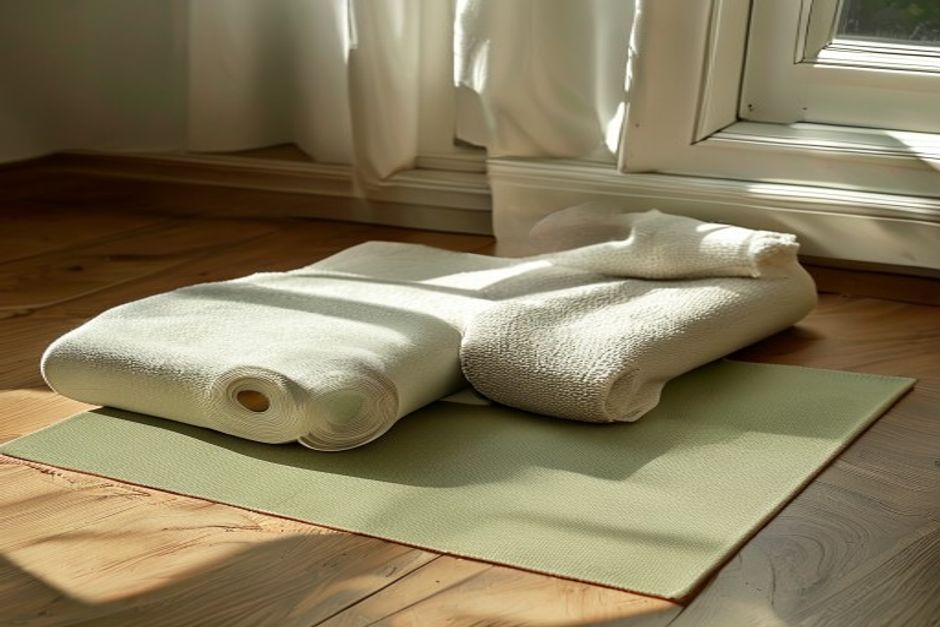
You slip into the office ten minutes before everyone else, roll out your mat in a quiet corner, and try to wake up your back before the first meeting. That tiny ritual can reset your whole day, but only if the mat actually fits real life: easy to carry, quick to unroll, and steady on smooth flooring. A yoga and stretching mat in a thin, portable format is usually enough for this kind of routine. The point is not to build a studio setup; it is to make movement feel doable on ordinary weekdays.
Morning office reset: what matters in a portable setup
For short morning mobility, you do not need an oversized fitness mat that takes over half the room. You need grip, manageable weight, and a surface that does not feel slippery when your hands warm up. If you are wondering how to choose a yoga and stretching mat, start with where you practice most often. Office carpet, polished meeting-room floors, and home wood surfaces all feel different under pressure, so traction should come before trend-driven details.
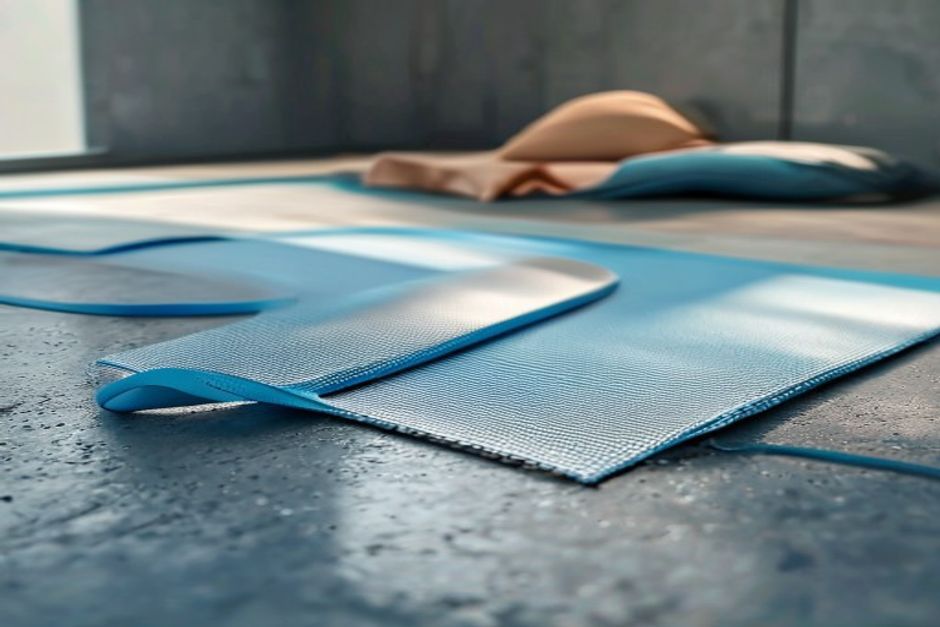
A practical office rhythm looks like this: chest-opening, hip mobility, and a few forward folds in under ten minutes. In that flow, compact design helps more than maximal cushioning, because you are rolling and storing the mat every day. A surface that packs fast and stays tidy in a closet is more likely to become part of your schedule than one that feels special-occasion only.
Evening decompression at home without turning it into a project
After screen-heavy days, home stretching works best when the setup feels emotionally light. That is why many readers look for a lightweight yoga and stretching mat for small spaces: they want something that disappears between sessions and does not make the living room feel like a gym. Think of evening practice as a downshift, not a performance. A mat with stable contact and easy cleanup can support that calm pace far better than chasing technical features you will never use.
Consistency is often the hidden metric. If your mat is simple to air out, quick to wipe, and comfortable enough for knees during slow holds, you will return to it more often. One twenty-minute stretch three evenings a week does more for comfort than buying multiple accessories and using none of them regularly.
Three-day work trip logic: compact, reliable, low-fuss
Travel is where overbuying usually starts. People assume they need a separate product for every context, but a single balanced option can handle office mornings, hotel routines, and weekend resets. If you need a best yoga and stretching mat for work travel, prioritize foldability, low odor, and dependable grip over advanced add-ons. The winner is the one you actually pack, not the one with the loudest feature list.
For short trips, test your mat in a realistic sequence before leaving: quick warm-up, one plank hold, seated stretches, then fast pack-away. That trial tells you more than specs alone. If the material bunches, slides, or feels distracting, it will be worse in a hotel room where space and time are tighter.
Common mistakes that make a good mat feel like a bad purchase
The first mistake is choosing by hype instead of scenario. The second is ignoring floor type, then blaming yourself for unstable practice. The third is expecting one session to prove everything. Your body and routine need a few days to adapt, especially if you are rebuilding movement after long desk hours.
If your goal is a non-slip yoga and stretching mat for office floor, keep decisions simple: realistic use case, portable format, and repeatability. A modest, reliable mat that supports your actual week will outperform a premium option that stays rolled up in a closet. Good movement habits come from less friction, not more equipment.
This article is editorial and informational. Skin chemistry, climate, and individual sensitivity affect results; when possible, try a product before committing.