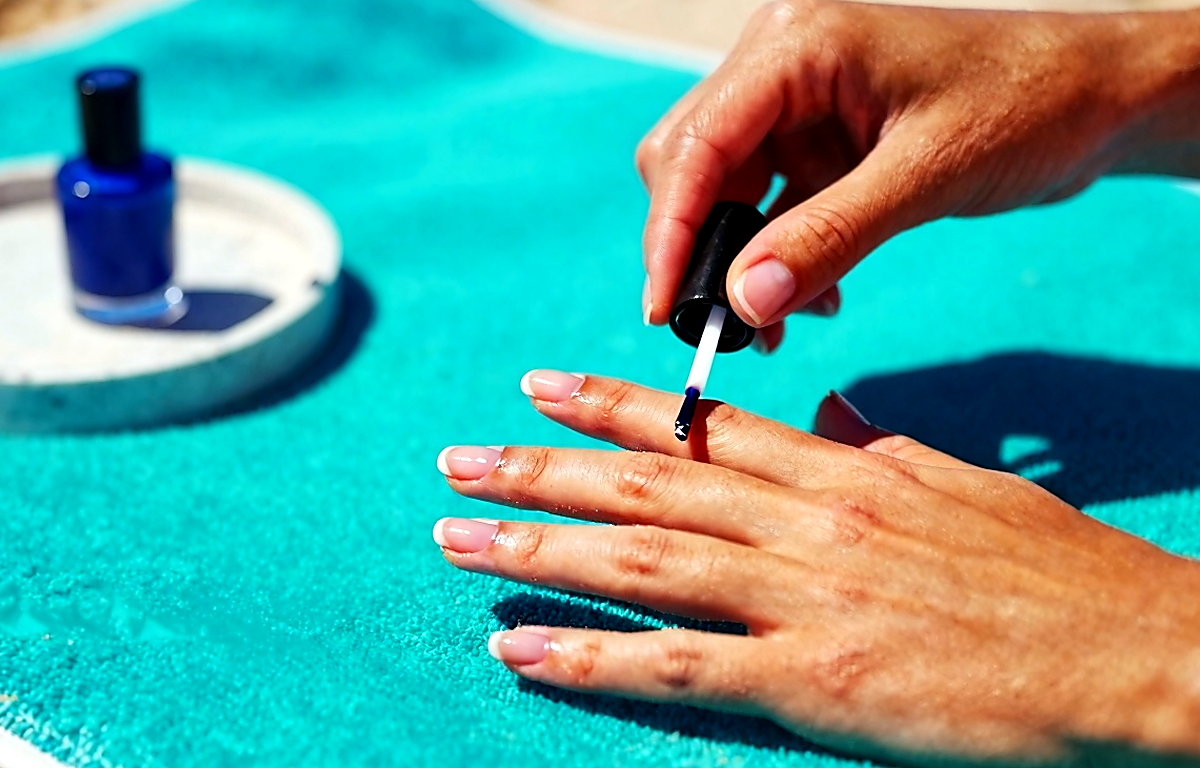
After the sea, nails rarely look as neat as they did on the first day of vacation. Salt, sun, sand, frequent hand washing, and contact with SPF gradually dry out the nail plate and cuticle, while polish starts to feel heavy or uneven. The good news is that you do not have to bring back a tidy look with a thick layer of base coat, gel, or bright polish. In most cases, it is enough to slightly shorten the length, remove dry cuticle, add hydration, and choose a light, semi-sheer finish that does not fight the nail’s natural texture.
If you want your hands to look polished today, follow a simple routine: shorten the free edge, refine the shape with a gentle file, apply cuticle oil, buff only the raised rough spots, and finish with one thin layer of a milky, pink-beige, or clear strengthening coat. This approach makes a manicure look fresh without feeling overdone. And if your nails have become sensitive, are peeling, or feel almost “squeaky” from dryness after vacation, a few days of gentle recovery matter more than camouflage.
Why Nails Lose Their Neat Look After the Sea
A seaside holiday affects nails from several directions at once. Sea water itself is not always harmful, but combined with strong sun, wind, and constant soaking, it increases dehydration. The nail plate loses smoothness more quickly, the cuticle dries out, whitish areas appear along the sides, and the free edge becomes more brittle.
There are also everyday reasons. On vacation, hands come into contact more often with sunscreen, sanitizers, sand, hard hotel water, and dishwashing products. If there was old polish on the nails, the regrowth line, tiny chips, and loss of shine become more noticeable after the trip. That is why it can seem as if the nails are “ruined,” when in most cases it is not serious damage but surface dryness and an untidy shape.
- Salt and sun dry out the cuticle and sidewalls.
- Frequent soaking makes the free edge more fragile.
- Sand and friction increase roughness on the nail plate.
- Old polish looks heavier and more uneven after vacation.
- On tanned skin, regrowth and chips are more noticeable than usual.
That is exactly why the best post-sea manicure is not the one that hides everything under a thick layer, but the one that gives hands a clean, fresh, well-groomed look through minimal, thoughtful care.
Where to Start: A Quick 15–20 Minute At-Home Reset
If your nails look tired, do not start with aggressive removal, buffing blocks, and several layers of ridge-filling base. First, put the foundation back in order. This is one of those moments when neatness comes not from masking, but from the right sequence of steps.
- Remove the remnants of old polish with a gentle remover without prolonged soaking. The less contact the nail has with solvent, the better for an already dried-out plate.
- Shorten the length. After the sea, a long free edge often looks thin and tired, while a shorter length instantly makes hands look neater.
- Shape the nails with a fine-grit file. Soft square, oval, or short squoval shapes work well: they are practical and hide minor unevenness.
- Treat the cuticle with a remover, or simply after a warm shower gently push it back with a stick. A deep cuticle manicure on over-dried skin can create extra sensitivity.
- Apply oil to the cuticle and sidewalls, then hand cream. Even at this stage, hands already start to look more polished.
- If needed, lightly buff only the lifted flakes and rough spots, without removing the top layer across the whole nail plate.
If you are really short on time, you can stop at three steps: length, oil, and a thin clear layer. For an everyday neat look, that is often enough. By the way, in summer the principle of lightness works well overall: it is also relevant for body skin when you do not want to overload your routine with heavy textures. If that approach speaks to you, you can also read our piece on a lightweight body cream for summer without stickiness.
What Shape and Length to Choose So Nails Look Well-Groomed Without Polish
After vacation, shape should be chosen based not on trends, but on the current condition of your nails. If the nail plate is soft and the edge has started to peel, long almond shapes and sharp corners almost always emphasize the problem. A short length that follows the nail’s natural line looks far more flattering.
The best options for the post-sea period are:
- Short oval — softens the look of the hands and makes tiny chips less noticeable.
- Soft square — looks polished if the nails are strong and do not break at the corners.
- Squoval — a compromise between oval and square, especially good for wider nails.
How you file the edge matters too. Use strokes in one direction or very gentle short passes, without sawing the nail too aggressively. It is also best not to file immediately after water exposure: let the nail dry completely first, otherwise the edge may start to split more quickly.
If your nails are naturally uneven, do not try to visually “save” them with extra length. On the contrary, a short, tidy outline makes hands look more expensive than a complicated shape that constantly needs correcting. Minimalism in a post-sea manicure almost always looks more modern than a dense, visibly built-up layer.
What to Use Instead of Heavy Coverage: Light Textures That Really Work
When nails are weakened, it is tempting to hide everything under a thick rubber base or several layers of color. But heavy coverage on a thin, dry nail plate can look less like an expensive manicure and more like an attempt to hide fatigue. Thin, semi-sheer, light-diffusing textures work much better.
These formats are especially appropriate after the sea:
- Clear strengthening polish — if you just want shine and a more polished look.
- A milky base in a thin layer — softly disguises uneven color without turning the nail into “glass.”
- Pink-beige nude — refreshes the hands and works beautifully on short nails.
- A semi-sheer peach or creamy shade — especially flattering on tanned skin.
- A satin or jelly finish — looks lighter than an opaque enamel.
The secret to a neat result is thin application. One even coat often looks better than two or three thick ones. If the shade is semi-sheer, that is actually a plus: the nail still looks alive rather than flooded with color. For an at-home post-vacation manicure, it is best to choose shades that do not require perfect leveling and do not highlight every millimeter of regrowth.
If you want to skip color altogether, focus on shine and a well-cared-for cuticle. Sometimes well-moisturized hands and a clean nail shape make a stronger impression than bright polish. The same principle works in summer facial care: the basics matter more than overload, so many people also benefit from revisiting a basic skincare routine for the face if skin has also become more sensitive after the sun.
Cuticle and Hand Care: This Is What Creates the Look of a “Fresh Manicure”
After a seaside holiday, it is usually not the nail plate itself that gives things away, but the dry cuticle. Even good polish does not help if there are hangnails, whitish patches, and dehydrated skin along the sides. That is why during the post-sea period, the cuticle deserves more attention than color.
What really helps:
- Cuticle oil 1–2 times a day. The easiest routine is once in the evening and once more during the day.
- Hand cream after every wash. It does not have to be heavy: in summer, lighter formulas are more comfortable and easier to use consistently.
- Gloves for household tasks, especially if you come into contact with detergents.
- Gentle pushing back of the cuticle instead of constant cutting, if the skin is currently over-dried.
- Night care: oil plus a richer cream than usual, so hands look calmer by morning.
If you like a quick visual effect, after the oil you can gently blot with a tissue and add a drop of clear polish. The contrast between hydrated skin and a clean nail shine instantly gives a more finished impression. It is especially noticeable on short nails.
It is also worth paying attention to overall summer hand care. If the skin on the hands and body is dried out after the sun, any manicure will look worse than it could. Everything is connected: smooth skin, a soft cuticle, a tidy nail edge, and a thin finish create that “expensive” effect without overload.
Mistakes That Make Nails Look Even Worse After the Sea
Sometimes the attempt to urgently get hands back in shape only makes things worse. After vacation, quick fixes are tempting, but this is exactly the moment to avoid too much aggression. Below are the most common mistakes that get in the way of restoring a neat look to the nails.
- Over-buffing. Smoothness for one day can turn into thinning and brittleness a week later.
- A thick layer of base or gel. It can emphasize unevenness, create a heavy look, and chip faster on a dry nail.
- Cutting over-dried cuticles down to nothing. This often leads to micro-damage and even more sensitivity.
- Keeping long length right after vacation. A weakened free edge looks good only for the first few hours.
- Frequent use of acetone products. They further dry out the nail plate and the surrounding skin.
- Ignoring daily hydration. Without it, any manicure quickly loses its neat appearance.
Another common mistake is choosing a shade based only on trends. After the sea, it is better to focus on what makes the hands look fresher right now. On tanned skin, not only classic nudes but also semi-sheer creamy, tea-rose, milky, and light peach tones can look unexpectedly beautiful. An overly dense cool beige, on the other hand, sometimes emphasizes dryness and uneven skin tone on the hands.
Which Shades and Techniques Make a Manicure Look Neater
If you want a truly beautiful result rather than just basic care, the easiest way is to choose a shade that does not fight the nail’s natural condition. After the sea, colors and finishes with soft depth but without a correction-fluid effect work especially well.
The most flattering options are:
- Milky — refreshes and softens the look of the nail plate.
- Semi-sheer pink — creates the effect of a healthy nail.
- Beige-pink nude — suits those who want a more polished look.
- Peach jelly — beautiful against a summer tan.
- Clear gloss — if you do not want color but still want a tidy finish.
The best techniques are:
- Thin application instead of trying to cover everything at once.
- Careful painting near the cuticle without flooding — that is what makes a manicure look clean.
- Short length that looks intentional rather than like a forced compromise.
- Cuticle shine after oil — it creates the feeling of fresh salon care.
If you like the idea of light summer solutions that do not feel overdone, it applies not only to nails. In makeup during hot weather, for example, lighter techniques often work better too, as discussed in our article on how to apply powder over SPF without patchiness.
When It Is Better Not to Cover the Nails Right Away and Give Them a Couple of Recovery Days
Sometimes the most sensible decision is not to apply polish on the same day. If the nail plate has become too soft, there are areas of noticeable peeling, sensitivity at the tips, or irritation around the nail, it is better to limit yourself to care and minimal shape refinement. After 2–4 days of good hydration, nails often look noticeably better and no longer need dense camouflage.
During this period, it helps to:
- shorten the length to a comfortable minimum;
- use cuticle oil every day;
- apply hand cream after contact with water;
- avoid keeping hands in hot water for too long;
- stay away from harsh buffing blocks and aggressive removers.
If what you notice is not just dryness but persistent burning, pain, swelling, a change in nail color, obvious inflammation, or suspicion of a fungal condition, it is better to postpone an at-home manicure and see a doctor. During pregnancy, with heightened skin sensitivity, or while using retinoids, it is also worth being especially careful with aggressive products and irritating formulas around the nails. A manicure may be cosmetic care, but it is not a substitute for medical evaluation when there are concerning symptoms.
Sometimes it is not only the nails that suffer after the sea, but the hair too: humidity, sun, and salt can change the overall texture. If you are currently reworking your summer beauty routine, you may also find it helpful to read about how to get frizz-free hair after humidity.
A Simple One-Week Plan to Bring Back a Neat Look Without the Salon
For a result that lasts rather than a one-day fix, a short plan for several days is enough. It suits anyone who does not want complicated procedures but does want hands to look neat and modern again.
Day 1: remove old polish, shorten the length, shape the nails, treat the cuticle, apply oil, and add one thin layer of clear or milky polish.
Days 2–3: use cuticle oil twice a day, apply cream after every hand wash, and keep contact with household chemicals to a minimum unless you are wearing gloves.
Day 4: assess the condition. If the nails look calmer, you can add another thin layer of a semi-sheer nude. If dryness remains, continue with care only.
Days 5–7: maintain the shape with light filing, refresh the oil, and if desired, top with a fresh thin layer of shine.
This rhythm does not require a salon, but it gives exactly the effect most people want after the sea: hands look clean, calm, and well-groomed, without heaviness or extra bulk on the nails.
The main takeaway is simple: a neat manicure after the sea begins not with dense coverage, but with respect for the nails’ current condition. Short length, a soft shape, daily hydration, and a semi-sheer finish almost always work better than a thick layer trying to hide dryness. If you give your nails a little time to recover and choose a light, visually fresh option, your hands will very quickly look polished again — and still natural.