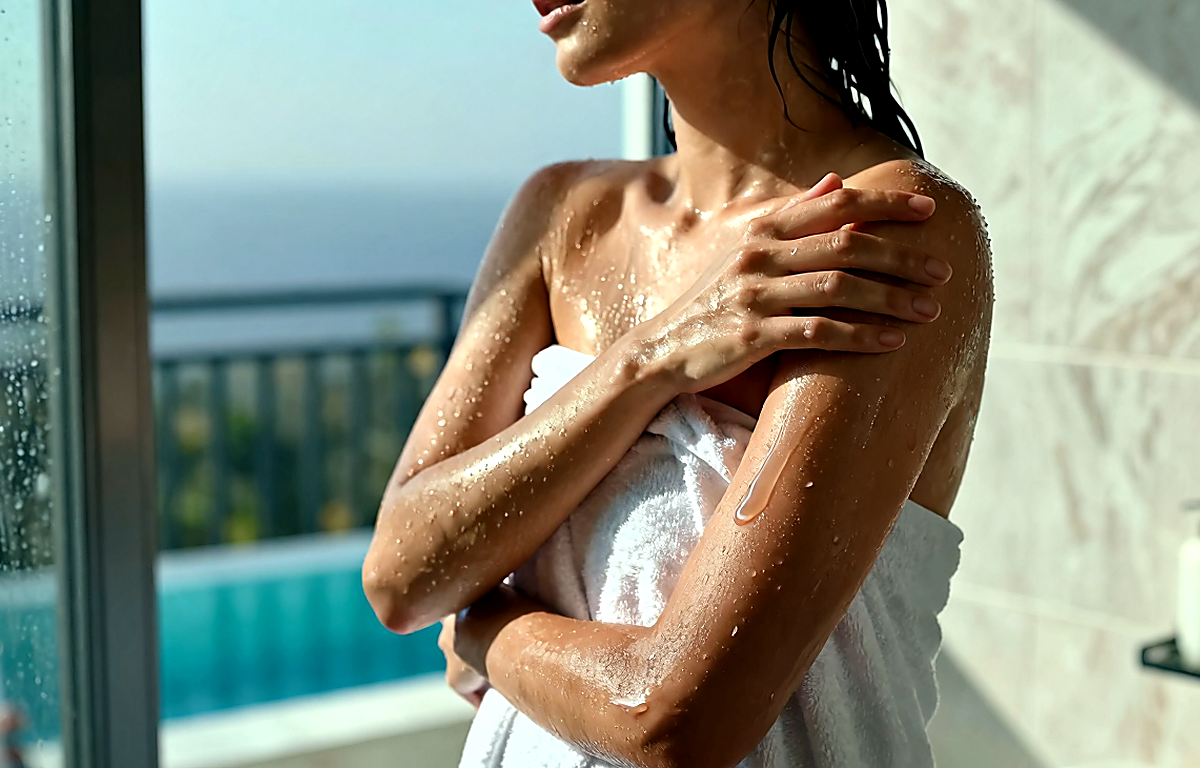
In hot weather, skin does not need a “layer cake” of rich products after a shower. It needs a short, thoughtful routine: gentle cleansing, quick patting with a towel, a light moisturizing layer on slightly damp skin, and targeted care only where it is truly needed. If you often feel sticky after showering, want to wash your body lotion off again ten minutes later, or get the feeling that your skin “cannot breathe,” the problem is usually not the routine itself but a texture that is too heavy, too much product, or application on overheated, completely dry skin.
The secret to freshness is simple: in hot weather, emulsions, gels, body milks, and fluids usually work better than rich body butters all over. You do not need to apply the same product to your arms, shins, back, décolleté, and feet. Each area has different needs. Where the skin is normal and starts sweating quickly, a very thin layer is enough. Where there is dryness after shaving, hard water, or sun exposure, a more attentive but still lightweight approach works better. This helps maintain comfort, reduce stickiness, and keep the skin hydrated.
Why Skin Quickly Loses That Fresh Post-Shower Feeling in Hot Weather
After a shower, you want to lock in the feeling of cleanliness and coolness. But this is exactly when many people make the same mistake: they apply a product that is too rich, as if it were winter and indoor heating were drying out the air. In summer, skin reacts differently to body care. Temperatures are higher, sweating is more active, clothes cling to the body more often, and any extra layer feels more noticeable. If you apply a thick layer of rich cream straight onto skin that is still damp from steam, it can mix with perspiration and create that film-like feeling.
There are other reasons freshness fades quickly:
- a shower that is too hot, leaving the skin overheated for a long time;
- aggressive gels that strip too much oil;
- vigorous rubbing with a towel, which increases sensitivity;
- applying too much product “just in case”;
- trying to use one rich product on the whole body;
- complex fragrances and rich oils on days when the skin is already reacting actively to heat.
Feeling fresh after a shower does not mean skipping care altogether. It means balance. The skin needs help holding on to moisture, but it should not be overloaded. That is why texture, application method, and understanding where the skin needs only a little care and where it needs slightly more matter even more in summer.
What a Proper Summer Post-Shower Routine Should Look Like
If you want your skin to stay comfortable for longer, it helps to keep your routine very short. It takes only a few minutes, but it can noticeably change how your skin feels throughout the day.
- Choose warm, not hot, water. A shower should refresh the body, not overheat it.
- Use a gentle cleanser. Your shower gel does not have to strip the skin until it squeaks. After overly aggressive cleansing, you tend to apply more cream, and that often creates stickiness.
- Do not dry the skin completely. It is better to pat gently with a towel and leave a trace of moisture.
- Apply product right away. On slightly damp skin, a lightweight texture spreads more thinly and feels more comfortable.
- Adjust care by body zone. Shoulders, back, and thighs may need only a minimum, while shins, elbows, and feet may need a little more.
- Let the product absorb for 2-5 minutes. Do not get dressed instantly if you want to avoid that clinging feeling.
This kind of routine is especially practical in the morning, when you do not want to spend time on complicated steps. It also works well after an evening shower if you struggle with that heavy feeling on the skin at night too.
Which Textures Work Best to Avoid Film and Stickiness
In hot weather, texture matters more than bold promises on the label. The most comfortable formats are the ones that give the skin water and lightweight softening ingredients without leaving a dense occlusive layer. There is no single universal option, but there are a few clear guidelines.
Gels and gel-creams are a good fit if your body skin feels normal, combination, or prone to overheating quickly. They often leave the most weightless finish. They are especially convenient for the back, décolleté, arms, and thighs.
Body milks and emulsions are the golden middle for most people. They spread thinly, do not require much product, and usually stay comfortable even on very warm days. If you want an everyday format after showering, body milk is often the most practical choice.
Lightweight lotions and fluids suit anyone who wants barely-there care but does not want to skip softening altogether. They are easy to use in the morning before getting dressed.
Rich creams and body butters are better saved in summer for specific dry areas or for evenings after intense sun, shaving, or constant air conditioning, when the skin feels noticeably tight. Applying them all over the body in hot weather is often unnecessary.
It helps to pay attention not only to the product name but also to how your skin feels after application. If, after ten minutes, you want to rinse off again, the product is probably too rich for your skin in this weather. In that case, switch to a lighter format. If you are looking for comfortable summer textures, you can also read our guide to a lightweight body cream for summer without stickiness, which helps explain what sensations to look for when choosing.
Where and How Much to Apply: Different Body Areas Need Different Care
One of the most useful summer habits is to stop applying the same amount of product everywhere. It may seem minor, but it often solves the problem of a heavy layer.
Arms, shoulders, and décolleté. These areas usually need very little. They tend to feel coated quickly, especially if you put on a T-shirt or shirt right away. A thin layer of emulsion or body milk is often enough.
Back. If the skin on your back tends to sweat easily and react to heat, choose the lightest possible textures or limit care to times of obvious dryness. Rich products can increase discomfort.
Shins. For many people, this is one of the driest areas, even in summer. After a shower, you can apply a bit more product here than on the thighs or arms, but it still should not become a thick layer.
Elbows and knees. More targeted, richer care makes sense here, especially if there is flaking. There is no need to make the whole routine heavy because of a few dry patches.
Feet. If you wear open shoes during the day, a lightweight cream in a small amount usually feels more comfortable. Apply it in advance so you do not get slipperiness or a greasy feeling. Richer care is better saved for night.
After shaving. The skin may need extra soothing hydration, but not necessarily a rich formula. A thin layer of a lightweight product without an overpowering fragrance is better than a large amount of something rich that makes the skin feel even hotter.
This zone-based approach makes body care truly individual. In summer, the body rarely needs the same level of coverage from head to toe.
Which Ingredients Usually Feel Comfortable in Hot Weather
Not everyone chooses body care by ingredients, and that is perfectly fine. But if you want to understand why some products feel fresh while others feel heavy, it helps to know a few basics. In hot weather, ingredients linked to hydration and softness without excessive richness usually feel the most comfortable.
- Glycerin helps retain moisture and is often well tolerated in lightweight textures.
- Panthenol can feel comforting after a shower, shaving, and sun exposure, when the skin wants softness.
- Allantoin is often found in calm formulas for sensitive skin.
- Hyaluronic acid in body products usually works as part of a hydrating base without automatically making the formula heavy.
- Squalane in small amounts can add softness without an overly greasy finish if the overall formula is lightweight.
- Ceramides are helpful if the skin is prone to dryness, but in summer it is especially important that the texture itself still feels comfortable.
Many people are cautious with very rich oil-based formulas in daytime summer care, especially if their skin starts sweating quickly. That does not mean oils are “bad”; they just do not always create the fresh feeling you want right after a shower. If your body skin is generally dry, it is often better to choose a lightweight emulsion and use it regularly than to rely on an overly rich product you avoid because it feels sticky.
If you are also rethinking your summer face-care routine, it helps to keep the same principle of moderation in mind. In that sense, it also makes sense to read about how to build a basic skincare routine for your face: the idea is the same there, too – skin needs a clear routine, not an overloaded one.
Mistakes That Make Even Good Body Care Feel Heavy
Sometimes the issue is not the product itself but how it is being used. Even a well-formulated product can lose its advantages if a few simple rules are ignored.
Mistake one: applying too much. In summer, the body rarely needs a generous layer. If you have to keep rubbing in the leftovers, you are already using too much.
Mistake two: waiting until the skin is completely dry. Then you need more product to compensate for tightness. On slightly damp skin, you need less.
Mistake three: using the same rich product all year round. What worked perfectly in winter can feel heavy in summer without that being the brand’s fault or an issue with the formula.
Mistake four: combining a hot shower with a rich cream. After the body is overheated, even good body care feels more intense and takes longer to absorb.
Mistake five: ignoring clothing and weather. On a day when you wear a fitted dress, jeans, or synthetic sportswear, even a moderate layer of product can feel very different.
Mistake six: trying to achieve complete mattness at any cost. Skipping body care entirely does not always make skin feel more comfortable. Often it leads to tightness and then to applying too much later.
The best summer benchmark is not how shiny your skin looks right after application, but how it feels 15-20 minutes later. If your skin feels soft, not sticky, and does not seem to need another urgent layer, you have found the right balance.
How to Adapt Post-Shower Care Depending on the Situation
A summer routine becomes easier when you stop trying to make it identical every day. Weather, activity level, shaving, air conditioning, time in the sun, and even clothing fabric all change what your skin needs.
After a regular morning shower before going out, the lightest scenario is enough: gentle cleansing and a thin layer of body milk or gel only on the areas that need it. The main goal is comfort, not to “seal” the skin.
After the beach, the pool, or a long walk in the heat, the skin may need a little more attention. On those days, gentle cleansing and light soothing hydration matter even more. But even then, it is better to apply two thin layers to dry areas than one very rich layer all over the body.
After shaving, choose a neutral formula that is not too active. Strong fragrances and irritating combinations can increase discomfort. If burning, pronounced redness, or soreness does not go away, it is worth discussing the situation with a doctor.
After an evening shower before bed, you can allow yourself a slightly richer texture on the shins, elbows, knees, and feet if nighttime is when you want to restore dry areas. But for the shoulders, arms, and torso, a lightweight format is often still more pleasant.
If the air conditioner runs constantly at home, skin can become dehydrated even in summer. In that case, you do not necessarily need to switch to a heavy cream. More regular use of a lightweight emulsion is often enough.
It is also important to mention persistent discomfort. If your skin constantly burns after a shower and regular body care, or you develop pain, severe swelling, weeping, pronounced flaking, or symptoms connected with a skin condition, it is better not to keep experimenting endlessly with cosmetics and to see a doctor. During pregnancy, with pronounced skin sensitivity, or when using products with retinoids in your routine, it is also wise to be especially cautious and discuss questionable actives with a specialist.
A Minimalist Set of Products That Is Often Enough in Summer
You do not need ten products to feel fresh. In practice, many people do well with a very small set if it is chosen wisely.
- A gentle shower gel that does not leave the feeling of harsh stripping.
- A lightweight body product – body milk, emulsion, fluid, or gel-cream for daily use.
- A richer product for targeted areas – elbows, knees, shins, or feet, if they are dry.
- A product without an overpowering fragrance for post-shaving days or when the skin needs the calmest possible care.
This is usually enough for skin to feel cared for rather than overloaded. Sometimes improving your summer routine is less about expanding the shelf and more about simplifying it. The clearer the routine, the easier it is to follow consistently, and consistency matters for body skin more often than the “perfect” formula that gets used only from time to time.
Conclusion: Freshness After a Shower Depends on Precision, Not a Thick Layer
Summer body care works better when it focuses on lightness and appropriateness rather than richness. To keep skin feeling fresh after a shower, you do not have to give up hydration. It is enough to choose a more airy texture, apply it to slightly damp skin, reduce the amount, and distribute products by body zone instead of treating the whole body the same way. That is what helps skin stay soft, calm, and comfortable without a film-like feeling.
In short, the most practical hot-weather routine looks like this: a warm shower, gentle cleansing, patting the skin dry with a towel, a thin layer of a lightweight product, and more attentive care only where dryness is actually present. A simple routine almost always works better than a heavy multi-layered one, especially on days when you want your skin to feel fresh rather than overfed.