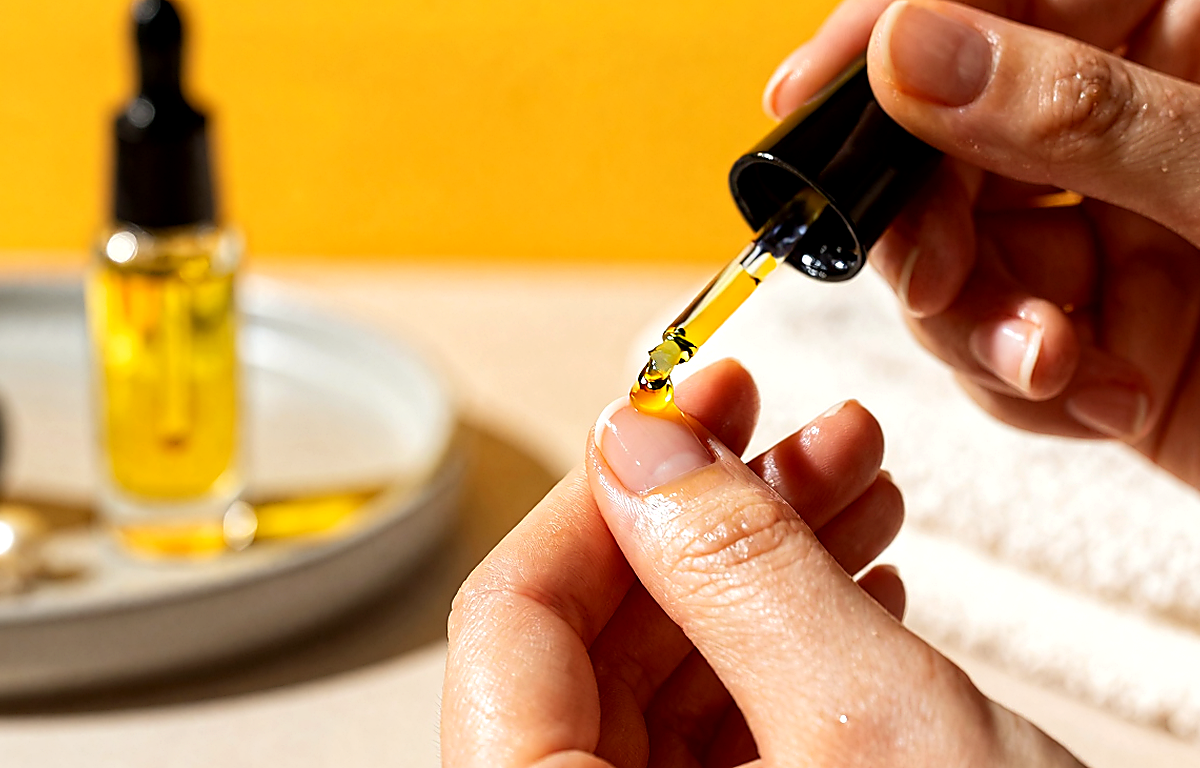
If your manicure starts to look tired too quickly, the problem is often not the polish color or the nail shape, but dry cuticles. They are usually the first sign that your hands need more care: the skin turns ashy, hangnails appear, the area around the nail becomes rough, and the manicure starts to look less polished even when the color itself is still holding up well. The easiest way to quickly make your hands look well-groomed again is to use cuticle oil regularly—and to use it properly, not just from time to time.
The main rule is simple: apply a small amount, but do it often, rubbing it in not only along the cuticle line but also into the sidewalls and the skin around the nail. The best effect comes not from a one-off heavy application, but from a small habit repeated 2–4 times a day, especially after washing your hands, using sanitizer, cleaning, and before bed. That is when the cuticle becomes softer, the manicure looks fresher, and small rough patches and dryness stop drawing attention.
Why cuticle oil matters at all
The cuticle is a thin area of skin at the base of the nail that protects the nail growth zone from external воздействие. When it becomes overly dry, microcracks, rough edges, hangnails, and that overall impression of “unkempt hands” appear—even if your manicure was done quite recently. Oil does not replace a proper manicure, but it helps maintain the result between salon visits or home sessions.
Its job is to soften the skin, reduce tightness, make the surface smoother, and give it a more polished look. As a result, the nail bed looks cleaner, the contour around the nail appears neater, and polish, gel polish, or natural nails all look tidier. The effect is especially noticeable on matte finishes, nude shades, and short nails, where dry cuticles are the most visible.
There is also a practical benefit beyond appearance: soft, supple skin catches less on clothing, flakes less, and is less likely to form painful hangnails. But it is important to keep perspective: oil is for care and dryness prevention, not for treating inflammation. If you have persistent burning, pain, pronounced redness, swelling, signs of infection, or a skin condition, it is better to see a doctor. During pregnancy, and if you use retinoid-based hand care, it is especially important to read ingredient lists carefully and avoid aggressive fragrance components if they trigger a reaction.
How to tell if you really need cuticle oil
The short answer is: almost everyone who gets manicures, washes their hands many times a day, or lives in dry air can benefit from it. But there are situations where oil is especially useful:
- the skin around your nails quickly turns white after washing your hands;
- hangnails appear a few days after a manicure;
- the cuticle looks dense, dry, and uneven;
- sanitizers and household cleaners dry out your hands;
- you often get your hands wet or work without gloves;
- the polish is still intact, but the manicure no longer looks fresh;
- your nails and the skin around them look dull in winter or during heating season.
Even if your cuticles are thin and you rarely get hangnails, oil can still help maintain a neat contour around the nail. This is especially relevant if you prefer a natural manicure without bright polish: in that look, the condition of the skin is what creates the impression of well-groomed hands.
If your hands are constantly dry overall, oil alone may not be enough. In that case, it works best alongside basic hand care: gentle cleansing, hand cream, and protection from over-drying. Just as facial care works best as a system rather than a single product, hand care follows the same logic. The same principle applies to skin care in general: first cover the basics, then add targeted products. You can read more about that idea here: how to build a basic skincare routine.
When to apply cuticle oil for a visible effect
The most common mistake is remembering cuticle oil only in the evening or only on manicure day. For a beautiful visible effect, consistency matters. Cuticles lose moisture quickly because of water, soap, alcohol-based products, and dry air, so oil works best when you use it at the moments when the skin is most vulnerable.
The best times to apply it are:
- after washing your hands, when the skin is already dry but still slightly warm;
- after using sanitizer, if it leaves your skin dry;
- after a shower, bath, or doing the dishes;
- after finishing a manicure, when the skin needs softness again;
- before bed—one of the best times for recovery;
- before a photo, meeting, or going out, if you want to refresh your hands quickly.
During the day, a tiny drop is enough—just rub it in quickly with your fingers. At night, you can do a richer treatment: hand cream first, then oil on the cuticles and sidewalls. That way, the skin gets both moisturizing ingredients and a more occlusive, softening layer of protection.
If you wear long-lasting polish, do not be afraid to use oil often: in normal home care, it does not “ruin” your manicure. On the contrary, dry cuticles next to a perfect finish create a stark contrast and make the whole look less polished. The only exception is right before applying polish: at that stage, the nail plate should be degreased, and oil should wait until later.
How to apply cuticle oil properly: step by step and without too much shine
If you want your manicure to look fresher, there is no need to drench the nail in product. Too much oil gives only a brief glossy look, but it does not make the care more effective. Technique and the application area matter much more.
- Wash your hands and dry them well. Oil is not very convenient on wet skin: it spreads less evenly and may simply slide on top.
- Take a tiny drop for each nail. If the product comes with a brush or rollerball, that is usually enough. You can always add more, but most often you will not need to.
- Apply the oil along the cuticle line, then onto the sidewalls. Those are the areas where dryness and hangnails appear most often.
- Gently massage it in for 20–30 seconds. Use circular or smoothing motions, without pressure and without trying to push back the cuticle with your nail.
- If your skin is very dry, spread the remaining oil over your fingertips and the backs of your hands.
- Let the product absorb for at least a minute, then, if needed, gently blot away the excess with a tissue.
For a quick daytime result, this trick works especially well: first use a very small amount of oil, then add just a pea-sized amount of hand cream and spread it over your hands without forgetting the skin around the nails. Your hands will not look overly greasy, but the nail contour will immediately appear neater and smoother.
If your goal is not only to soften the cuticles but also to improve the overall look of your hands, pay attention to the whole care “background.” In summer, for example, texture comfort matters a lot: when products feel too heavy, people tend to skip them, and the skin misses out on care. In that sense, the principle of light but regular products is useful here too, just as it is in body care: a lightweight body cream for summer without stickiness.
How to choose cuticle oil by formula and format
There is no universal “best cuticle oil”: a lot depends on how often you are willing to use it and what textures you enjoy. If a product is inconvenient, it will simply sit unused. So when choosing one, it is worth looking not only at the pretty packaging but also at a few practical details.
What to pay attention to:
- The base formula. Most often, it includes plant oils and softening ingredients. The better it feels after application, the more likely you are to use it regularly.
- The format. A brush is convenient for a home ritual, while a pen or stick works well for a bag or the office, and a rollerball is handy for quick application with minimal mess.
- Absorption speed. If dense oily residue bothers you, look for lighter textures or use the product mainly at night.
- Fragrance. A strong scent is not pleasant for everyone. If your skin is sensitive, it is better to choose calmer compositions or options without a heavy perfume load.
- Additional ingredients. Vitamin E and softening additives can make the texture feel more comfortable, but what matters more than a “rich” formula is how well your own skin tolerates it.
If you refresh your manicure at home often, it can make sense to keep two formats: one compact option for daytime and another more nourishing one for evening use. This is not a requirement, but it is convenient. The same product may feel too greasy during the day and perfect before bed.
It is also not worth relying only on promises like “strengthens nails in three days” or “instantly transforms your hands.” The real effect of cuticle oil is most noticeable in the condition of the skin around the nails: it becomes softer, smoother, and less prone to dry, sticking-up edges.
What to do if your cuticles are very dry and oil is not helping
Sometimes it seems as though oil “doesn’t work,” but in reality the skin may already be severely dehydrated or may need not only lipids but also basic moisturizing care. In that situation, it is more helpful not to increase the amount of oil, but to rethink the whole routine.
Try this plan for 7–10 days:
- apply hand cream after every hand wash;
- add cuticle oil 2–4 times a day;
- at night, do a richer routine: cream plus oil;
- use gloves when cleaning or handling household chemicals;
- do not trim dry sticking-up skin in a rush without softening it first;
- for a few days, avoid aggressive buffing and frequent removers if they make things drier.
If your skin still feels painful, cracks, weeps, or becomes inflamed even with this routine, it is better not to keep experimenting and to discuss the situation with a doctor. Persistent pain, throbbing, marked redness, swelling, or changes in the color of the skin or nail are no longer just a matter of ordinary dryness. The same applies if the reaction appears after a specific product: the issue may be an irritating ingredient rather than a lack of care.
It also helps to assess your surrounding habits. Very hot water, frequent use of sanitizers, constant washing without applying cream afterward, or a habit of picking at and tearing dry skin can cancel out any benefit from oil. Care works better when you are not having to repair the same damage every day.
Common mistakes that keep your manicure from looking fresh
Even a good oil will not give a beautiful result if you use it randomly or combine it with habits that keep irritating the skin. These are the mistakes that show up most often:
- Using it too rarely. Once a week is more of a cosmetic gesture than real care.
- Applying too much at once. Excess product shines and gets on objects, but does not make the cuticle noticeably more cared for.
- Applying it only to the center at the base of the nail. The sidewalls need care just as much, and often even more.
- Trying to push back the cuticle every time after applying oil. Care should not turn into constant mechanical trauma.
- Using oil instead of hand cream. These products are not always interchangeable: the skin often needs a more complete approach.
- Ignoring protection in daily life. If you wash dishes and clean without gloves, dryness will return quickly.
- Cutting hangnails while the skin is dry. That makes it easy to create an uneven edge and irritation.
Another subtle mistake is expecting oil to deliver only an instant glossy effect. Yes, it really can make the cuticle look smoother and more expensive right away, but a lasting neat result appears when the skin receives regular care for several days in a row. In that sense, oil is not a special effect—it is a habit.
If you like a polished effect, use the product 10–15 minutes before going out: first apply a minimal amount of oil, then gently spread it out and blot the excess. That way your hands will look well-groomed, but not greasy. This principle is similar to careful layering in makeup, where it is important not to overdo it and end up with patchiness or overload. You can see similar logic in the topic of textures over sunscreen too: how to apply powder over SPF without patchiness.
How to fit cuticle oil into your daily routine so you do not forget it
The most effective method is not to rely on memory, but to tie the product to specific actions. Most people do not forget to wash their face or brush their teeth precisely because those steps are part of a familiar sequence. The same principle works for cuticle oil.
Here are a few convenient scenarios:
- keep one product by the sink and apply it after washing your hands in the evening;
- keep a compact format in your bag and use it after sanitizer or while on the go;
- leave the oil next to your hand cream on your desk;
- apply it while watching a series or reading in the evening;
- make it a mini bedtime ritual: cream, oil, and a few seconds of massage.
Massage, by the way, is useful not only because it helps distribute the product. It also makes the routine more mindful and helps you avoid picking at dry areas. Literally half a minute per hand is enough: gently go over the cuticle line, the sidewalls, and the fingertips.
If you wash your hair often, blow-dry it, and notice that humidity affects both your skin and your hair, you may relate to the broader idea of seasonal care adjustment: adapting your routine to outside conditions instead of waiting for one universal product to do everything. The same principle supports smart hair care in humid weather: hair without frizz after humidity.
It is also important to remember that cuticle oil does not have to be only a “winter” product. Cuticles can dry out in summer too—because of sun, water, sand, air conditioning, frequent hand washing, and travel. In warm weather, it is simply more comfortable to choose lighter, faster-absorbing textures.
Cuticle oil after a manicure, on natural nails, and with gel polish: is there a difference?
Yes, there is a slight difference, but the overall logic stays the same: the job of cuticle oil is to keep the skin around the nail looking neat. After a classic or hardware manicure, it helps soften the cuticle area and reduce the feeling of dryness. On natural nails without polish, oil has an especially noticeable effect on the overall look of the hands, because there is no bright accent to distract from the condition of the skin.
With gel polish, oil is useful too—and often even more necessary. The coating may last a long time, but the cuticle can dry out during that period and spoil the overall impression of the manicure. That is why regular application throughout the entire wear time is one of the easiest ways to make the manicure feel fresh for longer.
If you paint your nails at home with regular polish, just remember the order: first prep the nail plate, degrease it, apply polish and top coat, and use oil only after everything is fully finished and dry, when the surface no longer needs to stay dry and “clean” for adhesion.
After removing polish, oil is especially appropriate. At that point, the skin around the nails often looks tired, and the hands can seem less cared for. A few days of regular application can help restore softness and a neater appearance more quickly. But if pronounced irritation, soreness, or signs of an allergic reaction appear after removal, it is better not to mask the issue with care alone and instead assess the situation with a specialist.
Takeaway: how to get a fresher-looking manicure without extra effort
Cuticle oil works best not as an occasional “spa treatment,” but as a short everyday habit. If you want your manicure to look fresher, apply it regularly, in small amounts, and make sure to work not only on the cuticle itself but also on the sidewalls. Paired with hand cream, protection from household chemicals, and giving up habits that damage the skin, this delivers the most visible result.
If you want to remember just one rule, let it be this: a small drop a few times a day is more useful than a heavy application once a week. That simple consistency is what keeps the skin around the nails soft, smooth, and neat—and makes your manicure look visually fresher, even when you did not just step out of the salon.