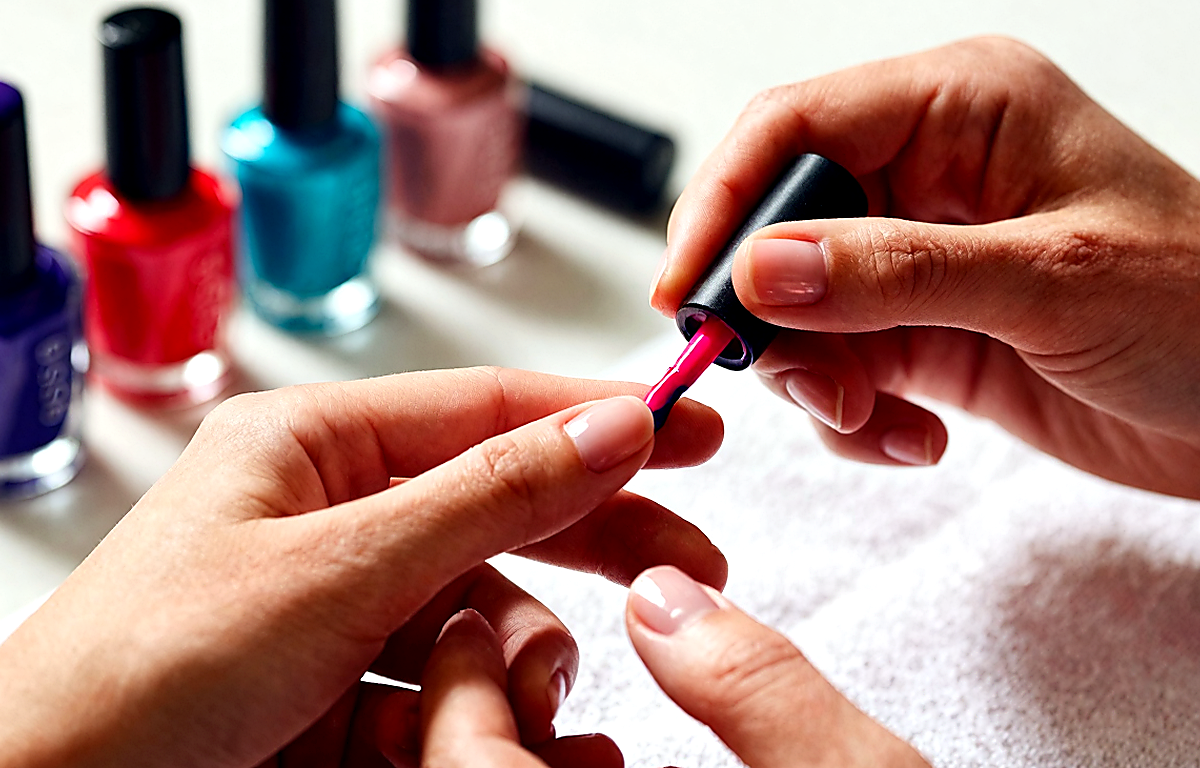
If your cuticles quickly become dry, tight, or start to look ragged after a manicure, the problem is not always the colored polish itself. Very often, the discomfort is made worse by the base coat: its formula, how it is applied, how quickly it sets, how it is removed, and even how close you bring the brush to the skin. If you are interested in Essie base coats or already use the brand, the main guideline is simple: do not look for the “longest wear at any cost,” but for a base that gives even adhesion to the nail without excessive degreasing, does not trigger extra dryness around the nail, and does not require aggressive removal.
With dry cuticles, it is important to check several things at once: how thinly the base applies, whether you feel any burning during application, how it behaves together with your remover, whether it emphasizes micro-cracks, and whether it makes you redo your manicure more often. Essie has good base coat options for different needs, but it is better not to rely only on promises of long wear or smoothing. It is much more useful to evaluate the whole ritual: nail prep, manicure frequency, contact with water, the habit of cutting the cuticle, and the formulas of the products that touch the skin around the nail.
Why Dry Cuticles and Base Coat Are Connected in the First Place
Cuticles do not suffer only from cold weather, water, or a lack of oil. A manicure itself can increase dryness if several irritating factors are present at once. A base coat comes into contact primarily with the nail plate, but it plays a role in the entire process: you degrease the surface, gently push back the cuticle, apply coat after coat, and then remove the polish. If even one step is too harsh, the skin around the nail responds with dryness, flaking, and sensitivity.
The connection is especially noticeable in three situations. First, if you like long-wearing polish and keep it on for a long time, then remove it with intense rubbing. Second, if you use a strong dehydrator before the base and repeat that often. Third, if the base applies thickly and you have to correct flooding near the cuticle, touching the skin again with solvent. That is why, when choosing an Essie base coat, it helps to look not only at the final shine and smoothness, but also at how well the product fits into a gentle manicure routine.
- Dryness gets worse if nails and skin often come into contact with acetone or harsh removers.
- Dense ridge-filling base coats can feel comfortable on the nail plate, but they require an especially careful thin layer near the cuticle.
- The more often you redo chipped polish, the more stress the surrounding skin goes through.
- Even a good base coat will not make up for the habit of cutting the cuticle too deeply or repeatedly traumatizing it with a pusher.
What to Check in an Essie Base Coat Formula if You Want Less Dryness
When you buy a base coat from a well-known brand, it is easy to focus on the line name and promises such as “strengthening,” “long wear,” or “smoothing.” But with dry cuticles, practical characteristics matter more. First, look at how fluid or thick the base is. A formula that is too thick ends up on the skin more often and requires cleanup around the nail edge. Second, pay attention to how you feel in the first minutes after application: tingling, a sharp cooling effect, an irritatingly strong smell, or a feeling of tightness around the nail are already reasons to reconsider the product.
If you are choosing an Essie base coat in an offline store, use the brand’s reputation for brush comfort and even application as a guide, but do not expect every option to suit you equally well. One base may bond better with color, another is designed for smoothing, and a third makes nails look visually more even. If you are prone to dry cuticles, the better choice is the one that lets you apply a thin, controlled layer without flooding and dries quickly without a “film” feeling at the base of the nail.
Another important point is compatibility with your at-home care routine. If you regularly use cuticle oil, a rich hand cream, or a restorative balm, the base should still perform well on a carefully prepared nail plate that is not over-dried. Degreasing “until squeaky clean” may improve adhesion for one day, but then worsen the condition of the skin and force you to keep rescuing your cuticles with oil.
- Check whether the base can be applied in a very thin single coat without patchiness.
- Assess whether it floods into the cuticle line because the texture is too runny or, on the contrary, too viscous.
- Think about whether you really need a strengthening or ridge-filling format if your main complaint is skin dryness rather than brittle nails.
- Stop using the product if, after several uses, the skin around the nail consistently looks worse even with a good oil and cream.
Which Nail Prep Mistakes Are Most Often Mistaken for “The Wrong Base Coat”
It often seems as though the Essie base coat or one from any other brand is to blame, when the problem actually begins before the first layer. The most common mistake is overly aggressive prep. When the cuticle is pushed back too hard, cut “for perfect cleanliness,” and then the entire area around the nail is wiped with a dehydrator, the skin quickly loses comfort. The manicure may look beautiful the next day, but within two days you get the feeling of a dry edge and small hangnails.
The second mistake is applying the base too close to the cuticle. Visually, it seems like that will make the manicure look neater and more salon-like, but if the product touches the skin and you then correct the edge with a cotton swab and remover, dryness is almost inevitable. It is much safer to leave a barely visible technical gap. It does not ruin the look of the manicure, but it reduces contact between the formula and the sensitive area.
The third common reason is choosing the wrong remover. Even a gentle base coat will not help if once a week you remove polish with a product that leaves the skin white and stinging. In that situation, it is worth looking not only at the base coat but at your entire manicure set. Sometimes it is enough to switch removers, reduce contact time with the solvent, and stop rubbing the nail with a dry cotton pad.
- Do not buff the nail surface unless necessary: this increases sensitivity and can make a manicure feel harsher overall.
- Do not cut the cuticle if gentle pushing back after a shower or after a cuticle remover is enough.
- Do not try to compensate for nail unevenness with a thick layer of base at the base of the nail.
- Do not wash your hands with hot water immediately after removing polish and repainting: this dries the skin even more.
How to Tell Whether an Essie Base Coat Works for You in Practice: A Simple 7-Day Test
The best way to evaluate a base coat is not by first impression, but by how your cuticles look after several days of wear. One week is enough for a home test. Do your usual manicure, but change only one element: the base coat itself. Keep the rest the same: the same colored polish, a similar nail length, and the same hand care. This will help you understand whether the difference really comes from the base coat rather than from the weather, cleaning without gloves, or a new dish soap.
On the first day, pay attention to comfort immediately after application. There should be no burning, sharp tingling, or a feeling that the skin at the base of the nail “dried out” instantly. On the third day, check whether a whitish dry line has appeared around the nail, whether there are hangnails, and whether you urgently feel like applying oil. By days five to seven, evaluate wear time: if the polish chips quickly, you will have to remove and refresh it more often, and that is already an extra burden on the cuticle. In the end, a slightly less long-wearing but gentler base coat can sometimes be the better solution for everyday life.
It is also useful to compare how the base behaves on both hands if one of them comes into contact with water or household chemicals more often. That will show you how much of the dryness depends on the formula itself and how much depends on lifestyle. For many people, that matters more than any description on the packaging.
- Day 1: evaluate how it feels during application and how the cuticle line looks.
- Day 3: look for dryness, hangnails, and tightness after washing your hands.
- Day 5: watch for chips and the need to repair the manicure.
- Day 7: assess the condition of the skin after removing the polish, not only how the manicure looked while wearing it.
Which Base Coat Is Usually More Comfortable for Dry Cuticles: Ridge-Filling, Strengthening, or Classic
There is no universal answer, but there is a clear selection logic. If your nail plate is normal, without pronounced ridges or peeling, a classic base coat with a thin even layer is usually more comfortable. It puts less weight on the base of the nail, is easier to apply, and is less likely to flood. This option often works better with a gentle at-home manicure, especially if dry cuticles are your main concern.
A ridge-filling base coat is useful when nails are uneven and you want a smoother finish under colored polish. But with dry cuticles, it is important not to overdo it. The denser the texture, the higher the risk of placing too much product at the base of the nail. If you choose this type from Essie, pay maximum attention to how thin the first layer is and do not try to “build” structure near the cuticle.
Strengthening base coats are usually chosen for brittle or soft nails. They can be helpful if your nails are genuinely fragile, but you should not expect a strengthening function to automatically solve the problem of dry skin around them. Sometimes the opposite happens: you focus on plate strength and miss the main irritating factor — frequent polish removal, aggressive prep, or not enough hand care. So the base should address the real issue, not an abstract idea that “the more active it is, the better.”
A useful guideline: if after a manicure you mostly enjoy the smooth finish, but within a day the cuticle starts to irritate you, it may be worth going back to a simpler base coat and compensating for aesthetic nuances with application technique rather than formula density.
Care Around the Nail That Helps a Base Coat Work More Gently
Even a good Essie base coat will not perform at its best if the skin around the nail is constantly dehydrated. What works here is not a complicated system, but consistency. Cuticle oil is useful not because it is a “mandatory beauty ritual,” but because it reduces the feeling of tightness, helps the cuticle edge look neater, and makes the next correction gentler. It is best applied not only in the evening, but also some time after the manicure has dried, when the coating has fully stabilized.
Hand cream also affects the result. If the skin on your hands is over-dried, the area around the nails almost always looks worse. Light but regular formulas during the day and richer textures at night usually work well. In hot weather, many people find a comfortable non-sticky cream more convenient than a dense butter: the overall moisture balance of the hands directly shows up in the cuticles too. If you like the idea of adjusting care to the season, you can look at the principles of choosing a light body texture and apply that same logic to your hands: light body cream for summer without stickiness.
Another underrated habit is wearing gloves for cleaning and dishwashing. When you protect your hands from water and household chemicals, the base coat wears more predictably and the cuticles dry out less. As a result, you do not have to repaint your nails too early, and the whole system becomes gentler on the skin.
- Cuticle oil 1–2 times a day helps maintain a neat look between manicures.
- Apply hand cream after every wash if water and soap noticeably dry out your skin.
- Do not pull hangnails off: trim them carefully with clean nippers and apply care right away.
- Take one or two polish-free days if the skin at the base of the nail has become especially sensitive.
When the Problem Is Not the Base Coat: Signs You Should Not Ignore
Sometimes dry cuticles are not just a cosmetic discomfort, but a sign that your manicure routine does not suit you right now or that your skin is reacting more strongly than usual. If there is not only dryness around the nail but also persistent redness, throbbing, soreness, cracks, oozing, or noticeable swelling, experimenting with new base coats is no longer the best idea. It is better to stop wearing polish first and figure out the cause. This is especially important if symptoms come back after different products, not only after one specific base coat.
Extra caution is also needed during pregnancy, while using retinoids, and in situations when your skin has generally become more reactive. During those periods, it is better to choose the simplest and gentlest possible at-home manicure routine, refresh the coating less often, and avoid unnecessary irritants. If burning, pain, pronounced dryness with inflammation, or suspicion of a condition persists, it is worth seeing a dermatologist or podiatrist rather than trying to “buy” comfort with a new product.
It is also helpful to remember that the skin on the hands often reflects your overall care routine. If you find yourself rethinking basic products not only for nails but also for the face, a minimalist principle sometimes helps: fewer active and irritating steps, more simple everyday comfort. In that sense, the logic of a basic routine works well in manicure too: how to build a basic facial care routine.
How to Build a Comfortable Essie Manicure Routine if Your Cuticles Are Constantly Dry
The most practical route is not to search for the “perfect magic base coat,” but to build a calm system. For many people, it looks like this: gently push back the cuticle without trauma, degrease only the nail plate moderately, apply a thin layer of Essie base coat, use color carefully without touching the skin, remove it gently without prolonged rubbing, and then use oil and cream regularly. With this kind of routine, it becomes clear whether a particular base coat truly suits you.
If you have to choose between visual perfection and skin comfort, dry cuticles are a reason to prioritize the second. A slightly less “flooded” cuticle line can still look modern and neat, and hands overall look more well-groomed than they do with perfect shine against a background of flaking and hangnails. A base coat should support your manicure, not turn it into a cycle of over-drying and constant repair.
A practical checklist before buying or using an Essie base coat again can look like this:
- I need a base coat that suits my nails, not simply the most popular format in the range.
- I can apply it thinly, without flooding and without touching the cuticle.
- It does not cause burning, strong tightness, or an urgent need to apply oil afterward.
- I remove the coating gently and do not make dryness worse with a harsh solvent.
- I have a simple daily hand care routine, not just polish and base coat.
If the answer is “yes” to most of these points, there is a good chance the base coat will feel comfortable even if you are prone to dry cuticles. If not, it is better to adjust your technique and care first: very often, that brings visible results faster than endlessly switching bottles.
Conclusion
With dry cuticles, an Essie base coat should be judged not by loud promises, but by how gently it behaves in a real routine. Look for thin application, no irritation, predictable wear, and gentle removal. Do not overload the area at the base of the nail, do not over-dry the nail plate with degreasing, and support the skin with simple daily care. Then the base coat can truly work as a manicure helper rather than another source of dryness.