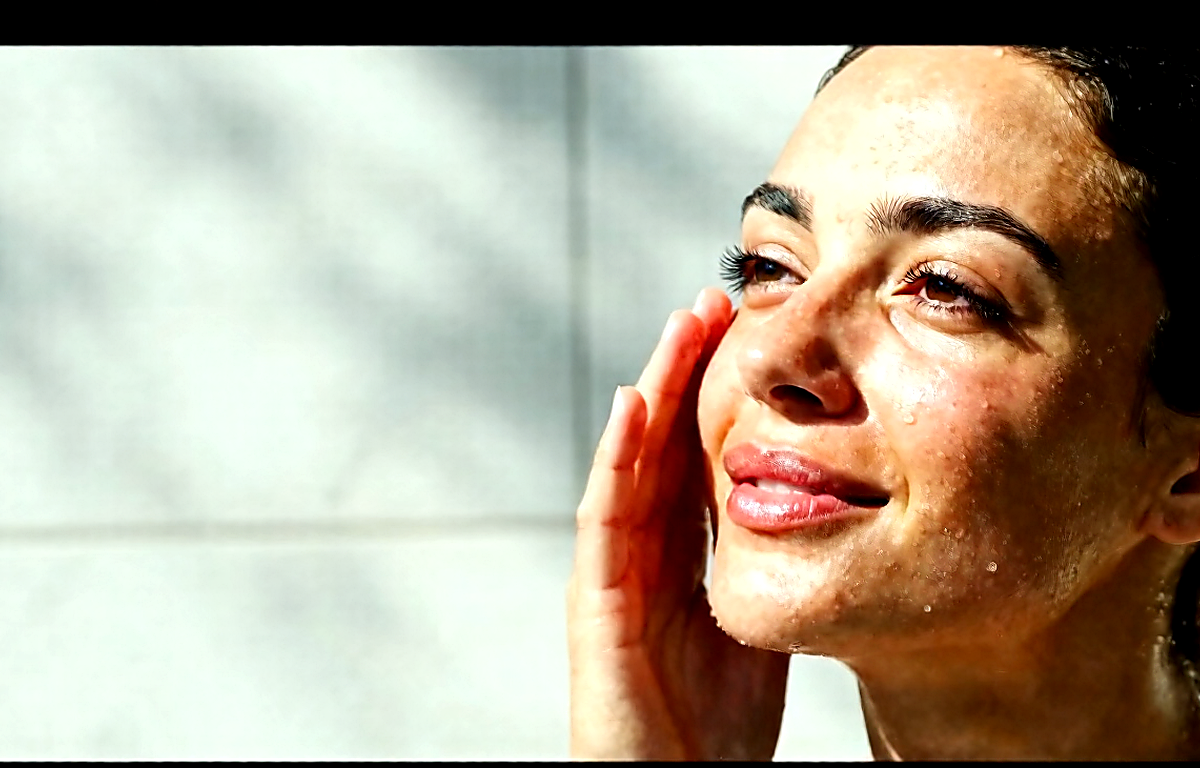
If enlarged pores concern you, the main question when choosing a Vichy cream is not “will this popular brand suit me,” but “how exactly will this specific formula behave on my skin.” Pores do not “open” or “close” on command from a cream, but their visibility really can become more pronounced or, on the contrary, less noticeable. This is influenced by the product’s texture, the amount of occlusive components, the presence of acids and hydrating ingredients, as well as what you cleanse with and what you apply on top.
Put simply, if your skin gets shiny quickly after a cream, your makeup starts sliding, and the surface looks looser and less even, the issue is usually not the Vichy name itself. More often, the texture turned out to be too rich, the formula too heavy for your skin’s oil regulation, and your routine as a whole out of balance. If, on the other hand, a product feels comfortable without heaviness, does not create a sticky film, and does not clash with the rest of your routine, pores usually look calmer and neater. Below is a practical guide to what is worth checking before you buy and after the first few weeks of use.
Why pores seem more visible after the “wrong” cream
Pores themselves are the natural openings of hair follicles and sebaceous glands. On the face, they are especially noticeable in the T-zone: on the nose, around it, on the forehead, and on the chin. Their visibility is influenced by genetics, skin type, sebaceous gland activity, the thickness of the stratum corneum, residual sebum and cosmetics, dehydration, and even lighting. So a cream cannot “erase” pores, but it can make them look smaller—or, on the contrary, make them stand out more.
Most often, pores are visually emphasized by three scenarios. The first is a texture that is too heavy and suffocating, after which the skin becomes oilier more quickly. The second is insufficient hydration, when the surface is over-dried, becomes uneven, and the texture looks rougher. The third is incompatibility with the rest of your routine: for example, a rich cream combined with aggressive cleansing, no gentle exfoliation, or an unsuitable SPF.
That is why you should not evaluate a mythical “comedogenic or not” label in isolation, but the whole context:
- what your skin type is and how it behaves throughout the day;
- whether you are prone to dehydration, sensitivity, or redness;
- whether you use acids, retinoids, or mattifying serums;
- what you use to remove SPF and makeup;
- whether you are overloading your skin with too many layers.
That is exactly why the same Vichy cream can work beautifully on one person’s skin and start emphasizing pores by midday on another’s.
What to check first: texture, finish, and how it feels on the skin
When pores are a visual concern, texture is often more important than bold promises on the packaging. Even a good formula may not suit you if the finish feels wrong. For skin with visible pores, lightweight cream-gels, emulsions, fluids, and non-sticky lotion textures often work better. They spread in a thin layer, do not create excess weight on the surface, and usually clash less with SPF and foundation.
What to watch for during the first 3–5 uses:
- does a film-like feeling appear 10–20 minutes after application;
- does the nose and the cheek area next to the nose become shinier than usual;
- does the product gather in creases, around the nostrils, or along smile lines;
- does the skin seem smoother or, on the contrary, does the texture look rougher;
- do you feel like powdering your face again shortly after skincare.
If you like the cream at first but then your face quickly turns greasy, that does not always mean the product is “bad.” You may be applying too much, layering it over a serum that is too rich, or trying to compensate for over-drying caused by aggressive cleansing. But if, with moderate application, your pores consistently look more noticeable over 1–2 weeks, it is worth looking for a lighter texture.
A useful guideline: a good product for skin with visible pores does not have to mattify “to the point of squeaking.” It is much more important that it gives an even, calm finish without stickiness and does not trigger excess sebum in response.
Which ingredients in a cream matter if pores concern you
Pores usually like balance: enough water in the skin, moderate emollience, gentle renewal of the stratum corneum, and a minimum of pointless overload. That is why it helps to read not the marketing copy, but the logic of the formula.
Ingredients that are often appropriate:
- Glycerin, hyaluronic acid, betaine, panthenol — help retain moisture and make the skin’s surface look smoother.
- Niacinamide — one of the most useful ingredients if you want more balanced sebum, gentler texture refinement, and better tolerance of your routine.
- Salicylic acid in a gentle format — useful if you are prone to clogged pores, blackheads, and uneven texture.
- Lactobionic acid, mandelic acid, and other mild acids — can sometimes help maintain a more even-looking skin surface if the formula is not irritating.
- Ceramides and squalane — especially important for dehydrated skin, where pores can look larger because the barrier is compromised.
The ingredients that deserve closer evaluation are not “forbidden substances,” but rather groups that may simply be too heavy for a particular skin type. For example, very rich oils, waxes, and dense occlusive systems can be wonderful for dry skin in winter, but on oily or combination skin with visible pores they may sometimes create a feeling of overload.
There is an important nuance here: one ingredient almost never determines a product’s fate. What matters is the entire formula, the concentrations, and how it feels specifically on your skin. So there is no need to panic and set a cream aside just because, for example, it contains silicones. For many people, they actually help the skin surface look smoother and are not automatically linked to pore problems.
When the problem is not the Vichy cream, but the rest of the routine
Very often, the cream becomes the “culprit” simply because it is the last step in the chain. In reality, pores may look worse because of the routine as a whole. For example, if you cleanse to the point of squeaking, then apply an active serum, then a rich cream, and then a dense SPF on top, the skin quickly tips either into irritation or into oily shine. Both make texture more noticeable.
Check the following points:
- Cleansing. A gel that is too aggressive can over-dry the skin, after which the sebaceous glands start working more actively.
- Exfoliation. If there is none at all, pores become visually congested more quickly. If there is too much, the skin gets irritated and looks uneven.
- Skincare layers. Several serums, cream, SPF, primer, and foundation already create a serious load for skin prone to oiliness.
- SPF. Sometimes it is actually the sunscreen that creates the feeling of congestion and heavy shine, not the base cream.
- Evening removal of makeup and SPF. If cleansing is not thorough enough, product residue can intensify the feeling of “dirty pores.”
If you want to rebuild your routine in a calmer, more logical way, it helps to focus on basic skincare principles rather than individual jars. On this topic, you can look at the article how to build a basic facial skincare routine: when your routine structure is clear, it becomes much easier to assess a specific cream.
Another common factor is the interaction with makeup. If, on top of cream and SPF, you use dense foundation formulas or a lot of powder, texture can also become more visible. For a daytime layer, a lighter setting technique sometimes works better, which is also reflected in the topic of powder over SPF without patchiness.
How to test a cream if your pores react quickly
If you are prone to visible pores, an impulsive “I liked it from the first use” is not always reliable. A cream should be tested in a short but disciplined way. This helps you understand whether the formula truly suits you, rather than just feeling pleasant in the moment.
A convenient 10–14 day testing plan:
- Do not introduce a new acid toner, serum, and SPF at the same time. Otherwise, you will not understand what your skin is reacting to.
- Apply the cream in a moderate amount. Too much product often makes the situation look worse even with good formulas.
- Photograph your T-zone in the same daylight on day 1, day 5, and day 10.
- Assess not only shine, but also texture: pores, smoothness, comfort, and makeup wear.
- Watch for new closed comedones, painful blemishes, or itching.
What to look for in a positive result:
- the skin looks more even, not just “dry-matte”;
- pores remain visible, but are less emphasized by light;
- the feeling of looseness in the T-zone decreases;
- makeup sits more calmly and does not gather around the nostrils;
- by the end of the day, the face is only moderately shiny, without a sudden greasy layer.
And conversely, it is a reason for caution if after a few days the surface becomes bumpy, multiple small breakouts appear, or you feel persistent burning or soreness. In that case, it is better to stop using the product rather than trying to “push through” the reaction.
If your skin is oily, combination, dehydrated, or sensitive: what to consider separately
The phrase “I have pores” is too general. The same complaint appears in very different skin types, so the requirements for a cream will vary.
Oily skin. It usually tolerates lightweight textures, a moderate amount of hydrating ingredients, and formulas that do not feel like a dense cocoon. Compatibility with SPF and makeup is especially important here. Products with niacinamide and a gentle sebum-balancing focus often work well, but without excessive mattifying.
Combination skin. The most common scenario is that the cheeks want comfort while the T-zone gets shiny quickly. In that case, it is often more convenient to apply the cream in a thin layer all over the face and, if needed, add a more nourishing product only to dry areas. One universal rich cream over the entire face can visually weigh down pores in the center of the face.
Dehydrated skin. Here pores can seem more visible not because of excess oil, but because of tightness and uneven microtexture. Paradoxically, this type of skin does not need the driest mattifying cream, but proper hydration without overload. Very often, once the barrier is restored, the face looks calmer.
Sensitive skin. If you are prone to redness, burning, and reactions, overly active formulas can make the situation worse. If you see pores, redness, and discomfort at the same time, tolerability becomes the priority. Even very trendy acids and actives should be introduced cautiously.
If you use retinoids or acids on a regular basis, evaluate the cream primarily as a supportive and soothing step. And if you develop persistent burning, pain, pronounced swelling, cracks, signs of dermatitis, or a skin disease during your routine, it is better to see a dermatologist. During pregnancy and when using retinoids, it is especially important to review your entire active routine with a specialist.
A popular brand is not a guarantee that a pore-friendly product will suit you
Popular pharmacy skincare brands, including Vichy, often inspire more trust: clear reputation, recognizable ranges, and easy availability. That is a good starting point, but it is not the answer to the pore question. Every brand has different formats—from rich creams for dry skin to lighter fluids and products with actives. That is why the name alone is not enough.
What is actually worth comparing before choosing within one brand:
- what task the product is meant for: barrier support, hydration, anti-aging care, imperfections, or sensitivity;
- how dense the texture of the specific product is;
- whether the formula contains actives that are already present in your serum or acid routine;
- what kind of finish to expect—glowy, neutral, nourishing, or matte;
- whether the product works for daytime use under SPF and makeup.
Sometimes, for a person with visible pores, not a classic cream but an emulsion or a serum-cream is the better fit. And sometimes the opposite is true: the skin is so dehydrated that a more comfortable cream actually makes it look smoother. In other words, the question is not “can you use Vichy if you have pores,” but what type of formula your skin needs right now.
It is equally important to remember that pores are not a defect that must disappear. In real skin, they are visible almost all the time, especially up close and in good daylight. The goal of skincare is not to erase anatomy, but to make the skin look more even, calmer, and more predictable throughout the day.
Practical checklist before buying and after opening
To avoid choosing a cream based on anxiety or advertising, it helps to keep a short list of questions in mind. This is especially useful if you are comparing several Vichy products—or products from any other brand—for skin with visible pores.
Before buying, ask yourself:
- Do I need a cream for dryness and discomfort, or am I trying to mattify my skin at any cost?
- Does this cream duplicate actives that are already in my serum?
- Will I actually be able to wear this texture in the morning under SPF and makeup?
- Is the formula too heavy for my usual sebum level?
- What do I deal with more often: oily shine, dehydration, sensitivity, or congestion?
After opening, check:
- how the product behaves 15 minutes after application;
- how the T-zone looks by the middle of the day;
- whether makeup wear has become worse;
- whether there are more closed comedones and uneven areas;
- whether persistent irritation has appeared.
A good guideline is that your skin should not require constant correction. If after applying a cream you feel the need to keep blotting your face, powdering away shine, covering texture, or relying on mattifying primers, the product probably just is not aligned with your needs.
Seasonal logic can help too: in summer, skin is overloaded more easily, while in winter it may tolerate more comfortable formulas. So the same cream can behave differently in heat, in dry office air, or during the transitional seasons.
Bottom line: what to look for in a Vichy cream if pores are your concern
In short, when choosing a Vichy cream for skin where pores are a concern, check four things: texture, finish, hydration balance, and compatibility with your entire routine. Do not expect the brand alone to solve the issue automatically. Look for a product that does not leave a heavy film, does not intensify shine, does not clash with SPF, and helps the skin look smoother without over-drying it.
The best cream in this situation is not the most popular one and not the “strongest” one, but the one after which your skin stays calm, smooth, and predictable throughout the day. If persistent burning, pain, swelling, pronounced inflammation, or suspicion of a dermatological condition appears, do not delay a medical consultation. Skincare can improve the appearance of pores, but it should not become a constant source of irritation.
This calm, observant approach usually gives the best result: fewer random purchases, less overload in your routine, and a better chance of finding a formula with which pores do not disappear from your anatomy, but stop being your main visual frustration.