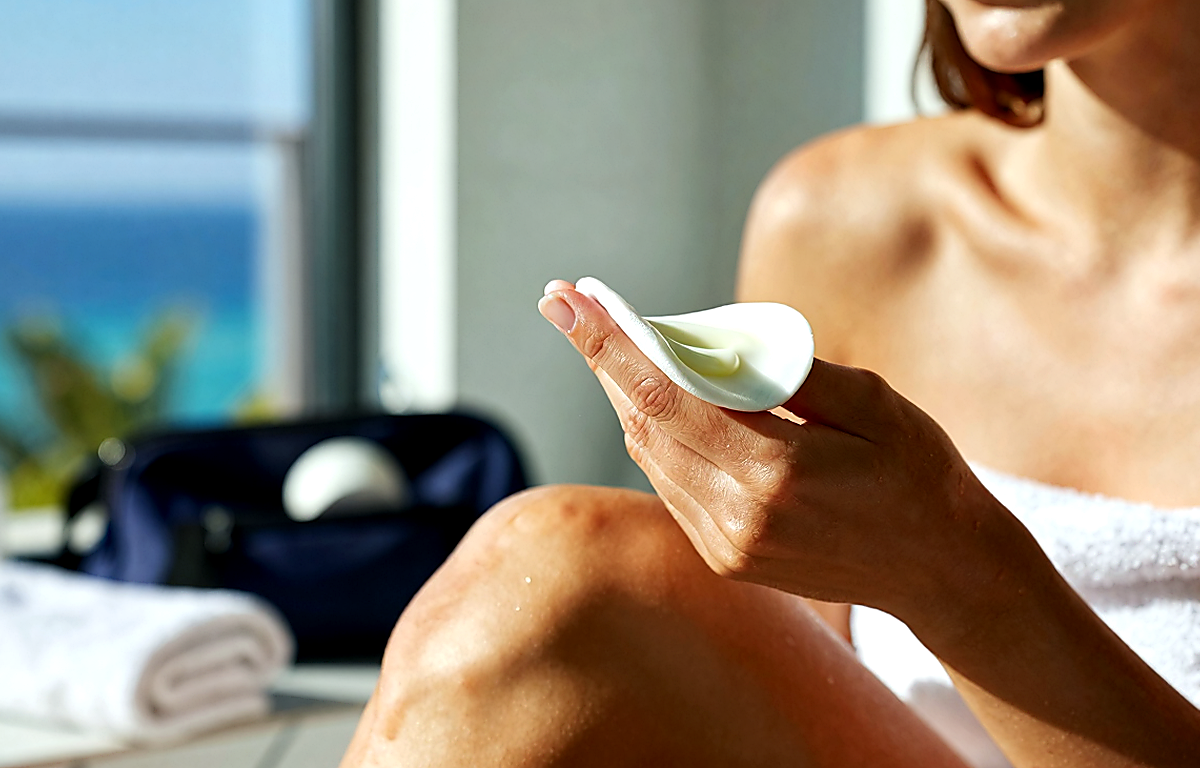
If your skin feels “sealed,” unable to breathe, and seems to pick up your clothes after applying body oil, the problem is not always the brand itself, and it does not necessarily mean the product “isn’t right for you.” Most often, that heavy-film feeling comes from a combination of three factors: a formula that is too occlusive, too much product, and application at the wrong moment. Even a good oil can feel heavy if you spread it over dry skin in a thick layer or try to use it as a complete replacement for the rest of your care when your skin is dehydrated and flaky.
If what bothers you is specifically a dense, sticky film that lingers after using a La Roche-Posay body oil or a similar product, start by checking practical details rather than advertising claims or promises on the packaging: does the formula contain a lot of mineral oils and waxes, are you applying it to slightly damp skin, how much are you using at one time, and is the oil clashing with a body cream or body SPF you already applied? In most cases, comfort can be improved significantly without drastic measures: adjust the amount, the application technique, the season, and how often you use it.
Another important point: not every “film” feels the same. For some people, it is a normal protective veil that reduces moisture loss and helps dry skin. For others, it is a sticky, greenhouse-like, suffocating layer they want to wash off immediately. The goal is not to eliminate oils from your routine entirely, but to understand which texture and which way of using it actually suit you. This is especially relevant if the skin on your body tends to feel dry after showering, tight in winter, irritated after shaving, or simply does not tolerate rich products well in hot weather.
Below is a detailed guide to help you assess a body oil in practice if, in the case of La Roche-Posay, the feeling of a heavy film is bothering you—and how to tell the difference between normal skin protection and obvious overload.
Why the feeling of a heavy film appears in the first place
Body oil works differently from a lightweight lotion or gel-cream. Its main job is to reduce moisture evaporation and soften the skin’s surface, not just absorb quickly. So a slight “slip” after application is not, by itself, a sign of a bad product. But if the sensation becomes heavy, there are usually several reasons.
- The formula is too occlusive for your comfort level. The more ingredients a product has that create a pronounced protective layer, the greater the chance your skin will perceive it as a film.
- You are using too much product. A common mistake is applying oil the way you would apply cream—generously and all over at once. Oil usually needs a much smaller amount.
- Your skin was too dry when you applied it. On completely dry skin, oil may not soften as well and can instead emphasize tightness while sitting more visibly on top.
- You are layering products. If you already applied a rich cream, balm, or body sunscreen before the oil, it is easy to end up with a feeling of overload.
- The weather is not helping. In heat and humidity, even a good nourishing texture tends to feel heavier than it does in autumn or winter.
That is why the exact same product can feel perfect in January and unbearable in July. In body care, how something feels on the skin is often more important than the bold wording on the label.
What to check in the formula: which ingredients more often create that “sealed-in” feeling
When a heavy film is the issue, it helps to look not at the word “oil” itself but at the overall formula profile. Put simply, a dry oil and a nourishing oil-balm can leave completely different finishes. If a La Roche-Posay product—or one from any other brand—feels too heavy, pay attention to a few groups of ingredients.
- Mineral oils and their derivatives. They are good at reducing moisture loss and often work well for dry, sensitive skin, but in richer formulas they can feel more “airtight.”
- Waxes and rich emollients. These make the texture feel protective, enveloping, and more persistent on the skin’s surface.
- A high percentage of butters. Shea butter and similar ingredients increase nourishment, but can also intensify that coated feeling, especially in summer.
- Silicones. They are not always the enemy of comfort: sometimes silicones create a smoother, drier slip. But combined with a rich base, they can feel like a “film-like” finish.
- Fragrance additives. They do not create a film directly, but they can make the texture feel heavier subjectively if the scent seems intrusive.
Important: none of these ingredients automatically makes a product “bad.” For very dry skin, a compromised skin barrier, or the cold season, a more occlusive formula may be exactly what helps. The only question is whether it matches what you are looking for. If you want softness without stickiness rather than protection at any cost, a body milk, a lightweight cream, or a dry oil may suit you better.
If you generally do not tolerate heavy textures well, it can help to compare your experience with lighter body-care formats. For example, in summer many people feel more comfortable with not an oil but a light body cream without stickiness, especially if the feeling that your skin “collects” fabric and dust annoys you.
How to tell a normal protective veil from a real problem
Not every film is a mistake. After a good body oil, the skin may look smoother, shinier, and more slippery for a while. That is expected. The real question is how intense it is and what happens next.
A normal protective veil usually looks like this:
- it is noticeable for the first 5 to 20 minutes, then decreases significantly;
- the skin feels softer, not more suffocated;
- clothes do not stick to it aggressively;
- you do not feel an urgent need to wash the product off;
- the next day, your skin does not feel even drier than before.
And here are signs that the product—or the way you are using it—does not suit you:
- the film lasts for hours and does not become thinner;
- the skin feels overheated under the layer;
- there is stickiness that makes it hard to get dressed;
- the product pills when you try to apply something else on top;
- after several uses, irritation, itching, or a burning sensation appears.
There is also a less obvious point. Sometimes a dense film masks dehydration rather than solving it. On the outside, the skin looks shiny and slippery, but underneath there is still discomfort, tightness, and roughness. In that case, oil alone may not be enough: first the skin needs a hydrating layer, and only then a gentle seal to help hold moisture in.
Application mistakes that can make even a good oil feel heavy
Very often, the issue is not the formula but the technique. With body oil, the way you apply it is almost as important as the ingredient list.
- Applying it to completely dry skin. It is best to spread oil right after a shower on skin that is slightly damp but not wet. That way, you need less product and the finish feels lighter.
- Using too much. You do not need to apply body oil “generously” to your arms, legs, and torso. Start with a minimal amount and add more only where needed.
- Layering it over a rich cream. The combination of “cream plus oil” works only if both layers are very moderate and your skin is genuinely very dry. Otherwise, heaviness is almost guaranteed.
- Applying it before bed in a hot room. Even a comfortable oil feels more noticeable when your skin is already warm.
- Using it all over the body without zoning. Shins, elbows, and knees often need more nourishment than shoulders, the décolleté, or the back.
A useful trick is not to spread oil over a large area right away, but to warm 1 or 2 drops in your hands first and then apply it only to the places that are actually dry. This approach almost always reduces the feeling of a film.
If your body skin is generally normal and dryness is only localized, you do not have to turn body oil into an everyday all-purpose product. It is often much more practical to use it as a targeted treatment: on dry shins after shaving, on elbows, or on areas that suffer from hard water or air conditioning.
When it is not only about the oil: your skin condition matters too
Sometimes the feeling of a film is connected to the fact that your skin is already irritated, dehydrated, or has a weakened barrier. On that kind of surface, any richer product feels more noticeable. The paradox is that an oil may soften the skin somewhat while still feeling irritating subjectively—simply because the skin reacts more strongly to friction, scent, or occlusion.
Pay attention to accompanying signs:
- flaking that does not improve with a regular cream;
- tightness immediately after a shower;
- reactions to hot water and harsh cleansers;
- discomfort after shaving, hair removal, or intense sun exposure;
- sensitivity to fragranced cosmetics.
In these cases, it may be better to simplify your routine for a while: gentle cleansing, a basic cream or balm without overload, and oil only on the driest areas—not every day. If what matters to you is not just softness but a logical basic care system, it is also worth looking at how your overall skincare routine is built: many problems do not start with one unsuccessful product, but with a routine that has become overloaded.
If using the oil causes persistent burning, soreness, noticeable swelling, weeping, a pronounced rash, or cracks, this is no longer just a texture issue. In that situation, it is best to stop using the product and consult a dermatologist. During pregnancy, with known skin conditions, or when using active products with retinoids, it is especially important to pay close attention to skin reactions and discuss questionable products with a doctor.
How to use body oil to reduce a heavy film
If you generally like the smoothing effect but dislike the heaviness, try adjusting the way you use the product before replacing it. Very often, that is enough.
- Apply it to damp skin after a shower. Do not wait until your body is completely dry.
- Cut the amount in half. With body oil, this almost always works better than generous application.
- Divide the body into zones. Let the driest areas get the oil, and use a lighter cream on the rest.
- Do not use it every day. For example, 2 to 4 times a week or only when needed.
- Leave time before getting dressed. Even 10 minutes after application can noticeably change how it feels.
- Do not combine it with aggressive cleansing. After a very hot shower and harsh gels, the skin often perceives any follow-up care more intensely.
Another useful trick is to mix one drop of oil with a portion of lightweight cream right in your palm. This makes the texture thinner, helps it spread more evenly, and reduces the feeling of a separate layer sitting on top. But this method does not work for everyone: if the formula is already prone to pilling, mixing may have the opposite effect. It is better to test it first on a small area.
Who rich oils suit—and who may be better off with an alternative
To be fair, a rich texture is not always a drawback. There are skin types and situations where it delivers the best result.
Richer body oils often work well for:
- very dry body skin;
- the cold season and dry indoor air;
- after showering, when there is pronounced tightness;
- elbows, shins, knees, and other rough areas;
- people who like a protected feeling on the skin.
Lighter alternatives are usually more comfortable:
- in heat and humidity;
- if you do not tolerate stickiness and slow absorption;
- if layered body care tends to feel overwhelming on your skin;
- if you need to get dressed quickly after a shower;
- if you want softness without obvious shine.
If you recognize yourself more in the second group, you do not necessarily need to give up body oil as a category entirely. Just look for lighter textures, “dry oil” formats, body milk with oils, emulsions, and lotions. Sometimes moving from the category of “nourishing oil” to “light cream with emollients” solves the problem without sacrificing comfort.
What to look for if you are choosing a new product after a disappointing experience
Having a bad experience with one product—even from a popular brand like La Roche-Posay—does not mean all body oils will feel the same. The next time you choose one, focus less on bold promises and more on a few practical criteria.
- Texture finish. Look for descriptions such as “dry oil,” “lightweight,” or “fast-absorbing,” but judge them in practice, not only by marketing language.
- The formula as a whole. The more rich occlusive ingredients appear near the top of the list, the greater the chance of a pronounced film.
- Fragrance level. If you are sensitive to strong scents, it is better to choose more neutral formulas.
- Seasonality. Something that works beautifully in winter does not have to be your best option in summer.
- Application format. Sometimes a balm or cream with an oil component is more convenient than a pure oil.
If possible, do not start with a heavy application over your entire body. Test the product on one area for several days first. That makes it easier to understand whether it irritates your skin, how long the finish lasts, and whether it suits both your skin and your daily routine.
When you should be cautious and see a doctor
Ordinary cosmetic richness and an unpleasant skin reaction are not the same thing. An oil may simply feel too heavy, or it may be triggering a condition that is not worth tolerating.
Stop using it and consult a doctor if:
- persistent burning or pain appears;
- there is pronounced redness and swelling;
- there is weeping, cracking, or severe itching;
- the condition does not improve after stopping the product;
- you have a skin condition, are pregnant, or have other circumstances in which active skincare needs to be chosen with extra caution.
This is especially important if you are also using exfoliating products, acids, retinoids, or have recently experienced irritation after sun exposure. In these situations, the skin does not always need a thicker layer; sometimes it needs a simpler, more predictable, and gentler routine.
Conclusion
If La Roche-Posay body oil leaves a heavy film, first check not whether “the brand suits you,” but more specific factors: how rich the formula is, how much you use, how damp your skin is at the moment of application, the season, and how the oil interacts with your other products. Very often, the solution is not giving up body oil as a category, but using a smaller amount, applying it to damp skin, and keeping it only for the areas that are genuinely dry.
And if even after adjusting the way you use it your skin still feels sticky, overloaded, or irritated, that is a good sign to switch to a lighter body-care format. Comfortable body care should not feel like a dense layer you have to endure: the best product is the one that genuinely leaves your skin softer and calmer, not simply more noticeable on its surface.