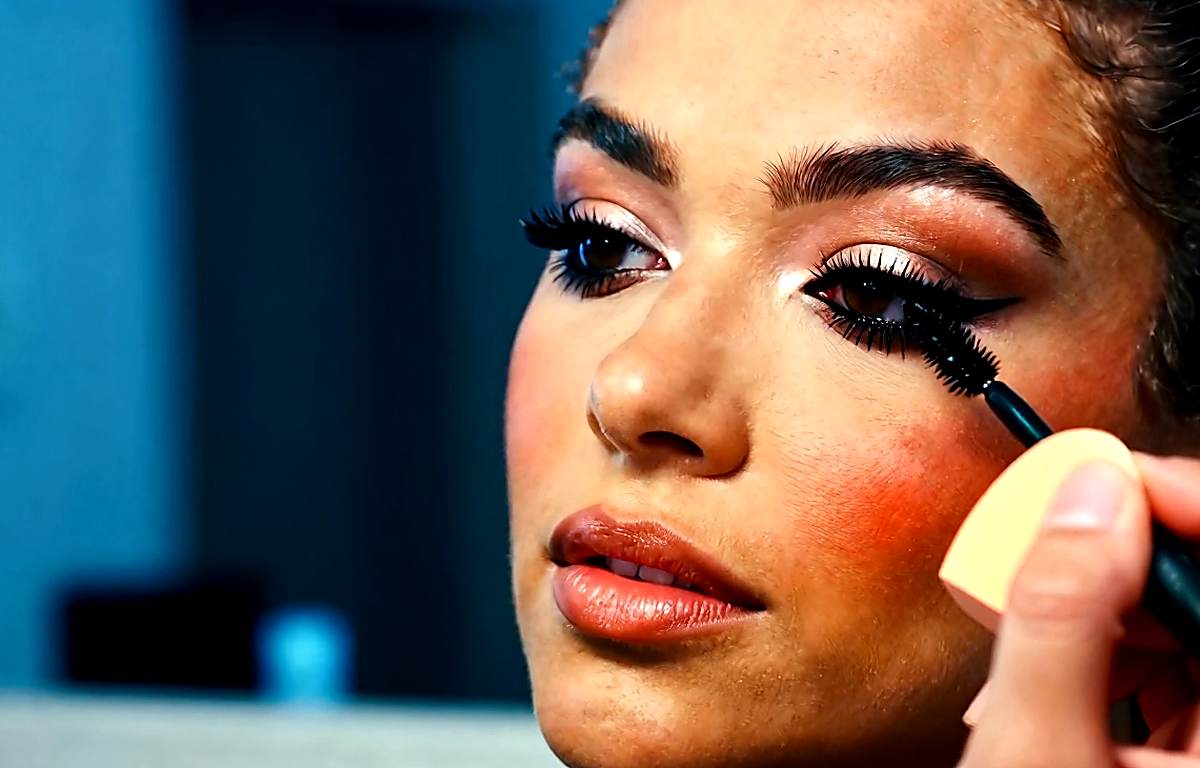
If your Shiseido powder, or a similar powder format, sits on the face in a dense, visible layer, the issue is usually not one product alone but a combination of factors: a base that is too rich, the wrong tool, too much product, and trying to add more powder to areas where the makeup has already set. The most useful check is not to immediately look for a “different powder,” but to review the entire application routine: how much skincare you applied, whether your cream had time to absorb, whether there is any tackiness from SPF, exactly what you are using to apply the powder, and in what order you are layering the rest of your textures.
Shiseido has different powder formats, and a heavy-looking layer can appear even with a quality product if the skin is dehydrated, the foundation is too gripping, and the brush is too densely packed. The good news is that this is usually easy to fix without radically changing your makeup bag. Below is a clear checklist to help you quickly understand why the powder looks heavier than you want and how to bring back a thinner, smoother, more polished finish.
Why powder starts to look heavy in the first place
A heavy layer is not always about “too much pigment.” Sometimes the visual heaviness comes from how the powder particles adhere to the skin’s surface. If the base is too damp or, on the contrary, too dry, the powder does not spread like a veil but clings in patches and gathers in more noticeable areas. From a distance, this reads as overloaded makeup, even if there is not actually that much product on the skin.
There are several typical reasons:
- there is residual tackiness on the skin after skincare or SPF;
- the foundation has not had time to settle and is still moving;
- the powder is being applied with a sponge using too much pressure where soft blending is needed;
- there are too many layers: primer, full-coverage foundation, concealer, cream contour, and then powder;
- the skin is dehydrated, so the powder emphasizes texture, flaking, and pores;
- the wrong type of powder was chosen for the task: for example, a mattifying, setting formula is being used as a product for active layering all over the face.
If you notice that your face already looks “powdery” just a few minutes after application, the cause is most likely either the amount of product or a clash between the textures underneath. If everything looked fine at first but the makeup became heavy after an hour, the reason is often skin oil mixing with the powder and making the finish more visible in the T-zone, around the sides of the nose, and on the chin.
The first thing to check: skin prep before makeup
Even a good powder rarely looks thin and refined on skin that has not been prepared for makeup. If a heavy layer is bothering you, start not with the compact but with your skincare. A very common mistake is applying a rich cream, then SPF, and then moving almost immediately to foundation and powder. As a result, the surface stays slippery or tacky, and a dry product goes on unevenly.
What to check step by step:
- Whether your daytime cream is too heavy for this time of year.
- Whether you give your skincare and SPF at least a few minutes to settle.
- Whether there is noticeable tackiness on the skin before makeup.
- Whether there is localized flaking on the nose, cheeks, or around the mouth.
- Whether you may have overdone the amount of glowy base or primer.
If your skin tends to be dehydrated, it is important not to try to “powder away” dryness. Powder does not hide flaking; it makes it more noticeable. In that situation, it is better to reduce the number of setting layers and first bring the skin surface into a more even condition. In an everyday routine, it helps to review your basic skincare, because sometimes the makeup problem starts there. You may also find this article helpful: how to build a basic skincare routine for your face.
Sun protection deserves a separate mention. Some SPFs leave a tacky, elastic finish that works well on its own but pairs less well with quick layering of dry textures. If you like to reapply sun protection or powder your face during the day, it is useful to keep that in mind too. If the question is specifically about applying powder over SPF, this breakdown may help: how to apply powder over SPF without patchiness.
Your tool changes the result more than it seems
The same powder can look almost invisible or very heavy depending on the brush, puff, or sponge. If the effect is what bothers you specifically with Shiseido, first try changing the tool without changing the product. This is one of the fastest ways to understand whether the problem is really the powder itself.
The general rule is simple: the denser and less flexible the tool, the more intense the layer will be. A puff or sponge presses particles more firmly into the base and gives stronger setting power. A fluffy brush, by contrast, distributes powder in a light haze. So if you do not want a heavy finish, it is better to start with a soft medium-size brush.
What to pay attention to:
- A densely packed round brush often picks up too much product in one touch.
- A flat puff works well for targeted setting, but it can overload the entire face.
- A damp sponge combined with powder almost always makes the finish more noticeable.
- If you have not washed your brush in a while, leftover foundation and oil can cause patchiness and heaviness.
A useful technique is to pick up a very small amount of powder first, then tap off the excess thoroughly, and only after that sweep lightly over the center of the face. There is no need to immediately “buff” the whole face in circles with pressure: that makes the powder grip the base more strongly and emphasizes texture. If you want a smoother effect in the pores around the nose, it is better to use a separate small tool locally rather than building up the layer across the entire skin surface.
How much product you really need and where to apply it
The most common reason for a heavy layer is applying powder where it is not needed. In real life, full-face heavy setting is rarely necessary. Much more often, it is enough to set the T-zone, the area around the nose, the center of the forehead, the chin, and, if needed, the under-eye area—but only if your concealer allows for it.
It helps to ask yourself three questions:
- Where does my makeup actually smudge or get shiny?
- Where does my skin, on the contrary, look dry and not need an extra layer?
- Do I need setting, or am I trying to use powder to change the texture of my foundation?
If your goal is to remove shine, you do not have to cover the whole face. If your goal is to extend wear, targeted application makes more sense. And if you want to blur pores, it is important to understand that excess powder often makes them stand out more. In that case, it is better to reduce the number of cream layers underneath and blend the foundation carefully before moving on to dry textures.
A convenient approach for a natural result looks like this:
- one thin layer of powder only in the center of the face;
- after a minute, assess the result in daylight;
- if needed, add only a very small amount more, and only to problem areas;
- do not reload the brush if the effect is already visible but you still feel tempted to add “just a little more.”
That last point is especially important. It is often that “just a little more” that turns neat makeup into something heavy. Powder almost always looks better when there is slightly too little of it than when there is slightly too much.
Compatibility with foundation, concealer, and SPF: the hidden cause of heaviness
Even if the powder itself is good, a heavy layer can appear because it clashes with other products. For example, a very flexible foundation with a dewy finish needs minimal setting and does not respond well to active layering with a mattifying powder. And a full-coverage concealer under the eyes may start to look dry and heavy if you set it with a formula designed more for an oily T-zone than for the delicate under-eye area.
Pay especially close attention to combinations like these:
- glowy primer + full-coverage foundation + matte setting powder;
- tacky SPF + water-based foundation + powder applied immediately after;
- self-setting concealer + an extra layer of powder under the eyes;
- cream blush or bronzer that has not had time to set + intensive powdering on top.
If you suspect a texture mismatch, it helps to do a simple test: one day, wear the same foundation without powder on dry areas and only with targeted setting in the center of the face, and another day, keep the same skincare but switch to a lighter powder application method. That makes it easier to understand which step is actually causing the overloaded feeling.
It also matters what job you expect the powder to do. It does not have to mattify, even out the surface, blur pores, set foundation, and add coverage all at once. When too much is expected from one product, the temptation to apply more than necessary becomes stronger. Visually, that almost always reads as a dense, dusty layer.
How to tell whether the problem is technique, not the powder itself
There are several signs that help distinguish an application mistake from a product that is objectively not right for you. If the powder goes on beautifully at first but quickly starts to look heavy, the issue most likely is not the powder alone. But if, even on well-prepped skin, in a thin layer, and with a fluffy brush, it immediately emphasizes texture and creates a mask-like effect, that specific texture may truly not suit you.
Signs that you should rethink your technique:
- the effect changes dramatically depending on whether you use a brush or a puff;
- some areas of the face look good while others look overloaded;
- the finish looks better half an hour later than it did immediately after application;
- the result improves noticeably when you reduce the amount of product.
Signs that it may be worth looking for another formula:
- the powder consistently emphasizes dryness even after good skin prep;
- every application method gives an overly matte, flat look;
- the shade oxidizes or visually makes the complexion look unnatural;
- the product clashes with most of your basic base products.
If we are talking about Shiseido, do not rely only on the brand’s reputation or on other people’s reviews. What looks beautiful on combination skin in a dry climate may behave very differently on dehydrated skin on a hot, humid day. It is much more useful to judge by how it actually sits on your skin in your everyday makeup routine.
What to do if the heavy layer has already happened
The good news is that unsuccessful powdering does not always need to be washed off and redone completely. Sometimes it is enough to carefully soften the finish and remove the excess. The main thing is not to add even more powder on top in an attempt to even out what has already become visible.
Here is what helps most often:
- a clean fluffy brush with no product on it: use it to gently lift excess from the surface;
- a slightly damp sponge: do not rub, just press it carefully onto overloaded areas;
- a setting or hydrating mist in a small amount, if your skin reacts well to it;
- localized correction: remove excess only from the nose, under-eye area, or chin instead of trying to rework the whole face.
If the problem happens regularly, it makes sense to change not only the technique but the logic of the makeup itself. For example, remove one cream layer, reduce the amount of concealer, give SPF more time to settle, or switch from all-over powdering to targeted setting. It is exactly these small adjustments that most often produce the most visible and natural-looking result.
Another useful reference point is lighting. What looks like a perfect matte finish in the bathroom can look like a dry, heavy layer by the window. So it is better to assess the result in daylight before leaving home. It is a simple habit that helps you catch product excess in time.
Specific situations: pores, dryness, mature makeup, and the under-eye area
The feeling of a heavy layer comes up especially often in four situations: visible pores, dehydration, age-related skin texture changes, and active powdering under the eyes. In all these scenarios, the key is not to intensify the dry product but to work more delicately.
If pores are the concern, avoid aggressively rubbing powder in with circular motions. That method tends to “seal” it into the texture and make pores more noticeable. It is better to gently press the product where needed and then softly diffuse the edges. If your skin is dry or sensitive, moderation is especially important, along with keeping repeated layers during the day to a minimum.
In mature makeup, powder also requires more precise dosing. It is often better to leave a natural glow on the outer areas of the face and set only the zones where the makeup truly moves. A fully matte face can look flatter and emphasize fine surface texture.
Under the eyes, the rule is even stricter: if your concealer has already set on its own, extra powder may not improve the result—it may make it worse. Check whether you need it at all. Sometimes a minimal amount only at the inner corner of the eye is enough, rather than across the whole area.
If, after applying makeup, you develop persistent burning, itching, soreness, swelling, pronounced redness, or flaking, this is no longer a matter of “the wrong brush.” In that case, it is better to stop using the irritating product and consult a doctor. During pregnancy, while actively treating the skin, when using retinoids, or with skin conditions, any new textures and fragrances should be introduced especially cautiously.
A practical checklist before blaming the powder
When it feels like the product itself must be the problem, it helps to run through a short checklist. It quickly narrows down the possible causes and helps you avoid spending money on an impulsive replacement.
- Was the skin smooth, without obvious tackiness or flaking?
- Did your skincare and SPF have time to absorb?
- Was the foundation itself not already too heavy?
- Was the powder applied with a fluffy clean brush rather than a dense puff?
- Did you work only on the areas that needed it, rather than automatically powdering the whole face?
- Was the amount of product minimal from the very beginning?
- Did you assess the makeup in daylight?
- Under the eyes, is powder truly necessary rather than being used “just in case”?
If the answer is no to even two or three of these questions, there is probably already room for a lighter result without changing the powder. And only if you have gone through this checklist and the finish still consistently looks heavy does it make sense to look for a different format or texture.
Conclusion
If your Shiseido powder feels too heavy, first check not the brand but your skin prep, texture compatibility, tool, and amount of product. Most often, a natural result comes back when you give skincare time to absorb, apply the powder with a light brush, and use it only where it is truly needed. A heavy layer rarely calls for “more coverage”—it usually calls for less product and more precise technique. That is what makes makeup look neat, modern, and polished.