If your Vivienne Sabo foundation is pilling, the issue is usually not one “bad” product but a combination of several factors: too heavy a skincare layer, an unsuitable SPF, an incompatible primer, rushing between steps, or trying to build coverage where the skin is already overloaded. In most cases, you can fix the situation without replacing your entire makeup bag: you just need to understand at which step the little clumps, flakes, or uneven streaks appear and remove that specific trigger.
The most useful check is simple: see whether the foundation pills immediately while you are blending it, after 5–10 minutes, or only after powder and concealer. If it happens right away, skincare, SPF, or primer are usually to blame. If it happens later, the cause may be too much product, active facial movement, dry areas, improper setting, or the habit of touching your face during the day. This is especially relevant with Vivienne Sabo if you want a smoother, more polished makeup look on a budget: the formula itself may work perfectly well, but your skin and prep have to suit it.
Why foundation pills in the first place
Pilling is not the same as emphasizing texture, dryness, or pores. When a product is truly pilling, you see tiny clumps, crumbs, uneven streaks, or bits of product lifting away from the skin. This usually happens for one of four reasons.
- Texture conflict. For example, a very silicone-heavy primer and a dense creamy SPF, with a foundation on top that uses a different emulsion system. The layers do not bind well and start sliding around.
- Too many layers. Even good products can pill if you apply serum, cream, SPF, primer, another primer in certain areas, and then a full-coverage foundation on top.
- Poorly prepared skin. Flaking, dehydration, leftover night skincare, or products that have not fully absorbed create an uneven base.
- Incorrect technique. If you keep buffing the face with a brush for too long, repeatedly go back over an area that has already started to set, or layer wet and dry products without pauses, the risk of pilling rises sharply.
That is why the question “Does this Vivienne Sabo foundation suit me?” almost always needs to be expanded to “Does it suit me within my current skincare and makeup routine?” The same foundation can look smooth on one person and pill on another, not because someone is using it “wrong,” but because the application conditions are different.
What to check in your skincare before makeup
The first step in troubleshooting is not the foundation itself but everything underneath it. Pilling often begins before makeup is even applied and only becomes visible once foundation goes on top.
Pay attention to how much skincare you use in the morning. If your skin is not very dry, it rarely needs a multilayer “sandwich” of toner, essence, serum, cream, and a glowy base before makeup. A simpler routine usually works better: gentle cleansing, one moisturizing layer, and SPF. If your skin is oily or combination, an overly rich cream under foundation can create a film-like surface that makes the product gather into streaks.
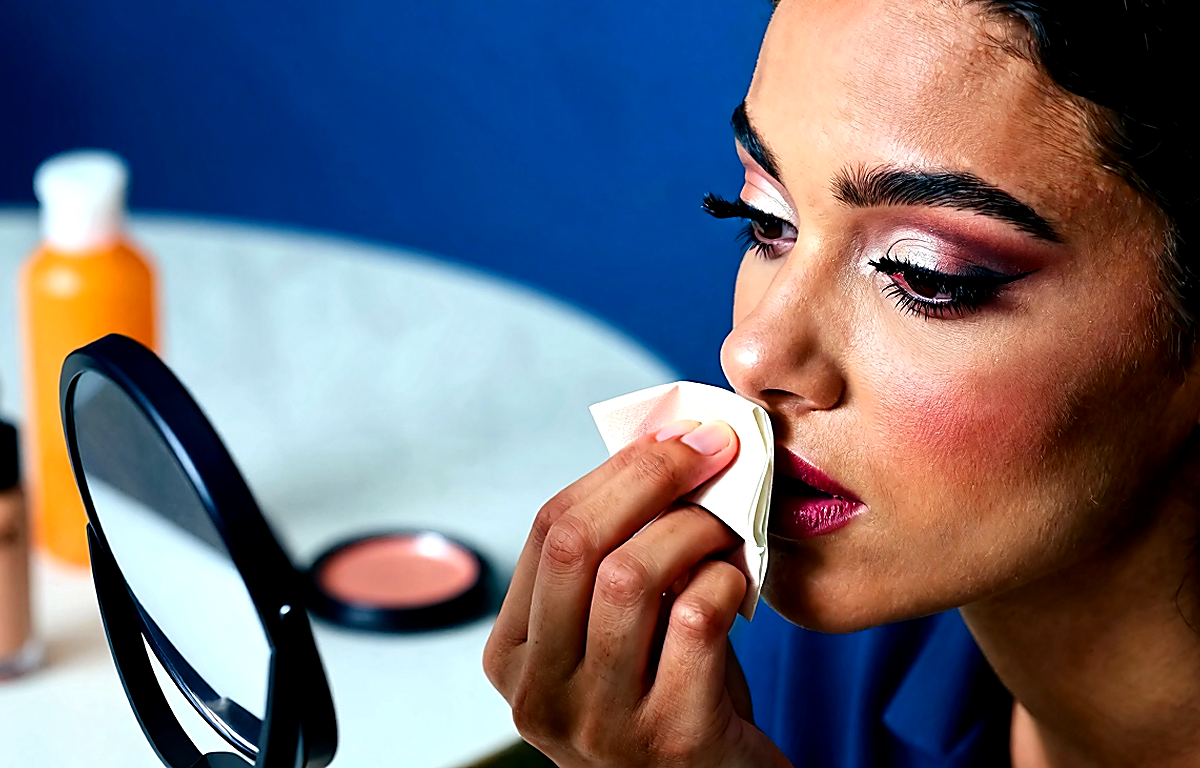
Also check how quickly you move to the next step. If your cream or SPF still feels slippery, foundation does not glide over the skin—it mixes with the layer underneath. As a result, the coverage becomes uneven and starts pilling later on. Sometimes it is enough to wait 5–10 minutes and blot away excess shine with a clean tissue instead of rubbing the face.
Another important point is gentle exfoliation, but without aggression. If the skin has visible flakes, foundation will cling to them regardless of the brand. At the same time, trying to “polish” the face with harsh scrubs right before makeup is also a bad idea: irritated skin reacts more easily with redness and may hold foundation worse. If you need a basic approach to everyday skincare, it is useful to compare your routine with the principles described here: how to build a basic skincare routine for your face.
If, during application, you experience not just discomfort but persistent burning, pain, marked redness, or swelling, this is no longer a matter of “the wrong technique.” In that situation, it is better to stop using the product and consult a dermatologist. During pregnancy, with heightened skin sensitivity, and when using retinoids, it is especially important to avoid unnecessary experiments with actives and irritating combinations.
Is your SPF compatible with Vivienne Sabo foundation?
One of the most common causes of pilling is sunscreen itself. Many people notice that without SPF the foundation behaves well, but with SPF it suddenly starts gathering around the sides of the nose, on the chin, and between the brows. That is not a reason to skip sun protection, but it is a reason to look more closely at the formula and the way you apply it.
The issue is most often caused by a few scenarios. The first is a very dense, rich, sticky SPF that does not really set on the skin on its own. The second is too many skincare layers before sunscreen. The third is trying to rub foundation over SPF that has set slightly but is still mobile underneath. The lower layer then starts to roll up together with the top one.
What helps:
- apply SPF in an even layer and let it settle;
- do not add an overly greasy cream underneath unless your skin really needs it;
- instead of actively rubbing in foundation, use pressing motions with a sponge or a flat brush;
- do not try to cover all redness at once with a thick layer;
- if needed, first even out the overall tone of the face and then add product only where it is truly necessary.
If you set your makeup with powder afterward, it is also useful to consider how the powder interacts with SPF. The wrong order, or too much powder over a base that is still damp, can also cause patchiness and pilling. There are practical tips on this in the article how to apply powder over SPF without patchiness.
Do you need a primer if foundation is pilling?
A common myth is that if foundation pills, you definitely need a primer. In practice, primer sometimes helps and sometimes makes things worse. It all depends on what you expect it to do and how compatible it is with the rest of your products.
If your skin is even, without very visible pores or heavy oil production, you may not need a primer at all. The fewer layers there are, the easier it is for foundation to grip the skin. But if you want to slightly smooth texture, blur the look of pores, or improve wear time in the T-zone, a primer can be useful—provided that it does not turn the face into an overly slippery surface.
There are a few signs that primer is more likely getting in the way:
- after primer, the skin stays too smooth and “glassy,” and the foundation starts sliding instead of spreading;
- the coverage gathers specifically where the primer was applied most heavily;
- the same foundation looks better without primer;
- pilling appears not immediately, but when you try to layer more product.
If you are testing Vivienne Sabo and cannot figure out the problem, try three separate scenarios on different days: skincare and SPF only; skincare, SPF, and foundation without primer; skincare, SPF, primer, and foundation. This simple at-home test often gives you an answer faster than endless attempts to “fix” makeup on top of a layer that is already failing.
Which application mistakes most often lead to pilling
Even a good formula can behave badly if you apply it too aggressively. For many Vivienne Sabo foundations, the principle that works best is “thin layers, gradually, without extra friction.”
The most common mistakes look like this:
- Using too much product right away. A thick layer does not necessarily give better coverage, but it does gather more easily in expression lines and around the nose.
- Buffing the face for too long with a brush. The longer you work over one area, the higher the chance of lifting the skincare or SPF underneath.
- Going back over coverage that has already started to set. Once foundation begins to grip, extra rubbing can trigger little rolls and clumps.
- Applying concealer or cream contour immediately, without a pause. This is especially risky if the previous layer has not stabilized yet.
- Trying to cover dry areas too quickly with a dense layer. This rarely looks better than building thin local coverage.
If your skin tends to be dehydrated, try spreading foundation with a damp, well-squeezed sponge. If your skin is combination and you want more coverage, start with a thin layer applied by brush from the center of the face outward, then add product only where needed with a sponge. The key is not to try to do everything at once in a single pass.
It is also worth checking your tools. A dirty brush, a sponge with old product left in it, or bristles that are too stiff can all contribute to foundation sitting unevenly. Sometimes, after simply washing your sponge, the coverage suddenly starts looking better—without changing the product itself.
Where the problem shows up most strongly and what it means
Where pilling appears often points to the cause. That is more useful than simply concluding, “This foundation does not suit me.”
Around the sides of the nose. Here the cause is often too much product, active facial movement, sebum, and the habit of applying extra foundation in an attempt to cover redness. It is better to apply the smallest possible amount in this area first and then add more only if needed.
On the chin. Contact with your hands, a scarf, or a collar often matters here, as does the habit of repeatedly layering foundation over small blemishes or uneven areas.
On the forehead and between the brows. This may point to a conflict with SPF, overly vigorous blending, or dehydration, especially if the skin feels tight after cleansing.
On the cheeks. If pilling follows dry patches, the issue is often flaking and uneven skin prep rather than the foundation itself.
Around the mouth. This area moves constantly, and any dense, slightly dry, or over-powdered formula loses its neat look faster here. Minimal product matters most in this zone.
Watching which exact area is affected helps you choose a more targeted fix. Sometimes you do not need a new foundation at all—you just need to stop applying the same amount of product all over the face.
How to tell whether the problem is the formula, not your skin prep
Sometimes the foundation really is not a good match. And that is normal: even popular products are not required to work equally well for everyone. To distinguish “not my formula” from prep mistakes, it helps to look at a few signs.
- The foundation pills in different scenarios: with SPF and without it, with primer and without primer.
- You have tried different application methods, but the coverage still breaks apart on the skin.
- The product emphasizes texture not just locally, but behaves unstably across the whole face.
- The problem appears quickly, even with a very thin layer.
- Similar formulas from other brands have also behaved poorly on your skin.
In that case, it helps to step back and identify which type of texture usually works best for you: more fluid and lightweight, more creamy, a natural satin finish, or something closer to matte. The brand name is secondary here. If you like the idea of an affordable everyday foundation but a specific Vivienne Sabo product behaves unstably, that does not mean you “do not know how to do makeup.” Most likely, the formula’s properties and your skin’s needs just are not a match.
Another marker is how the product behaves after a few hours. If everything looks even at first, but then the coverage starts breaking apart in areas with more sebum, a different T-zone prep method or a lighter setting step may suit you better. If pilling is visible within the first minute, the cause is more likely to be layer compatibility and application technique.
Step-by-step plan if you want to give the foundation a second chance
Before giving up on the foundation completely, it is worth doing a short but honest test. It takes a few days, but it helps you understand the problem without guessing.
- Day 1: apply minimal morning skincare, then SPF, wait, blot away excess shine with a tissue, and apply a very thin layer of foundation without primer.
- Day 2: repeat the same routine, but switch tools: if you used a brush on the first day, use a sponge.
- Day 3: test the foundation without primer and without powder to see whether the setting step is causing the pilling.
- Day 4: use primer only locally—for example, on the T-zone rather than the whole face.
- Day 5: cut the amount of product in problem areas in half and add coverage only where it is truly needed.
During this kind of test, it is important not to change everything at once. Otherwise, you will not understand what actually worked. It is better to note your observations: when the clumps appeared, in which area, and after which step. This is especially useful if you often buy popular budget-friendly products and want to learn how to quickly tell whether a product is worth keeping in your routine.
Season also matters. In summer, the skin usually produces more sebum, and heavy textures lose their neat look faster. In winter, the problem may be the opposite: dehydration, dry air, and flaking make foundation less flexible. So it is better to judge a product in connection with your skin’s current condition, not in the abstract.
What to do if pilling has already appeared during the day
Once makeup has started to pill, the urge to “cover up” the problem with another layer usually only makes it worse. A neater strategy is to first remove the excess and only then, if needed, lightly restore coverage.
Try this sequence:
- gently blot the problem area with a clean dry tissue or sponge, without rubbing;
- if there are visible little clumps, lift them away with patting motions rather than with your nails or friction;
- if necessary, add literally a drop of foundation or concealer only where needed;
- if your skin is dry, do not try to seal the area immediately with a large amount of powder;
- if your skin is oily, remove sebum first and only then set very lightly.
The less mechanical friction there is, the better the chance of preserving the rest of your makeup. If pilling keeps happening day after day during normal daily wear, that is a sign to revisit your skin prep or reconsider the formula itself.
Sometimes people blame the foundation alone, when the real culprit is the habit of constantly touching the face, adjusting makeup with the fingers, rubbing against a scarf, or pressing the face to a phone. In those cases, even a good product will not show its best side.
Conclusion: what to look at first
If your Vivienne Sabo foundation is pilling, first check not the brand itself but the combination of skincare, SPF, technique, and amount of product. Start by reducing unnecessary layers, letting the base absorb, applying foundation thinly, and not rubbing over coverage that has already started to set. Then test whether you need primer at all and whether sunscreen is the layer creating the conflict.
A good rule of thumb is this: if the product applies better with minimalist prep and a thin layer, the issue was an overloaded routine. If it pills in almost any condition, the formula may simply not be the right one for you—and that is also a useful result. In makeup, it is far more important to understand your own working combinations than to try to “make” every popular foundation work at any cost.