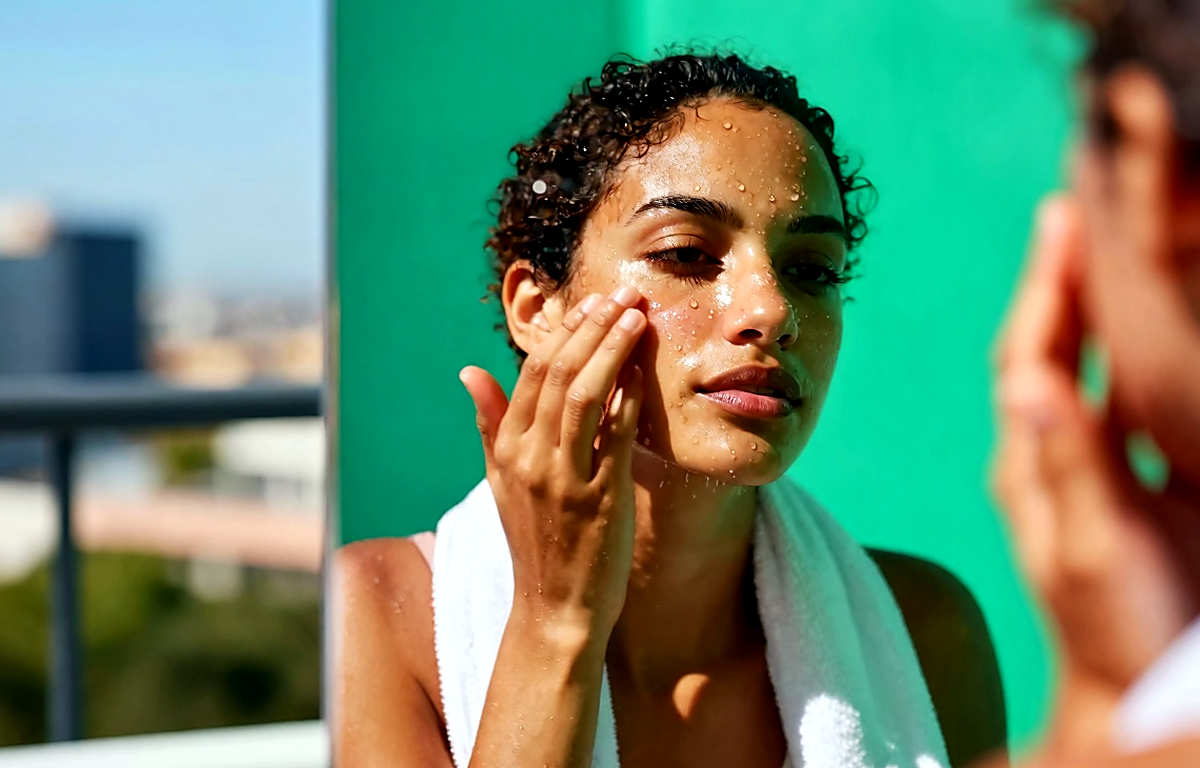
If pores bother you, a cream does not have to be “perfectly mattifying” or “fully non-comedogenic” to suit your skin. It is much more important to check a few practical things: how dense the texture is, whether it leaves a noticeable film, how it behaves when paired with SPF, and whether it triggers overheating or excess shine during the day. These are the details that most often make pores look more visible—even when the formula seems fairly calm at first glance.
If you are choosing a Eucerin cream or already using one and notice that your pores look larger, do not rush to conclude that the problem is only the brand or one specific ingredient. The appearance of pores is influenced by the entire skincare system: cleansing, the number of layers, the type of sun protection, the habit of touching your face often, overly active acids, or, on the contrary, dehydration. Below, we break down what exactly is worth checking so you can understand whether this kind of cream suits you and how to make your routine more comfortable for skin with visible pores.
Why pores may seem more noticeable specifically after cream
Pores do not literally “open” or “close,” but they can look larger because of a combination of sebum, skin texture, dehydration, and a layer of cosmetics on the skin’s surface. A cream mainly affects appearance: it can smooth the skin and make it look more even, or, on the contrary, emphasize texture.
Most often, pores become more noticeable for several reasons:
- Texture that is too heavy. A rich cream may feel comfortable on dry skin, but on combination or oily skin it can quickly start to feel heavy and increase shine in the T-zone.
- A film-forming finish. Some formulas create a pleasant feeling of protection, but in a layered routine that film can make texture look more visible.
- Too many layers. Serum, cream, SPF, primer—individually the products may be fine, but together they can create overload.
- Not enough hydration. Paradoxically, dehydrated skin often looks more uneven, and pores may appear more pronounced.
- Unsuitable cleansing. If SPF and makeup are not properly removed at night, over time the skin’s texture really can start to look rougher.
That is why it is better to judge a cream not by one promise on the packaging, but by how it behaves on your skin in the morning, during the day, and after 2–3 weeks of regular use.
What to check first: texture, finish, and skin feel
When pores are the concern, the first thing to look at in a cream is not bold claims but user experience. Even a well-formulated product may not suit you if it is simply too heavy for your skin type.
Pay attention to three basic parameters:
- Texture. Gel-cream, fluid, light emulsion, or a richer cream. For skin prone to visible pores, lighter formats often feel more comfortable, especially during the day.
- Finish. Natural, radiant, dewy, velvety. If your face already looks overloaded after 20–30 minutes, pores usually become more noticeable visually.
- Layering behavior. It matters whether the cream pills, clashes with SPF, leaves stickiness, or gathers in more active areas—around the nose, on the chin, or along the sides of the cheeks.
If we speak about a Eucerin cream as an editorial reference point, it makes more sense to look not at the brand’s recognition but at the specific type of formula. Brands with a pharmacy-style positioning often have both lighter and richer lines. For skin where pores are a concern, it is especially helpful to test a product in real life: at home, on transport, in the office, in the heat, under SPF, and with makeup. That is the fastest way to understand whether the cream emphasizes texture.
A convenient way to test it is to apply your usual amount of cream only to one half of the face for several days while keeping the rest of your routine unchanged. If the difference in shine, smoothness, and pore visibility is obvious, it is easier to draw a conclusion than after a one-time test on your hand.
Formula: which categories of ingredients matter more than individual “scary” ingredients
In conversations about pores, people often look for one culprit ingredient, but in reality a cream’s behavior is determined by the whole formula. For one skin type, rich emollients will be a спасение from dryness, while for another they will create a feeling of overload. That is why it is more useful to look not at individual names, but at groups of substances and the overall logic of the product.
What usually matters:
- Humectants. Glycerin, hyaluronic acid, urea, and similar components help reduce the feeling of tightness and visual roughness.
- Emollients. They soften the skin, but in excess within a formula they can create the feeling of a dense layer. Balance matters here, not simply their presence.
- Occlusive components. They are useful for restoring comfort, especially with dryness, but on skin that already gets noticeably shiny during the day they may feel heavy.
- Silicones. People often fear them, although they are sometimes exactly what gives a smoother and more even visual effect. The issue is not the name itself, but how successful the formula is as a whole.
- Fragrance and actives. If your skin reddens and becomes irritated easily, any extra discomfort can increase the feeling of unevenness and make you touch your face more often.
If pores are a concern alongside oiliness, do not look for a “completely oil-free” cream at any cost. Instead, look for a formula that does not make the skin feel stifled. Overly aggressive degreasing often ends with the opposite effect: the skin starts to look shinier, and the texture becomes more noticeable.
It is especially important to be cautious with combinations of several active products at once. If your routine already includes acids, retinoids, or intensive serums, even a good cream may seem “bad” simply because the skin has become reactive and dehydrated. If you have persistent burning, pain, increasing swelling, pronounced peeling, or if you are pregnant or using retinoids and are unsure about your routine, it is better to discuss it with a dermatologist.
How to tell that the issue is not the cream, but its combination with SPF and makeup
Very often the complaint sounds like this: “without makeup everything is fine, but by midday the pores seem to sink in.” The cream looks guilty, while the real conflict is happening between the cream, sun protection, and complexion textures. For skin with visible pores, this is critical: each additional layer can increase shine and emphasize texture.
Check a few things:
- How much product you apply. If you use a generous amount of cream during the day and then add a rich SPF on top, there may simply be too many layers.
- How much time you give each layer. It helps to give the cream at least a few minutes before applying SPF.
- What finish your sunscreen has. Sometimes it is actually the SPF that creates excess glow and makes pores look visually deeper.
- How heavy your foundation or powder is. Some complexion products settle into texture even if the skincare underneath is good.
If you wear makeup over sun protection, you may find it helpful to read about how to apply powder over SPF without patchiness. Sometimes it is the technique of the final layer that solves the problem of visible pores better than yet another cream replacement.
The practical test is simple: for a few days, use the same cream but change only the SPF or foundation. If the skin’s texture suddenly looks much better, the cause is not the cream itself but the combination of products.
Whether this kind of cream suits your skin type: dry, combination, oily
When people talk about pores, they often automatically assume oily skin. But visible pores can occur on combination skin and even on dehydrated skin, especially if texture is genetically pronounced. That is why it is important to assess not only your pores, but your skin’s overall profile.
For oily skin, lighter creams with a comfortable, non-sticky finish usually work best. During the day, fast absorption and the absence of a heavy film are especially important. But that does not mean hydration should be excluded completely: dehydrated oily skin often becomes even shinier.
For combination skin, it is useful to track whether the cream behaves the same on all areas of the face. Often the forehead and nose quickly become shiny while the cheeks feel fine. In that case, you can reduce the amount of cream in the T-zone rather than abandoning the product entirely.
For dry and dehydrated skin, a richer cream may be justified even if pores are visible. Here the task is not to “dry out” the texture, but to make it look softer and calmer. Sometimes it is exactly adequate hydration that reduces emphasis on pores.
If you are not sure whether your basic routine is balanced, it can help to check simple principles from the article on how to build a basic skincare routine for the face. Questions about pores often become less pressing when the routine becomes simpler and more stable.
Signs that the cream most likely does not suit you
You do not always have to wait a month to understand that a product is not working for you. There are several signals worth noticing early.
- Shortly after application, the face looks excessively shiny, even though that was not the case before.
- The cream noticeably pills or clashes with other basic products.
- Pores look visually darker and more textured by the middle of the day.
- There is a feeling of stuffiness, stickiness, and a desire to wash your face as soon as possible.
- Areas around the nose and on the chin get dirty faster from cosmetics and sebum.
- Irritation, tingling, or increased redness appears.
It is important to distinguish a visual effect from a real skin reaction. If pores simply look more noticeable under certain lighting, that does not yet mean the cream is causing breakouts. But if you see a steady decline in comfort and texture over 2–3 weeks, the product is worth reconsidering.
At the same time, there is no need to wait for perfection. A good cream for skin with visible pores is not one that “erases” texture, but one that does not make it look worse, does not interfere with SPF and makeup, and supports skin comfort without overload.
How to test a cream properly so you do not get confused by the results
One of the most common mistakes is changing everything at once: cleanser, serum, cream, SPF, and foundation. After that, it becomes impossible to understand what exactly affected the pores and the skin’s overall condition.
It is better to use a calmer testing approach:
- Keep the rest of your routine stable. Change only the cream.
- Give the product 10–14 days. That is enough to notice recurring patterns in shine, comfort, and texture.
- Look at your skin under the same conditions. For example, in the morning by the window and in the evening after a normal workday.
- Note not only breakouts, but also how the texture behaves. When does shine appear, how does SPF sit, and do you already want to blot your face after an hour?
- Test by zones if needed. This is especially convenient for combination skin.
It is also useful to consider the season. A cream that feels comfortable and looks even in winter may emphasize pores in summer because of heat and more active sebum production. In that sense, it can be more appropriate to have not one “perfect” cream for the whole year, but several care scenarios.
If you notice that dense textures work better not on the face but on the body, that is normal. Summer principles for choosing lighter formulas are well illustrated in body care too—for example, in the article about a light body cream for summer without stickiness. The logic is similar: the comfort of the finish often matters more than loud promises.
What to do if pores bother you but you do not want to change the cream
Sometimes you like the cream overall: it does not irritate, supports the skin in winter, and works well at night. But during the day it seems to visually emphasize pores. In that case, you do not necessarily have to give it up right away—sometimes it is enough to adjust how you use it.
What you can try:
- Use less. Often the issue is not the formula, but applying it too generously.
- Use the cream only in the evening. And in the morning choose a lighter emulsion or even stick to serum and SPF if your skin feels comfortable.
- Apply less product to the T-zone. For combination skin, this is one of the most effective techniques.
- Simplify the neighboring layers. Remove an extra serum or a heavier primer.
- Reconsider evening cleansing. Gentle but thorough removal of SPF and makeup often noticeably improves the look of pores.
If at the same time there is a constant feeling of congestion, painful inflammation, pronounced peeling, or persistent irritation, it is better not to experiment endlessly and to see a dermatologist. This is especially important if your skin has become sensitive because of acids, retinoids, or active acne treatment.
What to use as a guide when choosing your next cream
If after testing you understand that a specific Eucerin cream or any other product makes pores look more visible, it is useful to note not only the fact itself, but the reason. Not “the brand did not suit me,” but, for example, “during the day dense cream textures and a radiant finish feel heavy on me” or “light emulsions work better under my SPF.”
For your next choice, use criteria like these:
- Light or medium texture for daytime use.
- A comfortable finish without pronounced stickiness.
- Good compatibility with your sunscreen.
- No feeling of overheating on the skin.
- Predictable behavior throughout the day, not just a pretty effect immediately after application.
It is not worth choosing a cream solely because it says “for pore tightening.” Pores are not a parameter that truly changes because of a single promise on a label. It is much more useful to look for a product that supports the skin barrier, does not overload the skin, and helps the whole routine work calmly and consistently.
That is why, when choosing a cream for skin with visible pores, what matters more is not the product’s catchy name, but an honest test: how it feels, how it looks after a few hours, whether it works well with the rest of your routine, and whether it makes the skin shinier than usual. It is a more down-to-earth approach, but also a more reliable way to find your match.
The conclusion is simple: if pores bother you, with a Eucerin cream or any other one, it is worth checking the texture, finish, the number of layers in your routine, and compatibility with SPF. Visually, pores usually look worse not because of one “bad” ingredient, but because of overload, an unsuitable hydration balance, and an unsuccessful product combination. The calmer and clearer your routine is, the better the chance that your skin will look smoother and feel more comfortable every day.