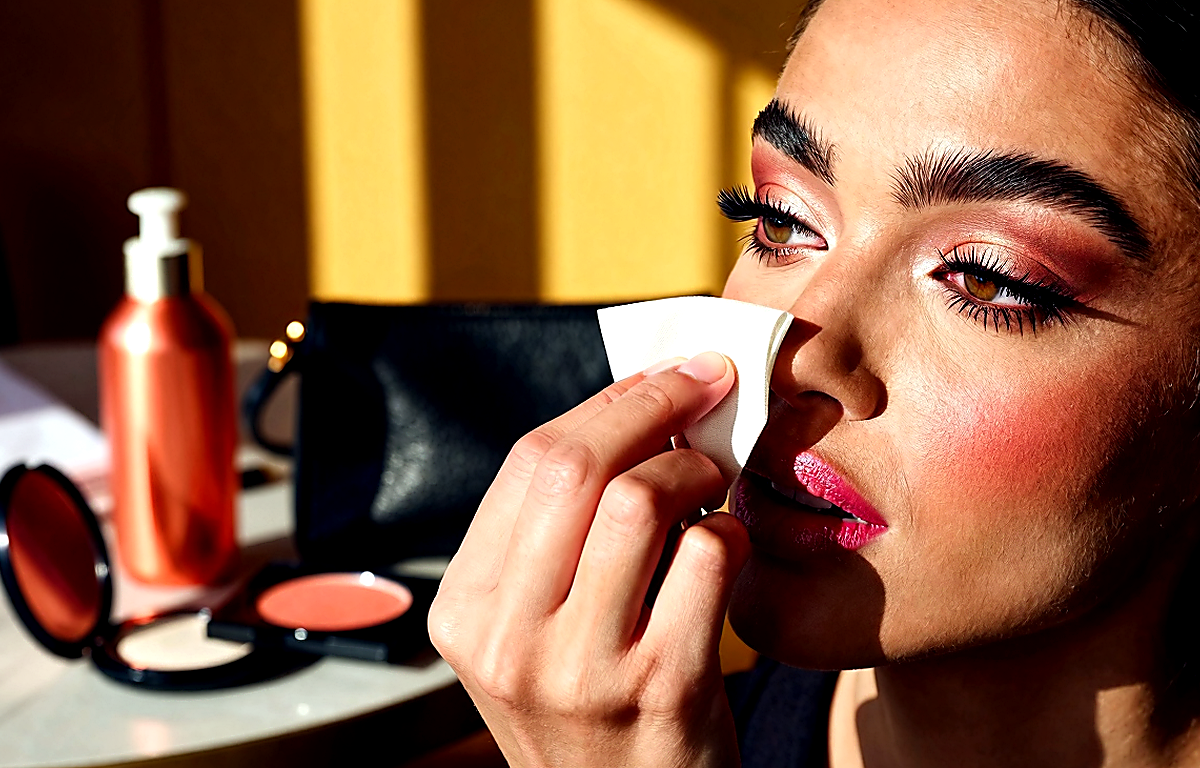
If your skin looks drier after applying Vivienne Sabo powder than it does without makeup, the powder itself is not always the main reason. Most often, dryness is intensified by a combination of factors: dehydrated skin, unsuitable pre-makeup skincare, an overly matte finish, heavy layering, and the wrong application technique. The key takeaway is simple: before giving up on the product, it is worth checking not only the texture of the powder, but also how you prep your skin, what you apply it with, and which primers or complexion products you pair it with.
Powder has one particular trait: it instantly reveals everything that is already happening on the skin. If there is flaking, a compromised barrier, cream that has not absorbed, or SPF that pills, powder will not hide it—it will emphasize it. That is why, when dryness is the concern, it makes more sense to look at makeup as a system. In that equation, the brand is only one part. Vivienne Sabo may work well for one skin type and feel uncomfortable for another, especially if you expect powder to set makeup, mattify, and stay completely invisible on a dehydrated surface all at once.
Why powder emphasizes dryness in the first place
By nature, powder works as a finishing layer: it sets makeup, reduces shine, evens out the look of the skin, and helps makeup last longer. But because of that very function, dry areas become more noticeable. The particles settle on uneven texture, cling to flakes, and the mattifying components visually remove the natural light that helps skin look smoother.
This is especially noticeable if:
- your skin is dehydrated, even if it is technically combination or oily;
- there is micro-flaking on the face after actives, retinoids, acids, or wind exposure;
- your morning skincare is too light and does not feel comfortable enough;
- your cream or SPF has not had time to settle before makeup;
- the powder is applied heavily, with rubbing motions, or with a stiff brush;
- you are already wearing a matte foundation underneath that makes the overall look drier.
It is also important to understand that the feeling of a “dry powder” does not always mean the formula is aggressive. Sometimes the issue is purely visual: the skin does not feel tight, but the makeup looks flat, chalky, and emphasizes texture. In that case, what needs adjusting is the technique and the prep, not necessarily your entire product lineup.
What to check in the Vivienne Sabo powder itself
If dryness concerns you, first assess powder as a product category, and only then the specific brand. Like many mass-market brands, Vivienne Sabo offers different formats: pressed powders, loose powders, more matte options, silkier options, and formulas with different levels of coverage. For dry or dehydrated skin, the easier-to-wear choices are usually not the ones promising an “ultra-matte,” “velvety-powdery,” or “maximum long-wear” finish, but thinner, softer-feeling textures.
What to look at when checking:
- Finish. If the powder already gives a dry velvety effect in a swatch, that effect will be stronger on skin lacking moisture.
- Application density. Pressed powders are often easier to overapply, especially if you use the sponge included in the compact.
- Level of pigmentation. The more coverage a powder gives, the more visible the powder layer will be on dry areas.
- How it wears after one or two hours. Some powders look beautiful at first, then begin to settle into pores and emphasize texture.
- How it feels on the face. If you feel tightness immediately after application, that is already a sign that the combination is uncomfortable.
Another useful trick is to test the powder not all over the face, but only on the T-zone or around the nose. Quite often, it turns out that dryness is not a concern everywhere, which means you do not have to eliminate the product completely. Sometimes it is enough to change the pattern: skip powder on the cheeks and areas prone to dehydration, and use it only where it is genuinely needed.
Skin prep: half the success happens before makeup
If powder emphasizes dryness, the first thing to reconsider is your morning skin prep. For this kind of makeup, you do not just need any cream—you need a comfortable, even, well-settled base without sticky layers and without conflicts between products. Even a good powder will look worse if it sits on top of skincare that has not absorbed or, on the contrary, if the skin simply does not have enough softness.
A workable routine usually looks like this:
- Gentle cleansing without that squeaky-clean feeling.
- A hydrating or soothing layer, if it suits your skin.
- A cream that feels comfortable but does not leave a heavy film.
- SPF, if you need it during the day, with enough time to settle.
- Foundation or concealer, if needed.
- Powder only at the end, and only where it is actually solving a problem.
If it feels like every makeup product is drying, it can help to temporarily remove the extras: active serums in the morning, overly alcohol-heavy textures, aggressive cleansers, and frequent scrubs. In that state, the skin barrier becomes more sensitive, and makeup products start to look like the cause, when in reality they are only making the issue more visible. In that case, it may be helpful to review your basic skincare routine; for example, the article how to build a basic facial skincare routine is a convenient reference for a simple, clear routine without overload.
SPF is a separate point. Some sunscreens form a film that works very well on its own, but conflicts with powder applied on top. As a result, the powder goes on patchy, clings to dry areas, or starts to pill together with the layers underneath. If you are trying to set your sun protection with powder, keep in mind that technique matters especially here. You may also find this article useful: how to apply powder over SPF without patches.
Which application technique reduces the dry effect
Even the same powder can look completely different depending on the tool. For dry skin, the most trouble usually comes from dense rubbing with a sponge or a stiff brush. That mechanically lifts flakes while also depositing too much product. A medium-size fluffy brush works much more gently: instead of pressing powder into the skin, it lightly veils the face.
Helpful application rules:
- use the smallest possible amount of product and tap the excess off the brush;
- apply with light pressing or gliding motions rather than circular rubbing;
- start with the areas where shine control is actually needed, not with the driest areas;
- leave the cheeks and outer areas of the face almost powder-free if there is no clear need;
- do not layer powder multiple times during the day over dry areas;
- if you want a more polished look, blot the skin with a tissue first and then lightly refresh the coverage.
The “micro-setting” approach also works well: powder only under the eyes, around the sides of the nose, in the center of the forehead, and on the chin. For everyday makeup, that is often enough. The skin keeps more of its natural glow and does not look overdried. If you want a smoother finish for photos or a long day, it is usually better not to add more powder, but to choose a more comfortable base or a less matte foundation.
Another common mistake is powdering the skin immediately after applying a cream product while it is still movable. In that case, the powder grabs in patches and visually creates a dry, uneven surface. Give the layers a few minutes, then apply the powder as lightly as possible.
What powder most often conflicts with
If it seems like Vivienne Sabo powder is what dries your skin out, it is worth checking whether the real issue is the combination with other products. The most noticeable conflicts usually come not from a single ingredient, but from incompatible textures across the whole makeup routine.
These combinations often make dryness more pronounced:
- Matte foundation + matte powder. The final finish becomes too flat and emphasizes texture.
- Sticky SPF + dense pressed powder. The powder grips unevenly and gathers in patches.
- Silicone primer + layered makeup. On dry areas, the product may sit in islands.
- Active skincare in the morning. After acids, retinoids, and some drying treatments, the skin often tolerates powder textures less well for a while.
- Frequent makeup touch-ups without prep. A new layer over an old one emphasizes dryness more than the first layer did.
You can do an honest test at home over a few days. One day, apply the powder sparingly to bare moisturized skin. Another day, wear it over your usual SPF. On a third day, wear it over foundation. That way, you will see at which stage the problem appears. Sometimes it turns out that the powder itself looks acceptable, and only one specific product underneath is what breaks the result.
If you also use powder around the eyes, dryness becomes noticeable there faster than anywhere else. That area usually needs a very small amount of product and an especially soft brush. Heavily setting concealer with powder rarely makes the look fresher, but almost always adds an older or more tired effect.
When it is better to choose another format or not use powder all over the face
Sometimes the most practical conclusion is not to force powder to work where you do not need it. If your skin is prone to dryness, feels normal most of the day, and only gets shiny in the center of the face, there is no need to cover your cheeks, temples, and jawline with a powder veil out of habit. Targeted application often looks more modern and more natural.
It may be worth considering a different format if:
- the powder consistently emphasizes flaking even after good skin prep;
- you feel tightness every time after applying it;
- your makeup quickly starts to look chalky and makes the face look older;
- you need too many hydrating layers just to get an acceptable result, and the routine becomes inconvenient;
- you have long stopped using the included sponge, but the product still applies heavily.
In that situation, you can look for a more finely milled texture, a less matte finish, or even switch to partial setting instead of powdering the whole face. For some skin types, airy formulas with a soft blurring effect work better than dense pressed powders. But even when you change the product, the basic logic stays the same: dryness is not just a makeup issue, but also a question of the overall condition of the skin.
It is also useful to keep seasonality in mind. In winter, when there is wind, indoor heating, and temperature changes, even a favorite powder can suddenly start emphasizing dryness. In summer, the same formula may feel perfectly comfortable. So it is not always worth rushing to the conclusion that “the product is bad”—the conditions in which you are using it may simply have changed.
How to tell when the problem is no longer the makeup, but the condition of your skin
There are situations where no application technique will fully solve the issue. If your skin is constantly flaky, red, burning, reacting to almost everything, or has suddenly become much drier than before, it is sensible to pause experiments with makeup and focus on your skin’s basic comfort. Here, powder is not the source of the problem, but an indicator that your barrier is under stress.
Pay attention to these signs:
- the dryness remains even without makeup;
- there is burning, soreness, or obvious irritation;
- the flaking is pronounced and lasts a long time;
- your skin reacts even to your usual skincare;
- the feeling of tightness appears immediately after cleansing and does not go away;
- the situation has worsened during active skincare, pregnancy, acne treatment, or retinoid use.
In such cases, it is better to pause aggressive experiments and, if needed, discuss your skin condition with a dermatologist. It is especially important to see a doctor if there is persistent burning, pain, swelling, signs of a skin condition, a flare in sensitivity, or if you are using retinoids and are not sure which textures are suitable right now. Makeup should not cause discomfort, and ongoing irritation should not be dismissed as “just fussy skin.”
By the way, if the overall dryness is noticeable not only on the face but also on the body, it can sometimes be part of a broader seasonal barrier and dehydration issue. In that case, it helps not only to adjust your makeup, but also to take a gentler approach to everyday care. As a point of reference, you can also look at related materials, for example how to choose a lightweight body cream for summer without stickiness: the logic of comfortable textures often overlaps with facial skincare as well.
Practical checklist: what to check if Vivienne Sabo powder is drying
So you do not have to guess what exactly went wrong, it helps to go through a short checklist. It can show whether you really need to replace the product or if it is enough to adjust your technique and prep.
- Is there already flaking or dehydration before makeup?
- Is your morning cleanse too aggressive?
- Does your cream provide real comfort, rather than just a formal skincare layer?
- Does your SPF have enough time to settle before foundation and powder?
- Is your foundation itself already too matte?
- What are you using to apply the powder: a soft brush or a dense sponge?
- Are you applying powder all over the face out of habit, even though only the T-zone gets shiny?
- Are you touching up makeup with a new layer over a dry surface without blotting first?
- Does your skin actually feel comfortable, or is the issue not only visual?
If, after this check, it becomes clear that dryness appears only in one specific setup, there is no need to change your whole makeup routine. Often, it is enough to switch to a lighter application, reduce the powdered area, and give your skin a more comfortable prep. And if this particular powder simply does not suit you, that is also a useful conclusion: not every texture is supposed to work for everyone, especially if you are prone to dryness.
Conclusion
If Vivienne Sabo powder emphasizes dryness, it is better not to begin with a categorical rejection of the brand, but by checking four things: the condition of your skin, your morning skincare, the way the powder interacts with SPF or foundation, and your application technique. Very often, the problem is solved not by replacing the entire product, but by gentler skin prep and using powder selectively instead of applying a dense layer over the whole face.
A good strategy when dryness is a concern is to aim not for maximum mattness, but for balance: neat setting where needed, and a fresh, comfortable skin look everywhere else. And if dryness comes with burning, pain, swelling, persistent irritation, or a noticeable worsening of your skin’s condition, it is better to discuss it with a doctor rather than try to disguise the problem with another layer of makeup.