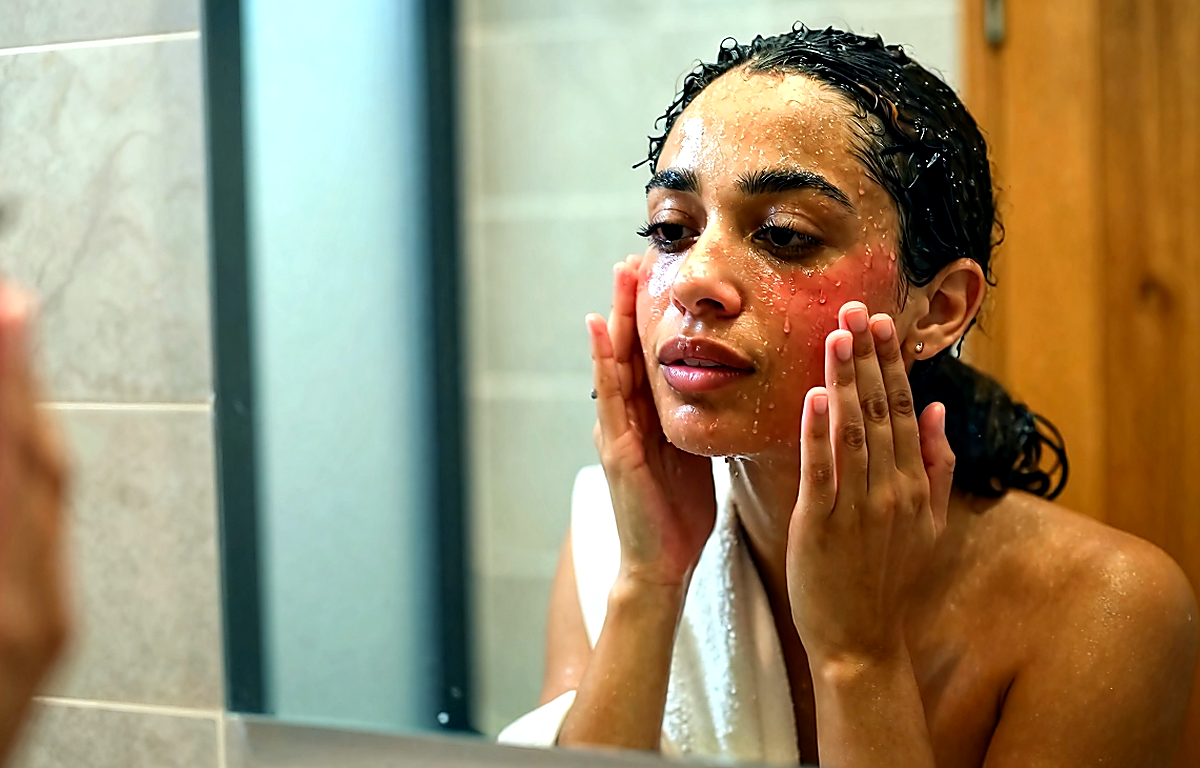
If your skin turns red after using a CeraVe cream, the first thing to check is not only the product itself, but also the condition of your skin barrier, what other actives you are using with it, and how you apply it. In many cases, redness is linked not to a “bad cream,” but to skin that is already irritated by acids, retinoids, overly frequent cleansing, hot water, or mechanical friction. In that situation, even a gentle formula can feel like it burns and leave noticeable redness.
A second important point: not all redness is the same. Brief warmth for 5–10 minutes without pain or itching is one thing; persistent burning, swelling, a rash, soreness, sheet-like peeling, or worsening with every use is another. In the first case, it is usually worth reviewing your routine and application technique. In the second, stop using the product and, if the reaction does not pass, show your skin to a dermatologist. It is best to assess the situation calmly and step by step, looking not only at the brand and the cream’s name, but at your whole skincare system.
Why skin can turn red even from a “gentle” cream
CeraVe is often chosen as basic skincare: the brand is known for formulas with ceramides, moisturizing ingredients, and a relatively clear logic for sensitive skin. But a reputation for being gentle does not by itself guarantee that a reaction is impossible. Skin responds to context.
Redness after cream is most often linked to one of several reasons:
- A damaged skin barrier. If the skin lacks lipids and water, it becomes more permeable and reactive. Then even familiar ingredients can feel stronger than usual.
- Combination with actives. Acids, retinoids, benzoyl peroxide, scrubs, stiff brushes, and harsh cleansers can all increase sensitivity.
- Too much product or overly frequent application. Paradoxically, overloaded skin can sometimes react with more redness than skin that is simply under-moisturized.
- Individual intolerance to ingredients. This is not necessarily a classic allergy; it can also be an irritant reaction to certain ingredients, the texture, or the preservative system.
- Applying it to damp, overheated, or compromised skin. After a shower, shaving, exfoliation, or vigorous rubbing, products can penetrate more intensely.
It is also worth remembering that redness is not always caused by the cream itself. Sometimes the real trigger is the cleansing gel, the habit of washing until the skin feels squeaky clean, a new SPF, an acid toner, a fragranced face mask, or even the towel used to dry the face too vigorously.
What to check first in a CeraVe cream formula
It helps to assess a product not by one “scary” ingredient, but by the whole formula. CeraVe has different creams and lotions, and a reaction may depend on the texture, richness, and supporting ingredients, not only on the ceramide-based core.
Here is what to look at first:
- Fragrance. If your skin is prone to redness, it is better to choose formulas without a pronounced scent. A pleasant smell does not make a product better for reactive skin.
- The richness of the occlusives. A dense cream can feel comfortable in winter, but on irritated, overheated, or redness-prone reactive skin it can sometimes create a sense of trapping heat.
- Moisturizers and barrier-supporting ingredients. Ceramides, glycerin, hyaluronic acid, cholesterol, and fatty alcohols are usually helpful, but on already damaged skin even a good formula can sting at first.
- Additional actives. If your routine already includes acids, a retinoid, or high concentrations of niacinamide in other products, a new cream may be not the cause, but the last straw.
- Preservatives and solvents. They are necessary in a formula, but when skin is highly sensitive, these are sometimes the components that trigger an individual reaction.
It is important not to jump to conclusions like “if it contains niacinamide, it must be that” or “ceramides suit everyone.” The same skin can tolerate an ingredient calmly in one formula and become irritated by it in another because of the texture, the level of occlusion, what cleansing came before application, and the overall state of the barrier.
If you need a calmer basic routine without extra steps, it helps to compare your routine with the principles of a simple regimen: how to build a basic skincare routine for your face. Very often, simplifying the routine is what reveals what your skin is actually reacting to.
How to tell a temporary reaction from irritation or possible intolerance
Not every flush of redness means you should immediately label a cream an “allergen.” But it is also not a good idea to tolerate persistent burning for weeks. It helps to assess the nature of the reaction using a few signs.
It is more likely a temporary reaction if:
- mild redness passes in a short time;
- there is no increasing itching, pain, or swelling;
- the skin does not develop a fine rash;
- it does not get worse day after day;
- the reaction appeared after overdoing actives or after cold, wind, or dry air.
It is more likely irritation or intolerance if:
- there is marked burning immediately after application;
- the redness lasts a long time and returns every time;
- there is itching, puffiness, soreness, or a feeling of heat;
- patches, tiny blisters, roughness, or oozing appear;
- the worsening continues even when you use less of the cream.
Pay especially close attention to the area around the nose, mouth, and eyes. The skin there is thinner and shows overload from actives, barrier disruption, and an unsuitable texture more quickly. If the reaction is localized, that is also a clue: the issue may not be the product as a whole, but how and where you apply it.
If you have persistent burning, pain, noticeable swelling, signs of a skin condition, a pronounced rash, or worsening during pregnancy or while using retinoids, it is better not to experiment and to see a doctor. Home skincare should not replace diagnosis.
Which routine combinations most often lead to redness
Very often, the cream becomes the “main suspect” simply because it is the last step applied. But the redness may actually be triggered by what came before it. That is exactly why it helps to look at your whole evening and morning routine, not only at the jar of CeraVe.
The most common problematic combinations look like this:
- Acids + a retinoid + a rich cream in one evening. The skin may not have enough time to recover, while the cream only intensifies the sensation of heat on an already irritated surface.
- Harsh cleansing + hot water + any active skincare. After that, the skin often turns red even from neutral formulas.
- A scrub or brush + cream on damp skin. Penetration increases, while the barrier has already been compromised.
- Several products with niacinamide, acids, or soothing extracts at the same time. Even “gentle” ingredients can add up to overload.
- Too many layers. Toner, essence, serum, another serum, cream, oil — for sensitive skin this is not always luxury; sometimes it is a direct path to reactivity.
If you recently introduced a new SPF, foundation, or active serum, do not leave them out of the assessment. Sometimes the cream simply highlights irritation that has already started, and sometimes it clashes with makeup or sunscreen because of texture. By the way, if redness and patches are more noticeable after makeup over SPF, it can help to review application technique: how to apply powder over SPF without patchiness. That can help you understand where the skin is experiencing extra friction and too many layers.
How to safely check whether the cream suits you personally
If the reaction does not look severe, it is wiser not to jump to conclusions, but to run a careful check. The goal is to understand whether the discomfort is linked to the formula itself, the amount you are applying, or the overall condition of your skin.
A practical approach is simple:
- Pause and simplify your routine for 3–5 days. Keep only gentle cleansing, basic moisturizing, and SPF during the day. Remove acids, retinoids, scrubs, and experimental serums.
- Check your application method. It is better to apply the cream to dry or slightly damp skin, but not skin that is hot or irritated, and without vigorous rubbing.
- Start with a small amount. If you overdo a rich texture, you can intensify the feeling of heat and overload the skin.
- Do a localized test. Apply the product to a small area near the jawline or on the side of the face, not to the entire face at once.
- Watch for several days. It is important to look not only at the first minute after application, but also at how your skin looks the next morning, how dry or flaky it feels, and whether the reaction repeats.
If your skin calms down on a minimalist routine and the redness returns specifically with one cream, the likelihood of incompatibility is higher. If the redness decreases as the barrier recovers, the product may not have been the main cause at all — it may simply have been applied to already stressed skin.
What matters here is resisting the temptation to “cover up” the reaction with several new soothing products at once. For sensitive skin, an excess of products almost always makes it harder to understand the real picture.
When the problem is not the cream, but the condition of your skin
Skin that is prone to redness often reacts in waves. One day it tolerates your usual skincare perfectly, and the next it turns red from the same product because of wind, heat, a flight, dry air, over-cleansing, or lack of sleep. At that point, it is especially easy to blame one specific cream by mistake.
There are several situations in which reactions to skincare become more noticeable:
- Dehydration. Skin can be oily and dehydrated at the same time; then tightness, dullness, and reactivity appear.
- Barrier disruption after actives. Especially after retinoids, at-home peels, or frequent acid use.
- Cold, wind, sun, and temperature swings. The external environment can easily increase a tendency toward redness.
- Friction. Towels, tissues, frequent touching of the face, a tight collar, protective masks — all of this can irritate the skin just as much as unsuitable skincare.
- Underlying sensitivity or dermatological conditions. In these cases, self-treatment is especially risky.
If you notice that your skin turns red not only after CeraVe, but also after water, cleansing, SPF, foundation, or wind, it is more likely that this is not a single-product intolerance, but a reduced overall resilience of the skin. In that case, it is better to simplify your routine for a while and focus on gentle recovery rather than constantly switching products.
It also helps to assess whether you are overloading the skin with rich textures beyond the face. For example, the habit of using overly heavy products in hot weather often changes the sense of comfort both on the face and on the body. In that sense, the logic of choosing textures by season is also clear in body care: a lightweight body cream for summer without stickiness. The same principle works for the face too: not every “nourishing” texture is needed every day.
How to choose an alternative or adjust the way you use CeraVe
If you like the idea of a basic cream but this particular version raises questions, you do not always need to give up on the brand completely or on cream as a category. Sometimes a more precise adjustment helps: a different texture, a thinner layer, a different time of application, or a pause from active skincare.
Try assessing the following points:
- Texture by season. A richer cream in winter and a lighter option in warm weather is often a more sensible approach than one universal product all year round.
- Not applying it to the whole face. If only the T-zone or the area around the nose gets red, you can use the cream locally where it is actually needed.
- Alternating use. Sometimes the skin feels better with it not every day, but every other day, especially after a period of irritation.
- Reducing the amount of actives. Once the barrier calms down, the same cream may again be tolerated normally.
- A simpler formula. The more reactive the skin, the more useful it is to have a short, clear set of steps without constant new products.
At the same time, it is not a good idea to rely only on a product’s popularity online. The fact that a particular cream “worked for everyone” does not mean redness-prone skin has to respond the same way. Sensitive skin does not respond well to universal advice and does much better with careful observation.
If redness gets worse during stress, humidity, or temperature changes, pay attention to external triggers too. Even hair touching the face in damp weather can add irritation, especially if there is styling product on it. This is also indirectly reflected in hair care during humidity: hair without frizz after humidity. The less unnecessary contact and friction sensitive facial skin has, the calmer it tends to stay.
When it is time to stop experimenting and see a doctor
Analyzing your home skincare routine is useful, but it has limits. If you have removed and reintroduced the cream several times and your skin responds consistently with pronounced redness, burning, or swelling, it is better not to continue testing. This is especially true if there are painful flaky areas, a rash, oozing, itching, or a reaction around the eyes.
It is worth seeing a doctor sooner if:
- the redness lasts a long time and is not limited to the moment of application;
- there is pain, strong burning, swelling, or itching;
- you suspect a skin condition rather than simple sensitivity;
- reactions repeat with many products in a row;
- you are pregnant or using retinoids and are not sure how to adjust your routine correctly.
This matters not because every episode of redness is dangerous, but because chronic irritation can easily mask the real problem. And the longer you try to “put it out” with random products, the harder it becomes later to understand the original cause.
Conclusion: what to look at first
If redness after a CeraVe cream is bothering you, start not with panic, but by checking three things: the state of your skin barrier, what else is in your routine, and exactly how you apply the product. Most often, the problem lies at the intersection of these factors. A rich texture, active serums, hot water, friction, and already irritated skin can together produce a reaction even to a basic cream.
The most practical approach is to simplify your routine, remove unnecessary actives, test the product on a small area, and assess whether the reaction repeats. If the redness is brief and decreases as the skin recovers, the issue may not have been the brand itself. But if there is persistent burning, swelling, pain, a rash, or worsening with every use, it is better to stop the experiment and discuss the situation with a dermatologist. Sensitive skin does not always need the “most popular” cream — it almost always needs the clearest and most predictable routine.