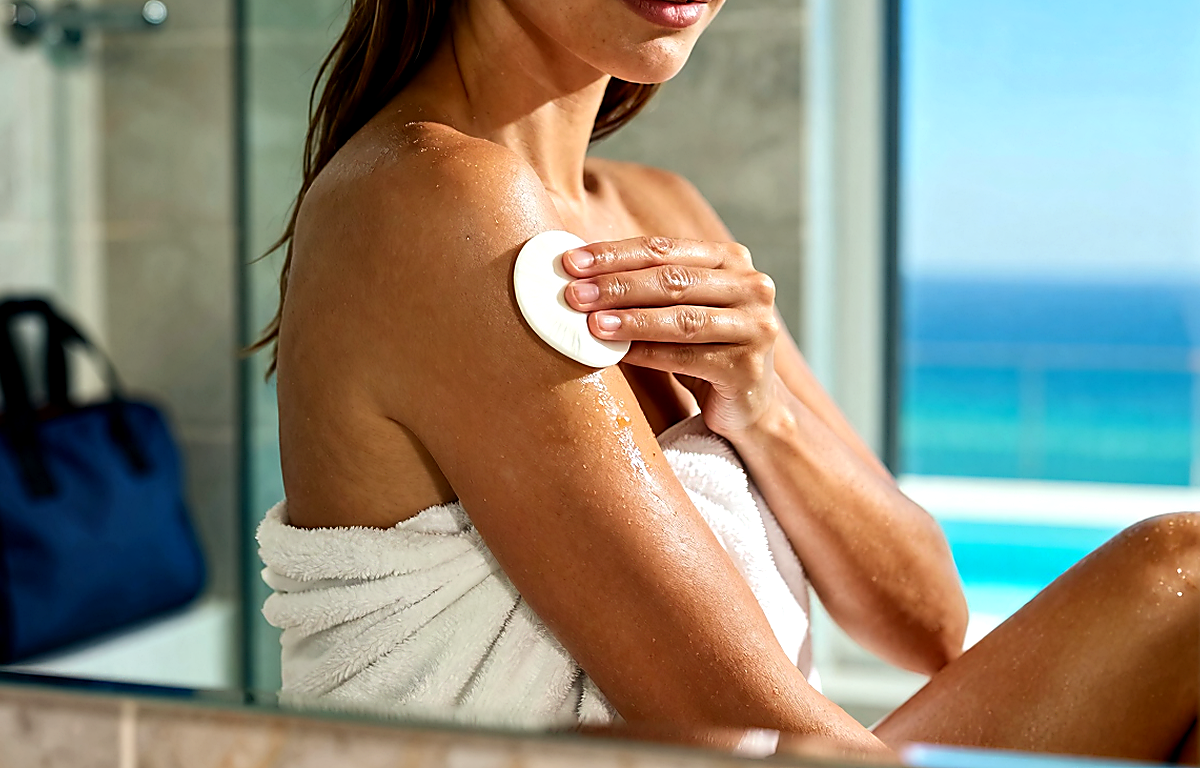
If your skin still feels dry, tight or starts flaking after using a CeraVe shower gel, the problem is not always the brand itself. Most often, dryness comes from several factors at once: water that is too hot, long showers, frequent use of cleanser, strong fragrance, unsuitable surfactants, and also the absence of one simple step after washing — applying a cream or lotion quickly to slightly damp skin. That is why the key question is not “is this a good or bad shower gel,” but “does this particular formula suit you, and how does it fit into your daily routine?”
CeraVe has a reputation as a brand for sensitive and dry skin, and that is not by accident: the brand often focuses on gentle cleansing, supporting the skin barrier and textures that do not leave that stripped, squeaky-clean feeling. But even a gentle cleanser has its limits. If your skin is already dehydrated, irritated, sun-damaged or stressed after retinoids, shaving or showering too often, shower gel alone is not obliged to “fix” the situation. Below, we will look at what exactly is worth checking in the formula, the way you use it and your overall routine if dryness is bothering you and you are considering CeraVe or already using it.
Why dryness happens after a shower in the first place
Washing itself means your skin comes into contact with water, cleansing agents and mechanical friction. For normal skin, this is not usually a problem, but if you are prone to dryness, even proper hygiene can temporarily weaken the protective layer. When lipids are removed faster than the skin can replenish them, you get that familiar tight feeling.
In practice, dryness after a shower is more often linked not to one cause, but to a combination of several habits:
- very hot water, which increases moisture loss and makes the skin more reactive;
- a long shower or bath every day;
- applying a lot of shower gel all over the body without any real need;
- rough washcloths, scrubs, brushes and vigorous rubbing with a towel;
- fragranced products, if your skin is sensitive;
- active body care with acids, retinoids or frequent shaving;
- dry indoor air, air conditioners, heating and seasonal temperature swings.
So even if the CeraVe brand generally suits you, it is worth checking not only the name on the bottle, but the whole shower routine: water temperature, shower length, amount of product and what you apply right after.
What to check first in a CeraVe shower gel
When dryness is a concern, it helps to look not at the promises on the packaging, but at a few practical signs of the formula. These are what most often determine whether a cleanser will feel comfortable in real life.
- The type of cleansing base. Gentle surfactants are usually tolerated more comfortably than aggressive foaming systems. If your skin is dry, you do not need maximum “squeaky-clean” results.
- The presence of barrier-supporting ingredients. For CeraVe, this is often a core idea: ceramides, moisturizing and softening ingredients can help make cleansing feel less harsh.
- Fragrance. Even a pleasant scent can be unnecessary if your skin is reactive, turns red or itches. When dryness is pronounced, it is safer to start with neutral formulas.
- The texture and the feeling after rinsing. If you immediately feel the need to put something on your skin urgently, and it seems thinner and drier right away, the cleanser may simply be too active for you.
- How you use it. The same shower gel can feel comfortable in a small amount and a short shower, but become drying if used generously every day on the whole body.
It is important to understand that the presence of ceramides or moisturizing additives does not change the fact that a cleanser still washes away some of the skin’s surface lipids. That means a gentle formula is good, but it does not replace the care that comes after.
Which ingredients and formula features usually matter when dryness is an issue
If you want to read an ingredient list more meaningfully, do not focus on a long list of names, but on the overall logic. For dry skin, formulas are usually more helpful when cleansing goes together with barrier support rather than working against it.
What is usually seen as a plus:
- ceramides and ingredients associated with restoring barrier function;
- glycerin and other humectants that help reduce the feeling of tightness;
- cream or milk textures, if you do not tolerate heavily foaming gels well;
- minimal fragrance load, if your skin is sensitive or prone to irritation;
- a neutral after-shower feel without squeakiness or a stripped sensation.
What can be a warning sign if your skin is already struggling with dryness:
- strong fragrance, especially if you often get itching or redness after showering;
- a feeling of very intense foam and “perfect cleanliness” followed by immediate tightness;
- using several active body products at the same time — for example, a gel, a scrub and acids on the same day;
- expecting cleansing alone to solve flaking without a cream or lotion.
This does not mean every fragranced gel is automatically bad, or that every “gentle” one will suit everyone. But when dryness is a concern, it is safer to start with the calmest possible base and only then decide whether you really want a more cosmetic experience with fragrance and rich foam.
When the problem is not CeraVe, but your shower habits
Very often, a person changes the cleanser but does not change what is actually drying out the skin. As a result, it starts to feel as if “nothing helps,” even though the main trigger is still there. The most common mistakes look routine, but they often make the biggest contribution to dryness.
- Water that is too hot. Comfortably warm water is almost always better tolerated than hot water. If your skin looks red after a shower, the temperature may be higher than your skin likes.
- Washing for too long. Daily hygiene does not require a long shower. The longer the contact with water and cleanser, the greater the chance of tightness.
- Using shower gel on the whole body every time. If your skin is dry, there is no need to lather every area thoroughly every day. A more selective approach is often enough.
- Washcloths and rough towels. They increase friction and micro-damage, especially if the skin is already irritated.
- Skipping care right after. The most useful thing you can do when dryness is a concern is apply a cream or lotion within a few minutes after showering.
If you use a gentle CeraVe shower gel, but take a very hot 20-minute shower and apply nothing afterward, dryness will almost certainly remain. In that sense, the cleanser is only one part of the system.
How to tell whether your shower gel suits you
It is better to judge a cleanser not by how much it foams or how it smells, but by the condition of your skin 15–30 minutes after the shower and the next day. It helps to run a small test for one to two weeks without changing ten things at once.
Here are signs that your shower gel probably suits you:
- there is no pronounced feeling of tightness after showering;
- your skin does not start itching, turning red or flaking more;
- you do not feel that your body urgently needs to be “rescued” with a thick balm;
- with regular use, your skin condition at least does not get worse;
- shaving, clothing friction and your usual routine do not become more painful.
And here are signals that it is worth reconsidering the cleanser or the way you use it:
- dryness gets worse specifically on the days when you use the gel more actively;
- there is burning, stinging or itching immediately after rinsing;
- areas of flaking appear on the hands, shins, shoulders or back;
- your skin looks dull and crumpled, even though you drink enough water and use a cream;
- symptoms lessen if you reduce frequency or apply the cleanser only to certain areas.
If you are unsure, try simplifying the routine: a short warm shower, a small amount of shower gel, no washcloth, then a light cream or lotion. If your skin calms down noticeably, the issue was not only the formula, but also the way it was being used.
What to do after a shower so dryness does not build up
If your skin is prone to dryness, post-shower care often gives the most noticeable effect. Cleansing is the stage where you remove impurities, not where you provide the skin with everything it needs. So it makes sense to see a CeraVe shower gel as one part of the routine, not as the final solution.
A practical base routine looks like this:
- Pat the skin dry with a towel instead of rubbing it.
- Leave the skin slightly damp, but not wet.
- Apply a cream, lotion or body milk within a few minutes after showering.
- Pay special attention to the shins, elbows, forearms and other areas where dryness appears most often.
If you do not like heavy textures, that is not a reason to skip care altogether. In warm weather, you can choose a lighter format; you may also find this article helpful: a lightweight body cream for summer without stickiness. The key is not to wait until dryness becomes visibly obvious. It is easier to support the skin every day than to try to restore comfort quickly later.
If dryness goes together with overall skin sensitivity, it makes sense to review the rest of your routine as well: the fewer irritating factors you combine at the same time, the easier it is to understand whether a particular shower gel suits you.
When it is worth switching formats: gel, cream-gel or cleansing oil
Sometimes the question is not the brand, or even the specific line, but the product format. If classic shower gels leave your skin feeling dry, your skin may simply be more comfortable with a creamier or oil-based type of cleanser. This is especially relevant in winter, after sun exposure, while using active ingredients or with age-related dryness.
The rough guidelines can be these:
- Classic shower gel may suit you if your skin is generally normal and the dryness is occasional, more related to water, weather or showering too often.
- Cream-gel often feels more comfortable if you want a softer skin feel and less of that stripped sensation after rinsing.
- Cleansing oil or oil-gel may appeal to people who tolerate ordinary foam very poorly and prefer the gentlest possible glide on the skin.
With CeraVe and similar pharmacy brands, the logic is usually built around gentle cleansing and preserving barrier comfort, but individual tolerance still matters more than the category. If one format does not work for you, that does not mean the whole brand is “not for you.”
It is also helpful to remember seasonality. In summer, many people are comfortable with a lighter gel, while in winter a more nourishing cleansing format and a mandatory post-shower cream feel better. That is normal and does not mean you have “failed to find your perfect product” — your skin’s needs simply change.
When dryness is no longer only a cosmetic issue
If dryness is not limited to a tight feeling, but comes with cracks, pronounced itching, bright redness, swelling, oozing or pain, it should no longer be treated as an ordinary reaction to a shower. In such cases, it is better to rule out dermatological causes rather than endlessly changing shower gels.
It is especially important not to delay a doctor’s consultation if:
- burning or pain continue after you stop using the product;
- there is swelling, marked inflammation or signs of a skin disease;
- dryness has suddenly become worse during pregnancy or while treating the skin with active medications;
- you use retinoids, acids or topical products that already make the skin more sensitive;
- the symptoms interfere with sleep, wearing clothes or keep recurring regularly without a clear reason.
A shower gel should not treat a disease and should not promise a medical result. Its job is to cleanse as gently as possible. If your skin is struggling consistently, that is a reason to look more broadly: at your overall routine, climate, medications, shower frequency and the condition of the barrier as a whole. For a basic understanding of the logic of gentle care, it may also be useful to read how to build a basic skincare routine: the principles of a mild routine are largely universal for the body as well.
Practical checklist: what to check if your skin feels dry after CeraVe
To avoid changing everything at once, it helps to go through a short list. It can help you understand whether the problem is more likely the cleanser, your habits or a lack of follow-up care.
- Is the shower warm rather than hot?
- Are you keeping it from running too long?
- Are you using the shower gel in moderation rather than very generously?
- Are you avoiding rough washcloths or scrubs every day?
- Is the formula free of unnecessary fragrance if your skin is sensitive?
- Do you apply a cream or lotion within a few minutes after showering?
- Is the dryness not getting worse because of retinoids, acids, shaving or sun exposure?
- Do you see any improvement if you reduce how often you use the cleanser on the whole body?
If the answer is “no” to several points, those are the first things to address. That will do more for you than buying a new bottle at random in the hope that it will instantly fix everything.
The conclusion is simple: CeraVe can be a good choice for dry skin if the specific formula suits you and if cleansing does not conflict with the rest of your routine. Check not only the brand, but also the water temperature, shower length, presence of fragrance, type of cleansing base and the habit of applying cream right after. If you have persistent burning, pain, swelling, cracks or any suspicion of a skin condition, it is better to see a doctor. In all other cases, a gentle shower gel, a short warm shower and timely post-shower care are the most realistic — and often the most effective — strategy.