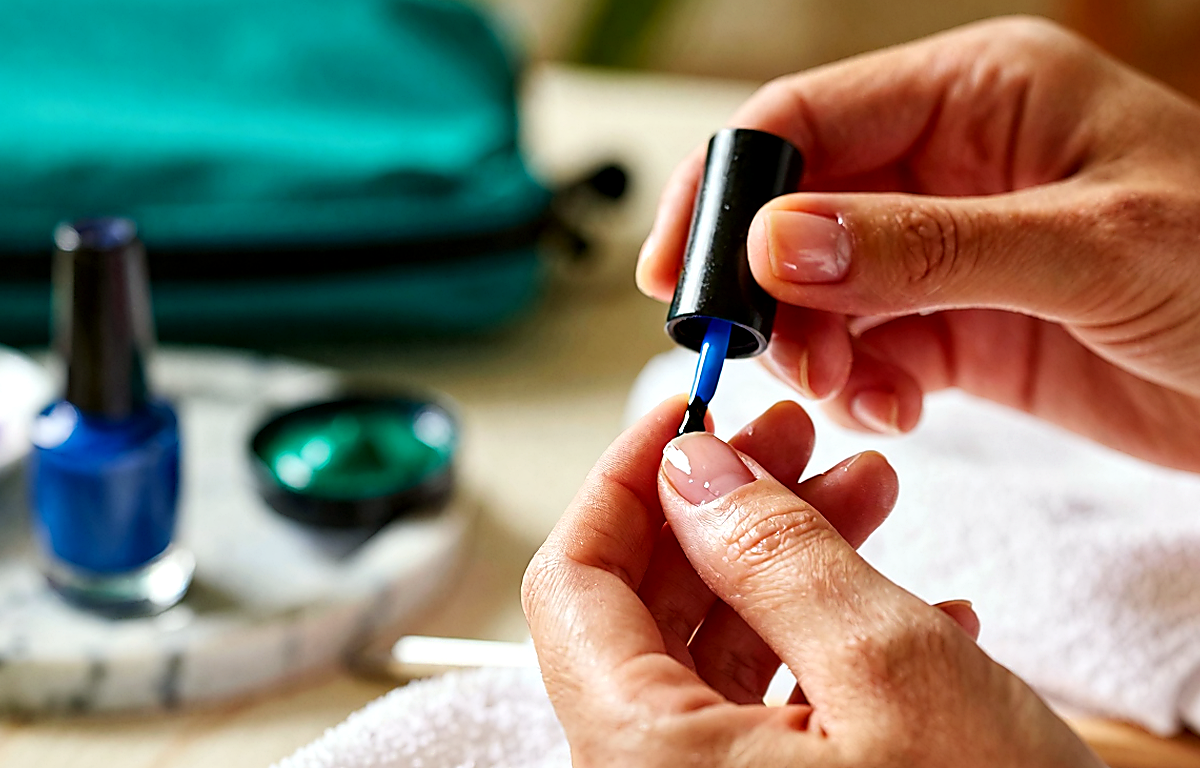
If, after the sea, your manicure with a nail top coat starts to sting, make your nails feel tight, turn cloudy, bubble, or chip faster than usual, the problem is most often not one single bottle but a combination of factors: salt, sun, sand, dehydration of the nail plate, microcracks in the coating, and increased sensitivity of the skin around the nail. If you use Orly as a familiar benchmark for quality and wear time, it is important not to look for a “magic fix,” but to calmly check a few things: whether your nails are overly dried out after the trip, whether there is a reaction to solvents and fragrance, whether the base, color, and top coat are compatible with each other, whether the coating is being applied too thickly, and whether the formula has touched an irritated cuticle.
The main practical takeaway is this: if there is discomfort after the sea, first assess the condition of the nails and skin, and only then the top coat itself. If there is burning, throbbing, tenderness when pressed, redness, swelling, or noticeable peeling, it is better to pause polish for a few days and restore the skin barrier. If the issue is only wear time, shine, and appearance, revisiting your application technique, drying time, and the condition of the nail plate usually helps. And if the unpleasant sensations keep recurring with one specific top coat, even under neutral conditions, it is worth considering individual sensitivity and switching product groups deliberately rather than following random advice.
Why a top coat starts “acting strange” specifically after the sea
The sea is always a stress test for a manicure. Salt water pulls out moisture, the sun increases dryness, and hot sand plus frequent handwashing change the condition of the skin and nails. Even a very careful at-home or salon manicure can behave differently after a vacation than it does in your normal city routine.
Most often, several changes happen at once after the sea:
- the nail plate becomes drier and slightly more brittle;
- the cuticle and sidewalls start reacting more strongly than usual to any active liquids;
- the top coat loses elasticity more quickly;
- sand and salt create microdamage along the free edge;
- frequent contact with water causes the nail plate to expand and contract.
In practice, it looks like this: a top coat that used to apply perfectly and last well suddenly chips at the tip, loses shine on the second or third day, stings during application, or starts peeling off in a film. Sometimes the reason is not even the product itself, but the fact that it was applied right after the beach, the pool, intense sun exposure, or a long time in the water. At that moment the nails are not in their best condition, and the coating is literally settling onto an unstable surface.
If your manicure with Orly or any other top coat behaved predictably before the vacation and something changed after the sea, it makes sense to first suspect not a “spoiled formula,” but changed conditions. This is a useful starting point: it helps you avoid switching every product at once and putting your nails through unnecessary experiments.
What to check first if there is burning, tightness, or irritation
Unpleasant sensations after applying a top coat should not be dismissed as just a “normal reaction.” A mild solvent smell and a brief cooling feeling are possible, but burning, tingling, and soreness are a signal to stop and look for the source of the problem.
Here is a basic checklist to go through before your next manicure:
- The condition of the cuticle and sidewalls. If they are overly dry, have microcracks, hangnails, or signs of aggressive manicure work, any top coat may feel harsher.
- Whether any product is getting onto the skin. Even a good top coat should not flood the cuticle or run into the sides of the nail.
- Whether the nail plate has become too thin. After aggressive removal, buffing, or frequent polish changes, sensitivity is usually higher.
- Whether the product is being applied to damp nails. After the sea, a shower, the pool, or a bath, give your nails time to dry completely and return to their normal state.
- Whether the smell, texture, or color of the top coat has changed. Severe thickening, separation, stringiness, or cloudiness in the bottle can mean the product is no longer performing as it should.
If you notice that the burning appears only after vacation or only in summer, a combination of irritated skin, ultraviolet exposure, and dehydration may be the reason. In that situation, it is not worth covering the problem with another layer. It is wiser to remove the coating gently, take a break, and let the skin around the nail calm down.
If the burning continues, or if you develop pain, swelling, pronounced redness, oozing, a rash, changes in nail color, or the unpleasant sensations keep coming back again and again, it is better to see a dermatologist or doctor. During pregnancy, while taking retinoids, with skin conditions, or with marked sensitivity, at-home experiments with nail coatings are especially undesirable.
How to tell whether the problem is the top coat, the product combination, or the application technique
When it comes to popular brands like Orly, users often share completely opposite experiences: for some, the coating lasts perfectly; for others, it starts chipping almost right away. That is not always a contradiction. The same top coat can behave differently depending on the base coat, the nail color, the thickness of the layers, and even the air temperature.
To sort it out, it helps to divide the possible causes into three groups.
1. The top coat itself. It may simply not suit you in terms of formula, set time, finish, or elasticity. Sometimes a product starts dragging the color, leaving streaks, bubbling, or thickening too quickly.
2. The formula combination. Not every base, polish, and top coat works well together. If the color layer is too soft and the top coat shrinks quickly, wrinkling and bubbles are possible. If the base does not adhere well enough to the nail, the chip will appear not because of the top coat, but because of the lower layers.
3. Technique. A thick layer, color that has not dried properly, applying the second layer too quickly, or not sealing the edge are common reasons for complaints about any nail top coat.
A practical way to test things is not to change everything at once. If you usually use Orly as your top coat, try assessing it in the clearest possible setup: a familiar base, one layer of well-dried color polish, a thin layer of top coat, careful sealing of the free edge, and no application immediately after a shower or the beach. If discomfort and defects persist even in that “clean” situation, then it makes sense to suspect an individual reaction to the product itself or incompatibility with your nails after a season of sun and water.
What quality signs to look for in a nail top coat after vacation
After the sea, the requirements for a top coat become even more important than usual. Your nails have already been under stress, so the top coat should not only add shine but also behave predictably on a drier, more sensitive nail plate.
Pay attention to these parameters:
- A thin, controllable layer. A good top coat spreads evenly without creating a heavy glassy “cap.”
- Elasticity of the coating. If the finish becomes too rigid after drying, it may chip faster on dehydrated nails.
- Drying speed. If it dries too slowly, the risk of bubbles, marks, and shifting increases.
- Clarity of the finish. After sun and salt water, any cloudiness is especially noticeable.
- Comfort for the skin. Sharp burning, especially if it touches the cuticle, is a reason to be cautious.
It is also useful to look at your everyday manicure habits. If you use hand sanitizers often, wash your hands with harsh cleansers, or rarely apply hand cream and cuticle oil, even a quality top coat will look worse. In essence, after the sea, the top coat reflects not only its own properties but also the overall condition of your hands.
In summer, the rule of “less, but more carefully” is especially relevant. One thin, even, well-dried layer is better than trying to get an instant mirror finish with a thick coat. By the way, similar logic works in seasonal care overall: when the skin and hair are overloaded by sun and humidity, the winners are not the heaviest solutions, but the ones most compatible with their current condition. On that note, you may find the article about how to keep hair from getting frizzy after humidity helpful: it clearly shows how the environment can change the usual behavior of even your favorite products.
Application mistakes that can make a top coat irritating or cause it to chip quickly
Sometimes after the sea there is a strong temptation to “refresh” your manicure quickly in the evening at the hotel or right after coming home. That kind of rush is exactly when mistakes are most likely to happen, and those mistakes are then blamed on a specific brand.
The most common ones are:
- Applying it to steamed nails. After a shower, bath, pool, or long swim, the nail plate temporarily changes. It needs time to return to a more stable state.
- Applying too thick a layer of top coat. It takes longer to dry, shrinks more strongly, and more often gathers around the cuticle.
- Applying it over color polish that has not dried. It may look dry on the surface, but still be mobile underneath. Then the top layer “locks in” an unstable surface.
- Ignoring the nail edge. Without lightly sealing the free edge, the coating wears off more quickly.
- Applying it to damaged skin. Even minimal flooding onto an irritated cuticle will cause a stronger burning sensation than usual.
If you are worried not only about wear time but also about heat or stinging, it also matters what you used to remove your previous manicure. Aggressive rubbing, holding soaked cotton pads on the nails for too long, or trying to “scrape off” leftover coating all make the nails and surrounding skin more sensitive. As a result, the new top coat seems to be the culprit, even though the irritation had already been prepared at the previous stage.
After vacation, it is better to use the gentlest possible scenario: careful removal, one or two days without coating if dryness is pronounced, cuticle oil, hand cream, and only then a new manicure. If the skin on the rest of your body also looks dehydrated during this period, it may be worth reviewing your summer body-care routine overall, for example by choosing a light body cream for summer without stickiness so you do not overload the skin while still supporting a comfortable barrier.
When it is better to take a break from manicures instead of looking for a new top coat
There are situations where the best move is not to urgently buy another product, but to temporarily stop using nail coatings. This is especially important if the problem is accompanied not only by cosmetic issues but also by physical sensations.
Taking a break is sensible if:
- your nails have become brittle and almost “papery”;
- the skin around the nails turns red even from neutral products;
- any top coat causes persistent burning after application;
- there is visible peeling at the free edge;
- there are tiny cuts after a manicure or active cuticle work.
During this period, it is better to focus on simple recovery: gently file the length, do not buff the nail plate unnecessarily, apply cuticle oil and hand cream, and avoid contact with household chemicals without gloves. Sometimes after just a few days it becomes clear whether the issue was a seasonal reaction or whether the product truly does not suit you.
If you really want a neat look, you can limit yourself to a clear protective layer only when there are no unpleasant sensations and the skin is completely calm. But if there is even the slightest suspicion of irritation, it is safer to keep the pause. In a beauty routine, this rule works not only for manicures: sometimes the best result comes not from adding new products, but from simplifying the routine for a while. This approach is also helpful for the face — for example, when the skin is overloaded with active ingredients, it can help to return to the basics, as discussed in the article on how to build a basic skincare routine for the face.
How to choose your next top coat if you want more comfort after the sea
If you have concluded that your usual top coat no longer feels right, it is better to choose a replacement not by promises of “super long wear,” but by how it behaves in real summer life. The important thing is to look for a formula that works with your nails, not one that shouts the loudest.
What to look for:
- A convenient brush and controlled product flow. This reduces the risk of flooding the cuticle.
- A texture that is not too thick. It is easier to apply in a thin layer.
- Neutral behavior on sensitive skin. If you know your skin reacts more strongly in summer, this is a key criterion.
- Predictable shine without excessive bulk. A summer manicure looks better when it does not feel heavy.
- Compatibility with regular nail polish. If you use classic polish, there is no point in choosing a product that performs well only in a very specific system.
It is also useful to remember realistic expectations. A top coat should not heal nails, undo dehydration, or mask skin irritation. Its job is to protect the color, add the finish, and extend a neat manicure a little. If you expect a product to compensate for overly dry nails, sun exposure, and frequent contact with water, disappointment is almost inevitable.
When testing a new option after the sea, it is better to do so on short nails and during a calm period, without intensive cleaning, pool time, or constant sanitizer use. That makes it easier to understand true compatibility rather than your nails’ reaction to everything at once.
Mini hand and nail care plan after the sea
Sometimes, for your nail top coat to look neat again and stop causing discomfort, it is enough to adjust a simple routine for a few days.
- Remove the old coating gently. No scraping and no harsh rubbing.
- Assess the condition of your nails in daylight. Check for peeling, white patches, soreness, and skin irritation.
- Let your nails rest if there is sensitivity. Even a short break can change the situation.
- Add cuticle oil and hand cream 2–3 times a day. Especially after washing your hands.
- File the length carefully. A short free edge catches and chips less.
- Bring the coating back gradually. Start with a base and one color layer, then a thin top coat if everything feels comfortable.
If you spend a lot of time in the sun, do not forget about overall hand protection as well. We often carefully reapply SPF on the face, but almost never think about the hands. Yet dryness and tightness around the nails get worse precisely after sun exposure. If you know the problem of refreshing makeup in summer, you may also find the article on how to apply powder over SPF without patches useful: it clearly shows how careful technique and thin layers work better than trying to cover everything at once.
It is also important to remember that your usual “perfect” manicure may look a little different after the sea, and that is normal. In the season of heat and vacations, it is better to aim not for a flawless glossy picture at any cost, but for comfort, clean application, and healthy-looking hands.
Conclusion
If your nail top coat is bothering you after the sea — including if you think of Orly as a familiar reference product — first check the condition of your nails and skin, not just the bottle itself. Most often, the source of the problem is overdrying, an irritated cuticle, reapplying polish too quickly, or an unfortunate combination of products. A good top coat should add shine and protection, not cause burning or increase discomfort. If the unpleasant sensations are persistent, or if there is pain, swelling, redness, or nail changes, it is better not to experiment and to see a doctor. In all other cases, a calm, editorially boring, but most reliable approach works best: a pause, recovery, thin layers, and a careful compatibility check.