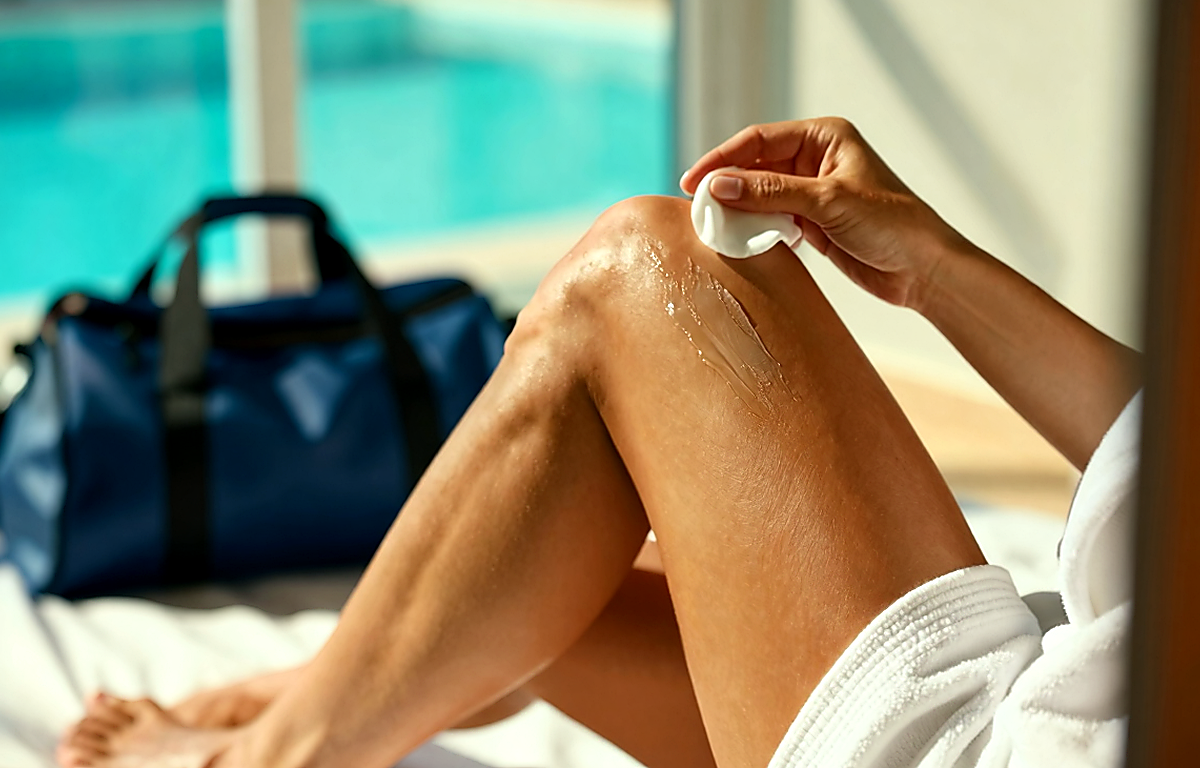
If the skin on your body is flaking, the first impulse is easy to understand: reach for a richer oil and try to “seal in” the dryness. But this is exactly where mistakes are most common. When flaking is the issue, it is important to check not only whether a product contains oils, but also whether the formula includes enough moisturizing ingredients, how it behaves on damp skin, and whether it makes tightness worse again after just a couple of hours. If you are considering CeraVe or body oils in general, it is more useful to think not in terms of “richer means better,” but in terms of barrier repair: how the skin gets water, how it holds on to it, and what helps reduce moisture loss.
For flaky skin, oil can be a good step, but not always on its own. Sometimes it works beautifully as a final layer over cream or on slightly damp skin after a shower, and sometimes it is too occlusive without enough hydration underneath and does not deliver the comfort you expected. So the real question is this: is a specific formula right for skin that is not just dry, but visibly flaky, rough, or reactive to water, clothing friction, and temperature changes.
Why skin flakes and why oil alone may not be enough
Flaking is not always simply a matter of “needing more nourishment.” Much more often, it points to a weakened skin barrier and increased moisture loss. The skin loses water faster than it can retain it, and dry scales, rough texture, patchy itching, and post-shower discomfort start to appear on the surface. In this situation, a dense oily layer really can reduce water evaporation, but if the skin has not first received much hydration, the effect may be short-lived.
Put simply, oil is good at sealing things in, but it does not always hydrate well enough on its own. That is why with pronounced flaking, formulas usually work best when they contain not only oils and emollients, but also ingredients that support the barrier and water balance: glycerin, forms of hyaluronic acid, urea in gentle concentrations, ceramides, cholesterol, and fatty acids. That is the first thing worth checking when you look at a CeraVe product or any other body oil.
- If your skin turns whitish and feels “squeaky” after a shower, it often needs not just a lipid layer, but water plus humectants.
- If flaking is worse on the shins, elbows, and forearms, that is a typical dehydration-and-friction zone where oil may help, but rarely solves everything by itself.
- If there is itching, redness, and reactivity, it is especially important to avoid irritating additives and overly active fragrance.
What to check in a CeraVe formula or any body oil
Products bought “for flaking” often make very similar promises, but the feel on skin and real usefulness can differ dramatically. So it is better to look not at the marketing line on the packaging, but at the type of formula.
The first thing worth checking is whether the product contains barrier-supporting ingredients. CeraVe is of editorial interest here because the brand is often associated with ceramides and products for dry skin. If a specific product, or one built on a similar logic, contains ceramides, that is a good sign: they help support the intercellular “cement” that, when lacking, lets skin lose moisture faster and start to flake.
The second point is the presence of humectants. Glycerin is often underestimated, even though it frequently does more for skin comfort than the high-profile word “oil.” It is a plus if the formula combines oils or emollients with glycerin: then the product not only softens the skin, but also helps it hold on to water for longer.
The third point is fragrance and potentially irritating additives. If flaking comes with stinging after a shower, the skin becomes blotchy, or reacts painfully to shaving and synthetic clothing, it is better to choose the calmest possible formula without a strong perfume composition.
The fourth criterion is texture. Body oil comes in different forms: dry oil, classic oil, jelly-like oil, oil-cream hybrids. For very dry skin, a hybrid texture is often more comfortable than a pure oil, because it offers both emollients and a hydrating base. These products are easier to spread and are less likely to leave you with that “film without results” feeling.
- Ceramides are a plus for skin with a compromised barrier.
- Glycerin and other humectants matter if flaking is visibly noticeable.
- A gentle, not overly scented formula is preferable for sensitive skin.
- An “oil plus skincare” texture is often more practical than a very heavy oil on its own.
How to tell whether oil is right for you, rather than a cream or balm
When people hear the word “flaking,” many automatically reach for oil, but in practice a body cream or balm sometimes works better. This is especially noticeable if your skin is not just occasionally dry, but persistently dry, and you have already tried rich products that soften it only for the evening.
Oil makes the most sense in three cases. First, when the skin feels dry after a shower and you want quick relief from tightness. Second, when you want to boost a cream that is already working: oil can become the final layer on the driest areas. Third, when you simply prefer the sensory feel of oil, which means you will actually use it consistently.
But if the skin feels rough, dehydrated, and somewhat prone to irritation, cream-based formulas often have the edge. They are better at bringing water, humectants, and lipids into the routine all at once. For everyday use, that can simply be more practical. If you want to compare textures and understand whether something will feel too heavy in summer, it also helps to look at materials on lighter body-care formats, such as how to choose a lightweight body cream for summer without stickiness.
A useful way to think about your choice could be this:
- Light seasonal flaking after a shower — you can start with an oil or an oil-based lotion.
- Dense dryness on the shins and elbows — a cream or balm is more often needed, with oil left as an extra layer.
- Sensitivity and redness — choose the calmest possible formula and test it on a small area.
- Pronounced roughness, itching, or tiny cracks — do not delay a dermatologist consultation.
How to apply the product so it actually helps with flaking
Even a good formula can seem useless if you apply it too late or onto completely dried-out skin. The most common mistake is using oil 20–30 minutes after a shower, when the skin has already lost some of its moisture. In that case, the product simply softens the surface, but does not give the cushioned feeling people expect from skincare.
The best time to apply it is within a few minutes after a shower, when the skin is no longer wet but is still slightly damp. That way, the oil or oil-based treatment helps hold moisture in and reduce tightness. If flaking is pronounced, you can use a two-layer method: first a light hydrating lotion or cream, then a little oil on the driest areas.
Amount matters too. A very generous layer is not always more helpful: it may absorb poorly, stain clothing, and create a false sense of care, while the skin underneath still does not get enough hydration. It is better to apply a thin layer regularly than a thick one occasionally.
- Shower without very hot water.
- Use a gentle cleanser rather than a drying body wash.
- Pat the skin dry with a towel instead of rubbing.
- Apply the product to slightly damp skin.
- On especially dry areas, add a second layer or a richer cream if needed.
If stinging appears after application and does not go away, or if the flaking becomes more noticeable, it is worth reviewing not only the product but the whole routine: water temperature, scrub frequency, shaving, acid use, and fragranced shower products.
What signs suggest the product is not right for you
Sometimes a product is formally suitable for dry skin, but not for your particular skin. With flaking, it helps to watch not only the first pleasant impression, but also the changes over several days. There are a few signals that should not be ignored.
The first is instant shine and softness without lasting comfort. If after an hour or two the skin looks ashy, tight, and covered in fine scales again, the formula is probably lacking a hydrating component, or you are using it in the wrong format.
The second is burning, itching, or increased redness. For sensitive skin, this may point to a reaction to fragrance, active additives, or a damaged barrier that currently needs the most neutral care possible.
The third is a film-like feeling and heat under clothing. A body oil that is too heavy is not always more “therapeutic”: sometimes it simply gets in the way, especially if applied to completely dry skin or in hot weather.
- Your skin is already dry again by the middle of the day.
- Flaking does not visibly improve within 1–2 weeks of regular use.
- Burning appears, soreness develops, or itching intensifies.
- There are areas with cracks, oozing, or marked inflammation.
In these situations, switching from one oil to another is not always the most sensible move. Sometimes what you need is a simpler, better-structured skincare base, just as with facial care: restore the basics first, then experiment with extra textures. This logic is well illustrated by the approach in how to build a basic facial skincare routine: barrier and comfort first, everything else second.
What to pay attention to in daily habits besides the product itself
Even a well-chosen product cannot always offset daily dryness triggers. So if you are evaluating CeraVe or any body oil honestly, it is important to look not only at the bottle, but also at what is happening around it.
Very hot showers, aggressive strongly scented shower gels, frequent scrubs, rough washcloths, and the habit of rubbing the skin dry with a towel can all easily cancel out the benefits of skincare. In winter, dry indoor air and dense synthetic clothing often make the situation worse; in summer, sun, salt, chlorinated water, and shaving can do the same.
The minimum set of supportive habits may look boring, but it works better than impulsively switching between a dozen products:
- shorten very hot showers;
- choose gentle cleansing products;
- do not use a scrub on flaky, irritated skin;
- apply skincare immediately after contact with water;
- reapply product to the shins, elbows, and hands more often than to the whole body;
- wear softer fabrics if dryness gets worse from friction.
If you love the smooth, glossy skin that oil can give, that is not a problem. It only matters that the beautiful finish comes with a real reduction in tightness and visible flaking, rather than just a brief cosmetic effect.
When it is especially important to be careful
Not every case of flaking is just seasonal dryness. If the skin has persistent redness, soreness, cracks, oozing, pronounced itching, or areas that look like a rash, experimenting with dense fragranced products without specialist advice is not the best idea. This is especially important if symptoms last longer than two to three weeks or clearly get worse.
Extra caution is also needed during pregnancy, when actively using products with retinoids or acids on the body, and if you have diagnosed skin conditions. In these cases, even a familiar product may be tolerated differently. If you have persistent burning, pain, swelling, signs of inflammation, or suspect a dermatological condition, it is better to see a doctor rather than trying to compensate with another layer of oil.
Body oil is a skincare element, not a universal solution for every type of dryness. It should not promise a therapeutic effect and does not replace diagnosis when the skin is sending warning signals.
How to assess results over one to two weeks and avoid buying too much
To understand whether a product is working, it helps to ask yourself a few specific questions. Are there fewer whitish patches after a shower? Is there less need to urgently “put something on” by the middle of the day? Does your skin cope better with clothing, shaving, and temperature changes? If yes, then the formula and the way you apply it are working for you.
If progress is minimal, try not to buy another oil right away, but change the method instead. For example, switch to applying it on damp skin, add a gentle cream under the oil on your shins, or replace part of the ritual with a more basic barrier-focused routine. That is often enough to see a difference without endlessly rotating through products.
When choosing CeraVe in the dry-skin category, it makes more sense to focus not on the popularity of the brand itself, but on whether the specific texture matches your needs. For flaking, the key words are not just “oil,” but “barrier repair,” “moisture retention,” “comfort without irritation,” and “consistency of use.”
Conclusion
If flaking is your concern, check not only whether a body oil contains oils, but the whole architecture of the formula: hydrating ingredients, ceramides, gentleness for sensitive skin, and comfort when applied to damp skin. With CeraVe, the benchmark should be the same: not the category name alone, but whether the product helps your skin stay softer, calmer, and less rough for longer. Oil can be very helpful, but in most cases the best result comes not from the heaviest texture, but from a thoughtful combination of hydration, lipids, and the right application method. And if the flaking does not improve, or comes with burning, pain, swelling, or marked inflammation, it is better not to postpone a doctor consultation.