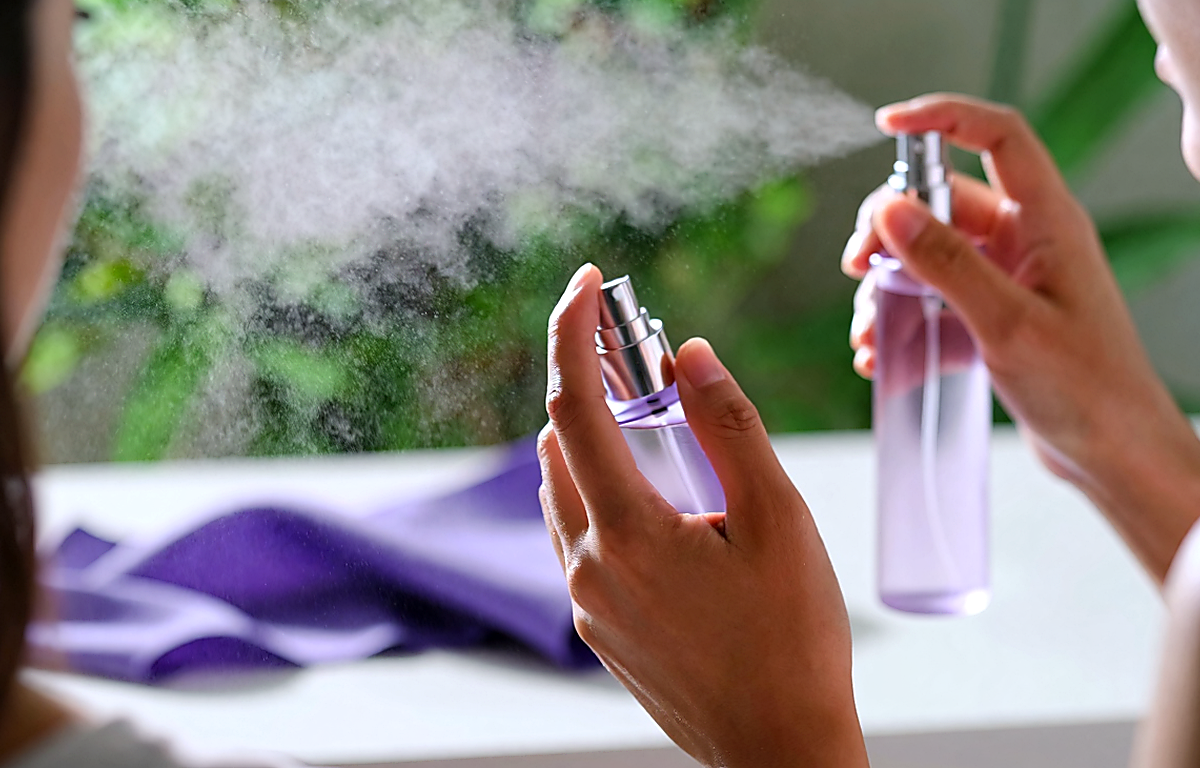
If musk in perfume worries you not because of its clean feel but because of a heavy trail, the main filter before buying is very simple: do not focus on the word “musk” alone, but on how it is built into the composition. The most “oppressive” impressions usually come not from a single ingredient, but from a combination of high concentration, a sweet base, dense woody-amber accords, and overly generous application. That is why, before buying, it is important to check the note pyramid, the type of concentration, how the fragrance behaves on a blotter and on skin after several hours, and how it feels indoors, not only outside or in a store.
The second key point: musk can be almost weightless or extremely persistent. One fragrance smells like freshly washed fabric, another like a warm sweet veil that lingers in the elevator and on a scarf until evening. If your issue is specifically a heavy trail, do not rush to buy even popular musk compositions after the first inhale. The best solution is to screen fragrances by a set of signs: a transparent opening, no sticky sweetness, moderate concentration, a soft base, and a comfortable feel on your own skin after 3–6 hours.
Why Musk Sometimes Feels Suffocating
Musk itself is not always about smelling “loud.” In modern perfumery, a musky effect often means a feeling of cleanliness, softness, skin, powder, or warm linen. But this very comforting effect can unexpectedly turn into a heavy trail if the composition is built too densely.
Most often, the feeling of heaviness comes from several factors at once:
- an overly rich fragrance concentration;
- a combination of musk with amber, vanilla, tonka bean, caramel, and dense white florals;
- very warm skin, on which the base opens quickly and intensifies;
- application to clothes, hair, and moisturized skin in several areas at once;
- closed spaces, where the trail is more noticeable than outdoors;
- individual sensitivity to “clean,” powdery, or synthetic-molecular accords.
Musk is especially tricky because it can seem quiet in the first minutes. In the store you smell soft cleanliness, and two hours later you get a dense warm cushion of base notes that lasts a very long time. That is why buying a musky fragrance based only on the opening is the most common path to disappointment.
What to Look for in the Fragrance Pyramid Before Testing
The note pyramid does not give a one-hundred-percent forecast, but it does help you quickly understand whether there is a risk of a heavy scent profile. If you already know that you do not tolerate an intrusive trail well, look in the description not only for the word “musk,” but also at what surrounds it.
Safer choices for a cautious purchase are often compositions where musk sits alongside:
- citrus notes;
- neroli;
- green tea;
- iris in a dry rather than sweet direction;
- aldehydes;
- fresh herbal or watery accents;
- transparent woody notes without vanilla thickness.
It is worth being more cautious with formulas in which musk is listed together with:
- vanilla, praline, caramel;
- ambroxan and amber accords;
- patchouli in a sweet style;
- tuberose, gardenia, jasmine sambac in a dense presentation;
- coconut, milky notes, syrupy fruits;
- oud, resins, balsamic materials.
This does not mean such combinations are bad. It is simply that they are more likely to create that enveloping trail that many people tire of quickly. If you like a clean musky profile, it is better to start with more transparent, airy, and “dry” compositions.
It is also helpful to pay attention to the wording of the description. Phrases like “skin scent,” “clean musk,” “linen,” “soap-like,” “cotton,” and “airy” more often suggest a soft sound. Words like “sensual,” “intoxicating,” “opulent,” “creamy,” “warm amber trail,” and “addictive” often hint at a denser, more noticeable base.
Concentration, Intensity, and Wear: Why This Matters More Than a Trendy Name
One of the most common mistakes is thinking that a fragrance’s lightness or heaviness is determined only by the brand, the popularity of the composition, or the type of note. In practice, concentration and the way a fragrance wears matter much more. Even a restrained musk in extrait or rich eau de parfum form can behave much more densely than an airier eau de toilette.
Before buying, check:
- what the concentration is—eau de cologne, eau de toilette, eau de parfum, parfum;
- how the brand itself describes the intensity—soft, moderate, intense;
- whether reviews complain specifically about the trail, not only the longevity;
- how many hours the fragrance remains noticeable on fabric;
- whether it belongs to “molecular” or “linen-like” compositions that may seem quiet to the wearer but very noticeable to others.
Longevity and trail are not the same thing. A fragrance may last 8–10 hours close to the skin and still feel comfortable. And the opposite is also true: in the first 40 minutes it may already fill the space and become tiring. If your goal is not simply “not too strong” but “no heavy trail,” look specifically for moderate diffusion rather than minimal longevity.
Seasonality also matters. In cool weather, musk can feel soft and almost powdery, while in heat it can turn sticky, sweet, and overly skin-like. That is why a perfume that you liked in winter in a store may open very differently in summer.
How to Properly Test a Musk Fragrance Before Buying
The best way to avoid a mistake is to give the fragrance time. This is especially important with musk, because its real character often appears in the base rather than in the opening notes.
A practical testing routine looks like this:
- First apply the fragrance to a blotter and do not judge it instantly. Wait 10–15 minutes.
- If the opening does not seem sticky, sweet-dusty, or too loud, apply one spray to the skin.
- Do not test more than two fragrances at once: musky bases blend together easily in perception.
- Leave the store, or at least step out of the scented area, so you can hear the real way it wears.
- Check the fragrance again after 30 minutes, 2 hours, and 4–6 hours.
- Assess not only the beauty of the smell, but also the comfort level: do you want to wash it off, and do you get tired of the background?
A very useful trick is to ask yourself not “Do I like it?” but “Do I want to feel this cloud around me for another half day?” Many musky fragrances are beautiful as an idea, but tiring in real wear.
If possible, get a sample or do a full day of wear at home and on public transport. In a store, the trail is often deceptive: the air is already saturated with smells, and your skin has not yet warmed up the way it does in daily life.
For testing, it is best to apply fragrance to clean skin without a strongly scented cream. At the same time, a very rich or heavily perfumed base can amplify the trail. If you like body care, you may find it helpful to follow the principle of a light, neutral base, similar to the approach used for comfortable textures in skincare: a light body cream without stickiness usually clashes less with perfume than dense sweet-smelling products.
Signs That Musk Will Most Likely Leave a Heavy Trail
Even without perfect knowledge of perfume terminology, you can learn to recognize risky options quickly. There are several markers after which it is worth slowing down before buying.
- On a blotter, after just 10 minutes the fragrance becomes not fresh but creamy-sweet and “dusty.”
- On the skin, after half an hour it creates the feeling of a warm blanket, syrup, or cosmetic lipstick.
- You notice the fragrance not only when moving, but constantly, even while sitting still.
- It clings to a scarf, collar, and hair and does not let go even after airing out.
- It has a “clean laundry” effect, but not a transparent one—more like fabric soaked in a very concentrated fabric softener.
- The sweetness grows stronger as you wear it instead of becoming quieter.
A separate warning sign is the so-called “blind trail.” The wearer may stop hearing the fragrance clearly because of habituation, while other people continue to smell it very strongly. This is especially typical of some musk-amber and molecular compositions. If you tend to apply generously, the risk only increases.
Another concerning signal is the urge to “sniff it out” by bringing your wrist closer and closer. With quiet musks this is normal, but if you can barely smell it on yourself and keep adding more because of that, you may create a very noticeable cloud for everyone around you.
Which Formats and Directions Usually Feel More Comfortable If You Do Not Like a Dense Trail
When the problem is specifically a heavy trail, it is worth choosing not simply “less musk,” but a different style of musky scent. Fragrances in which musk plays the role of a background note rather than a central dramatic accord often feel more pleasant.
Usually more comfortable are:
- clean “linen-like” musks without gourmand sweetness;
- citrus-musk compositions;
- musk with iris in a dry, cool powdery direction;
- watery and green versions;
- fragrances with a transparent woody base;
- body mists or lighter concentrations for everyday wear.
It is worth being more careful with directions in which musk is presented as:
- a creamy skin accord;
- sweet skin;
- milky powder;
- an amber-vanilla veil;
- a very sensual nighttime fragrance.
If you like the feeling of cleanliness and polish, fragrances with aldehydes, tea, neroli, or dry florals can sometimes work better than purely musky scents. They create a fresh, neat effect without an intrusive trail. By the way, the same principle of balance and moderation matters in other beauty habits too: when the base is chosen correctly, the result looks lighter and neater. The logic of “better thinner than denser” is also close to the approach used in skincare, for example in the article on how to build a basic skincare routine, where excess often gets in the way more than it helps.
How to Wear Musk So It Does Not Become Heavy
Sometimes the problem is not the fragrance itself, but the dosage. Musky compositions are very easy to oversaturate, especially if it seems to you that the scent stays close to the skin. To keep the trail delicate, it is often enough to change the way you apply it.
Rules that work:
- start with one spray, not the usual three or four;
- do not apply fragrance to the neck, hair, clothes, and wrists all at once;
- avoid applying it under a scarf, turtleneck, or dense collar;
- in hot weather, move the fragrance lower—for example, to the body rather than the face area;
- do not layer musk over sweet body lotions and oils;
- if the fragrance feels too dense, try spraying a cloud and walking through it instead of spraying directly onto pulse points.
It is important to remember that hair and fabric hold musk especially well. If you do not like a heavy trail, test the fragrance only on skin at first. Applying it to clothing often turns a moderate composition into one that is extremely long-lasting and noticeable.
In an office, on public transport, in small spaces, and at events with close distance, it is more appropriate to choose the kind of fragrance that is only noticeable up close. That style almost always looks more expensive and modern than a fragrance that enters the room before you do.
When It Is Better to Skip Buying Even a Popular Musk Fragrance
Popularity does not guarantee that a fragrance will suit you personally. It is better to walk away from the purchase if you recognize at least a few of the following scenarios:
- the fragrance is beautiful on a blotter, but on skin it quickly turns into sweet stuffiness;
- after an hour it causes fatigue, a heavy head, or the urge to get fresh air;
- you like only the opening, while the base feels sticky, dusty, or too skin-like;
- you already know that you do not tolerate amber-musk and fabric-softener-style accords well;
- you are tempted by trendiness rather than real comfort in wear;
- you feel the need to convince yourself that “I just need to get used to it.”
The last point is especially important. With a good everyday fragrance, you usually should not need to negotiate with yourself. It should not trigger inner bargaining such as “maybe I just did not understand its character.” If the trail already unsettles you at the testing stage, the irritation will usually only get stronger in real life.
It is also wise to be more careful during periods of increased sensitivity to smells: in hot weather, during migraine-related fatigue, in pregnancy, after sleepless nights, or if you work in close contact with people. Perfume itself should not cause discomfort. If testing on skin leads to persistent burning, pain, pronounced redness, swelling, or other unusual reactions, it is better to wash the fragrance off and stop using it; if symptoms persist, you should consult a doctor. This is especially important if you already have known skin sensitivity or actively use strong cosmetic products.
Quick Checklist Before Buying
If you need a fast guide, save this list. It helps rule out most musk fragrances with a potentially heavy trail even before an impulse purchase.
- Check what musk is paired with in the note pyramid: freshness or sweet density.
- Clarify the concentration and do not confuse longevity with trail.
- Test it not only on a blotter, but also on skin.
- Give the fragrance at least 4–6 hours so you can hear the base.
- Assess it in ordinary life, not only in the store.
- Start with one spray.
- Do not buy it if the base becomes sweet-dusty, sticky, or intrusive.
- Remember that musk on fabric and hair smells louder and lasts longer.
And one more helpful guideline: the best musk for someone afraid of a heavy trail usually does not try to impress with volume. It creates an impression of cleanliness, polish, and soft warmth rather than a dense perfumed veil that fills the space.
In the end, choosing a musk without a heavy trail is entirely realistic if you do not trust only the first impression. Look for a transparent composition, check the company surrounding the note carefully, test the base on your own skin, and do not overestimate a “quiet opening.” Good musk does not suffocate, tire you out, or compete with your presence—it simply makes the overall impression feel more polished, clean, and a little more intimate.