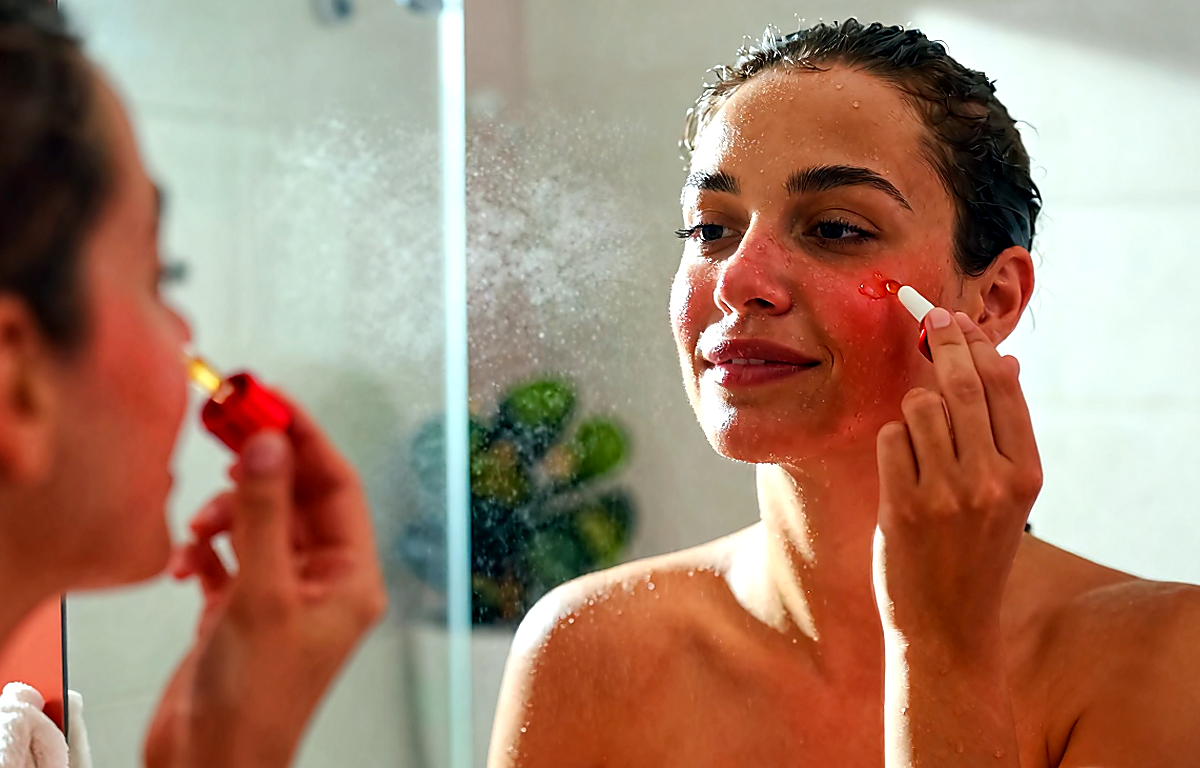
If your skin feels rough, makeup sits unevenly, and the mirror shows tiny bumps, dullness, and an “unpolished” surface, you need to look beyond the brand name alone. With an Eucerin serum, the key question is this: does the specific formula match the actual reason behind your uneven skin texture? For one person, the issue is linked to dehydration and a weakened barrier; for another, to an overloaded routine; for a third, to mild but persistent pore congestion. That is why the first things to check before buying and during the first weeks of use are not the promises on the packaging, but the ingredient list, the type of actives, the base, the presence of fragrance, and how well it works with your cleanser and daytime sun protection.
Put simply, a good serum for uneven texture should do one of three things: exfoliate gently, hydrate well and soften the skin’s surface, or soothe and even out the complexion through barrier support. That is exactly how Eucerin should be assessed as a brand: not “will the brand suit me in general,” but “which mechanism works in my situation.” If your skin becomes smoother after the serum, tightness decreases, your tone looks more even, and new bumps do not appear, you are on the right track. But if dryness, burning, or random breakouts increase, the problem may not be that the product is too weak—it may be that the formula does not match your needs.
First, figure out what you actually mean by uneven texture
Uneven texture is not one diagnosis or one cosmetic condition. This term often lumps together several very different concerns, which means the right serum approach will differ too.
- Roughness and tightness after cleansing. This is often dehydration, a weakened skin barrier, or overly aggressive cleansing.
- Tiny under-the-skin bumps. Possible causes include overly rich textures, too many layers, unsuitable oils, or poor tolerance to heavy SPF or cleansing products.
- Dullness and a “tired” surface. Hydrating and gently renewing formulas often help here.
- Post-breakout marks and visually uneven skin relief. In this case, calm brightening and barrier-supporting actives matter more than harsh daily exfoliation.
- A combination of dry patches and clogged pores. This is one of the most common situations where you do not need the “most active” serum, but a well-balanced base.
That is why, when choosing Eucerin, it is worth looking not only at words like serum, anti-pigment, or hydrating, but at which problem the formula is designed to address first. A brand may have several product lines, and even a very successful serum for pigmentation will not necessarily be the best option for dehydrated, rough skin.
Which actives to look for in a serum if you want smoother skin
For uneven texture, the most effective ingredients are usually not “miracle components,” but clear functional groups of actives. They may appear in Eucerin formulas and in products from other pharmacy skincare brands, so what matters is the formula’s function.
- Hydrating ingredients: glycerin, hyaluronic acid, urea in gentle concentrations, betaine, panthenol. They help the skin look plumper and visually smoother.
- Barrier support: ceramides, squalane, cholesterol, soothing extracts, panthenol, niacinamide. If roughness has become worse after active skincare, this is often the most useful direction.
- Niacinamide: one of the most practical ingredients for uneven texture, enlarged pores, and dull tone. It does not have to give an instant result, but it often helps the skin become calmer and more stable.
- Gentle acids: lactic acid, mandelic acid, polyhydroxy acids, and sometimes low concentrations of salicylic acid. These make sense if the problem is linked to a buildup of dead skin cells and clogged pores.
- Antioxidants: for example, vitamin C in gentle forms or other antioxidant complexes. They do not “polish” the skin on their own, but they can help a dull surface look fresher.
A useful guide: if your skin is reactive, often turns red, and stings even from water, it is better to start not with an acid serum, but with a hydrating, barrier-repairing one. But if the uneven texture is linked to clogged pores and a heavy film on the skin, a hyaluronic serum alone will not solve the issue.
What to check in an Eucerin formula: not just the active, but the base too
When people talk about a serum, they often focus only on the star ingredient. But for the feeling of smoothness, the base matters just as much: how light it is, whether it forms a film, whether it feels silicone-heavy or sticky, how quickly it absorbs, and whether it clashes with SPF and foundation. Sometimes an ingredient list looks impeccable, but the serum texture itself turns out to be too heavy for a particular skin type—or, on the contrary, too “empty.”
Check a few things:
- Is there a noticeable fragrance? If your skin is already irritated, fragranced formulas may increase discomfort. This does not mean fragrance is always harmful, but with sensitive uneven texture, simpler is often better.
- How sticky is the product? Strong stickiness is not dangerous in itself, but it often leads people to apply more cream and then an even heavier SPF. The result is a routine that feels too heavy, and the texture may end up looking worse.
- Is there a pronounced silicone smoothness? It can give a beautiful instant effect, but it is important to understand whether the skin is actually improving or whether it is only a temporary “primer” feel.
- How does the serum behave in layers? If it pills under cream or SPF, that is not a minor detail. Constant rubbing and reworking layers often increases irritation and makes uneven texture look more obvious.
That is why Eucerin is best judged not by one application on the back of the hand, but in a full routine: cleansing, serum, cream if needed, SPF in the morning or richer care in the evening. Only then can you tell whether your skin’s surface will actually look smoother in real life.
A common mistake: treating uneven texture too aggressively
When you want smooth skin quickly, it is tempting to choose the most active serum possible and use it every day. In practice, this is one of the most common reasons texture gets even worse. Over-dried skin may first look more matte and seemingly “clean,” but then it responds with tightness, flaking, burning, and random breakouts. Visually, the texture only becomes more noticeable.
If you are considering Eucerin with acids or other renewing actives, start gently:
- 2–3 times a week instead of daily use;
- apply to completely dry skin if the formula is active and prone to stinging;
- do not combine several strong “renewing” products in the same evening;
- track not only glow, but also how comfortable your skin feels the next morning;
- always use SPF during the day, otherwise uneven tone and post-breakout marks may become more noticeable.
If your skin is already sensitive, the first improvement in texture often comes not from increasing exfoliation, but from reducing it. Sometimes removing an extra scrub, aggressive cleansing, and chaotic active rotation is enough for a serum to start working much better.
How to tell whether an Eucerin serum suits you in the first 2–4 weeks
Judging a serum by the first impression alone is a bad idea. Instant softness may simply be a cosmetic effect of the base, while a genuinely helpful formula may not show results on day one. To understand whether the product is working on uneven texture, look for more specific signs.
Good signs:
- the skin flakes less and does not look like a “dry mesh”;
- foundation goes on more evenly instead of catching on microtexture;
- there is less roughness in the morning around the cheeks, forehead, or chin;
- new tiny bumps do not appear more often than usual;
- redness does not increase after every use.
Warning signs:
- persistent burning that lasts longer than a few minutes after application;
- increasing redness, soreness, or swelling;
- flaking that looks like irritation rather than gentle renewal;
- a sense of overloaded skin, an oily film, and more closed comedones;
- a sharp drop in tolerance to your other familiar products.
If you see the second scenario, it is better not to convince yourself that “this is how it is supposed to be.” Skincare that makes your texture worse will not become ideal just because the brand has a good reputation. With persistent burning, pain, pronounced swelling, signs of a skin condition, or during pregnancy when using actives such as retinoids, it is worth discussing your routine with a doctor. And if the formula has a retinoid focus or you are putting together an active routine on your own, extra caution is especially important.
What to pair a serum with so it actually helps smooth texture
Even a good serum rarely shows its full potential if the rest of the routine gets in its way. Uneven texture often appears not because one magical product is missing, but because of a combination of small mistakes: cleansing too often, using the wrong cream, wearing a heavy SPF that does not wash off well, and not protecting the skin enough during the day.
Here is a practical base that usually gives an Eucerin serum a better chance to perform:
- Gentle cleansing. No squeaky-clean feeling and no complete stripping. If your skin feels tight after washing, the serum will be working under more stressful conditions.
- One main active at a time. If you are testing a new serum, do not introduce an acid toner, retinoid, peeling pads, and another concentrated essence all at once.
- A neutral cream if needed. Especially if the serum is active. A calm, simple cream helps improve tolerance and lowers the risk of irritation.
- Daily SPF. Without it, achieving a visually smoother surface and a more even tone becomes much harder.
If you are rethinking your whole routine right now, this guide on how to build a basic skincare routine may help. Very often, texture issues are solved not by replacing one product, but by creating a calmer overall system.
When it is better to choose a hydrating serum, and when a renewing one makes more sense
This is one of the most useful questions to ask when choosing Eucerin. Many people assume uneven texture almost automatically calls for acids. But if your skin is dehydrated, irritated, or has been through too much active skincare for too long, a renewing serum may only make the problem worse. In that case, the first step is often a hydrating or barrier-repairing formula.
A hydrating serum is a better choice if:
- you have tightness and fine surface flaking;
- your skin reacts to weather, heating, or air conditioning;
- your tone looks dull, but there are not many breakouts;
- your face quickly turns red after cleansing;
- you have already overdone actives and want to bring comfort back.
A renewing serum makes more sense if:
- you have small bumps and a feeling of “stagnant” skin;
- your pores seem to clog more often than before;
- your skin is thicker, not overly sensitive, and tolerates acids well;
- you are not using several other irritating actives at the same time.
Sometimes the best strategy is not to choose one option forever, but to alternate periods. For example, a few weeks of barrier repair followed by the careful addition of gentle renewal. This kind of calm management—not a constant race for the strongest products—is what more often leads to noticeably smoother texture.
What to pay attention to if your skin is sensitive or breakout-prone
With sensitive skin and a tendency to break out, brand associations can sometimes get in the way. A pharmacy-skincare image creates the expectation that a product will automatically be universal and low-risk. But even formulas designed with tolerance in mind may not suit a particular routine.
Check the following:
- Are there already too many actives in your routine? The serum may be good, but against the background of an acid cleanser, a retinoid, and an aggressive toner, your skin may simply not handle the overall load.
- Does the product trigger closed comedones specifically for you? This is best assessed over 2–3 weeks of use, not after one day.
- Is makeup masking worsening texture? Sometimes the skin seems smooth while it is covered with a silicone base and foundation, but without them the bumps are actually becoming more noticeable.
- Could the worsening be linked to SPF removal? This is a very common story: the serum gets blamed when the real problem is that a dense sunscreen layer is either not removed thoroughly enough or, on the contrary, removed too aggressively.
If you notice constant painful breakouts, pronounced redness, itching, swelling, or deterioration that does not look like normal adjustment, it is better not to continue experimenting blindly. If you suspect a dermatological condition, skincare should be chosen carefully and sometimes together with a specialist.
How not to expect a serum to do what it is not supposed to do
Even a very successful Eucerin serum cannot replace everything at once. It is not supposed to instantly erase post-acne marks, remove pronounced scars, fully change pore size, or correct the effects of overly aggressive procedures. Its job is to gradually improve the quality of the skin’s surface within a home-care routine: reduce the feeling of roughness, support moisture balance, help the tone look more even, and lower the likelihood of new unevenness if the formula is chosen correctly.
It is also important to remember that visual smoothness depends in part on how you apply makeup. If you use SPF and then decorative products, this guide on how to apply powder over SPF without patchiness may be useful. Sometimes the skin looks more textured not because of the serum, but because of the way daytime layers interact with each other.
In real life, the most noticeable results come from three things: consistency, moderation, and an honest assessment of your skin’s reaction. Not the “most active” serum, but the one after which your skin looks calmer, smoother, and more predictable a month later is the better choice.
Conclusion
If uneven skin texture is bothering you, choose an Eucerin serum not by bold promises, but by the logic of the problem: dehydration, an overloaded routine, clogged pores, or dullness all call for different formulas. Check the type of actives, the base, tolerance, and how the product works with your cleanser and SPF, then evaluate results by skin comfort and changes in texture over several weeks. Gentle hydration and barrier support are often just as important as acids. And with persistent burning, pain, swelling, suspected skin disease, or questions about active skincare during pregnancy, it is better not to experiment and to discuss the situation with a doctor.