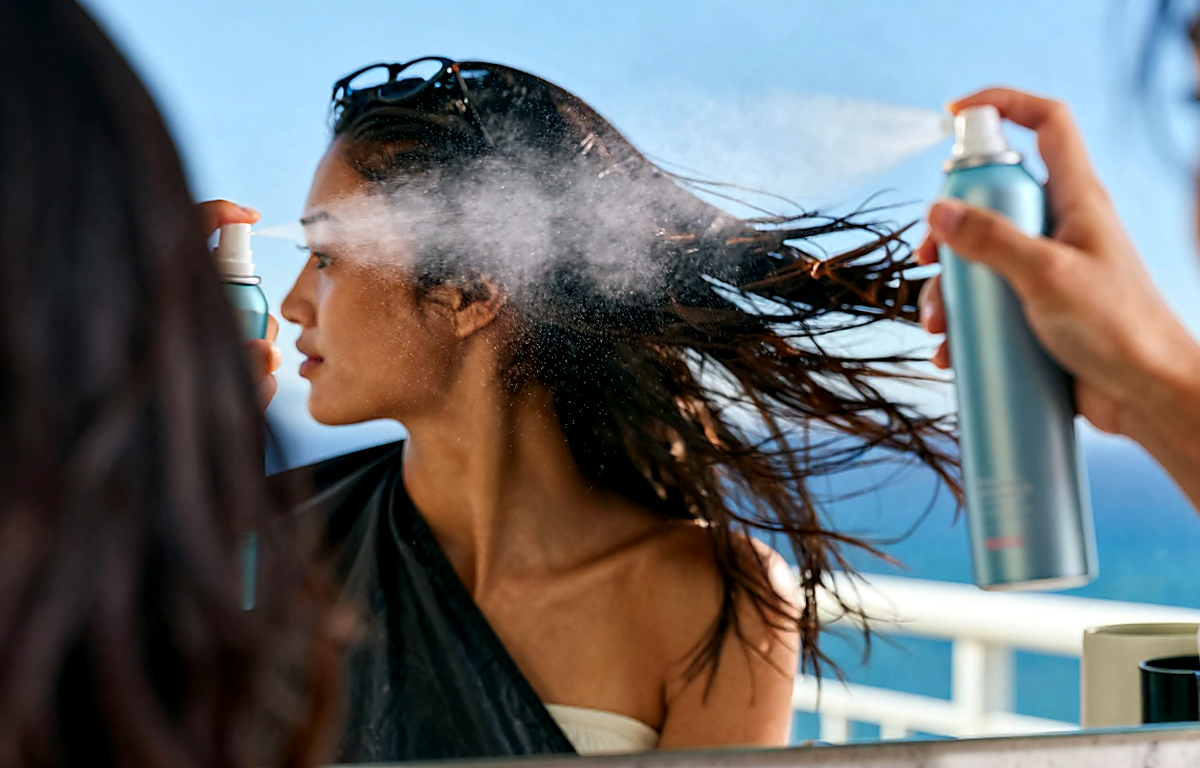
If your hair has become brittle, the main question is not whether K18 “works” or whether you need a leave-in spray at all. It is more useful to first understand what exactly you are dealing with: hair breaking along the lengths after bleaching and hot styling, splitting at the ends from dryness, frizzing and catching on itself, or literally snapping during brushing. Everything depends on this: which leave-in format to choose, where to apply it, how much product you need, and why even a good product sometimes fails to deliver a noticeable result.
The short answer is this: when breakage is a concern, it is important to assess not only the product itself but the entire care routine. K18 and other leave-in sprays have their strengths, but they do not replace gentle washing, heat protection, less mechanical friction, and regular trimming of damaged ends. If breakage is getting worse, hair is snapping when wet, or you notice scalp burning, pain, swelling, marked itching, or suspect a skin condition, it is better not to keep experimenting and to see a dermatologist or trichologist. This is especially important if the problem started suddenly, is accompanied by shedding, or began during pregnancy or the postpartum period.
First clarify: is it breakage, dryness, or frizz?
The word “breakage” often hides different problems. Hair can seem damaged because of dryness, tangling, and increased roughness, but that does not always mean deep structural damage. If you are buying a leave-in spray only because your hair has become stiff and frizzy, the result may disappoint you: you do not need the “strongest” product, but the one that addresses your actual issue.
- True breakage is more often noticeable as snapped hairs of different lengths, white dots along the shaft, loss of density through the lengths, and the feeling that the hair “clicks off” under tension.
- Dryness shows up as dullness, stiffness, and static, but the hair does not necessarily break in large amounts.
- Frizz and porosity tend to worsen in humid weather, after sleep, and when there is not enough protection from friction. In that case, this piece may be helpful: hair without frizz after humidity.
This distinction matters because K18 is usually discussed in the context of damaged hair after coloring, bleaching, and hot tools, while leave-in spray as a category can serve other purposes too: making detangling easier, reducing frizz, providing heat protection, adding smoothness, or supporting visual elasticity.
What exactly to check in K18 or any leave-in spray
When choosing a product for brittle hair, it helps to focus not on a bold promise but on practical parameters. They are clearer than abstract words like “repair” or “salon effect.”
- What function the product performs. A spray can be conditioning, smoothing, heat-protective, thickening, hydrating, or a combination. One format rarely does everything at once.
- Whether it matches your level of damage. Heavily bleached, porous, and fragile hair often needs not just a light spray, but denser support through the lengths.
- Whether your routine includes heat protection. If you blow-dry or use a styler, the lack of heat protection will cancel out part of the benefit of any treatment.
- Whether the formula overloads your hair. Some hair becomes stiffer and tangles more when there are too many film-formers, oils, or proteins without enough balance from humectants and softening ingredients.
- Where the product is meant to be applied. Most leave-in formats are intended for the lengths and ends, not the scalp.
If you are specifically thinking about K18 as a well-known product for breakage, the main thing is not to expect magic in isolation from your habits. Hair that is already damaged along the lengths cannot be made “new” again. Care can improve how the hair behaves, reduce further damage, add smoothness, and help it break less during daily handling, but it does not eliminate the need for careful trimming of damaged areas and reconsidering hot styling.
Check the formula by logic, not by trendy words
For brittle hair, it helps to assess the formula by groups of ingredients. You do not need to analyze every molecule, but it helps you understand why a product works the way it does.
What is usually useful to see in a leave-in spray:
- conditioning ingredients that reduce friction and make detangling easier;
- humectants, if the hair is dehydrated and becoming fragile from dryness;
- smoothing and film-forming components that make the cuticle feel more even;
- heat-protective elements, if the spray is intended for blow-drying or hot styling;
- a moderate amount of oils or emollients for the ends, if the hair is very porous.
What deserves a more critical look:
- formulas that are too heavy, if your hair is fine and loses volume quickly;
- an overly protein-heavy feel, if after several uses the hair becomes stiff, dry, and less flexible;
- strongly fragranced products, if your scalp is sensitive and the product may accidentally reach the roots.
One more nuance: brittle hair does not always respond well to extremes. If your routine includes a lot of squeaky-clean cleansing, acid treatments, hot tools, and rich leave-in products all at once, the hair may behave unpredictably—from temporary smoothness to tangling and dry stiffness. What matters is not only what you buy, but how the products work together.
A common reason for disappointment: the product is good, but the application routine is not
Even a good leave-in spray can easily underperform when used incorrectly. With breakage, technique matters no less than the formula. Hair usually does not break in the bottle—it breaks during washing, towel-drying, detangling, and hot drying.
What to check in your routine:
- Applying it to hair that is too wet. If water is still dripping from the hair, the product spreads unevenly and simply slides down. It is better to gently blot the lengths first.
- Using too little product. This is especially common with thick, porous, or bleached hair. The comb still catches, and the user concludes that the spray is useless.
- Using too much product. Then the lengths may become sticky, heavy, more prone to tangling, and harder to style.
- Applying it only on the surface. With breakage, it matters to work through the mid-lengths and ends, not just mist the top layer of hair.
- Rough detangling. After applying the product, use a wide-tooth comb or a brush that does not tug at the hair, and work from the ends upward, not the other way around.
If you use K18 or a similar popular treatment as a “repair” step after damage, it makes sense for a while to watch the mechanics especially closely: do not rub the hair with a towel, do not sleep with a tightly pulled ponytail, do not dry the lengths on maximum heat, and do not straighten already fragile sections unless there is a clear need. In practice, this often gives a more noticeable result than swapping one leave-in for another.
When a spray really helps, and when another format is needed
A leave-in spray is useful because it feels light, spreads quickly, and often does not overload the hair. But with pronounced breakage, it is not always enough as the only product. If the hair has been through bleaching, chemical processing, frequent hot styling, or has become very porous, a more layered approach may be needed.
A spray is especially suitable if:
- the hair is fine or medium in density and gets weighed down quickly;
- the main issue is tangling, stiffness, frizz, or loss of smoothness;
- you need quick protection before blow-drying;
- the breakage is moderate and you have already removed the main damaging factors.
It is worth thinking about additional care if:
- the hair is snapping along the lengths even without frequent styling;
- the ends are dry, fragile, and literally catch on clothing;
- after every wash the hair is hard to detangle even with a spray;
- you regularly bleach your hair or wear very hot styles.
In these situations, a spray may be part of the system, but not its center. Sometimes a combination of gentle cleansing, conditioning, one thoughtful leave-in product, and heat protection works better than a set of five “repairing” products with no clear role for each one.
Five signs that breakage is being made worse not by the product, but by daily habits
There are situations where someone changes products again and again, but the problem stays the same. Then it is worth checking not the shopping list, but the routine.
- You often brush wet hair without enough slip. Wet hair is more vulnerable, and tension quickly leads to snapping.
- You dry your hair with air that is too hot and hold the dryer too close. Overheating dries out the lengths and makes them more fragile.
- You wear tight hairstyles every day. Constant tension is especially harmful for fine and weakened hair.
- You rarely trim severely damaged ends. An area that is already compromised keeps splitting further and worsens the look of the entire length.
- You use many active formulas without breaks or observation. Hair needs stability and predictability, not aggression.
Sometimes it helps to simplify the routine for a while and see how your hair behaves on a basic care regimen. This approach also works in skin care: first the foundation is built, then targeted products are added. A similar logic can be seen in this piece on basic care: how to build a basic facial skincare routine. For hair, that means gentle cleansing, conditioning, one suitable leave-in product, and minimizing damaging factors.
How to tell whether a product suits you: focus not on promises, but on your hair after 2–3 weeks
Judging a leave-in spray by the first use is not always wise. On the day of application, almost any product can give cosmetic smoothness, but with breakage something else matters more: how the hair behaves after several weeks of regular, careful use.
Good signs:
- the hair detangles more easily after washing;
- the brush glides through more gently, without constant snagging;
- the ends frizz less and break less;
- the lengths look more even and less dull;
- the need for extra product does not keep increasing every day.
Signs that something is not working:
- the hair becomes sticky, dull, or gets dirty quickly;
- after drying, it feels stiff and rough;
- tangling gets worse;
- scalp irritation, burning, or soreness appears;
- breakage does not decrease even though you lowered the styling temperature and started handling the lengths more gently.
If there is pronounced burning, pain, swelling, oozing, persistent redness, or flaking of the scalp, it is better to stop using the product and see a doctor. Hair-care products should not cause noticeable discomfort. If you have chronic scalp conditions, are pregnant, are postpartum, or have experienced a sudden change in your hair’s condition, professional advice is especially appropriate.
A practical selection algorithm if you are interested specifically in K18 or a similar leave-in
To avoid buying a product on impulse, it helps to go through a short checklist. It makes it easier to understand whether you specifically need a leave-in spray and what you should expect from it.
- Describe the problem in one sentence. For example: “my hair breaks after bleaching and blow-drying” or “the ends are dry and catch, but do not break massively.”
- Define the product’s role. Do you need a repair-focused product as part of a broader routine, easier detangling, heat protection, frizz control, or all of the above?
- Check how you dry and style your hair. If that process is aggressive, even a good product will work less effectively than it could.
- Match the product texture to your hair type. Fine hair is often more comfortable with sprays, while dense and very porous hair may need something richer in addition.
- Give the product time. Look not only at shine on day one, but at the number of snapped hairs, ease of detangling, and the condition of the ends after 2–3 weeks.
In an editorial context, it makes sense to view K18 as one of the notable products in the damaged-hair category, but not as a universal answer for every kind of breakage. If the cause is constant overheating, rough handling of wet hair, or ends that have not been trimmed in a long time, those are the things to correct first.
Conclusion: with breakage, what matters is not one hero product, but the whole care system
K18 and any quality leave-in spray can be useful if you understand what problem they solve: reducing friction, helping with detangling, supporting smoothness, protecting during styling, and making the lengths more manageable. But with breakage, the decisive effect almost always comes not only from the product, but from a combination of factors: less overheating, less mechanical damage, gentler brushing, realistic expectations, and care chosen for your type of damage.
If you want to get the most out of a leave-in, start simple: check whether your hair is truly breaking rather than just frizzing; make sure you are applying the product correctly through the lengths; do not overload the hair with unnecessary layers; rethink your blow-dryer temperature and the condition of your ends. Only after that should you evaluate how well K18 or another leave-in spray fits into your hair-care system. This approach usually delivers a more noticeable and more honest result than the search for one “perfect” bottle.