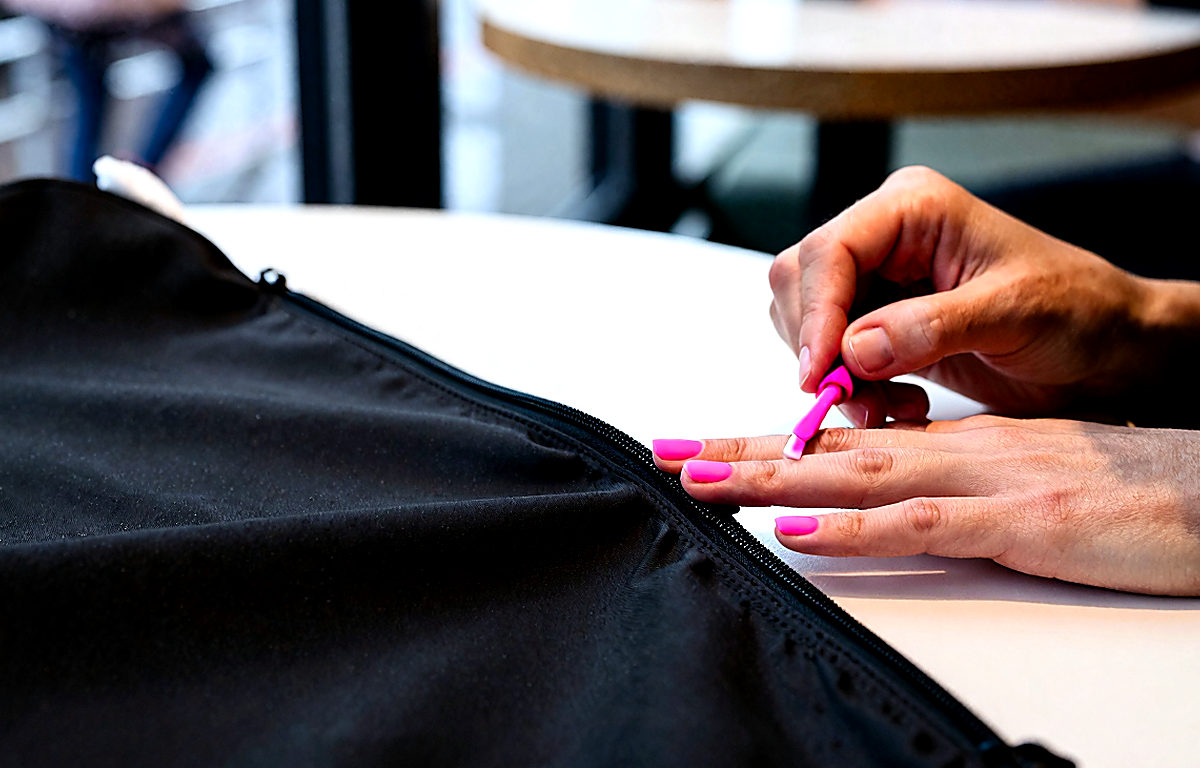
If your nails suddenly feel softer after the sea, start peeling, and your nail strengthener seems “not quite the same,” the main thing to check is not the brand on the bottle but the condition of the nail plate itself, the formula, and whether it is appropriate right now. Salt, sun, sand, frequent contact with water, and mechanical friction change the surface of the nail: it can become drier, more porous, and more sensitive. That is why even a familiar strengthening product, including Orly, may work differently after a holiday: it may feel tighter, sting more noticeably on damaged cuticles, apply in streaks, or create a feeling of excessive hardness.
The practical takeaway is simple: if the condition of your nails worries you after the sea, first assess what exactly has changed—breakage, peeling, sensitivity, yellowing, unevenness, or a reaction in the skin around the nail—and only then decide whether to keep using your current strengthener. What matters more is not finding “the strongest one,” but ruling out irritation, overdrying, and the wrong type of coating. Below is a detailed checklist to help you understand what to check in an Orly strengthener and in your own routine so you do not make the problem worse.
Why nails change after the sea even without gel manicures
Many people link worsening nail condition only to removing a coating, but a seaside holiday alone can noticeably affect how your nails look and how strong they feel. A nail is not living tissue in the usual sense, but its structure reacts to its environment: it absorbs moisture, loses it, expands, and contracts again. When that happens often, the nail plate becomes more vulnerable.
Most often, several factors affect nails after the sea at the same time:
- salt water and prolonged soaking;
- dry hot air and strong sun;
- frequent hand-washing and travel sanitizers;
- sand and micro-friction along the free edge;
- contact with SPF, body oils, and household cleaners in an apartment or hotel;
- the habit of quickly reshaping nails yourself when they have already been softened by water.
As a result, nails can become both soft and brittle at the same time—and that is not a contradiction. First the plate becomes oversaturated with moisture, then it dries out quickly, and its layers begin to separate. Against that background, a nail strengthener may seem weak, although the issue is not insufficient “power” but the wrong care format.
What exactly to check in an Orly nail strengthener
If you already have an Orly nail strengthener and have questions after the sea, start with a basic review. Even a good product may not suit you at a specific moment if your nails are dehydrated, thinned, or the skin around them is irritated.
Check the following points:
- Some strengthening products are designed for brittle, soft nails, others for peeling, and others work more as a protective base. If the problem changed after the sea, your previous product may no longer match the task.
- It is normal if the coating simply dries quickly and feels slightly tightening on the surface. It is not normal if you feel burning, tingling, increasing redness around the nail, or pain.
- If the product has become noticeably thicker, forms strings, applies in lumps, or its smell has changed, the result on the nails will be worse and irritation will be more likely, especially on sensitive skin.
- After the sea, it is tempting to apply a thick layer of strengthener every day. But excess coating can sometimes make nails harder and more brittle when they bend, or dry them out more than necessary.
- Oils, hand creams, cuticle products, and leftover sunscreen can interfere with even adhesion, causing the product to lift and making it seem as though it “doesn’t work.”
- If the concern is not the nail itself but the skin around it, the problem may not be strengthening at all but irritation from contact with the coating, acetone, salt water, or manicure-related trauma.
Important: Orly is only one example of a popular brand in the nail-strengthening category. What you should assess is not the reputation of the brand as a whole, but the specific formula, the way you apply it, and the current condition of your nails.
How to tell that the problem is not the product but the condition of the nail
After a holiday, it is easy to blame the product, especially if it used to work well for you. But some signs more often point to a temporarily changed nail condition.
It is probably not just the product if you notice:
- the free edge quickly becomes ragged and peels horizontally;
- your nails become more flexible after a shower or the sea and then break as they dry;
- whitish dry patches and dullness appear without a pronounced yellow tone;
- the coating wears worse than usual even though your application technique has not changed;
- the cuticle looks dehydrated, with hangnails and micro-cracks;
- after removing polish, the surface feels rough, though not necessarily thinned.
In such cases, a nail strengthener should be seen as part of a system, not the only solution. Nails often need not more “strength” but fewer damaging factors: a neat length, a soft shape, protection from water, and consistency in cuticle care.
There is another extreme too: when the nail becomes too hard and breaks without warning. That is also a reason to review your routine. Overly aggressive degreasing, applying layers too often, and constantly using only hardening formulas without balancing moisture can produce exactly that result.
Which signals mean you should not continue and it is better to stop
Not every type of discomfort is worth tolerating in the hope that the product will “start working.” After the sea, the skin is often more reactive, and the line between normal adjustment and irritation becomes thinner.
It is better to temporarily stop using the strengthener and observe what happens if you notice:
- burning for longer than a few minutes after application;
- increasing redness around the nail;
- pain when touched;
- a sensation that the nail plate is “burning” under the coating;
- swelling of the sidewalls or cuticle;
- a rash, itching, or weeping skin on the fingers.
This is no longer a story of weak effectiveness. It may be irritation of the skin, damage after overly aggressive manicure work, or a reaction to components in the coating and related products. If burning, pain, swelling, pronounced inflammation, a change in nail color, an unpleasant odor, suspected infection, or suspected disease do not go away, it is better to consult a dermatologist or podiatrist. During pregnancy, while taking retinoids, with chronic skin conditions, and with pronounced skin sensitivity, any active nail formulas should be introduced especially cautiously and discussed with a specialist if you are unsure.
How to adjust your routine safely after the sea
The most effective strategy is to simplify your routine for one to two weeks and see how your nails behave without extra stress. Very often, that is exactly what shows whether you still need your previous strengthening product or whether it is better to change the plan.
Here is a practical algorithm:
- Do not peel off the coating or buff the surface unless necessary. The more mechanical trauma there is, the worse the nail reacts to strengthening.
- After the sea, a long free edge often becomes the weak point. A short, neat length reduces the risk of peeling.
- After water exposure, the plate is more vulnerable. It is better to use a gentle file and avoid aggressive back-and-forth filing.
- Hand cream and a cuticle product matter just as much as the strengthening product itself. If the skin is irritated, any lacquer-type product will feel stronger.
- Do not apply it more often or in thicker layers than the manufacturer recommends. The urge to speed up results usually does not help.
- If the nails look smoother, catch less, and there is no discomfort, the routine suits you. If things get worse, it is worth reviewing both the product and how often you use it.
Sometimes it is helpful to avoid colored coatings altogether for a few days and keep only the gentlest care. This does not make nails “dependent” on air, as people sometimes say, but it does help you assess their condition objectively without a decorative layer.
What to look at in the formula and texture if you have not chosen yet
If you are buying a new nail strengthener after the sea, it is better to focus not on promises of “the strongest nails in a week,” but on how the formula behaves in real life. From an editorial point of view, Orly is often considered one of the recognizable names in nail care, but the selection principle remains universal for the whole category.
Pay attention to these characteristics:
- Layer density. Layers that are too dense look worse on a dehydrated nail plate and chip more often along the edge.
- Clear instructions. It is useful when it is easy to understand how often to refresh the coating and whether it should be applied as a course.
- Your skin’s reactivity. If you know your skin reacts more strongly after sun and salt exposure, it is better to avoid experimenting with several new products at once.
- The actual problem you are trying to solve. Softness requires one approach; peeling at the edge requires another; if your nails are basically normal but need a temporary barrier during recovery, a more delicate option may be enough.
How the product dries and wears is just as important. If the coating constantly picks up lint, prints, bubbles, or chips on the very first day, it will encourage the habit of picking at the edges—and that is already a direct path to additional nail trauma.
Common mistakes that make a nail strengthener seem useless
Sometimes the product is objectively decent, but typical everyday mistakes spoil the result. After the sea, they are especially noticeable because the nails are already in a vulnerable state.
- Applying it to a poorly prepared surface. The product adheres worse, the layer goes on unevenly, and then lifts faster.
- Using layers that are too thick. They take longer to dry, chip more often, and may create the feeling of a rigid film.
- Adding new layers every day despite irritation. If the nail is irritated, adding a fresh layer daily rarely improves the situation.
- Ignoring cuticle care. Dry, traumatized skin around the nail intensifies any discomfort and visually makes the manicure look less neat.
- Removing the product too aggressively. Even a good strengthener loses its meaning if it is taken off too harshly.
- Expecting one bottle to solve everything. Nails after the sea need hand protection from water, cream, and a neat length too—not just one bottle.
Another mistake is judging the effect too soon. If the nail plate has already been damaged by a holiday, visible recovery is never instant. A good sign in the first few days is not a miraculous “armor” effect, but less breakage, a smoother edge, and no progressive worsening.
When Orly may make sense as an editorial pick, and when it is better to pause
Without making advertising promises, popular nail strengtheners like Orly may be appropriate when nails after the sea have simply weakened, become more flexible, or are peeling slightly at the edge, but there is no pronounced inflammation, pain, or skin damage. In that case, a carefully chosen strengthening base or treatment course can help make the recovery period more comfortable and more aesthetically manageable.
But there are situations where it makes more sense not to search for the “best bottle,” but to pause and look into the cause. For example:
- if the nail has changed color in more than a superficial way;
- if throbbing, soreness, or swelling appears;
- if the skin is damaged, with cracks or small wounds;
- if the reaction repeats with different coatings;
- if the nails suddenly begin to crumble without an obvious external reason.
In these scenarios, the task is no longer to mask the issue with manicure care. A gentler routine is needed and, possibly, a specialist consultation, especially if symptoms persist.
How to support your nails over the next two weeks
After the sea, it helps to think not only about your manicure but about your hand routine as a whole. Recovery is usually calmer if you remove irritants and let the nail plate grow out without constant micro-damage.
A small plan for the next two weeks:
- keep the length short or medium, without sharp corners;
- apply hand cream after every wash;
- use a cuticle product in the evening;
- wear gloves for cleaning and prolonged contact with water;
- do not buff the surface unless there is a real need;
- do not test several new nail products at once;
- watch whether sensitivity increases after application.
This approach may not sound dramatic, but it is what most often truly works. Nails respond best not to drastic measures, but to consistency. That is exactly why, after the sea, it is better to choose a calm strategy: assess the problem, temporarily remove the excess, reintroduce the strengthening product gradually, and monitor the reaction.
The bottom line is simple: if an Orly nail strengthener worries you after the sea, check not only the bottle itself but also the condition of the nail plate, the surrounding skin, your application technique, and your overall care routine. In most cases, the issue is not that the product has “suddenly gone bad,” but that your nails have become more vulnerable and require a different level and format of support. If burning, pain, swelling, or persistent worsening appears, it is better not to keep experimenting and to consult a specialist.