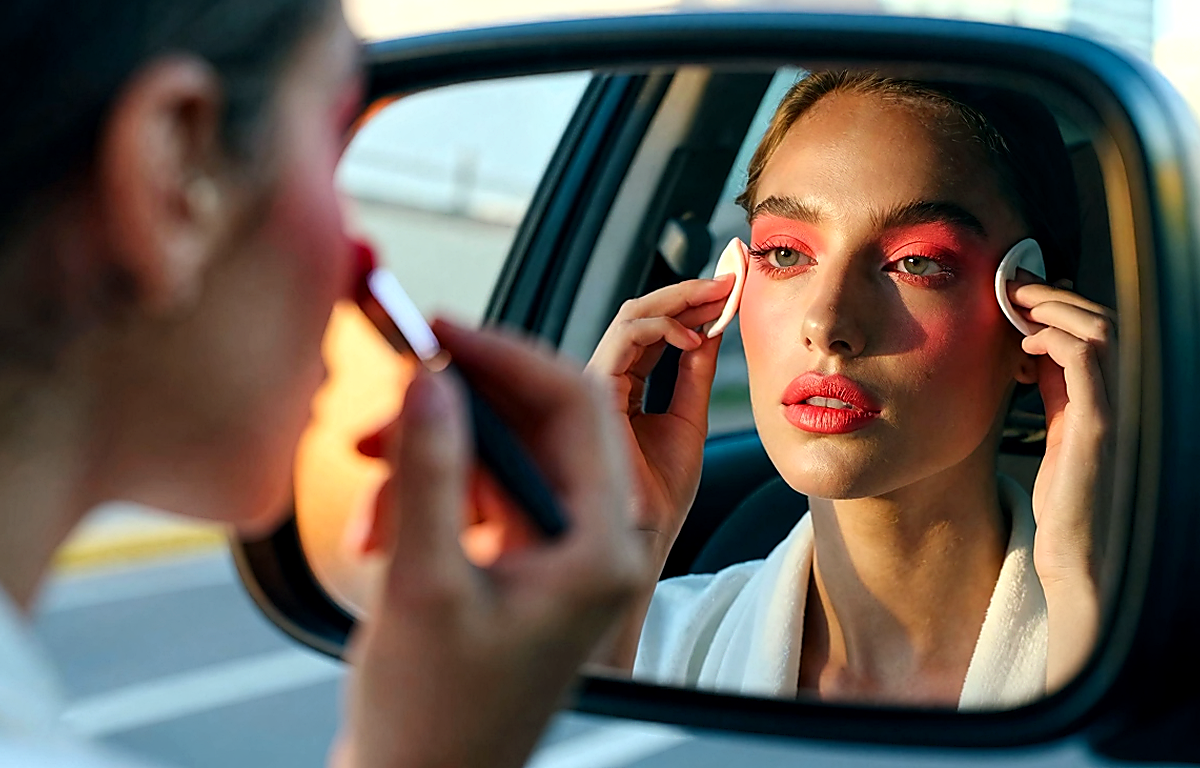
In hot weather, foundation often starts to feel less like a helper and more like an extra layer: the face sweats faster, the skin looks shinier, and the coverage seems to sit on top and resemble a mask. The main principle for choosing a product in this situation is simple: the higher the temperature and humidity, the more important it is to focus not on dense camouflage, but on a thin layer, good adhesion to the skin, and a formula that can withstand sebum, sweat, and active facial movement. In practice, this means that in summer most people feel more comfortable with lightweight fluids, serum foundations, skin tints, and water- or gel-based textures rather than classic dense creams, because they even out the complexion without creating an armored feeling.
If what bothers you most is specifically the mask-like feeling on your face, do not look for the most matte or the most long-wearing product at any cost. Instead, look for a balanced formula: sheer coverage, a natural finish, moderate staying power, and compatibility with your skincare and SPF. Often the discomfort comes not from the foundation itself, but from an overloaded stack of layers: a rich cream, a sticky sunscreen, a primer, and then another long-wearing coating on top. In hot weather, the winning system is the one in which every layer is lightweight and the foundation works with your skin, not instead of it.
Why foundation feels like a mask in hot weather
A mask-like feeling is rarely caused by just one product. Usually it is a combination of factors: air temperature, humidity, sebum, perspiration, the condition of the skin barrier, and an unsuitable texture. When the skin produces more oil, the formula starts mixing with it on the surface. If the foundation is dense, waxy, or overly silicone-heavy to begin with, it collects faster in pores, emphasizes texture, and becomes physically noticeable on the face. That is where the sense of heaviness, stuffiness, and the urge to wash everything off comes from.
Another common reason is trying to compensate for summer instability by applying more product. It may seem logical to put on a thicker layer so the makeup will definitely last, but the result is often the opposite. A layer that is too thick grips the skin worse, moves more visibly during facial expressions, settles into lines faster, and becomes especially noticeable in the T-zone. The thinner and more even the layer, the greater the chance that the makeup will hold up neatly and feel comfortable throughout the day.
What textures usually feel more comfortable
If you dislike the sensation of makeup on your face, start with the texture category rather than with promises on the label. The most comfortable options in heat are usually fluid foundations, skin tints, serum-like products, and lightweight gel or water-based formulas. They spread more easily, set in a thinner layer, and are less likely to create the visual and tactile effect of a coating on top of the skin.
Creamy, dense, highly pigmented, and very occlusive formulas are more likely to feel heavy in hot weather, especially if the skin is already prone to oiliness or sweating. This does not mean they are always bad, but in summer they are often better left for spot correction or evening makeup rather than for all-over daily wear. If you need coverage, it is usually more comfortable to use a lighter base and then add concealer only where it is truly needed.
What finish to choose so the face does not feel overloaded
An ultra-matte finish is not always the best solution in hot weather. On paper it seems ideal, but in reality overly matte formulas can feel drier, tighter, and more noticeable on the skin, especially if the face is dehydrated. At the same time, a very emollient dewy foundation may slide faster in humidity. The most universal option is often a natural finish: not flat matte, not oily-glossy, but balanced.
This kind of finish usually looks more skin-like and behaves more predictably during the day. If shine appears, it is easier to control it with blotting papers or a small amount of powder than to live all day with makeup that already felt heavy from the start. In other words, it is better to choose a base that initially feels comfortable and then fine-tune it, rather than force the skin into a formula that is too harsh or too rich.
How skincare and SPF affect the feeling of foundation
In hot weather, the sensation of a mask often begins even before foundation. If the skincare underneath is too rich, oily, or slow to absorb, any complexion product on top will feel heavier. The same applies to sunscreen: some SPF textures are comfortable on their own, but when combined with foundation they can create stickiness, slippage, and the feeling that there is too much on the skin.
That is why it is important to evaluate the entire routine, not just the foundation in isolation. In daytime makeup, SPF remains essential, and it should not be skipped. But it helps to choose a sunscreen texture that sits well under makeup and to let it settle before applying foundation. If your skincare, sunscreen, and complexion product all compete with one another, even a good foundation may end up feeling uncomfortable.
How to apply foundation so it does not turn into a heavy layer
In hot weather, technique matters no less than the formula. The safest approach is to apply foundation in a very thin layer, starting from the center of the face and blending outward. It is better to add a little more only where needed than to cover the whole face heavily from the start. This helps preserve a skin-like finish and reduces the chance that the product will gather in pores, lines, or active zones.
Application tools also influence the final feel. Fingers can give the thinnest layer if you use a small amount of product, while a damp sponge often helps remove excess and press the texture into the skin more naturally. A dense brush may create fuller coverage faster, but in summer it can also make it easier to overapply. The main goal is not maximum perfection at once, but a light, even veil that remains comfortable after several hours.
When less foundation is actually the better choice
Sometimes the most comfortable solution in hot weather is not to search endlessly for a super-resistant full-coverage foundation, but to reduce the amount of product overall. If the skin looks acceptable, a skin tint, a bit of concealer, and strategic powdering may feel much better than a full dense base. This does not mean giving up makeup completely. It means adapting it to the season and to the needs of the skin.
If the face flushes easily, sweats heavily, or reacts sensitively to heat, comfort becomes an important criterion, not a minor preference. Makeup that feels breathable is easier to wear, easier to refresh, and usually looks more natural during the day. And if a product constantly makes you want to wash it off, that is already a sign that the formula or the application style is not right for the current weather conditions.
How to understand that a foundation is not right for summer
There are several signs that a foundation is not working well in the heat. It quickly becomes noticeable on the skin, gathers around pores or in facial-expression lines, shifts when you touch your face lightly, or starts to feel stuffy within the first hour or two. Another warning sign is that the face looks overloaded even though the coverage itself seems neat in the mirror. In that case, the issue is often not the shade match, but the weight and behavior of the formula.
If your skin feels irritated, overheated, or unusually uncomfortable under makeup, do not try to solve it by adding more fixing products on top. It is better to reconsider the base itself, simplify the routine underneath, and choose lighter textures. The goal of summer complexion makeup is not to create a rigid coating, but to even out the tone while keeping the face as comfortable as possible.
The key principle when choosing foundation for hot weather
If you are bothered by a mask-like feeling, choose foundation for hot weather according to one main rule: the lighter, thinner, and more balanced the system of layers, the more comfortable the result is likely to be. Focus on fluid or serum-like textures, natural-looking finishes, moderate staying power, and compatibility with skincare and SPF. In summer, comfort usually comes not from maximum density, but from smart restraint.
The best foundation in hot weather is not the one that hides the skin most aggressively, but the one that lets the skin still look and feel like skin. When the product is lightweight, the layer is thin, and the routine underneath is not overloaded, the face looks fresher and the makeup is far less likely to turn into a mask by midday.