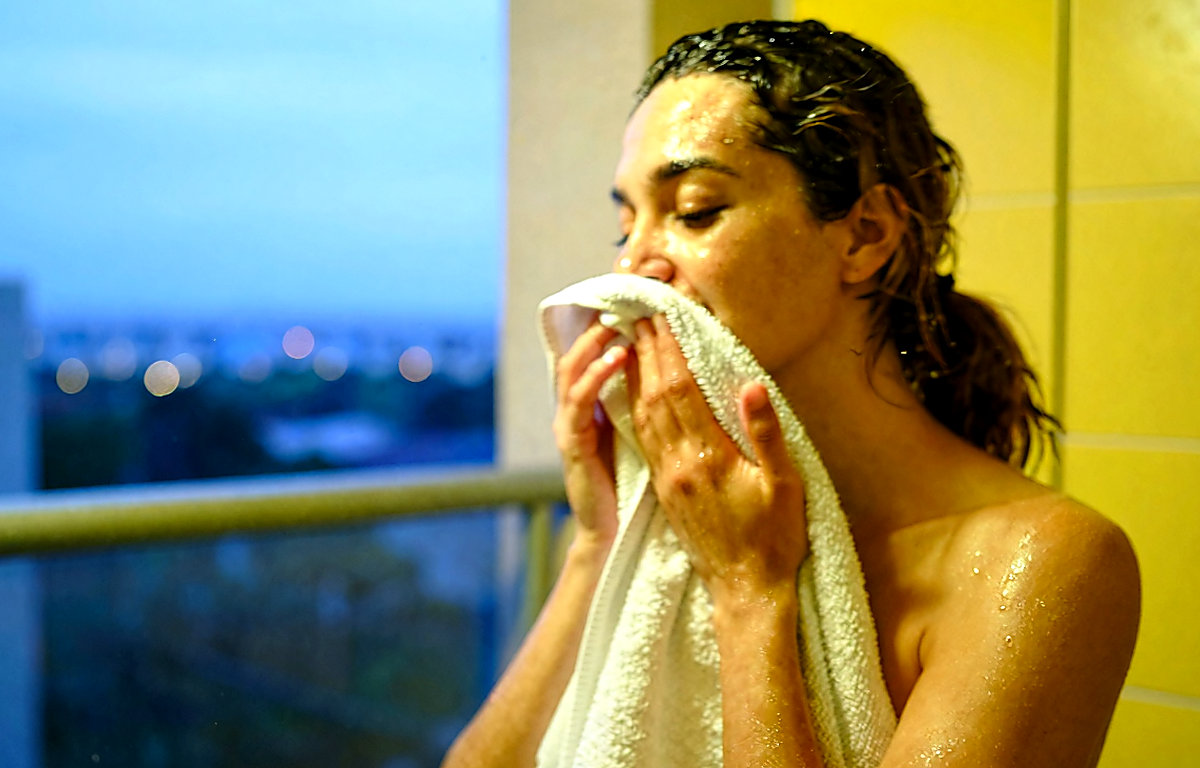
If your skin starts to feel tight, itchy, or simply uncomfortable after a shower while traveling, the best choice is not the “richest” cream on the shelf, but a product that matches your real conditions: the climate, the length of the trip, how often you shower, and how exactly your skin reacts. For a short city trip, a light cream or emulsion with glycerin, squalane, panthenol, and gentle emollients is often enough. For flights, seaside trips, hard water, and cold climates, a richer texture is usually more practical — a cream balm or a cream with ceramides, oils, and ingredients that help reduce the feeling of dryness after contact with water.
The main rule is simple: do not rely on promises of “universal rescue.” Focus on three practical criteria instead — how quickly the product relieves tightness after a shower, whether it leaves an unpleasant sticky feel in the heat, and whether it is easy to take with you. A good travel body cream should fit smoothly into your real routine: spread easily, absorb quickly, work well with clothing, and not require ten minutes of waiting before you can get dressed. That is what makes body care on a trip realistic instead of “ideal only in theory.”
Why skin can feel drier after a shower when you travel
Even skin that behaves predictably at home often reacts differently on the road. The reason is not always the cream itself: the feeling of dryness is affected by water quality, temperature, air conditioning in the room, flying, sun, wind, and even the fact that we often shower more frequently on vacation. If your skin easily tolerates your usual shower gel and only occasional lotion at home, that same routine may stop working during a trip.
Most often, discomfort is caused by several factors at once:
- harder water, which can leave skin feeling squeaky and tight;
- a hot shower, which temporarily increases dryness and makes the skin surface more vulnerable to dehydration;
- sun exposure, wind, salt water, and air conditioning, all of which can increase the feeling of dryness;
- more frequent showers than usual, especially after the beach, the pool, long walks, or flights;
- a routine that is too minimal: cleansing without enough replenishing care afterward.
That is why a travel body cream should not just smell pleasant or come in a nice tube. It should help your skin recover comfortably after water exposure and fit the exact conditions of your trip.
What texture to choose: lotion, cream, balm, or emulsion
The right texture depends less on preference alone and more on where you are going and how your skin usually feels after a shower. If tightness is mild and the climate is warm or humid, a lotion or light emulsion is often enough. These textures are easier to spread, absorb faster, and are usually more comfortable if you need to dress quickly.
If your skin feels very dry after water, if you are flying, staying in a cold climate, or dealing with hard water, a classic cream or richer cream balm is usually more reliable. It does not have to feel heavy or greasy, but it should give a more noticeable protective and softening effect.
- Lotion or emulsion: suitable for normal skin, warm weather, short city trips, and frequent daytime use.
- Cream: a versatile option for most travel situations when skin feels tight after a shower.
- Cream balm: useful for pronounced dryness, cold weather, flights, hard water, and wind exposure.
If you dislike sticky products, test-rich formulas are not automatically the best option. In heat and humidity, an overly occlusive texture can feel uncomfortable, even if the formula itself is good. In that case, it is often better to choose a medium-weight cream and apply a slightly more generous layer right after showering.
Which ingredients are most useful when skin feels tight after a shower
When choosing a travel body cream, it is more helpful to look for a balanced formula than for the longest ingredient list. The key is that the product combines humectants, emollients, and skin-supporting components that help reduce the feeling of dryness and discomfort after water exposure.
Ingredients that are often useful in this situation include:
- glycerin — helps attract and retain moisture;
- squalane — softens skin and helps reduce the feeling of dryness without unnecessary heaviness;
- panthenol — supports comfort and helps calm skin that feels irritated after showering;
- ceramides — help support the skin barrier, especially when water, climate, and frequent cleansing disrupt it;
- fatty oils and butters in moderate amounts — can be useful in colder, windier, or drier conditions.
If your skin is reactive, it is often more practical to avoid formulas that are overloaded with strong fragrance or too many potentially irritating extras. On a trip, the goal is not experimentation but predictable comfort.
How to choose according to climate and trip format
The same product will not feel equally comfortable in every travel scenario. A cream that works beautifully during winter flights may feel too heavy in a hot seaside climate, while a very light lotion may be pleasant in summer but too weak after a long flight or in a hotel with hard water.
- For a short city trip: a light or medium cream is usually enough, especially if your skin is not very dry.
- For flights: choose a more nourishing texture that helps compensate for dry cabin air and frequent washing.
- For the sea and sun: look for a comfortable cream that softens well after showering and does not feel suffocating in the heat.
- For cold or windy weather: richer creams with ceramides and emollients are usually more practical.
- For hard water: formulas that reduce the immediate feeling of tightness after washing tend to work best.
If you are unsure, the safest universal compromise for travel is usually a medium-rich cream with glycerin, squalane, panthenol, and barrier-supporting lipids. It is often flexible enough for different conditions without being too light or too heavy.
Which packaging is most convenient for travel
Convenience matters more than it seems. Even a very good body cream is unlikely to help if the packaging is bulky, leaks in a bag, or is awkward to use when you are tired and want to get dressed quickly. For travel, practical packaging is part of product quality.
- A tube is often the most convenient option: it is easier to pack, simpler to use, and usually more hygienic on the go.
- A small pump bottle can be comfortable for longer stays, but it is less practical for compact luggage.
- A jar may suit home use, but it is usually less convenient for travel, especially if you want quick, clean application after a shower.
If you are traveling with hand luggage only, it is worth thinking in advance about the allowed volume and whether the product is easy to decant without losing convenience. A travel cream should not turn routine care into a separate logistical task.
How to apply body cream on a trip so it actually works
Technique matters too. Even a good product can feel less effective if you apply it too late, too sparingly, or onto completely dry skin after a long pause. The easiest approach is to apply the cream soon after showering, when the skin has been gently towel-dried and still feels slightly fresh rather than completely dehydrated.
A practical routine looks like this:
- take a warm, not very hot, shower if your skin already tends to feel tight;
- pat the skin dry rather than rubbing aggressively with a towel;
- apply the cream promptly, paying extra attention to areas that dry out the fastest;
- adjust the amount depending on climate: less in humid heat, a bit more in dry air or cold weather.
If one layer is not enough after a flight, in a cold climate, or after repeated showers, it is often better to reapply a small amount to the driest areas later than to use an excessively heavy product everywhere from the start.
What to avoid if comfort after showering is your main goal
If your priority is to get rid of tightness quickly and comfortably, the least practical choice is usually a product that is either too weak for your conditions or so heavy that you do not want to use it regularly. In real life, consistency matters more than an “ideal” formula that stays in the bag.
- Do not choose by texture alone: “the richest” is not always the best.
- Do not focus only on fragrance or the promise of luxury feel if the formula does not suit your climate and routine.
- Do not ignore stickiness if you are going somewhere hot: an uncomfortable product often gets skipped.
- Do not expect one product to solve all discomfort if showers are too hot and too frequent.
If dryness after showering becomes pronounced, persistent, or is accompanied by significant irritation, cracking, or worsening discomfort, it is better not to rely on cosmetic care alone.
The bottom line
The best body cream for travel is the one that quickly restores comfort after a shower under your actual travel conditions. Start with how your skin feels, where you are going, how often you will shower, and whether you need a lighter or richer texture. In most cases, a practical formula with glycerin, squalane, panthenol, and barrier-supporting ingredients is a more reliable choice than a product selected only for density or marketing promises.
When a cream is easy to pack, pleasant to apply, and truly comfortable on the skin, body care during a trip becomes much easier to maintain. And that is exactly what helps reduce tightness after showering — not a perfect routine on paper, but one that you will actually keep using.