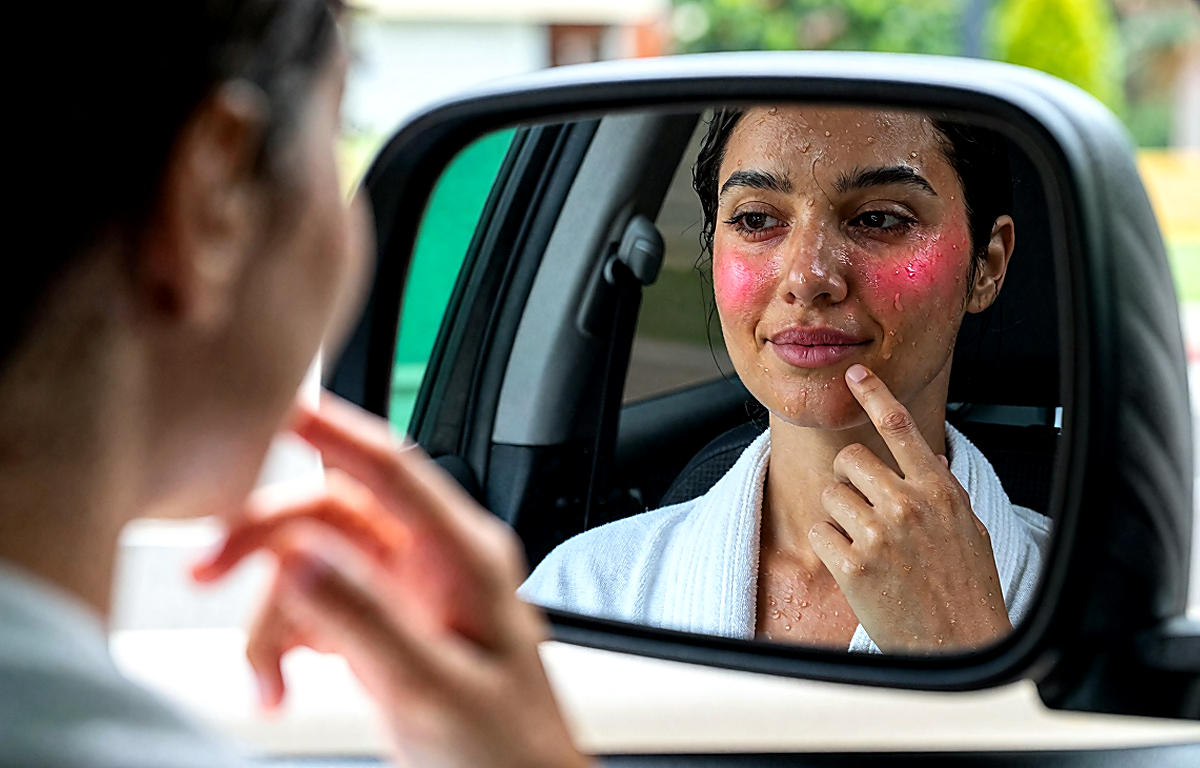
If your skin quickly starts to feel tight after SPF, begins to flake by evening, or seems to “ask” for cream again within an hour, the issue is not always the sunscreen itself. Dryness often appears because of a combination of factors: a texture that is too light for your skin type, active skincare underneath SPF, a high amount of alcohol in the formula, too few moisturizing components, or simply an incorrect application routine. So if you are looking at Vichy products or any similar pharmacy SPF products, it is worth paying attention not only to the protection level, but also to how the formula behaves specifically on dry or dehydrated skin.
The most useful guideline is simple: a good SPF for skin prone to dryness should not only protect from the sun, but also avoid making the barrier worse. That means before buying and during the first days of use, it is important to check the texture, the ingredient list, how it behaves on freshly cleansed skin, whether it works well with your moisturizer, and how your skin reacts throughout the day. If a product feels comfortable immediately after application but causes burning, tightness, or makes flakes more visible a few hours later, that is already an important sign to reconsider your choice.
Why SPF can make dryness worse, even if the product is considered “good”
Dryness after sunscreen does not mean that the product is bad or unsuitable for everyone. SPF has its own specifics: the formula needs to create an even protective film, remain stable enough, and still feel comfortable. To make textures lighter, many brands formulate more fluid, fast-setting, and less nourishing products. For normal or combination skin, that can be a plus, but for dry skin, not always.
Discomfort is especially common in several situations. The first is when the skin is not just dry, but dehydrated and has a weakened barrier. The second is when active skincare with acids, retinoids, or overly harsh cleansing is used under SPF. The third is when a person chooses the most mattifying or weightless texture possible, expecting it to replace a regular day cream. In practice, such a formula may provide excellent UV protection but still leave dry skin without enough comfort.
What to check in the formula first
Alcohol and the overall feel of the base
If dryness is your main concern, it is worth checking how high alcohol appears in the ingredient list and, more importantly, how the product feels on your face. Alcohol in itself does not always mean the product is bad, but in lightweight sunscreens it often helps the texture spread quickly and set fast. On resilient or oilier skin, that may feel pleasant. On dry or sensitized skin, the same effect can translate into tightness and a more fragile barrier feeling by the end of the day.
If you notice that the product applies nicely but after some time your skin feels thinner, drier, or starts to sting, that matters more than the marketing description. In this situation, it makes sense to look for a more cream-like texture and to avoid assuming that a very fluid finish will automatically be comfortable for dry skin.
Moisturizing and barrier-supporting components
It is also useful to see whether the formula contains components that help support comfort: humectants, emollients, and ingredients that reduce the feeling of dryness during wear. A sunscreen does not have to replace a full moisturizer, but for dry skin it is usually easier to wear formulas that do not feel purely volatile or drying.
If the product protects well but constantly leaves the skin uncomfortable, the issue may be not the filters themselves, but the balance of the whole formula. In other words, good UV protection and good daily comfort are both important.
Why skincare underneath SPF matters
Sometimes sunscreen gets the blame when the main issue is the routine underneath it. If you use acids, retinoids, benzoyl peroxide, strong cleansers, or other potentially irritating actives, the skin may already be in a more vulnerable state before SPF is applied. In that case, even a decent sunscreen can sting, emphasize flaking, or make dryness feel stronger.
That is why it is worth evaluating the full morning routine rather than judging SPF in isolation. If your skin is already reactive, a gentler cleanser and a reliable moisturizer underneath sunscreen may improve comfort more than switching between multiple SPF products one after another.
Should SPF replace moisturizer?
For skin prone to dryness, that usually should not be the default assumption. Some sunscreens are comfortable enough to work on their own, but many lighter pharmacy textures perform better when applied over a suitable moisturizer. The key is not to overload the skin, but to give it enough support so the sunscreen film does not sit on a dehydrated surface.
If the combination pills, separates, or becomes patchy, that suggests incompatibility between the products or that too much time is needed between layers. But if skipping moisturizer leads to tightness every time, that is also useful information.
How to assess texture correctly
Do not rely only on how the product feels in the first five minutes. Many sunscreens seem pleasant right away and only later reveal whether they are actually comfortable for dry skin. A better test is to watch the skin for several hours: whether tightness appears, whether fine flakes become more visible, whether the cheeks start to sting, and whether the face feels as if moisture has been pulled out of it.
For dry skin, a sunscreen does not have to feel heavy, but it should not create a persistent sensation of tension either. If you repeatedly get the same result, that is more meaningful than claims such as “light,” “invisible,” or “non-greasy.”
Signs that the issue is not just dryness, but irritation
It is important to distinguish simple lack of comfort from irritation. If you notice burning, persistent redness, itching, tenderness, or worsening reactivity around sensitive areas, the problem may be more than just a slightly dry finish. In that case, continuing to use the product despite daily discomfort is not a good idea.
Pay special attention if your skin is already irritated by acids, retinoids, over-exfoliation, or an impaired barrier. Stronger reactions are a reason to stop using the product and reassess the routine. If swelling, significant pain, or a pronounced rash appears, it is safer to seek medical advice rather than trying to “push through” the adaptation period.
What to check before deciding that SPF is not right for you
- Whether the skin was already dehydrated before starting the product.
- Whether acids, retinoids, or overly harsh cleansing are part of the routine.
- Whether the formula feels too mattifying, too fluid, or too fast-setting for your skin type.
- Whether the sunscreen is being applied over an appropriate moisturizer.
- Whether dryness appears alone or is accompanied by burning, redness, or irritation.
Bottom line
If dryness is a concern, when choosing Vichy SPF or similar sunscreen products, it is worth looking beyond the protection number alone. The important question is not only whether the product protects from UV, but whether it remains comfortable on dry or dehydrated skin throughout the day. Texture, the balance of the formula, skincare underneath, and signs of irritation all matter.
A suitable sunscreen for dry skin should protect well without making the barrier feel worse. And if a product repeatedly causes tightness, flaking, burning, or obvious discomfort, that is a valid reason to look for a formula that your skin tolerates more calmly.