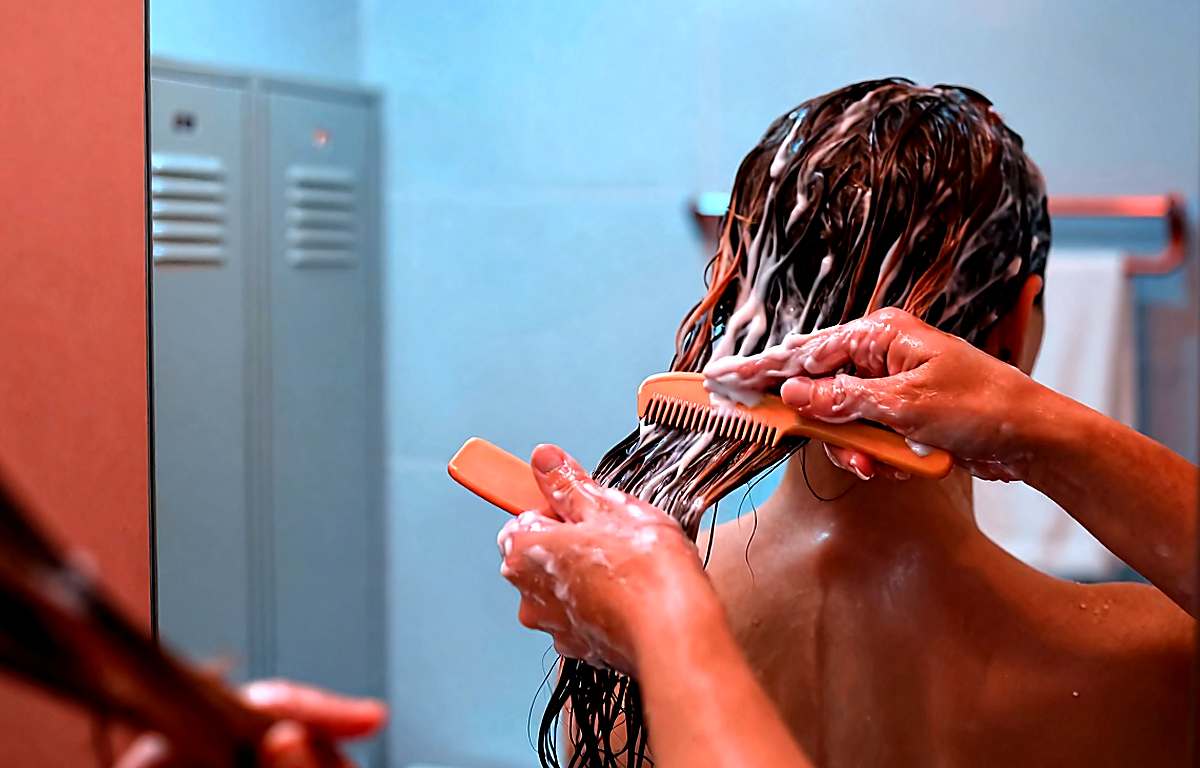
If hair feels drier rather than softer after a mask with a “repairing” or “bonding” effect, the problem is not always the product itself. In most cases, it helps to check four things: whether the formula matches your specific type of damage, whether you are using an intensive product too often, whether your hair is getting enough regular moisture, and whether your application technique is getting in the way of the result. Even a popular mask, including options often discussed alongside Olaplex, will not necessarily give the same effect on fine, porous, bleached, curly, or heat-damaged hair.
The main practical point is simple: if dryness is the concern, do not rush to replace your entire routine right away. First assess whether you may be overloading the hair with proteins and dense film-forming ingredients, whether there is enough water and softening ingredients in your routine, how long you leave the mask on, and what happens afterward — whether you use conditioner, a leave-in product, and heat protection. Quite often, dryness is not a “reaction to the brand” but a sign that the hair needs a more precise balance between repair, moisture, and protection.
Why hair can feel dry after a mask
Dryness after an intensive mask does not always mean the hair has literally been “dried out.” Sometimes strands simply become stiffer to the touch, lose slip, tangle more, and feel more fragile through the lengths. This can happen when care shifts too far toward reconstructing ingredients while basic moisture and softness are not enough. For some hair types, that gives a feeling of density and control; for others, it creates a straw-like effect.
There are several common reasons:
- the formula works more on strengthening and structure than on immediate softness;
- the mask is used too often even though it is meant for occasional use;
- the hair is already dehydrated from hot tools, sun, hard water, or aggressive cleansing;
- there is not enough conditioning and leave-in protection after the mask;
- the product does not match the hair’s current condition.
What to check in the formula first
If a product is positioned as repairing, strengthening, or bonding, it is important to understand what kind of cosmetic effect it is designed to emphasize. Some masks are valued for making hair feel denser, more controlled, and visually smoother, but that same result can be perceived as dryness if the hair naturally needs more elasticity and softness.
It is worth paying attention to how the formula behaves specifically on your hair. If strands are fine, highly porous, or prone to stiffness, a dense restorative mask may need to be alternated with a more moisturizing option. If the hair is badly damaged from bleaching or heat styling, strengthening care may be useful, but it still should not replace the basic need for slip, flexibility, and surface protection.
How frequency affects the result
One of the most common mistakes is using an intensive mask too often. If the product gives a good salon-like effect at first, it is tempting to repeat it at every wash. But hair often responds better when restorative masks are used periodically rather than as a universal daily or every-wash solution.
If dryness appears, it makes sense to review frequency first. Sometimes reducing use and alternating the mask with gentler moisturizing care is enough to bring back balance. This is especially relevant if the hair has become rougher, harder to comb, or less flexible than usual.
Why moisture balance matters no less than repair
Even when the mask really helps damaged hair look more orderly, it does not cancel the need for moisture. If there is not enough hydration in the routine, the hair may gradually lose softness, become dull, and tangle more easily. In that case, the issue is not that restorative care is “bad,” but that it is not supported by products that help retain softness and manageability.
It is useful to assess the routine as a whole: how gentle the shampoo is, whether there are moisturizing and softening products between intensive treatments, and whether the hair is protected from overheating and friction. The stronger the external stress on the hair, the more noticeable a moisture deficit can become.
How application technique can change the feel of the hair
Sometimes the issue is not the mask itself but how it is used. If the product is applied too generously, left on for too long, distributed unevenly, or not rinsed out well enough, the final feel may be heavier, rougher, or less smooth than expected. On the other hand, if the hair is not finished with a conditioning step, it may lack the slip that makes lengths feel soft and manageable.
What matters here is not only the mask but the whole sequence: cleansing, careful rinsing, conditioner if needed, leave-in care, and heat protection before styling. Dryness often becomes more noticeable not at the rinsing stage, but later — when the hair dries, tangles, and starts to catch through the lengths.
When the product may simply not be the right fit
Hair condition changes over time. What worked well after coloring, a haircut, or a period of active heat styling may feel completely different a few weeks later. Sometimes a mask that once gave density and smoothness starts to feel too heavy or too focused on structure. That does not always mean the product is poor quality; it may simply no longer match the hair’s current needs.
If dryness keeps returning, it is reasonable to ask not whether the product is “good or bad,” but whether it is suitable right now. Fine hair, highly porous lengths, curls, and bleached hair can react differently even to the same routine. That is why the best result often comes not from choosing the “strongest” care, but from choosing the most balanced one.
What to do if dryness is already bothering you
The most practical approach is to simplify the assessment. First, reduce how often the intensive mask is used. Then check whether the routine includes enough moisturizing and softening support. After that, review the technique: application amount, timing, rinsing, and the use of conditioner, leave-in care, and heat protection.
If after these adjustments the hair still feels rough, tangled, or brittle through the lengths, the formula may not be the best match for your current condition. In that case, it is worth choosing a gentler and more balanced routine instead of forcing a result from one product.
If dryness is accompanied by marked breakage, scalp irritation, discomfort, or worsening hair condition, it is best not to keep experimenting aggressively. In that situation, a more careful approach and, if needed, advice from a specialist is the safer option.