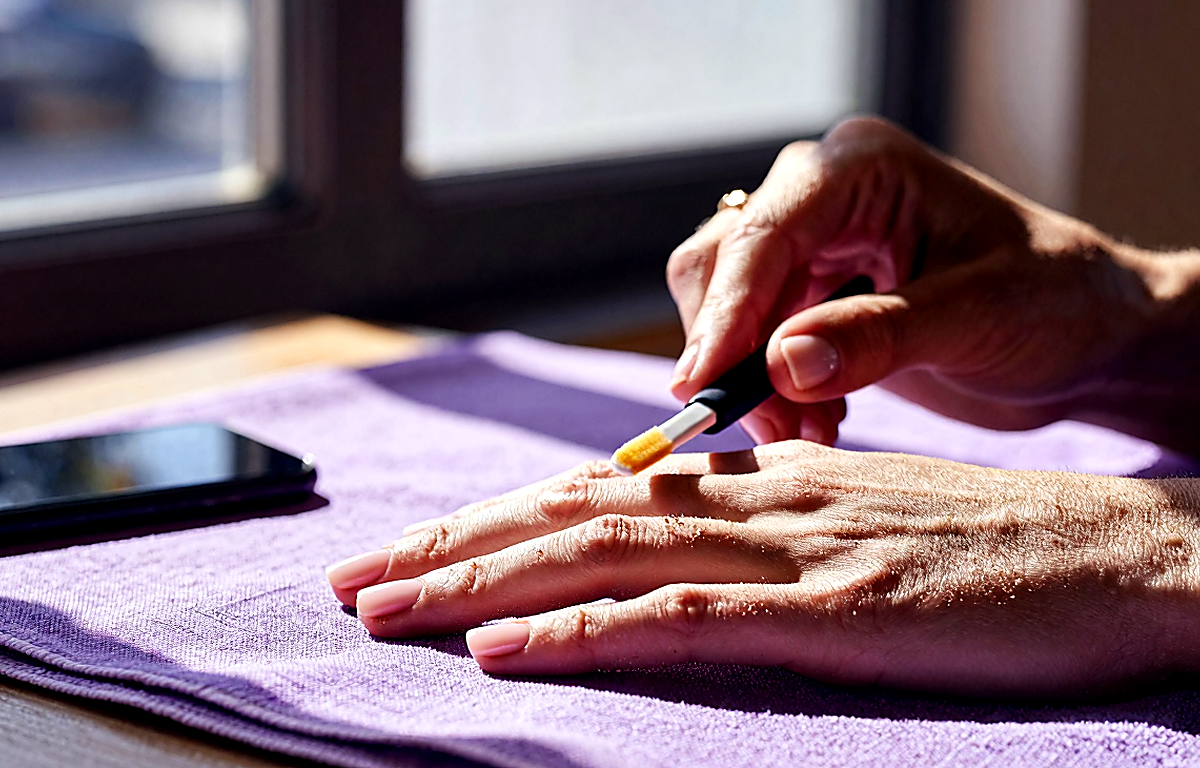
After a vacation, nails often look and feel worse than they did before the trip: the nail plate seems thinner, the free edge bends more easily, the cuticle becomes dry and starts to catch, and the skin around the nails feels tight. Usually there is not just one cause but several at once: sun, sea salt, chlorinated water, frequent hand washing, air conditioning, sand, friction, and the habit of using hand sanitizers more often while traveling. At that point, cuticle oil really can help, but it is important not to choose the “most nourishing” option at random. What you need is a product that supports the skin around the nail and does not interfere with the gentle recovery of a thin nail plate.
The main guideline is simple: after a vacation, thin nails usually do better with oils and oil serums that have a clear softening formula, an easy way to apply them, and no aggressive fragrance if your skin is sensitive. Look for a combination of light base oils, components that help reduce moisture loss, and, if needed, soothing additions. What you should not expect is for an oil to “glue” peeling layers back together or make the nail instantly thicker. Its real job is to make the cuticle more flexible, reduce dryness, lessen hangnails, and help the growth area look neater while you return to a gentler routine.
Why the cuticle gets dry after vacation and nails seem thinner
A nail is not a living “sheet” that can be fully restored in a couple of days. Its appearance depends a lot on the condition of the surrounding skin, how well moisture is maintained, and how often the nail plate comes into contact with water and household products. During a vacation, that balance is easy to disrupt.
Most often the situation develops like this: first the skin and cuticle become dehydrated from sun, salt, or chlorine, then we wash our hands more often, use sanitizers, remove and reapply polish while traveling, and the nails become more flexible and fragile at the free edge. If you add the habit of filing length “dry” without careful technique or trying to cut hangnails too aggressively, the area around the nails starts to look even more irritated. In that state, the task is not to overload the nails with too many products at once, but to restore comfort and reduce daily friction.
What kind of cuticle oil is best for thin nails after vacation
The best choice is usually a simple, understandable formula that mainly works on softening and protecting the skin around the nails. Light plant oils are often more comfortable than very dense, waxy textures if you plan to apply the product during the day as well as at night. The product should spread easily in a thin layer, absorb without heavy residue, and not make you want to wash it off right away.
It is helpful when the formula contains ingredients that reduce transepidermal moisture loss and keep the cuticle more supple. If the skin around the nails feels reactive, soothing components can also be useful. The texture matters too: if the oil is too thick and sticky, it is often used irregularly, and consistency is more important than chasing the richest formula on the shelf.
Which ingredients to look for
Focus on softening oils and supportive components that help the skin stay comfortable. A blend of lighter base oils is often a good option when the cuticle is dry but the nails themselves feel thin and flexible. Such formulas help reduce roughness and make the skin around the nail look more even without turning care into a heavy occlusive layer that feels unpleasant during the day.
If the skin is not only dry but also feels tight or easily irritated, choose formulas with a calm, minimal composition. The fewer unnecessary extras, the easier it is to understand how the product behaves on your skin. If you already know that fragrances or essential-oil-heavy products irritate the area around your nails, it is better to avoid them during recovery and choose a more neutral option.
What to avoid when the cuticle is dry and the nail plate is thin
A very intense fragrance is one of the first things to be cautious about if the skin around the nails has become more sensitive after sun, sea, and frequent cleansing. A strong scent does not make the product more effective, but it can make regular use less comfortable and, in reactive skin, increase irritation.
It is also worth being careful with formulas that promise an instant dramatic effect on the nail plate itself. Cuticle oil is a supportive step in care, not a way to immediately rebuild a thinned nail. If a product leaves a heavy coating but does not improve comfort, elasticity, or the appearance of the cuticle, it may simply not suit your current needs.
Which format is more convenient: brush, dropper, or pen
The best format is the one you will actually use regularly. A brush bottle is convenient at home, especially in the evening, when you can apply a slightly more generous layer and massage it in slowly. A pen or compact applicator is useful during the day and while traveling, because it is easier to carry and simpler to use neatly.
If your nails are thin after vacation, routine matters more than format prestige. A product that is pleasant to apply two or three times a day usually works better than a richer one that sits untouched because it is inconvenient. Ease, neat application, and comfort on the skin are practical selection criteria, not minor details.
How to use cuticle oil so it helps rather than gets in the way
Apply the oil to clean, dry skin around the nails and massage it in gently without pressure. There is no need to flood the area: a small amount is enough if the formula spreads well. Regular use works better than occasional heavy application.
If your nails feel especially fragile, combine oil with a generally gentler routine: avoid long soaking, minimize unnecessary contact with harsh cleansers, and be careful with filing and cuticle trimming. Oil works best when it is part of a recovery period in which the nail plate and surrounding skin are exposed to less repeated stress.
What results are realistic
A well-chosen cuticle oil can make the skin around the nails softer and more flexible, reduce dryness, and help decrease hangnails. The cuticle usually starts to look neater, and the area around the nail feels more comfortable. This is exactly the result worth aiming for first after vacation.
What it cannot do is instantly make the nail plate thick again or erase all signs of dehydration in a day or two. If the nails are very thin, peeling, or breaking high into the nail, recovery takes time and a generally careful approach. The role of oil here is supportive but still important.
When not to rely on oil alone
If the skin around the nails is not just dry but painful, visibly inflamed, swollen, or damaged, oil alone may not be enough. The same applies if you notice persistent splitting, marked tenderness, or changes that do not improve with gentler care. In that situation, it is better not to keep experimenting with active or heavily fragranced products.
When irritation is pronounced or the condition of the nails keeps worsening, a professional evaluation may be the safer route. Home care should make the area feel calmer and more comfortable, not more reactive.
The bottom line
After a vacation, thin nails usually benefit most from a simple cuticle oil with a clear softening formula, comfortable texture, and no unnecessary irritants. The right product does not need to be the richest one. It needs to support the skin around the nails, reduce dryness, and fit easily into a gentle routine.
If you choose with comfort, consistency, and sensitivity in mind, cuticle oil can become a useful recovery step after sun, salt, chlorine, and frequent cleansing. It will not perform miracles overnight, but it can help the cuticle look neater and the area around the nails feel much better while the nails gradually recover.