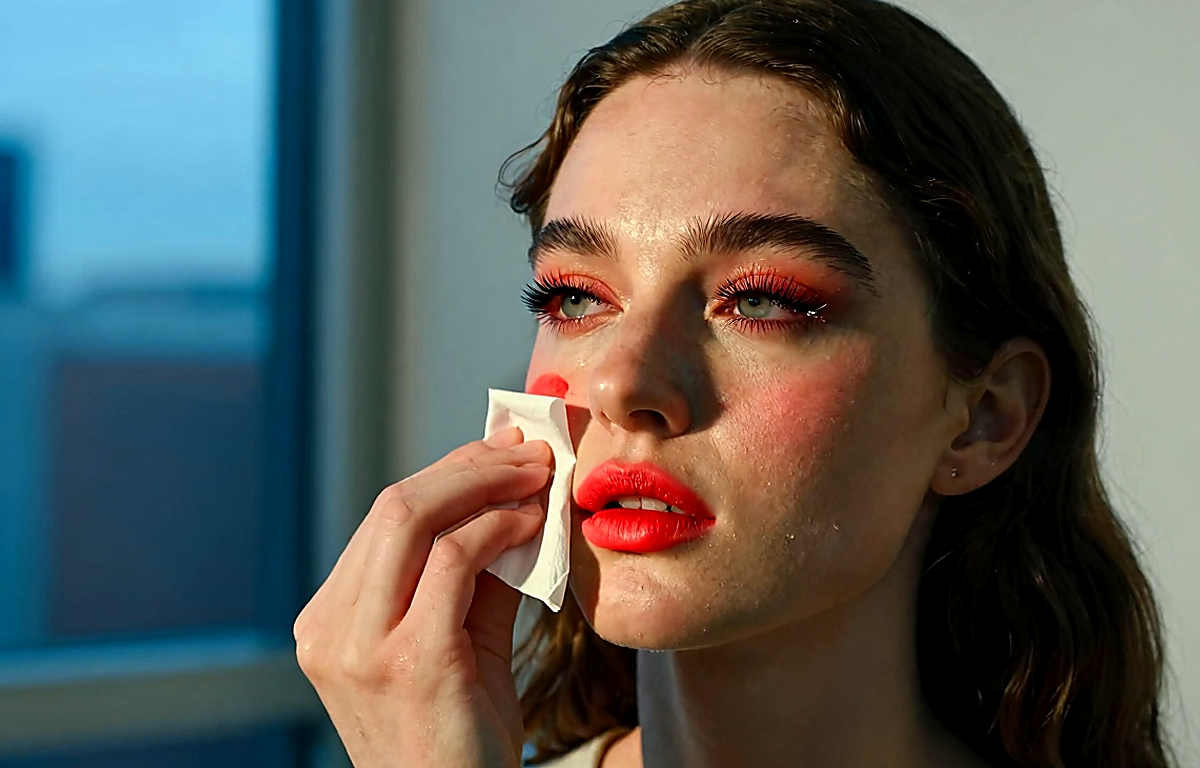
If your skin starts looking shiny just a couple of hours into a trip, it is not only about using the “wrong shade.” When you travel, humidity, temperature, water quality, sleep patterns, and even your usual way of applying makeup all change. That is why the best foundation for travel is not the fullest-coverage one and not necessarily the most matte one, but the one that can handle heat, the road, and a busy day without a mask-like effect, patchiness, or a heavy feel.
The main rule is simple: if you are prone to oily shine, it is better to take a lightweight or medium-coverage foundation with a natural-matte or soft-matte finish, good staying power, and slim, practical packaging. Very dry ultra-matte formulas often emphasize dehydration after a flight and start to “break” on the skin, while overly glowy textures tend to lose their neat look faster. Below, we will look at how to choose a product without unnecessary compromises and what really helps keep your complexion even while traveling.
Why oily shine becomes more noticeable during a trip
Even if your makeup behaves predictably at home, your skin can quickly slip out of its usual rhythm when you travel. On planes and trains the air is often dry, in hot climates it is humid, in a city with a packed schedule you touch your face more often, and there is less time for full skin prep. In response, skin often becomes dehydrated while also producing more sebum. That is exactly why the face may look shinier, and foundation may shift off the T-zone more quickly, settle into pores, and collect around the sides of the nose.
In practice, it looks like this: you apply your makeup as usual in the morning, and by lunchtime you notice shine on the forehead and nose, uneven coverage, and the urge to powder immediately. The mistake at that point is trying to cover the problem with a denser layer. While traveling, a different logic works better: not to “hide everything,” but to reduce the chance that the formula will start sliding.
- Heat increases sebum production and speeds up makeup breakdown.
- Dry air after a flight can trigger both dehydration and excess shine.
- Frequent touch-ups with several products at once often make the finish look heavier rather than fresher.
Which foundation texture works best for travel
If oily shine worries you, the most practical choice is usually a fluid, lightweight cream, or serum-style foundation with buildable coverage. These textures spread more evenly, adapt better to changing conditions, and are easier to refresh neatly during the day. Very dense formulas can look impressive right after application, but in heat, humidity, or after a long journey they often become more noticeable on the skin.
It is also important to consider how the product feels in a thin layer. In travel conditions, foundation should not only cover uneven tone, but also stay comfortable from morning to evening. If the formula already feels heavy during a quick test, that effect is likely to become stronger on the road.
What finish to choose if your skin gets shiny quickly
A natural-matte or soft-matte finish is usually the safest option. It helps visually control shine, while still keeping the skin looking alive rather than flat. This is especially important in travel photos and in bright daylight, where overly matte foundation can make the complexion look dry, while very radiant finishes can emphasize oiliness.
If your skin is combination rather than very oily, you do not have to aim for the driest possible result. It is often enough for the product to keep the T-zone neat while staying more natural on the cheeks. A balanced finish usually looks more polished throughout the day than either extreme.
Why staying power matters more than maximum coverage
For travel, a foundation with reliable wear is usually more useful than one with maximum coverage. If the product starts separating after a few hours, dense pigment will not save the result. On the contrary, when the formula stays in place well, even medium coverage often looks tidier and more expensive than a heavier layer that quickly loses definition.
It is best when the product can survive heat, long walks, commuting, and repeated contact with hands, glasses, or a phone. At the same time, long-wear should not mean a rigid, overly dry finish. The goal is not to “cement” makeup onto the face, but to keep it stable without discomfort.
Which packaging is most convenient on the road
Travel-friendly foundation is not only about the formula itself, but also about the package. Compact, tightly closing bottles or tubes are usually more practical than bulky glass packaging. A dispenser is often more convenient than an open neck because it helps control the amount of product and keeps the texture cleaner during travel.
If you know you will be doing makeup quickly, in transit, or in imperfect lighting, ease of use matters a lot. The simpler and more predictable the application, the lower the chance of overloading the skin from the start.
How to apply foundation so it stays neater for longer
When oily shine is a concern, less is usually better. It is best to apply foundation in a thin layer, paying attention to the center of the face and using a denser application only where it is really needed. This helps prevent buildup in areas where makeup tends to shift first.
Skin prep also matters. If the skin is dehydrated, the foundation may first emphasize dryness and then start getting shiny faster. That is why a light, comfortable moisturizer and a calm, non-overloaded base often work better than trying to layer too many mattifying products at once.
- Apply foundation in a thin layer instead of trying to create full coverage immediately.
- Focus on the T-zone and areas with visible redness or uneven tone.
- If needed, build coverage locally rather than on the entire face.
Mistakes that make oily shine more noticeable during travel
One common mistake is choosing a foundation that is too matte in the hope that it will completely block shine. In practice, such formulas often emphasize dehydration, texture, and unevenness, especially after a flight or in changing weather. Another frequent mistake is using too much product from the start, which makes any breakdown more visible later.
It is also risky to rely only on glow or only on powder. If the finish is too radiant, the face can start looking oily too quickly. If there is too much powder, the makeup may lose freshness and become patchy after touch-ups. Balance usually gives the best result.
How to choose without unnecessary compromises
If oily shine is your main concern, look for a foundation that combines a lightweight or medium texture, a natural-matte or soft-matte finish, good wear, and practical packaging. This kind of product is usually easier to adapt to different climates and daily routines than either a very dense evening formula or an overly luminous one.
The best travel foundation is the one that stays neat without feeling heavy, does not emphasize dehydration after the journey, and lets you refresh your makeup calmly instead of redoing it from scratch. In other words, the right choice is not the harshest mattifying formula, but the most balanced one for the realities of being on the road.