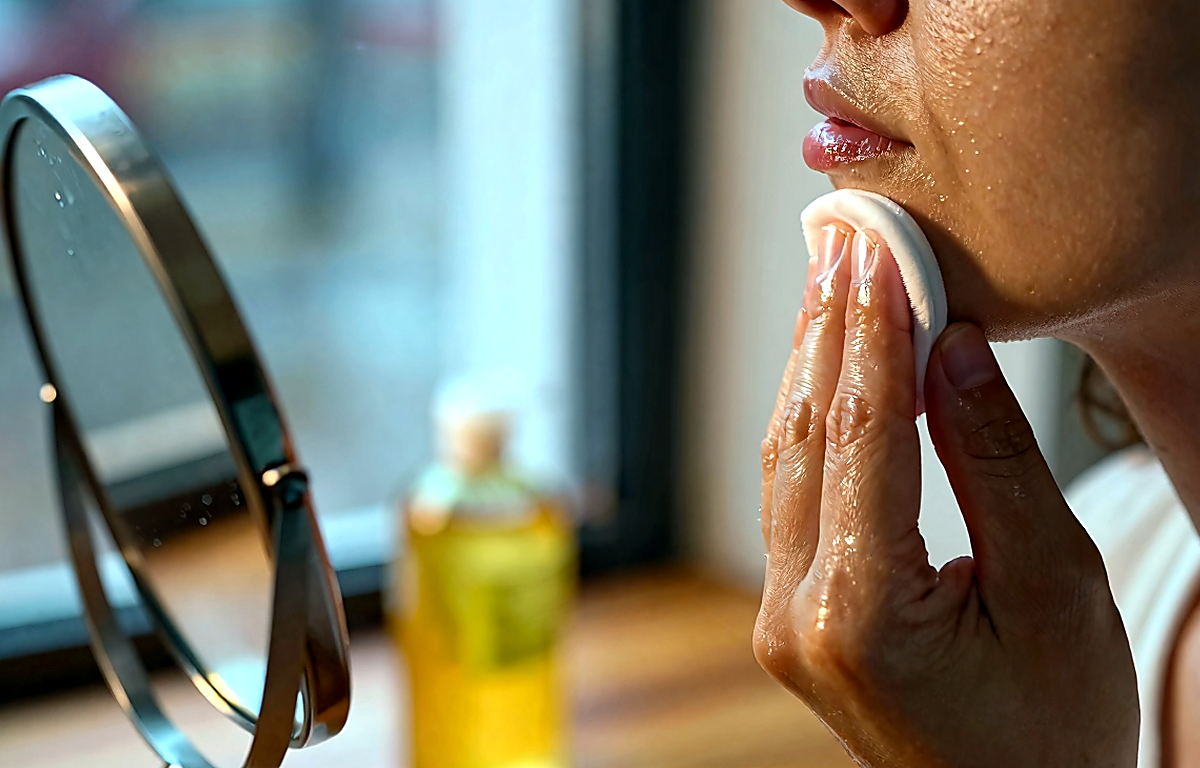
If your skin reddens easily, stings after cleansing, or suddenly reacts even to products described as “gentle,” the main question about a Vichy toner is not whether it is “good or bad,” but whether that specific formula suits your skin and the whole routine around it. With sensitive skin, details matter: whether the formula contains acids, how many hydrating and soothing ingredients it has, whether fragrance is present, whether your evening routine is overloaded with actives, and whether your skin barrier is already compromised.
The most practical strategy is simple: first check the ingredient list, then compare it with your own triggers, and only after that introduce the product gradually. Even if a brand generally works for you, different toners within the same line can have very different profiles: one may be mainly hydrating and comfortable, while another may be more active and not the best choice during a reactive period. With sensitive skin, it is safer to focus not on the brand name but on the formula, frequency of use, and compatibility with the rest of your routine.
Below, we break down what matters most if you are considering a Vichy toner and want to avoid extra stinging, dryness, or increased redness.
Where to start: what to ask of a Vichy toner before you buy
The first thing to do is check not the marketing description but the full INCI list on the packaging or on the product page of an official retailer. Formulas can be updated, so relying on old reviews is risky. If your skin is sensitive, what matters is not general promises like “freshness” or “glow,” but specific signs of potential tolerance.
Check five things:
- Does it contain acids? AHA, BHA, PHA, and other acidic exfoliants are not always appropriate. If your skin is already irritated, flaky, or you are using a retinoid, an acid toner is often unnecessary.
- Is denatured alcohol high on the ingredient list? This is not a problem for everyone, but if you are dealing with stinging, tightness, and redness, alcohol-heavy formulas can make sensitivity feel worse.
- Is fragrance present? Fragrance does not automatically mean a reaction, but with reactive skin it is one more possible trigger worth noting in advance.
- Are there enough hydrating and soothing components? Look for ingredients that support comfort rather than a formula built mainly around aggressive renewal or a quick “clean” feel.
- What is happening in the rest of your routine? Even a fairly mild toner can become problematic if it is layered with retinoids, acids, scrubs, strong cleansers, or other irritating steps.
In other words, it is better to judge a toner not by the promise on the bottle but by how realistic it is for your current skin condition.
Why skin sensitivity changes the way you choose toner
Sensitive skin does not always react because a product is objectively harsh. Sometimes the issue is timing: the barrier may already be weakened by weather, over-cleansing, active ingredients, or too many new products at once. In that situation, even a formula that once felt fine may suddenly sting.
That is why it helps to evaluate a Vichy toner in context. If your skin currently feels calm, resilient, and well-moisturized, you may tolerate more. If it is burning, flushing easily, or reacting after washing, your safest choice is usually the least irritating option and a slower introduction.
Acids, exfoliation, and why “more active” is not always better
If the toner contains exfoliating acids, decide first whether your skin actually needs that step right now. Many people with sensitivity are tempted by products that promise smoother texture or more radiance, but if the barrier is unstable, extra exfoliation can lead to more redness, dryness, and discomfort rather than better skin.
This matters even more if you already use a retinoid, benzoyl peroxide, a leave-on acid, or a strong vitamin C product. In that kind of routine, an acid toner may become one active too many. The problem is often not the toner alone, but the total cumulative load.
If you are currently reactive, it is usually safer to pause additional exfoliation and prioritize barrier comfort first.
Alcohol and fragrance: not automatic deal-breakers, but worth checking
Two points that deserve special attention with sensitive skin are denatured alcohol and fragrance. Neither one guarantees that a product will be irritating, and some people tolerate them without difficulty. But if your skin already tends to sting, flush, or feel tight, these features deserve a more cautious look.
The key is not panic, but pattern recognition. If you have noticed in the past that fragranced products or alcohol-heavy textures leave your skin feeling worse, use that history when assessing the toner. Your own reaction pattern is more useful than blanket rules.
What to look for in a more comfortable formula
If sensitivity is your main concern, a toner is usually easier to tolerate when it supports hydration and comfort rather than trying to do too many active jobs at once. In practice, that often means a formula that feels straightforward, is not overloaded with exfoliating ingredients, and fits into the routine without increasing irritation.
A comfortable toner should not make your skin feel progressively hotter, tighter, drier, or shinier from dehydration after use. If you get immediate burning or delayed worsening of redness, that is important information, even if the product is marketed as suitable for sensitive skin.
How to combine a toner with retinoids and other actives
If you use a retinoid, strong acids, or other active treatments, the safest approach is to avoid introducing everything at once. A new toner should be tested as a separate variable, not added on the same week as several other changes.
If the toner is active and your routine is already active, consider whether you need both. If your priority is tolerance, calmer skin often benefits more from simplification than from stacking multiple corrective steps in one routine.
When in doubt, reduce overlap: fewer potentially irritating layers usually make it easier to understand what your skin is responding to.
How to introduce a Vichy toner more safely
Even if the formula looks promising, do not rush into twice-daily use from day one. With sensitive skin, gradual introduction is the safer route.
- Start with a small amount and limited frequency.
- Do not combine it immediately with every other active product in your routine.
- Watch for stinging, prolonged redness, new dryness, flaking, or a feeling that the skin becomes more reactive after several uses.
- If discomfort appears, stop and reassess the formula and the routine around it.
A patch test and slower rollout will not guarantee perfect tolerance, but they reduce the chance of overlooking an early warning sign.
When a toner may not be the best idea right now
If your skin is currently burning, peeling, visibly inflamed, or reacting to water and basic cleansing, this may not be the right moment to experiment with a new toner at all. In a highly reactive phase, even a product that is reasonable on paper can feel like too much.
When sensitivity is pronounced, it often makes more sense to stabilize the routine first and only then decide whether the toner adds value. If symptoms are persistent, severe, or hard to explain, professional advice is the safer next step.
The bottom line
If you are choosing a Vichy toner for sensitive skin, the most important thing to check is not the brand name itself, but the exact formula and how it fits into your current routine. Pay attention to acids, alcohol, fragrance, the overall level of actives, and the condition of your barrier.
The best choice is usually the one your skin can tolerate consistently without extra burning, dryness, or redness. With sensitivity, a careful ingredient check, a realistic view of the rest of your routine, and a gradual introduction matter far more than marketing claims.