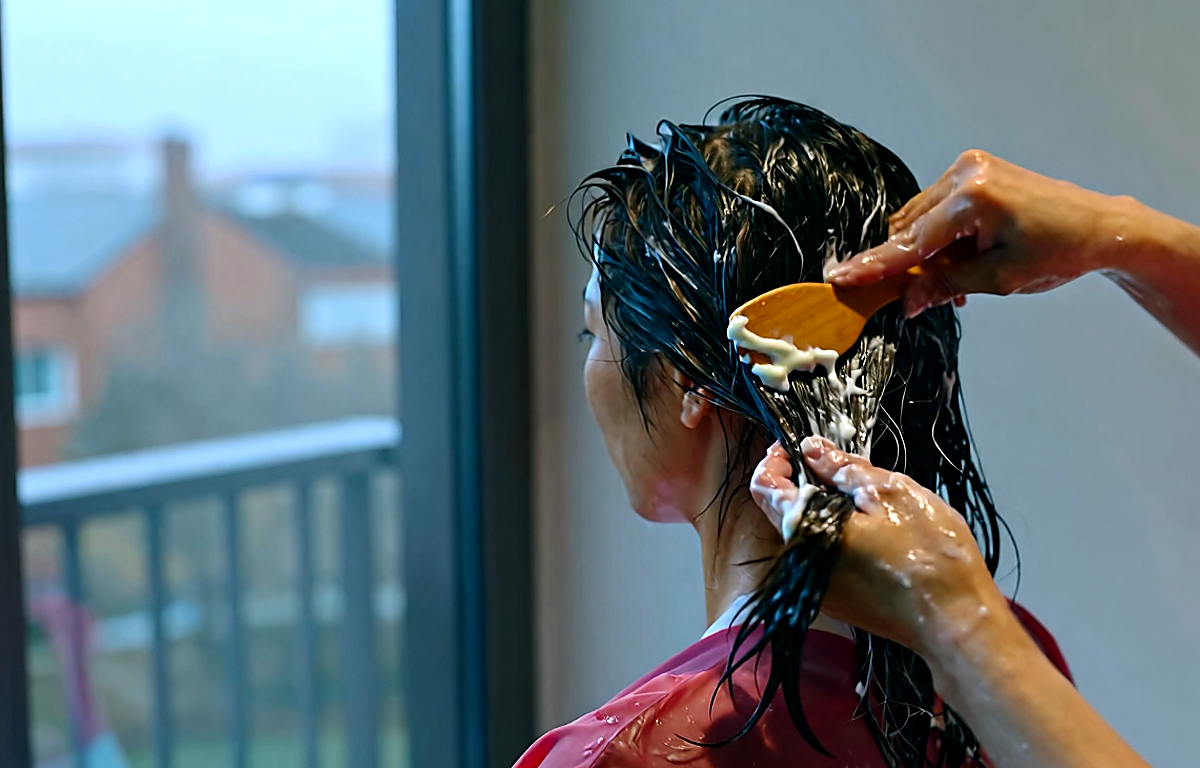
If your hair does not become smoother after a Wella mask and instead starts tangling more, this does not always mean the product is “bad” or that you urgently need to give up the whole range. More often, the reason is a combination of factors: the mask does not suit the current condition of your lengths, it is applied too close to the roots, left on longer than necessary, rinsed out poorly, or used on hair with buildup from styling products and hard water. The key idea is simple: tangling after a mask is usually linked not to a single ingredient, but to the overall condition of the hair — how dehydrated, damaged, overloaded with film-forming components, or, on the contrary, under-conditioned it is.
What should you check first? First, does the hair feel “squeaky” after rinsing, or, on the contrary, sticky and heavy? Second, where exactly do tangles appear: at the roots, through the lengths, or at the ends? Third, does the situation change after using a gentler shampoo, rinsing more thoroughly, and combing only damp lengths with a leave-in product? If tangling is concentrated at the ends, the cause is more often dryness and micro-damage; if it is at the roots, the mask may be too rich for the scalp and root area; if it is through the full length, it is worth considering product overload, mineral buildup, or an unsuccessful combination of several products used one after another.
Why hair may tangle specifically after a mask
A mask is usually expected to bring softness, slip, and easier detangling. But in practice, the result depends on the type of formula you use and what is happening to the hair before and after washing. Even a popular product may not match the current needs of your lengths. For example, a rich repairing mask on fine hair can sometimes create a feeling of heaviness without real slip, while one that is too light does not fully address dryness in porous areas, which causes the cuticle scales to catch on one another.
There are several common reasons why tangling becomes more noticeable:
- Insufficient conditioning for the current condition of the hair. If the lengths are very dry, porous, bleached, or mechanically damaged, the mask may simply not provide enough slip.
- Overloading the hair. Rich formulas with oils, silicones, proteins, waxes, or other film-forming components can sometimes make the hair feel dense, dull, and harder to separate into strands, especially if cleansing is not strong enough.
- Applying the mask too close to the roots. This can weigh down the root area, reduce volume, and make tangling near the scalp more noticeable.
- Rinsing out poorly. Residue can leave hair sticky, heavy, or uneven to the touch, which often worsens tangling.
- Build-up from styling products and hard water. Mineral deposits and leftover styling products prevent the mask from working evenly and can make the hair feel rough rather than smooth.
- A formula mismatch. Some masks focus more on reconstruction, density, or shine than on slip and detangling, so the result may feel disappointing if your main concern is easier combing.
What to check in the formula
If tangling appeared after using a particular mask, it makes sense to look at the formula as a whole rather than blaming one ingredient in isolation. The same component can work very differently depending on the hair type, the condition of the lengths, the shampoo used before it, and the products applied afterward.
What may matter:
- Proteins and strengthening components. If the hair is sensitive to protein-heavy care, it may feel stiffer and less flexible, especially with frequent use.
- Oils and rich emollients. They can be helpful for coarse, dry, porous hair, but on fine hair they sometimes create weight without enough movement or slip.
- Silicones and film-formers. They often improve glide, but with buildup they can also make hair feel coated and harder to cleanse properly.
- Humectants. They help draw in moisture, but if the hair is already dehydrated or the routine is unbalanced, hydration alone may not be enough for smooth detangling.
The practical conclusion is this: it is important to evaluate not whether the formula is “good” or “bad,” but whether it matches your hair’s current needs.
Application mistakes that often make tangling worse
Even a suitable mask can give a disappointing result if it is used incorrectly. The most common issues are applying too much product, distributing it unevenly, leaving it on for too long, or trying to work it through hair that has not been gently squeezed of excess water.
What helps reduce the risk of tangling:
- Wash the scalp and lengths thoroughly before applying the mask so buildup does not block even distribution.
- Gently squeeze excess water from the hair before applying the product.
- Apply the mask mainly through the lengths, paying special attention to the driest areas.
- Avoid the root zone unless the product is specifically intended for the scalp as well.
- Follow the recommended leave-on time instead of assuming longer is always better.
- Rinse carefully, especially at the nape and in dense sections of hair.
How to tell whether the problem is dryness, overload, or buildup
The feel of the hair after washing can give useful clues. If the lengths seem rough, puffed up, and tangle mostly at the ends, dryness and damage are more likely. If the hair feels coated, heavy, and difficult to separate even while wet, overload or residue may be the bigger issue. If the result changes noticeably after a deeper cleanse or a gentler shampoo, buildup may be contributing as well.
It can be helpful to test a few variables one at a time: change the shampoo, reduce the amount of mask, shorten the leave-on time, rinse more thoroughly, or add a lightweight leave-in conditioner only to the lengths. When several things are changed at once, it becomes much harder to understand what actually made the difference.
When it makes sense to pause the mask
If tangling becomes consistently worse after every use, the hair is harder to comb, and the lengths feel either rough or coated, it is reasonable to pause that mask for a while and reassess the routine. This does not automatically mean the brand or the entire range is unsuitable. Sometimes the issue is simply that the formula does not match the hair’s current condition, or that cleansing and conditioning are out of balance.
If the hair is breaking heavily, the scalp is irritated, or detangling is accompanied by marked shedding, pain, or visible damage, it is better not to force repeated testing. In that situation, a gentler routine and, if needed, advice from a dermatologist or trichologist may be the more careful approach.
Bottom line
If your hair tangles after a Wella mask, do not look for just one “bad” ingredient right away. It is usually more useful to assess the condition of the lengths, the richness of the formula, where and how the mask is applied, how thoroughly it is rinsed out, and whether buildup from styling products or hard water may be interfering. The more precisely you identify where the tangling appears and what the hair feels like after washing, the easier it is to understand whether the real issue is dryness, overload, buildup, or simply a mismatch between the product and your current hair needs.