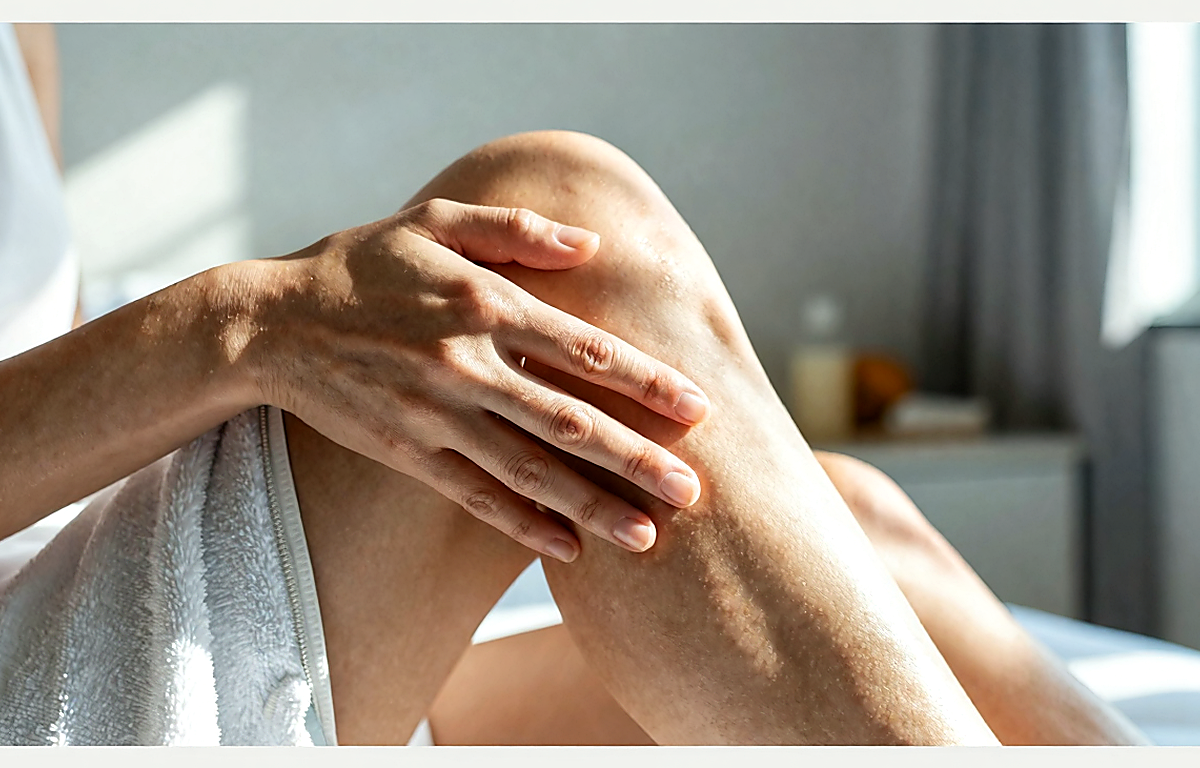
If your skin feels tight or stings after a shower, or you immediately want to put on the richest cream you can find, the issue usually is not that you need the heaviest product on the shelf. When skin is irritated after contact with water, what matters more than richness is the right formula: no unnecessary fragrance, and ingredients that help retain moisture and support the protective barrier. A good body cream after a shower should not just soften the skin for a few minutes, but reduce the feeling of dryness, make skin more comfortable, and avoid triggering extra reactivity.
The practical rule is simple: if your skin is prone to irritation, choose a cream or balm with a straightforward formula, a gentle texture, and a barrier-supporting focus. Look for glycerin, ceramides, squalane, panthenol, colloidal oatmeal, betaine, oils in moderate amounts, and as few potentially irritating additives as possible. It is best to apply the product to slightly damp skin within a few minutes after showering, when it works much more effectively. And if the burning sensation is persistent, or you notice soreness, swelling, oozing, cracks, a rash, or irritation that does not go away, it is worth seeing a doctor: what looks like ordinary dryness can sometimes be dermatitis, eczema, an infection, or a reaction to skincare.
Irritation after a shower is common even in people who do not think of their skin as sensitive. Very hot water, harsh cleansers, rough washcloths, long showers, fragranced shower gels, and the habit of rubbing the body completely dry gradually weaken the lipid layer. As a result, skin loses moisture faster, and a regular lotion may stop being enough. That is why it is better to choose a post-shower cream not by the promises on the packaging, but by how the product behaves on reactive skin: whether it relieves discomfort quickly, whether it increases stinging, and whether it leaves a heavy film that makes you want to wash it off an hour later.
Why skin gets irritated specifically after a shower
Contact with water does not keep skin hydrated for long. On the contrary, after moisture evaporates, the feeling of dryness may become even more noticeable, especially if the skin barrier is already weakened. Hot water, surfactants in cleansers, friction, and aggressive drying all increase transepidermal water loss. That is why the period right after a shower is the moment when skin needs support most.
If the skin barrier is compromised, even products that used to feel neutral may begin to sting. In this state, it is important not to overload the skin with active ingredients, strong fragrance, essential oils, or overly dense formulas that feel suffocating rather than comforting. The goal of a post-shower cream is not dramatic effect, but predictable comfort: less tightness, less dryness, and a calmer skin reaction.
What kind of texture to choose
If irritation is mild and the main issue is dryness after water, a cream with a medium, comfortable texture is often enough. It should spread easily, absorb without friction, and leave the skin feeling protected rather than sticky. For many people, this format is more comfortable than very light lotions, which may not give enough support, or very heavy ointments, which can feel too occlusive on the body.
If the skin is very dry, flaky, or reactive, a richer balm may work better, especially on the shins, elbows, forearms, and other areas that dry out more quickly. But the densest texture is not always the best choice for the whole body. If a product feels too heavy, overheats the skin, or makes itching worse, it is better to switch to a simpler and more balanced cream.
Light lotions can still be appropriate if they contain enough humectants and barrier-supporting ingredients, but in persistent post-shower dryness they are often too weak on their own. In that case, it is more useful to focus not on the label, but on whether the formula truly keeps skin comfortable for several hours.
Ingredients that can help calm irritated skin
One of the most useful ingredients in a body cream after a shower is glycerin. It attracts water and helps the skin stay hydrated longer. Ceramides are also important because they support the barrier and help reduce moisture loss. Squalane softens the skin and is generally well tolerated even when the skin is reactive.
Panthenol is often a good choice when the skin feels uncomfortable or stingy, because it helps soothe and soften. Colloidal oatmeal can also be helpful in formulas for dry, irritated skin. Betaine supports hydration and can make a product feel gentler on sensitive skin. Oils may be useful too, but moderate amounts are often more comfortable than very oily formulas, especially if the skin reacts easily.
In general, the best post-shower cream is usually not the most complicated one. A calm, clear formula with a barrier-supporting base tends to work better than products overloaded with plant extracts, perfuming components, or marketing-driven add-ons.
What can make irritation worse
Fragrance is one of the most common reasons a body product feels pleasant at first but gradually becomes irritating. This applies both to obvious perfume and to heavily scented botanical ingredients. Essential oils can also be problematic, especially when the skin is already stinging after a shower.
Formulas with a high amount of acids, active exfoliating ingredients, or strong warming and cooling components are usually not the best option when the skin barrier is compromised. Even if such ingredients are useful in another context, irritated post-shower skin often needs recovery first, not extra stimulation.
It is also worth being careful with products that leave a dense, suffocating coating if that feeling makes your skin more uncomfortable. Occlusive ingredients can be helpful, but the formula should still feel wearable. If you want to wash a cream off soon after applying it, it is unlikely to become part of a consistent routine.
How to apply body cream after a shower so it works better
The best time to apply body cream is within a few minutes after showering, while the skin is still slightly damp. This helps the product hold onto moisture more effectively. There is no need to rub aggressively: spread the cream gently over the skin and give it a moment to settle.
If your skin is very reactive, it helps to review the rest of the shower routine as well. Warm rather than hot water, milder cleansers, less friction, and gentler towel drying can noticeably reduce dryness and stinging. Even a well-formulated cream will work less effectively if the skin is being irritated at every wash.
If certain areas are much drier than others, you can use a richer product only there and a more comfortable cream on the rest of the body. This approach is often better tolerated than covering the whole body with a very heavy balm.
When it is better not to rely on cream alone
If irritation after a shower keeps coming back despite a gentle routine and a suitable body cream, the problem may be more than simple dryness. Persistent burning, pain, swelling, cracks, oozing, a visible rash, or itching that gets stronger are signs that deserve medical attention. In these situations, it is better not to keep experimenting with random products.
Conditions such as dermatitis, eczema, contact allergy, or infection can look like ordinary post-shower irritation at first. If symptoms do not improve or are getting worse, a doctor can help determine the cause and recommend the right care.
How to choose a body cream after a shower if irritation is a concern
The most reliable option is a fragrance-free or low-fragrance cream or balm with a simple formula and a barrier-supporting focus. Look for ingredients such as glycerin, ceramides, squalane, panthenol, colloidal oatmeal, and betaine. Choose a texture that feels protective but not oppressive, and apply it soon after showering to slightly damp skin.
If the product reduces tightness, softens the skin, does not increase stinging, and keeps the skin comfortable for hours, it is likely a good fit. If it burns, feels overly heavy, or the irritation does not go away, it is better to stop using it and reassess both the formula and the rest of the routine.