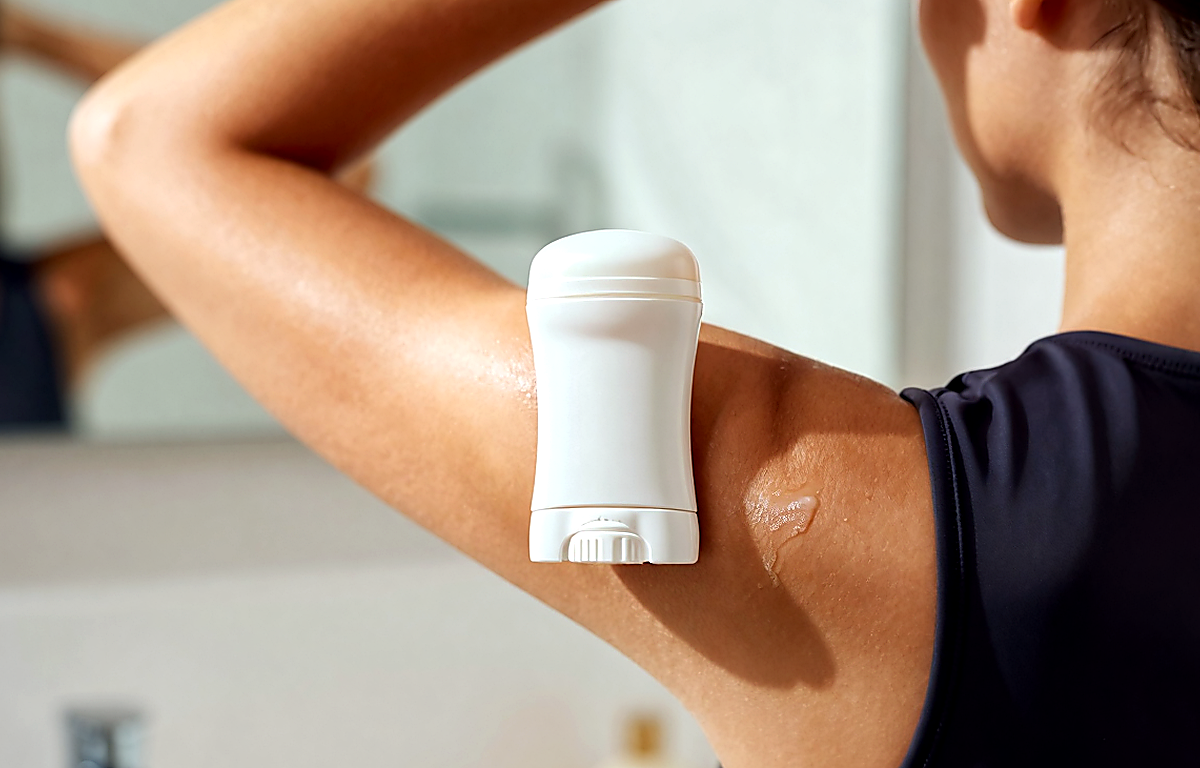
In hot weather, most people expect two things from a deodorant at once: it should truly help you get through an active day, and it should not leave white streaks on a black T-shirt, silk blouse, or underwear. The good news is that marks on clothing usually depend not only on the product itself, but also on its format, how much you apply, how long it has to dry, and how it interacts with your body care routine. If you want the safest everyday option in terms of stains, clear gels, lightweight liquid roll-ons, and some sprays without a dense powdery base usually work best. Classic dense sticks and creamy formulas, by contrast, are more likely to leave a whitish residue, especially if you apply them generously and get dressed right away.
When choosing a deodorant for hot weather, it is better not to focus on loud “72-hour” promises, but on more practical factors: do you need odor control or reduced sweating, how sensitive is your skin, what is your daily routine like, what colors do you wear in summer, and are you willing to wait until the product dries completely. Below is a simple selection system that helps lower the risk of white marks and keeps summer body care from turning into a constant battle with fabric stains.
Why white marks appear more often in hot weather
White streaks on clothing are not always a sign of a “bad” product. In hot weather, they become more noticeable for several reasons. First, we tend to apply more product because we want extra protection. Second, the skin becomes damp faster and fabric clings more closely to the body, so even a carefully applied formula transfers more easily. Third, in summer many people wear dark tank tops, fluid tops, fitted T-shirts, and delicate fabrics where any residue shows up immediately.
Marks are especially often caused by:
- dense sticks with a high amount of waxes and powdery components;
- cream antiperspirants applied in a thick layer;
- products that did not have time to dry before touching clothing;
- combining deodorant with a rich body cream in the underarm area;
- reapplying over skin that is already damp.
It is important to distinguish white marks from yellowish stains. White residue is usually linked to the product texture and mechanical transfer onto fabric. Yellowish stains often appear later because of the interaction between sweat, sebum, antiperspirant ingredients, and laundry residue. For a summer wardrobe, the first question matters most: which format is less likely to soil clothing here and now.
First decide: deodorant or antiperspirant
Before choosing a format, it helps to understand what you expect from the product. A deodorant does not “switch off” sweating; it helps reduce or mask odor. An antiperspirant works differently: it temporarily reduces sweating with the help of aluminum salts. In summer, this difference is especially important, because in active heat many people need not only a fragrance effect, but also a drier skin feel.
If odor is your main issue but you do not struggle with strong wetness, you can start with a lightweight deodorant in a spray, roll-on, or clear gel. If the real problem is wet marks and discomfort, an antiperspirant is more likely to suit you, but choose it especially carefully: some of these products are more prone to leaving visible marks on clothing.
You can use this as a guide:
- For moderate heat and a calm day — a lightweight deodorant without a dense residue.
- For commuting, office days, and public transport — a roll-on or gel with antiperspirant action.
- For sports, long walks, and travel days — an antiperspirant applied in advance and given time to dry completely.
If you experience persistent burning, pain, pronounced redness, swelling, or cracks after applying the product, it is best to stop using it and consult a doctor. During pregnancy, with skin conditions, after procedures, and while using retinoids or if you have increased skin sensitivity, choose products especially carefully and consult a specialist if needed.
Which format leaves the fewest marks
Each format has its own character. In hot weather, this becomes especially obvious: a product that works perfectly in winter may suddenly start staining clothes in summer or feel too heavy.
Spray
Usually one of the most convenient options for hot weather if you want a quick, lightweight layer and a fresh feel. It is good because it requires almost no contact with the skin and often leaves less visible residue. But two things matter: do not spray too close, and let the product dry completely. Some “powdery” sprays can still leave a whitish coating.
Roll-on
A practical compromise. Liquid roll-on formulas often stain clothing less than dense sticks, but only if you apply them lightly. The main downside is that they need a little more time to dry. If you get dressed immediately, the fabric may pick up a damp imprint that later dries into a pale streak.
Clear gel
One of the best formats if your goal is to minimize white marks. It usually goes on in a thin layer, does not contain a pronounced powdery component, and works well under dark clothing. But there is still one condition: you need to let the gel dry, otherwise it transfers easily.
Stick
The most controversial summer option. It is convenient for travel, does not leak, and applies quickly, but sticks are also the format most likely to show up on fabric, especially if the formula is waxy, matte, or “creamy-powdery.” If you like sticks, it is better to look for clear versions and apply them very sparingly.
Cream
A good choice for those who care most about skin comfort and a soft feel, especially after shaving. But in intense heat, cream formats usually require the most care: excess product easily ends up on underwear and the armholes of clothing. This option is better for people willing to apply a very small amount and wait until it is fully absorbed.
If you want a short conclusion, it is this: for hot weather and dark clothing, a clear gel, a lightweight roll-on, or a good spray without a powdery residue is usually the most convenient choice. A dense stick is not the best option if you constantly deal with white streaks.
Which ingredients and textures are more likely to leave a white residue
When people say, “this deodorant stains clothes,” they usually do not mean one specific ingredient, but the overall architecture of the formula. White residue appears more often in products that feel dense, have a dry finish, and leave a noticeable physical layer on the skin.
More likely to leave marks:
- waxes and dense structuring components in sticks;
- powdery additives for a matte finish;
- too much creamy base;
- opaque white emulsions;
- overly rich layered fragrances, if the product has to be reapplied during the day.
Usually lower-risk options include:
- clear gels;
- liquid water-based textures;
- finely misted sprays without a pronounced dry residue;
- formulas labeled “invisible,” “clear,” or “no marks,” but only when applied correctly.
Even a product that promises an “invisible” finish can still leave streaks if you apply too much. In summer, it is better to think not in terms of “the more, the more reliable,” but “a thin even layer works more cleanly.” This is especially important if you also use summer body care products: overly nourishing textures in the underarm area can increase transfer onto fabric. If you are updating your warm-weather routine, a lighter body cream format may also be useful — we wrote about that in detail here: how to choose a lightweight body cream for summer without stickiness.
How to choose a format for your clothes, daily routine, and skin type
The same deodorant can behave differently depending on what you wear and how your day unfolds. That is why the most practical approach is to choose a product not in the abstract, but for a specific scenario.
If you wear a lot of black, navy, and charcoal
Look for clear or liquid formats. On dark fabric, any dry white residue is especially noticeable. Sprays, roll-ons, and gels are usually safer than dense sticks.
If your clothes are light-colored and loose-fitting
You have more options: a lightweight roll-on, spray, gel, or sometimes even a soft cream. But in hot weather, even with light fabrics, it is still better to avoid an overly rich or thick layer.
If your day is active and you move around a lot
It is better to choose a product that works in advance instead of one that needs constant refreshing. Reapplying in the middle of the day over damp skin is often what creates those streaks.
If your skin is sensitive
It is worth avoiding unnecessary experiments with aggressively fragranced formulas and applying the product only to dry, intact skin. After shaving, it may be better to wait a little rather than apply it immediately. If irritation keeps coming back, this is no longer just an aesthetic issue, but a sign that the product should be reconsidered together with a dermatologist.
If you travel often
A stick is easier to carry, but it is also the format most likely to stain clothing. In a travel bag, a mini roll-on or compact spray often wins if convenience matters, but so do clean armholes on your clothes.
How to apply deodorant to avoid streaks and stains
Sometimes the solution is not a new product, but a new technique. This is especially noticeable in summer, when rushing gets in the way of letting the product settle properly on the skin.
- Apply only to clean, completely dry skin. Even slight dampness increases the risk of transfer onto fabric.
- Use less than you think you need. One or two light passes are usually better than a dense layer “just in case.”
- Let the product dry. This is critical for roll-ons and gels. A couple of extra minutes often saves your clothes.
- Do not apply it over body cream. The underarm area does not do well with multiple layers, especially in hot weather.
- If you use an antiperspirant, try applying it in the evening. For some formulas, this is more convenient: the product has time to work, and in the morning there is less temptation to overload the skin with a new layer.
- Get dressed carefully. A narrow neckline or a tight top can rub even a well-applied product off the skin and onto fabric.
- Do not keep reapplying endlessly throughout the day. If you need to freshen up, it is sometimes better to gently blot the skin first and only then use a minimal amount of product.
One separate tip for hot weather: if you come in from outside already overheated, do not rush to apply another layer right away. First let the skin cool down and dry. Reapplying onto hot, damp skin rarely looks neat and almost always increases the risk of marks.
Common mistakes when choosing a summer deodorant
In summer, it is easy to fall into the marketing trap: the louder the promise, the more attractive the product seems. In practice, though, white marks are usually linked to a few predictable mistakes.
- Buying the most “powerful” option without considering the texture. Extreme protection does not always mean comfortable wear with lightweight clothing.
- Choosing a product only for the scent. A pleasant fragrance does not make up for a dense white residue.
- Ignoring drying time. This is especially true for roll-ons and gels.
- Applying too much. This is one of the main causes of streaks on fabric.
- Using the same format all year round. A summer wardrobe and a higher activity level often call for a lighter texture.
- Mistaking irritation for a “normal reaction.” If a product keeps stinging, leaves bright redness, or causes soreness, that is not something you should tolerate.
Another typical mistake is judging a product by the first use on an extreme-weather day. If you are testing a new deodorant in hot weather, it is better to do it at home or with clothing you do not mind staining. That makes it easier to understand how it dries, feels, and transfers onto fabric.
Which option to choose in different situations: a simple guide
If you want a practical system without long comparisons, you can rely on these scenarios.
For the office and city heat:
A lightweight roll-on or clear gel. They offer a good balance between odor control, a neat finish, and comfort under clothing.
For dark T-shirts and shirts:
A clear gel or a spray without a powdery residue. These are the safest options when it comes to visible marks.
For travel and an everyday bag:
A compact roll-on. It is more practical than many sprays and usually cleaner on clothing than a dense stick.
For very sensitive skin:
A gentle formula without unnecessary fragrance load, ideally with a simple minimalist texture. But if even careful options cause постоянный discomfort, it is better not to cycle through dozens of products and instead discuss the situation with a doctor.
For those who hate waiting for products to dry:
Well-diffused sprays can work well. But it is important that they are not too “powdery,” otherwise the no-mark effect disappears.
Summer body care works better when it is built as a system: lightweight body textures, gentle cleansing, and a thoughtful choice of products for the weather and your clothes. The same principle can simplify other seasonal beauty decisions too, for example in makeup and hair care. If that approach feels right for you, you can also read how to manage frizzy hair in humid weather.
Conclusion
If your main goal in summer is a deodorant without white marks, focus not on maximum “strength,” but on format and texture. The most convenient options in hot weather are usually clear gels, lightweight roll-ons, and some sprays without a dry powdery residue. Dense sticks and creamy formulas can still be comfortable, but they more often require very moderate application and time to dry. Apply the product to dry skin, do not overload the underarm area with body care, and let the product dry completely before it touches clothing — these simple steps are usually what solve the problem of white streaks faster than an endless search for the “perfect” deodorant.