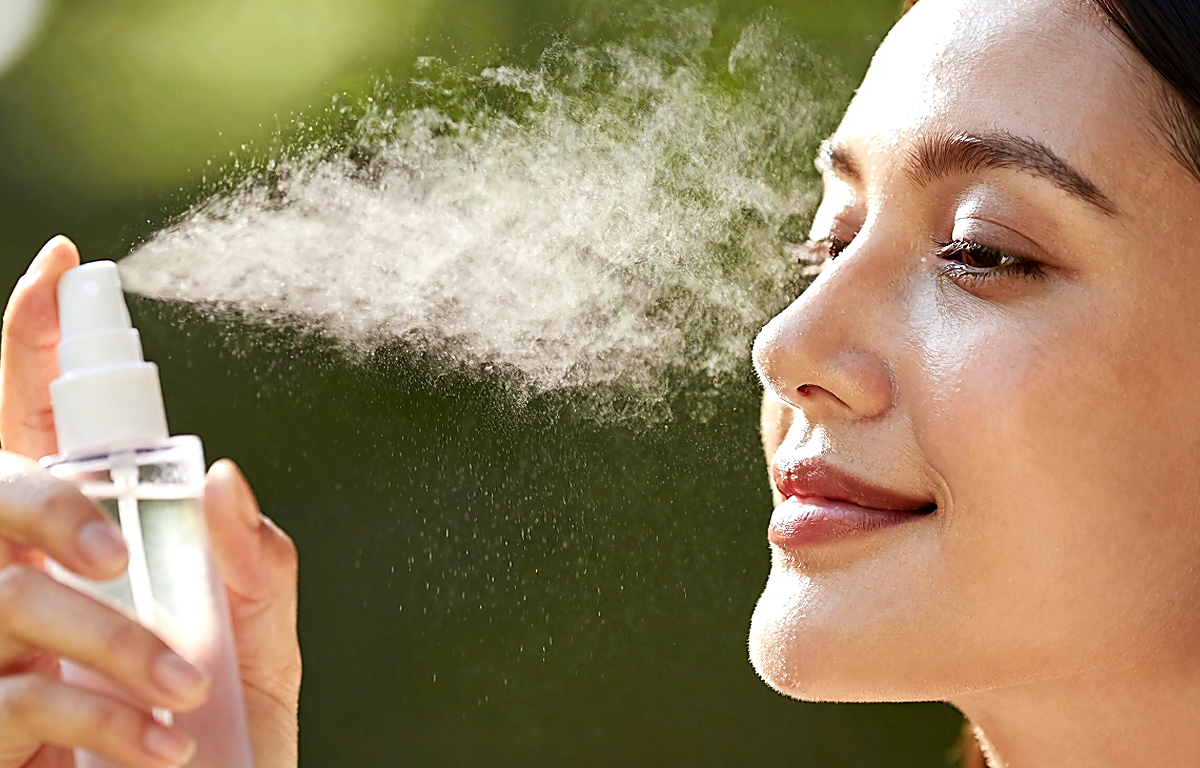
Thermal water and face mist really can refresh the skin quickly—but not always, and not on their own. In short, they work best in hot weather, in a dry office, on a plane, after cleansing, and throughout the day when your skin needs relief from tightness, overheating, or that dusty, tired feeling. But there is one important caveat: if you simply spray water onto your face and let it evaporate, especially in dry air or under air conditioning, you can get the opposite effect. As the moisture evaporates, the skin can sometimes lose even more comfort, and that feeling of freshness can turn into dryness and irritation.
The main rule is simple: thermal water and face mist are not magical substitutes for skincare—they are tools. They refresh when they suit your skin and are used alongside the rest of your routine: on slightly damp skin, before cream, over makeup in moderation, or followed by a step that helps seal in moisture. They tend to dry the skin out when they are chosen for a pretty bottle rather than the formula and situation, sprayed too often, or used instead of proper hydration. Below, we break down how thermal water differs from mist, who really benefits from them, and how not to turn a refreshing spray into a source of tightness.
Thermal water vs. face mist: what is the practical difference?
On the shelf, these products often look almost identical: a light facial spray promising freshness, comfort, and hydration. But in practice, they are two different categories.
Thermal water is usually water from a natural source with a specific mineral composition. It may contain salts, trace elements, and components the manufacturer presents as soothing or softening. A product like this usually has a very short ingredient list: essentially just water and sometimes an inert propellant in an aerosol format. It is a minimalist option: fewer actives, less chance of clashing with skincare or makeup, but also less standalone hydrating power.
Mist is a broader category. It is not just water, but a water-based spray with additional ingredients: humectants, soothing components, extracts, and sometimes niacinamide, panthenol, glycerin, betaine, aloe, hyaluronic acid, or amino acids. There are also more questionable versions—with heavy fragrance, essential oils, alcohol, or acids—that may feel refreshing but do not suit everyone.
In practice, the difference looks like this:
- thermal water is more often used for an instant cooling sensation and less discomfort;
- mist is more often chosen as a light extra step for hydration and comfort;
- thermal water usually has a simpler formula and is safer for sensitive skin;
- mist depends more heavily on the formula: one can feel pleasant and supportive, while another can feel sticky, heavily scented, or irritating.
That is why the question “which is better?” is not very precise. A more useful question is: what exactly do you want—cooling, relief from tightness, support for makeup, help with dry air, or a substitute for day cream? The answer will differ depending on the goal.
When they really do refresh the skin
There are situations where a facial spray works especially well and feels less like marketing and more like a practical product you genuinely want to carry with you.
The first is heat and overheating. When the skin feels hot, the face looks flushed, and the air feels heavy, a fine mist really can bring quick relief. Here, formulas without strong fragrance or a sticky film usually work best: you want the product to refresh, not leave a tacky layer on the skin.
The second is dry, air-conditioned air. In offices, cars, trains, and on planes, skin often starts to look dull and feel unpleasantly tight. In that moment, gentle mists with humectants—or thermal water, if you follow with a little cream or at least do not let the moisture sit and fully evaporate for too long—can work well.
The third is the step after cleansing. If you do not like applying serums and creams to completely dry skin, mist or thermal water can act as an in-between step. A slightly damp surface makes the next product easier and more comfortable to spread and helps reduce tightness faster. This is especially helpful if you are still building your basic routine: you can read more about step order here—how to build a basic facial skincare routine.
The fourth is during the day over makeup, when you do not need a redo but more of a facial reset. One or two light sprays from a distance can reduce a dusty-looking finish, visually soften dry patches, and make makeup look fresher. But moderation matters here: too much moisture can break up foundation, especially if you are wearing a lot of powder. If this is relevant to you, it is also useful to know how to use powder correctly over SPF without patchiness or buildup—see the guide here.
The fifth is after sun, wind, or a long walk in the city, when the skin wants simple comfort rather than treatment. At moments like this, calm, minimalist formulas without aggressive additives usually work best.
When thermal water and mist can dry out the skin
The most common mistake is thinking that any water on the face automatically hydrates. In reality, the feeling of moisture and true moisture retention are not the same thing. If moisture actively evaporates from the skin’s surface, especially in dry air, it can increase the feeling of dryness. That is exactly why some people love thermal water while others feel that it leaves their face even tighter.
The drying effect usually shows up in several scenarios.
- You spray the product in a dry indoor environment and do not apply anything over it.
- You use the product too often—literally every half hour—instead of adjusting your basic skincare routine.
- You chose a formula with alcohol, a lot of fragrance, essential oils, or actives that irritate your particular skin.
- You apply too much over heavy makeup: at first the face seems fresher, but then everything dries unevenly and emphasizes dry areas.
- You try to replace a cream or serum with mist even though your skin already lacks lipids and protective comfort.
There is another subtle point: the mineral composition of thermal water. Not all skin responds equally well to highly mineralized water. Some people do great with it, while for others it can increase tightness, especially if the skin is already dehydrated or the skin barrier is damaged. That does not mean thermal water is bad, but it does mean that your skin’s response matters more than the product’s general reputation.
If after using a spray your face does not just feel a little dry but regularly stings, turns red, burns, or itches, that is a sign not to keep experimenting on autopilot. Persistent burning, pain, swelling, obvious inflammation, skin conditions, and sensitive skin during pregnancy or while using retinoids are all situations where it is safer to discuss your skincare with a dermatologist rather than trying to spray your way through the problem.
How to tell which format is right for you
It is easier to choose between thermal water and mist by your goal and the type of feel you want—not by brand name or attractive marketing copy.
If what you want most is quick cooling and as little extra as possible, start with thermal water. It is often a convenient option for sensitive, reactive skin, for summer use, after exercise, after a walk, or while traveling. It is also a good choice if you do not like strong fragrances or complex formulas.
If your main goal is not only to refresh but also to support hydration a little, look at mists with gentle humectants. The best options are usually those without a sharp perfume note, with glycerin, panthenol, betaine, allantoin, amino acids, ectoin, and sometimes low levels of hyaluronic acid. They feel less like plain water and more like an extra layer of comfort.
A simple guide by skin type looks like this:
- Oily and combination skin: lightweight, non-sticky sprays without oils or a heavy film tend to feel best.
- Dry and dehydrated skin: mists with humectants can be more useful, but not as your only skincare step—rather as an addition to cream.
- Sensitive skin: it is wiser to start with short ingredient lists, without heavy fragrance or active acids.
- Skin with a compromised barrier: a spray may offer temporary relief, but the foundation should be repairing the routine, not endless re-spraying.
If you are unsure, ask the product three simple questions: does it refresh only in the moment, does it leave no stickiness, and does it avoid triggering redness by evening? If the answer to even one of those is no, the product is not worth romanticizing just because it fits nicely in your bag.
How to use facial sprays so they do not do harm
Technique matters just as much as formula. Many disappointments are caused not by the product itself, but by how it is used.
The safest and most useful way is to use thermal water or mist as an in-between step rather than a standalone rescue. After cleansing, lightly spray the product, wait a few seconds, and apply your serum or cream. That way, the moisture does not just sit on the surface but becomes part of a more comfortable skincare routine.
During the day, use it in moderation. There is no need to turn spray into a reflex every time you feel tired. Sometimes the skin is not asking for another cloud of water, but for gentler cleansing, a more suitable cream, SPF, fewer mattifying products, or simply a glass of water and a break from air conditioning.
Useful rules:
- hold the bottle at a distance so the spray is fine and even;
- do not soak the face: a few sprays are enough;
- if the air is very dry, apply a light cream shortly afterward or at least gently blot away excess without rubbing the skin;
- do not use a mist with acids, alcohol, or strong fragrance just “for freshness” if your skin is sensitive;
- do not try to fix dehydration with sprays alone—they need the support of a solid basic routine.
Over makeup, a gentle approach matters even more. One thin layer can revive a powdery finish, but several heavy sprays can break down your base, cause patchiness, and emphasize pores. If your skin feels dry and heavy under makeup during the day, it can be more helpful to rethink the layers underneath rather than just adding more and more refreshing sprays.
Which ingredients to look for—and which are better to avoid
Thermal water usually has a short ingredient list, so there is less room for surprises. But mists are more interesting in this sense: they can either be a great find or the reason behind irritation you cannot quite explain.
What usually feels comfortable:
- glycerin in a moderate amount;
- panthenol;
- betaine;
- allantoin;
- aloe, if your skin tolerates it well;
- ectoin and amino acids;
- soothing ingredients without an overloaded perfume base.
What calls for caution if your skin is sensitive or dehydrated:
- a high amount of alcohol;
- strong fragrance;
- essential oils, especially in hot weather and on reactive skin;
- acids in a mist you planned to use many times throughout the day;
- overly active plant extracts if you do not know your tolerance.
Another practical benchmark is how your skin feels after 10–20 minutes. A good mist should not leave the face feeling both sticky and dry at the same time. If it feels pleasantly cool at first but then makes the skin tighter, it is not the kind of product you should heroically try to use up. In skincare, what matters is not how an effect feels in the first five seconds, but what happens shortly afterward.
If heavy textures feel uncomfortable to you in summer overall, it may be worth reviewing not only your facial spray but also the products around it in your routine. For example, many people feel better switching to lighter body formulas without stickiness—here is a useful article on how to choose a lightweight body cream for summer.
Common myths about thermal water and face mists
There are many oversimplifications around these products, which is why expectations often do not match reality.
Myth 1: any water hydrates.
Not exactly. It can temporarily give a feeling of moisture and coolness, but without ingredients that hold moisture and without follow-up care, the effect is often short-lived.
Myth 2: thermal water suits absolutely everyone.
No. Even a minimalist product may not feel good on a particular person’s skin. If it consistently makes your skin feel worse, trust your own reaction rather than universal advice.
Myth 3: mist replaces cream in summer.
Usually not. It can make skincare feel lighter and more pleasant, but it cannot handle every job on its own—especially if the skin is dehydrated, irritated, or stressed by temperature changes and air conditioning.
Myth 4: the more often you spray, the better.
Using it too often can simply keep the cycle going: refreshed—evaporated—drier again. If you already feel uncomfortable without a spray every half hour, the issue is probably your routine or your environment.
Myth 5: any mist works well with makeup.
Also no. Some formulas set makeup beautifully, while others clash with foundation, SPF, and powder. Extra caution is needed if you wear many mattifying layers.
By the way, the way the environment affects hair looks very similar to how it affects skin: humidity, dry air, and product texture can change the result dramatically. If that logic interests you, you can also read about how to avoid frizzy hair in humid weather.
Who should be especially careful
Although thermal water and mists are considered a gentle skincare category, there are cases where it is wise to be more careful than it may seem.
First, skin with a compromised barrier: after overly strong acids, retinoids, aggressive cleansing, scrubs, or procedures. Even an innocent-looking spray can start to sting, and a fragranced mist can make irritation worse.
Second, skin with rosacea, pronounced reactivity, or a tendency toward redness. Here, very calm formulas without a perfumed trail or experiments with essential oils usually work best.
Third, pregnancy and the parallel use of retinoids—not because every mist is dangerous in itself, but because the skin often becomes more sensitive and unpredictable during this time. The simpler the formula and the less improvised experimenting with actives, the better.
You should always pause and see a doctor if use leads to persistent burning, pain, noticeable swelling, oozing, rash, increasing inflammation, or if you already have a diagnosed skin condition. Facial sprays are products for comfort and support, not tools for treating symptoms.
How to fit thermal water or mist into a real routine
The easiest way to think about these products is not as miracle solutions, but as additions to a skincare routine that already works. Expectations become more realistic that way, and the result is usually much better.
In the morning, the routine can look like this: gentle cleansing, mist or thermal water if needed, then serum, cream, and SPF. During the day: one light spray when needed, not simply out of habit. In the evening: use it after cleansing if that makes the next step of skincare feel more comfortable to apply.
If your skin often feels dry specifically in the middle of the day, try checking not only the spray but your whole routine structure:
- is your cleansing too aggressive in the morning and evening;
- are you using enough cream, rather than relying on serum alone;
- is your mattifying SPF or powder drying the skin out too much;
- are you overusing acids and actives;
- is the air around you simply too dry.
When these points are in order, thermal water and mist really do become a pleasant little extra that works: they refresh quickly, slightly soften the look of the skin, and make the day more comfortable. When the basic routine is failing, they often just mask the problem for a few minutes.
Conclusion
Thermal water and mist really can refresh the skin when they are used with a purpose: in hot weather, in dry air, after cleansing, over makeup in moderation, and as part of a thoughtful routine. They can dry the skin out when they remain the only step, evaporate from the skin without any follow-up comfort, do not suit the formula needs of your skin, or are used too often instead of fixing the routine.
The most useful approach is to choose not the trendiest spray, but the one that solves a specific need your skin has. If you want the bare minimum and a cooling feel, try thermal water. If you want more hydrating comfort, look for a calm mist without excess fragrance or irritating ingredients. And if your skin consistently burns, hurts, swells, or turns red after any spray, that is a reason not to tolerate it, but to discuss the situation with a doctor.