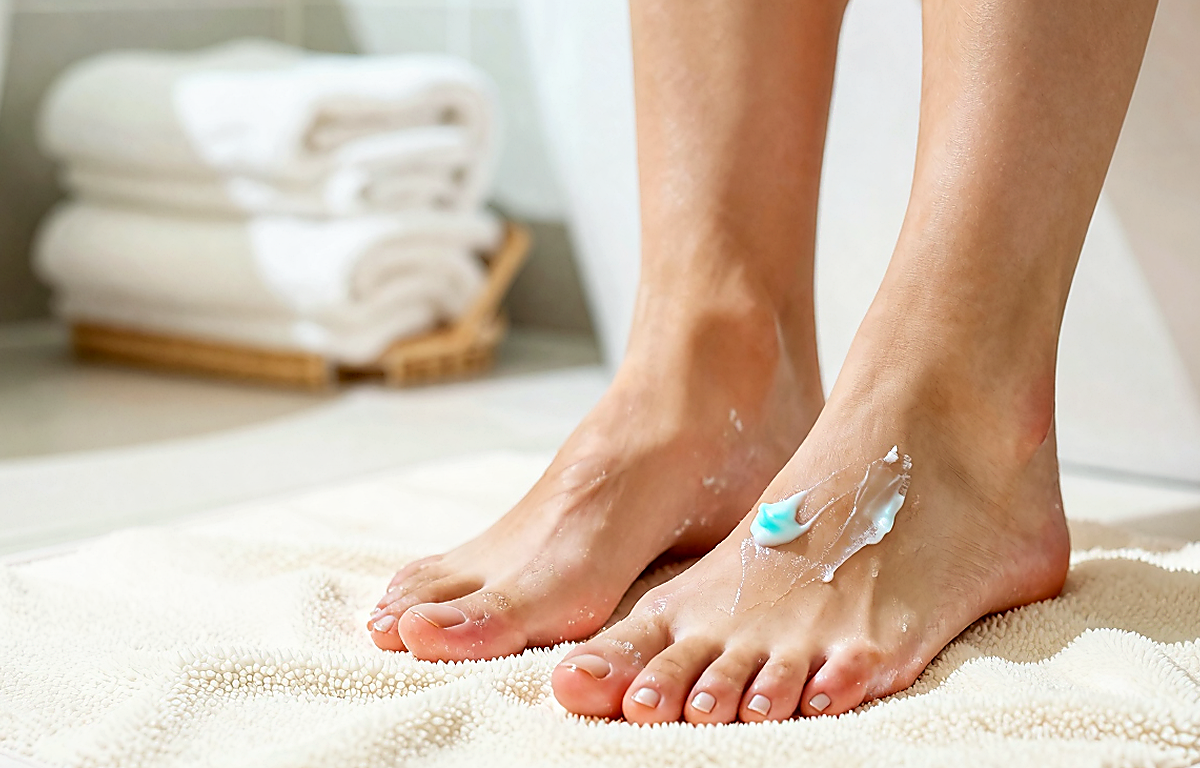
In summer, feet dry out faster than at other times of the year: open shoes, dust, sun, hot asphalt, pool water, and the habit of walking barefoot more often gradually make the skin denser and rougher. That is why the question “which is better—a scrub or a cream?” seems logical. The short answer is this: for most people in summer, a regular cream matters more, while a scrub is only an extra and very gentle step. If you try to get rid of dryness with abrasives alone, you may end up with burning, micro-damage, and even more noticeable flaking instead of smoothness.
A practical routine usually looks like this: first, you reduce the buildup of dead skin cells with gentle exfoliation 1–2 times a week, and then maintain the result with a cream every day. It is the cream that helps hold water in the skin, softens rough areas, and makes heels look smoother. A scrub is not necessary for everyone or all the time: with sensitive skin, small cracks, irritation after sun exposure, or heavy walking, it often causes more discomfort than benefit.
Why feet become dry faster in summer
Dry feet in the warm season are not necessarily a sign of “poor care.” The skin on the feet has its own characteristics: it is dense, constantly under pressure and friction, and the horny layer builds up faster on the heels. In summer, seasonal triggers add to this, making the skin protect itself even more actively.
- Open shoes. Sandals and flip-flops do not help retain moisture at the skin’s surface, and strap friction increases roughness.
- Dust and heat. In hot weather, the skin loses water faster, while dirt makes the surface feel rougher.
- The beach, pool, and seawater. Salt, chlorine, and prolonged contact with water can increase tightness.
- Walking barefoot. The foot responds to constant mechanical stress by thickening the top layer.
- Frequent washing and harsh gels. Over-cleansing removes the lipids that help keep skin soft.
It is important to understand that rough skin on the heels is not always something that needs to be “scrubbed off until smooth.” Sometimes it is simply a protective response. If you remove it too aggressively, the body responds with new thickening, and the cycle repeats.
What to choose: a scrub, a cream, or a combination of both
Practically speaking rather than cosmetically, these products do different jobs. A cream does not treat disease; it addresses everyday dryness as a cosmetic care issue: it reduces tightness, visually smooths flaky areas, and helps the skin look well cared for. A scrub does not moisturize on its own—it only removes some surface flakes and makes the skin feel smoother if used in moderation.
When it makes more sense to focus on cream:
- if the skin on your feet is simply dry but without thick buildup;
- if there is sensitivity or a tendency toward redness;
- if you walk a lot and get a burning sensation after a day in open shoes;
- if the skin is already irritated after sun exposure, a pedicure, or friction.
When a scrub may be useful:
- if there is moderate roughness on the heels and balls of the feet;
- if you apply cream regularly, but the surface still looks dull and uneven;
- if the skin does not react with burning and there are no cracks, abrasions, or significant irritation on the feet.
For most people, the best option is not to set these products against each other, but to give each one its role. Cream works as the foundation of daily care, while a scrub is occasional support if the buildup of dead skin really gets in the way of softness. The same logic applies to summer body care in general: light but regular textures usually work better than rare “intensive” treatments—a similar principle can be seen in our article on a lightweight body cream for summer without stickiness.
When a foot scrub really makes sense—and when it is better not to risk it
The main summer-care mistake is using a scrub like sandpaper. This is especially tempting before a vacation or after a few days in flip-flops, when you want perfect heels in one evening. But overly large particles, vigorous brushing, and frequent scrubbing can leave micro-damage, worsen dryness, and make the skin more sensitive to shoes and sweat.
A scrub is appropriate if three conditions are met: the skin is intact, there is no significant irritation, and the product is gentle. It is better to choose formulas with delicate particles and use them without pressing hard. Movements should be short and careful, and the procedure itself should not take long.
It is better to avoid or postpone a scrub if:
- there are cracks on the heels, even shallow ones;
- there is burning after a pedicure;
- the skin is red, itchy, or peeling in sheets;
- you got sunburned and your feet have become sensitive;
- there are pronounced calluses, pain, or suspected fungal involvement.
In these cases, harsh mechanical friction only makes things worse. It is much safer to pause, switch to gentle cleansing, and support the skin with cream. If burning, pain, swelling, unpleasant odor, oozing, severe itching, or persistent peeling does not go away, you need a doctor’s assessment rather than another at-home scrub.
What kind of cream helps with dry feet in summer
A foot cream for summer does not have to be heavy or very greasy. If the texture is too dense, people simply stop using it: it feels sticky, stains house shoes, and seems out of place in the heat. A cream you actually want to apply regularly works much better. What matters is not the highest possible “nourishing” claim on the package, but a sensible formula and comfort in use.
What to look for:
- Moisturizing components. Glycerin, urea in a moderate concentration, and lactic acid in gentle formulas help retain water and soften the surface.
- Softening lipids. Oils, squalane, and fatty alcohols reduce the feeling of dryness and make the skin more flexible.
- Soothing additions. Panthenol, allantoin, and centella may be helpful if your feet react to heat and friction.
- A comfortable texture. In summer, cream-gels, medium-weight emulsions, and fast-absorbing creams often work best.
If dryness is more pronounced, creams with not only oils but also ingredients that attract and hold moisture usually work better. At the same time, “greasier” does not always mean more effective: a dense balm may create a film-like feel without solving the problem of ongoing skin dehydration. As with facial care, the system matters more than one “miracle product”—you can see a similar approach in the article on how to build a basic skincare routine.
If you are pregnant, have chronic skin conditions, or use products with retinoids and acids on other areas, it is best to read ingredient lists especially carefully and avoid introducing several active foot products at once. If in doubt, it is safer to discuss your care routine with a doctor.
How to relieve dryness without irritation: a step-by-step summer routine
The most reliable way to get your feet back in shape is not to “scrape off everything extra,” but to reduce the daily causes of dryness and support the skin consistently. Below is a routine that works for most people if there are no cracks, marked inflammation, or individual intolerance to ingredients.
- Wash your feet gently. Use warm rather than hot water and a mild cleanser without that aggressive “squeaky-clean” feeling.
- Do not soak for too long. Long hot foot baths may feel softening at first, but they often worsen dryness afterward.
- Pat the skin dry carefully with a towel. Do not rub your heels until they turn red.
- Apply cream right after a shower. This is the best moment, when there is still moisture in the skin.
- Add gentle exfoliation 1–2 times a week. If you use a scrub, do it without pressure and only on intact skin.
- At night, you can apply a thicker layer of cream. Especially on the heels and balls of the feet, then put on thin cotton socks if that feels comfortable.
This routine is simple, but that simplicity is exactly where its strength lies. Feet respond better to small but regular attention than to rare traumatic procedures. If you use cream daily for at least 7–10 days, the look of the skin often changes more noticeably than it does after one intense scrubbing session.
Common mistakes that only make dryness worse
Sometimes it seems like your care routine is not working, when in fact the problem is created by habits. In summer, these mistakes are especially common because people want quick results and the feeling of perfectly smooth skin.
- Scrubbing too often. Daily mechanical exfoliation does not give the skin time to recover.
- Pumice stones and metal files used “until polished.” The more aggressive the procedure, the higher the risk of rebound roughness.
- Using cream only from time to time. Occasional application cannot offset constant dehydration and friction.
- Hot foot baths every evening. They feel relaxing, but often increase tightness once the skin dries.
- Applying cream to completely overdried skin once a week. Frequency matters much more than extreme “nourishment” on one single evening.
- Ignoring footwear. If straps rub and the sole is too hard, no cream will give stable comfort.
Another mistake is applying the general trend of “the more actives, the better” to your feet. Acids, urea, oils, scrubs, foot files, and peeling socks—all at once in summer can be too aggressive. The skin on the feet is dense, but that does not mean it is not sensitive. If you prefer straightforward minimalism in your routine, it works here too.
What to do if your heels are dry but a scrub stings
This is a very common situation. A person sees flaking, reaches for a scrub, then feels burning afterward and concludes that the skin is simply “very neglected.” In reality, burning usually does not mean you need to rub harder—it means the skin barrier is already irritated.
If a scrub stings, try this approach for 5–7 days:
- completely stop using any abrasives and harsh foot files;
- wash your feet with a mild cleanser and keep it brief;
- apply cream morning and evening in a thin but regular layer;
- at night, use a richer product only on dry areas;
- avoid shoes that actively rub the heel and side areas;
- do not apply alcohol-based sprays or fragranced products to irritated skin.
Once the skin has calmed down, you can return to very gentle exfoliation—or stick to cream alone if you are happy with the result. The important thing is not to compete with your own heels: in summer, the goal of care is comfort, a neat appearance, and no discomfort while walking, not a “salon-polished” effect at any cost.
How to keep feet soft on vacation and in the city
Summer care is easier when it fits into everyday life. On vacation, no one wants to carry half a jar of dense balm and a separate pedicure kit, and in the city, people often do not have the patience for long rituals. That is why it makes sense to build a short routine that actually works.
For the city:
- keep your cream where you are sure to see it in the evening: in the bathroom or by the bed;
- apply it right after a shower instead of putting it off for later;
- if you wear open shoes every day, add a second light layer of cream in the morning.
For vacation:
- bring a compact cream that absorbs quickly and does not feel sticky;
- rinse your feet with fresh water after the sea or pool if possible;
- do not do an aggressive at-home pedicure right before long walks;
- alternate flip-flops with softer, more stable shoes to reduce friction.
If you want your skin to stay visually smoother for longer, it also helps to remember the habits around it: gentle cleansing, regular basic care, and a sensible choice of textures for the season. It is the same principle that helps hair stay less frizzy in humid weather: not fighting by force, but using smart prevention—you can read more in the article on how to reduce hair frizz after humidity.
When home care is no longer enough
Cosmetic care works well for ordinary seasonal dryness, but it should not replace medical evaluation if symptoms go beyond everyday discomfort. It is worth seeing a doctor if dryness is accompanied by painful cracks, marked redness, swelling, burning, unpleasant odor, oozing, significant itching, nail changes, or if the problem keeps coming back and does not improve with gentle care.
Caution is also needed for people with diabetes, reduced foot sensitivity, chronic skin conditions, and during pregnancy if pronounced swelling, pain, or any unusual symptoms appear. In these situations, it is better not to experiment at home with acid peeling socks, harsh peels, or intensive mechanical buffing.
Home care should make the skin feel more comfortable, not more painful. If several attempts with a scrub only make things worse, that is already a sufficient signal to rethink your strategy.
The takeaway is simple: in summer, dry feet are usually managed better with a regular cream and only occasional, gentle exfoliation when needed, rather than with a harsh scrub. If the skin is sensitive, stings, or is already irritated, start by restoring comfort rather than adding friction. The best-looking summer heels are not the ones that went through extreme buffing, but the ones cared for calmly, consistently, and without unnecessary aggression.