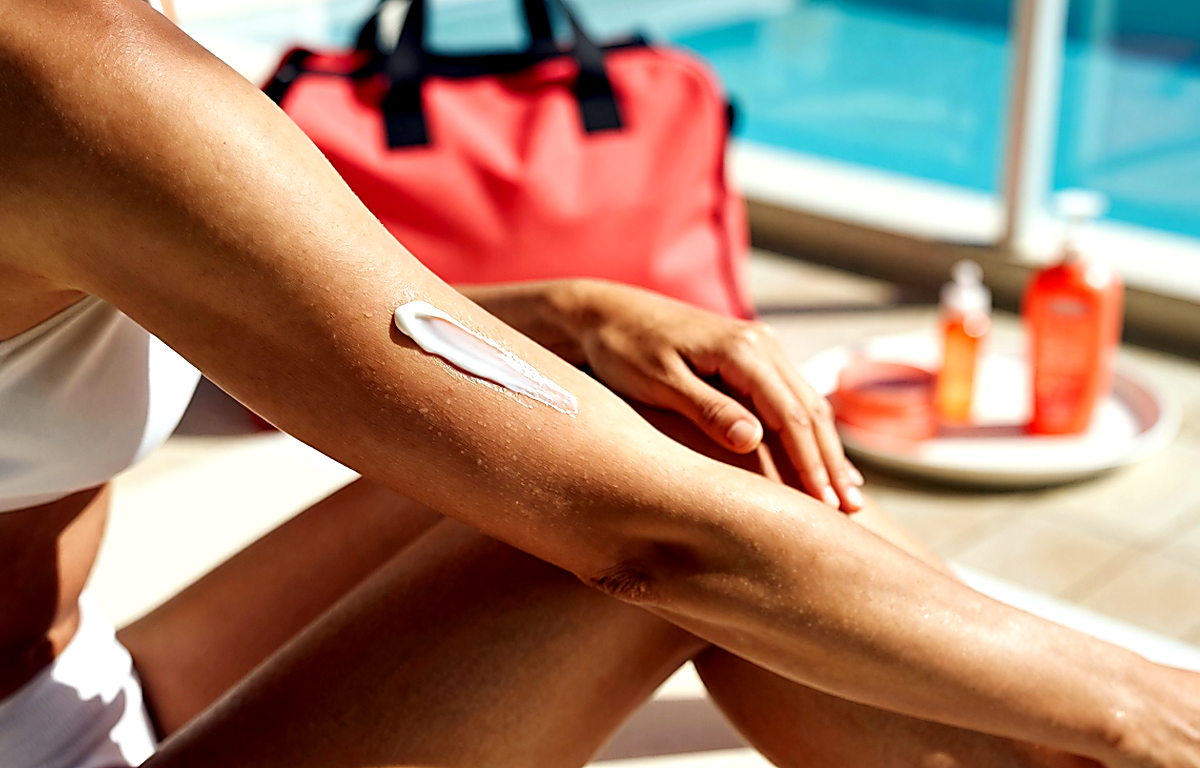
If the skin on your body feels uneven, the first impulse is usually simple: reach for a stronger scrub and “polish” the surface. But this is exactly where the mistake most often happens. Uneven skin texture is not always related to a lack of exfoliation. Sometimes the issue is dryness, friction, overly aggressive cleansing, a reaction to fragrance, or the fact that the skin is left without proper recovery after scrubbing. So if you are interested in Topicrem and a body scrub, the main question is not “how harsh is it,” but “does this formula suit my skin, and could it make the condition worse?”
The practical takeaway is this: when uneven skin texture is a concern, it is worth checking not only the brand and the promises on the packaging, but also the type of abrasive particles, the presence of acids, fragrance, oils, how often you use it, and what you apply after your shower. A good scrub should help gently smooth roughness, not intensify redness, burning, and tightness. If your skin feels smooth for only a few hours after use and then looks even drier and rougher, the problem is most likely not that the scrub is too weak, but that the routine itself is put together incorrectly.
With Topicrem, as with other popular pharmacy and dermocosmetic brands, it is reasonable to expect a focus on skin comfort, but even within one brand, the deciding factor is still the specific product and its formula. Some people do better with delicate creamy formulas with fine particles, while others may need not a scrub at all, but a combination of gentle cleansing and a light body cream. That is why, before buying and before first use, it helps to run through a short checklist: what exactly do you want to correct, how does your skin react to friction, and are there signs of sensitivity that mean mechanical exfoliation should be limited?
First, figure out what kind of unevenness is actually bothering you
The phrase “uneven texture” sounds very broad, and care can differ in each case. One thing is ordinary roughness after dry air, sun exposure, or hard water. Another is small bumps on the shoulders and thighs, a reaction after shaving, dense dry patches on the elbows and knees, or pronounced irritation after a shower. Visually, all of this may feel like “the skin is not smooth,” but the approach will be different.
- If the skin is simply dry and dull, a gentle scrub once a week plus a regular cream is often enough.
- If there are small dense bumps, gentleness and consistency matter more than strong friction.
- If the unevenness comes with redness, itching, or burning, an aggressive scrub usually only makes the situation worse.
- If the problem appears after hair removal or shaving, you need to look not only at the scrub, but also at the hair-removal method, clothing friction, and soothing aftercare.
That is why the most useful question before buying is this: “What do I see after a shower on clean, dry skin without cream?” If it is dull dryness and light roughness, a gentle scrub may be appropriate. But if you see irritated spots, soreness, small cracks, or a feeling that “the skin is burning,” it is better to postpone exfoliation and restore the barrier first.
By the way, for many people, uneven body skin texture gets worse in summer not because they are missing a scrub, but because of dehydration after sun exposure, air conditioning, and frequent showers. In that case, it is worth reviewing your finishing care as well. On this topic, it is useful to read our article about a lightweight body cream for summer without stickiness: sometimes a light but regular emollient texture changes the situation more noticeably than yet another cleansing step.
What to check first in a Topicrem scrub
When it comes to a specific popular brand, the easiest thing is to look not at the range name, but at the actual parameters of the formula. Even if the jar says the product makes the skin smooth, that still does not tell you how comfortable it will be for you personally.
Here is what to check first:
- Base type. A creamy or oily base usually feels gentler than one that is very foaming or stripping.
- Size and amount of abrasive particles. Fine, even particles tend to give a more predictable result than large, sharp ones.
- Whether it contains acids or enzymes. A combination of mechanical and chemical exfoliation can be effective, but for sensitive skin this is already a more active scenario.
- Fragrance. A strong scent does not automatically mean poor quality, but with reactive skin it is an extra risk factor.
- Softening ingredients. Oils, glycerin, and emollients help reduce the feeling of dryness after rinsing.
- Recommended frequency of use. If a product is meant to be used often, that does not mean your skin needs it just as often.
If you are considering Topicrem specifically, it helps to treat the brand as a reference point for textures and tolerance, not as a guarantee that any scrub will automatically suit you. The brand may have a reputation for comfortable care, but your skin’s reaction always depends on the combination of formula, application technique, and the current state of your barrier.
Also check whether you have a habit of applying scrub to very hot, already steamed skin and then rubbing the problem areas hard. Even a good product becomes a source of micro-damage in that kind of routine. And if after a shower you feel not “clean,” but sharply tight, that is an important sign that the formula or the way you are using it does not suit you.
How to tell whether mechanical exfoliation is right for you
A scrub is not a mandatory step for everyone. When skin texture is uneven, it can be a useful tool, but only if your skin tolerates mechanical action calmly. There are several signs that suggest this format will probably suit you, and several warning signals that mean it is better to reduce the intensity.
Mechanical exfoliation most likely suits you if:
- after a gentle massage, the skin looks smoother without noticeable redness;
- the feeling of smoothness lasts longer than a few hours;
- there is no pronounced dryness the next day;
- there is no burning when you apply cream after a shower.
It is best to be cautious with scrubs if:
- you notice burning already while rinsing;
- after the procedure, the skin looks shiny not from moisture, but as if it has been “stripped”;
- the roughness comes back quickly and even gets worse;
- you are prone to redness, itching, or breakouts after friction;
- you use retinoids, acids, or other active ingredients on that area.
People whose uneven texture comes with sensitivity should be especially careful. In those cases, it is better to choose minimal hand pressure, a short massage time, and a limited application area. Sometimes it is enough to treat only the elbows, knees, outer shoulders, or thighs instead of spreading scrub over the whole body.
If you are not sure how active the formula is, start with a test application on a small area. This is a simple but underrated step. It is especially important if you are concerned about fragrance, a large number of particles, or a scrub combined with acids. The easiest way is to test the product on a small area and watch your skin for 24 hours: whether there is lingering redness, burning when you apply cream, unusual dryness, or itching.
What mistakes people make most often with uneven skin texture
Sometimes the problem is not the scrub itself, but how it is built into the routine. People often try to solve uneven skin texture with one product and forget that the result depends on the whole system: cleansing, water temperature, shower frequency, clothing, shaving, and the cream used afterward.
The most common mistakes look like this:
- Using it too often. The wish to see smoothness faster leads to scrubbing every other day or even daily. In response, the skin becomes drier and more sensitive.
- Rubbing problem areas too hard. The more pressure you use, the higher the risk of micro-injuries and persistent redness.
- Combining it with several active products at once. Scrub, acids, retinoids, a rough washcloth, and shaving on the same day is a bad idea for most people.
- Skipping cream after the shower. Exfoliation without recovery makes the skin look smoother for a short time, but then increases dryness.
- Applying it to irritated skin. After sun exposure, hair removal, intense exercise, or during breakouts, it is better to put the scrub aside.
Uneven skin texture is very often confused with the goal of “making the skin perfectly polished.” But a healthy visual result is usually not mirror-like smoothness after a harsh procedure, but soft, calm skin without tightness. If you feel you need to “take off a layer” every time to get an effect, your basic body care may simply be poorly put together.
For many people, a more noticeable result comes not from more scrubbing, but from simplifying the ritual: gentle cleansing, a short shower, careful towel blotting, and regular cream. From a body-barrier perspective, this approach is often more sustainable than any aggressive polishing.
How to combine scrub and cream correctly so the skin looks smoother
The most underestimated part of care is what happens after the scrub. If your skin is prone to unevenness, dryness, and dullness, recovery after a shower is almost as important as the exfoliation itself. And this is often where it is decided whether the effect will be neat and cumulative or end in tightness.
A practical routine usually looks like this:
- use the scrub on damp, but not overheated, skin;
- massage briefly, without heavy pressure;
- rinse with warm, not hot, water;
- do not rub the skin with a towel, just blot gently;
- apply cream or body milk within a few minutes.
If after a scrub you feel that any texture stings, that is no longer a comfort norm. It means your skin needs a gentler approach. In that case, it makes sense to reduce the frequency, switch to a milder formula, or take a recovery break.
When Topicrem is involved, it is logical to look at combining the scrub with basic moisturizing care built around the same philosophy: calm textures, a focus on comfort, and as little “bare skin” feeling after the shower as possible. But there is no universal rule that you should always take a pair from the same brand. What matters far more is that the cream helps maintain softness and does not trigger extra irritation.
If you are also choosing care for your face, it is useful to remember the same overall logic: first support the barrier, then increase active ingredients. This principle is explained well in our article on how to build a basic facial skincare routine. For the body, it works just as convincingly: smoothness begins not with maximum intensity, but with a balance between cleansing and recovery.
How many times a week to use a scrub for roughness and bumps
Frequency is one of the most important questions, because this is where it is easy to overdo it. There is no universal number, but for most people with uneven body skin texture, it is safer to start rarely rather than often. It is better to get a moderate but steady result than to trigger irritation with an overly active schedule.
As a general guide, you can use this scheme:
- Very sensitive or dry skin: no more than once every 10 to 14 days, if your skin tolerates mechanical exfoliation at all.
- Normal skin with seasonal roughness: about once a week.
- Thicker skin on the elbows, knees, or isolated dry areas: targeted use once or twice a week may be acceptable if there is no irritation.
It is important to watch not only how the skin looks right after a shower, but also how it feels the next day. If it seems smoother without becoming drier, the schedule is probably working well. But if tightness appears, the roughness returns faster, or sensitivity increases, the frequency should be reduced.
Another nuance is seasonality. In winter and during seasonal transitions, body skin often reacts more sharply to scrubs because of dry air and hot showers. In summer, on the contrary, it may seem easier to achieve smoothness, but the risk of irritation after sun exposure, shaving, and clothing friction also rises. So the same jar can work differently in different months, and that is normal.
If you already use lotions or creams with acids, urea, or other active texture-targeting ingredients, it is better to introduce a mechanical scrub especially carefully. Not because the combination is always bad, but because the skin can easily shift from “care” mode into “overload” mode.
When it is better to postpone a scrub and choose another approach
There are situations when the question is not which scrub is best, but whether you need one at all right now. With persistent discomfort and a damaged barrier, mechanical exfoliation more often gets in the way than helps.
It is better to pause if:
- there is active irritation after shaving or hair removal;
- the skin is sunburned;
- there are cracks, scratch marks, weeping areas, or pronounced redness;
- any product after a shower causes burning;
- there is a suspicion of a skin condition rather than just dryness and roughness.
In these cases, it is more sensible to focus on gentle cleansing and neutral restorative care, and bring the scrub back later, when the skin stops reacting so sharply. If the unevenness comes with soreness, visible inflammation, swelling, or prolonged itching, it is better to discuss the situation with a dermatologist. The same applies during pregnancy, with pronounced skin sensitivity, and when using retinoids or other active products: in these cases it is especially important not to experiment with intense exfoliation unnecessarily.
Sometimes the alternative to a scrub is a softer way of addressing texture: reducing the frequency of hot showers, giving up rough washcloths, using a cream after every wash, and choosing gentle formulas with moisturizing components. This approach may seem less dramatic, but over time it gives the skin a more even look without the cycle of “smooth today” and “irritated tomorrow.”
How to choose a good scrub in the store: a short checklist
If you are standing in front of a shelf choosing between Topicrem and other options, an abstract reputation is less helpful than a short practical filter. It saves both money and frustration, especially if your skin has already reacted more than once to products that were “too active.”
- See what skin type the product is intended for: dry, sensitive, or normal.
- Assess the format: creamy, oily, or gel-based. For uneven skin that is prone to dryness, the less stripping option is usually more comfortable.
- Check whether the formula combines several intensity factors at once: large particles plus acids plus strong fragrance.
- Think about whether you have a cream you will apply right after the shower. If not, start with that.
- Do not buy a scrub as a “quick fix” for every kind of texture. First understand the reason for the roughness.
It also helps to remember realistic expectations. Even a good scrub does not make the skin perfectly even forever after one use. Its job is to gently improve the surface and help the rest of your care work better. If you expect an instant polished effect from a jar without any follow-up hydration, disappointment is almost inevitable.
One more important point: if you like layered routines and active textures, do not try to combine everything at once. Body skin often needs far fewer steps than it seems. Sometimes one correctly chosen scrub and a suitable cream give a better result than a complicated routine with constant product changes.
Bottom line: what really matters before you buy
In short, if uneven skin texture is your concern, a Topicrem scrub or any other one should be evaluated by four points: how gentle the formula is, how well your skin tolerates mechanical exfoliation, whether you have a habit of restoring the skin after a shower, and whether you are trying to solve dryness with overly aggressive friction. A popular brand alone does not guarantee a perfect result, but choosing the product wisely and using it with moderate frequency really can make the skin look more even and feel more pleasant to the touch.
The best guide is not the feeling of “squeaky-clean” skin, but calm smoothness without burning or tightness. If after a scrub your skin becomes softer rather than more sensitive, you are most likely moving in the right direction. But if discomfort persists, or if pain, сильное жжение, swelling, or persistent inflammation appear, the right step is not to intensify your routine, but to see a doctor and reassess the whole plan.