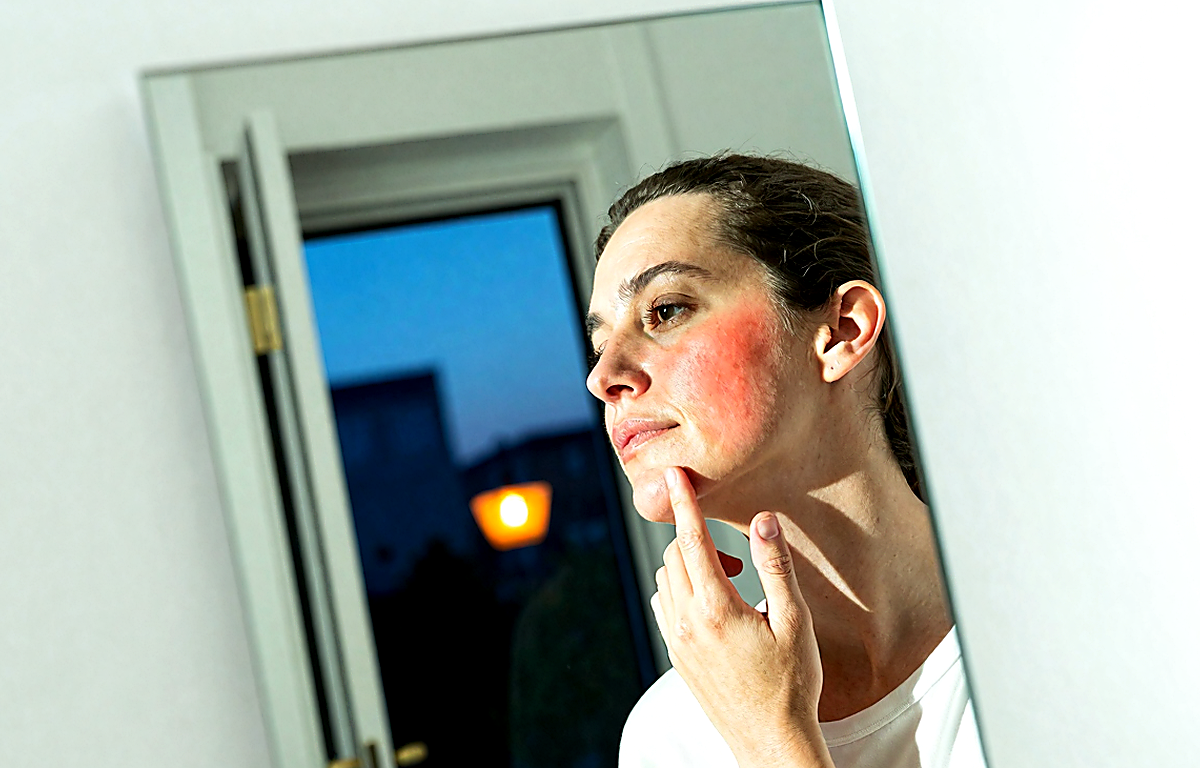
If your skin quickly turns red, stings after cleansing, or feels tight even with “gentle” formulas, the main question is not whether you can use acids at all, but exactly how you introduce them and what stands next to them in your routine. With CeraVe, this matters especially: the brand has products that can support the skin barrier well, but even the most comfortable cream cannot always make up for exfoliating too often, using too high a concentration of acids, or combining too many actives in one evening.
The practical takeaway is simple: when sensitivity is a concern, do not start with the promises on the packaging. First check four things — the type of acid, the overall active “load,” the condition of your barrier, and your skin’s reaction over the first two weeks. If an acid causes more than brief, mild tingling — if you get persistent burning, increasing redness, soreness, or sheets of flaking — that is not a “getting used to it” phase. It is a sign to rethink the routine. The sooner you notice it, the easier it is to keep your results without damaging the barrier.
Below, we will look at what is worth checking if you are interested in acids within a CeraVe-based routine but are worried about sensitivity: how to read the formula, which combinations most often cause problems, why a moisturizer does not always “fix” irritation, and how to build a calm, predictable routine without unnecessary heroics.
First, define what you mean by sensitivity
The word “sensitive” is often used for very different situations, and that changes whether an acid routine is a good fit for you and in what amount. A few common scenarios can be distinguished.
- Reactive skin: it quickly turns red from water, wind, friction, new products, fragrance, or active ingredients.
- A weakened barrier: there is tightness, roughness, discomfort after cleansing, makeup emphasizes dry areas, and any active feels harder to tolerate than usual.
- A tendency toward inflammation: breakouts are present, but the skin also reacts easily with stinging, dryness, or redness.
These situations can overlap, but the logic is the same: the more reactive the skin and the more fragile the barrier, the more careful the acid routine should be. In practice, that usually means starting more slowly, avoiding multiple strong actives on the same night, and watching the skin’s response rather than following an aggressive schedule.
Check which acid you are actually using
When people say they want to “use acids,” they often group together products that behave very differently on the skin. Sensitivity is affected not only by the concentration, but also by the type of acid, the frequency of use, the rest of the formula, and what else you apply in the same routine.
For easily irritated skin, the key point is not to assume that all acids are interchangeable. A leave-on exfoliating product used several times a week creates a very different load than a milder formula used occasionally. Even if your routine includes barrier-supporting CeraVe products, that does not cancel out the effect of the acid itself.
If the skin is already reactive, it is especially important to avoid introducing several new active products at once. Otherwise, if irritation appears, you will not know whether the problem is the acid, the frequency, the concentration, or the combination with other ingredients.
Assess the total active load in the routine
One of the most common mistakes is to judge a product in isolation. In reality, the skin responds to the entire routine. An acid may seem “not too strong” on its own, but in a routine that already includes retinoids, benzoyl peroxide, strong vitamin C, scrubs, or frequent cleansing, the total load can become excessive.
This is exactly why sensitivity often appears unexpectedly: not because one product is objectively harsh, but because several exfoliating or irritating factors build up in the same week or even the same evening. A CeraVe cleanser or moisturizer may make the routine feel more comfortable, but comfort is not the same as tolerance. You can still be overloading the skin even if the routine feels acceptable for the first few days.
If you are unsure what is causing the problem, simplify first. It is easier to assess tolerance when the acid is the only major active being introduced and the rest of the routine is kept as steady and bland as possible.
Do not ignore the condition of the barrier
If the barrier is already compromised, acids become much harder to tolerate. In this state, the skin can react sharply even to formulas that would otherwise feel manageable. Tightness, persistent dryness, rough texture, increased stinging, and a general feeling that the skin has become “touchy” are all signs that barrier support should come before more exfoliation.
This is where CeraVe products can be useful in a routine: they are often chosen specifically for their barrier-supporting role. But it is important to understand their place correctly. They can help maintain comfort and recovery, yet they do not give unlimited freedom to keep increasing acid frequency or strength. A moisturizer supports the skin; it does not erase the consequences of over-exfoliation.
If irritation has already built up, the smartest step is often not to “push through,” but to reduce the routine, remove obvious triggers, and allow the skin to calm down before trying again.
Watch the first two weeks carefully
The first two weeks usually give the clearest information about whether the routine is realistic for your skin. Mild, short-lived tingling can happen, but the overall trend should still be stable: no steadily increasing redness, no mounting soreness, no expanding dry patches, and no worsening discomfort after each application.
What matters is the pattern. If every use leaves the skin a little more irritated than before, the routine is not becoming “accustomed” — it is becoming less resilient. That is your cue to stop, space out applications more, or reconsider the product altogether.
Do not judge tolerance only by the first night. Some routines seem fine at the start and then become problematic once the cumulative effect shows up several days later. This is why a measured start is more useful than chasing quick visible results.
Why moisturizer does not always fix irritation
A common expectation is that if you pair acids with a good moisturizer, you can neutralize most problems. In reality, moisturizer can reduce discomfort and support recovery, but it cannot fully offset a routine that is too aggressive for your skin. If the acid strength, frequency, or combination is wrong, irritation will often continue to build under the surface even if the skin feels temporarily softer after cream.
This matters because sensitivity can be masked for a while. The routine may seem workable simply because the skin is being soothed afterward, but the barrier may still be under too much pressure. When that happens, the signs usually appear later: more redness, more stinging, worse tolerance to products that used to be fine, or visible flaking.
That is why it is better to treat moisturizer as support, not as permission to keep every other part of the routine unchanged.
Build a calmer, more predictable routine
If sensitivity is a concern, the safest approach is usually the least dramatic one. Introduce one acid product at a time, keep the rest of the routine simple, and give the skin time to show you whether it can tolerate the plan. Do not stack multiple strong actives in one evening just because each of them seems useful on its own.
A calm routine is not a weak routine. It is often the most sustainable way to get the benefits of exfoliating care without ending up in a cycle of irritation and recovery. If your skin stays comfortable, stable, and predictable, that is a much better sign than chasing a faster effect at the cost of redness and burning.
If you are using CeraVe in a routine with acids, think in terms of balance: barrier support is helpful, but the deciding factors are still the acid type, the total active load, the state of your skin, and the reaction you see over time. Checking these points early can save you from unnecessary irritation and make the routine much easier to maintain.