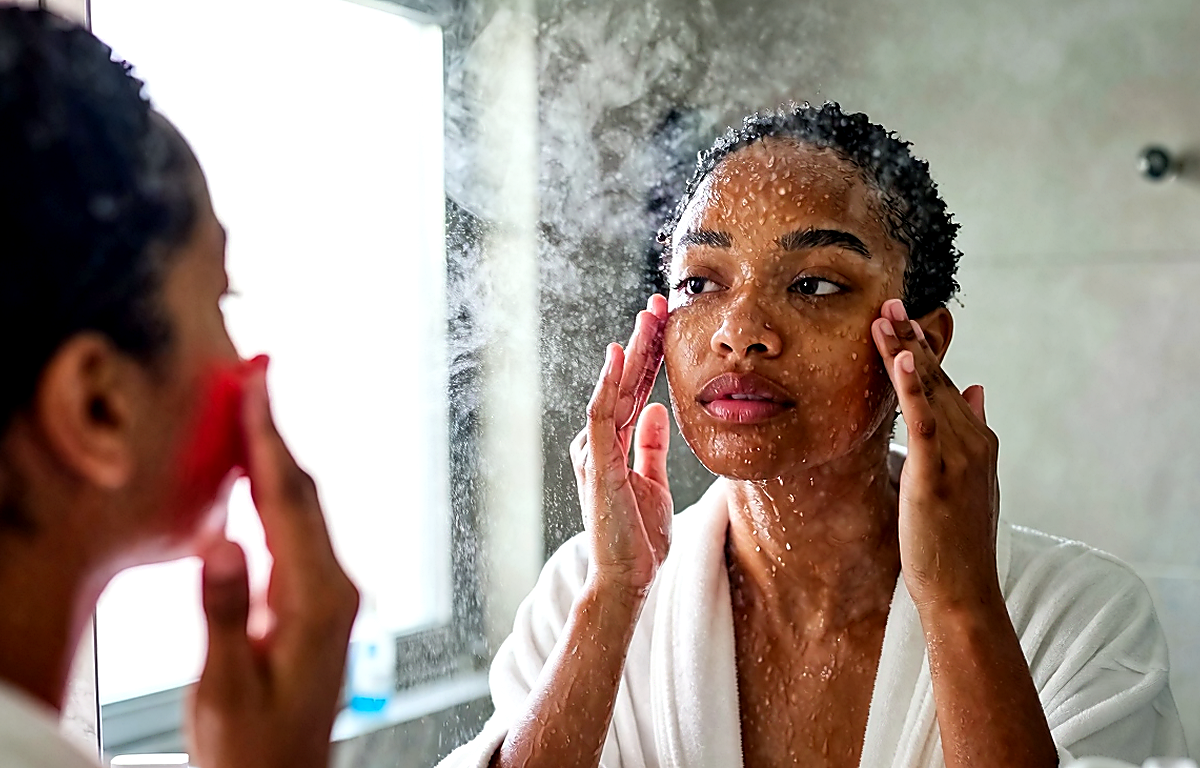
If your pores look more noticeable than usual, the first step is not to look for a “product that will close them,” but to check whether your skincare routine is making dehydration, oiliness, and rough texture worse. With a CeraVe toner, the key question is this: does it help support the skin barrier and gently reduce the look of pores, or does it add stickiness, overload your routine, and trigger new unevenness on your skin? Pores do not disappear forever and do not “dissolve” after a couple of uses, but they can look less pronounced if the formula works in a calm, predictable way.
That is why it is worth checking not just the brand name and the claims on the packaging, but specific details: whether the formula contains hydrating and barrier-supporting ingredients, whether the toner conflicts with acids, retinoids, and cleansing, how quickly shine appears after you use it, and whether it leaves a film on the skin. For skin concerned with visible pores, a good toner is not necessarily the most “acidic” or the most mattifying one, but the one after which skin looks smoother, softer, and calmer, without burning or tightness.
Why the topic of pores and toner is often misunderstood
Pores are a normal part of skin structure. They can look more noticeable because of excess sebum, heavy textures, cleansing that is not gentle enough, dehydration, genetics, and age. When we say “my pores get clogged,” we are usually talking about several factors at once: oil, dead skin cells, overly heavy skincare, and an inflammatory response to irritation.
Because of this, toner is often expected to do too much. People want it to cleanse the skin until it squeaks, instantly tighten pores, and keep the face matte all day. In reality, a toner’s role is much more modest, but still important: it can help skin regain comfort faster after washing, provide light hydration, soften texture, and, if it contains the right actives, support a cleaner, smoother-looking complexion. But if you rely on toner alone while ignoring cleanser, moisturizer, SPF, and how well your skin tolerates actives, the result will almost always be unstable.
So when considering CeraVe or any other toner, it helps to think not in terms of “will this work for everyone with pores,” but “how exactly will this formula fit into my current routine?” That is what separates a smart choice from buying based on popularity.
What to check first in a CeraVe toner formula
If visible pores bother you, you do not have to look for a long list of acids in the ingredient list. Start with basic logic: the formula should support your skin, not make it more reactive. With CeraVe, attention is often drawn to ingredients linked to barrier repair, and those can be especially valuable for skin that is both shiny and easily irritated.
Here is what makes sense to look for in the ingredient list:
- Hydrating ingredients — glycerin, hyaluronic acid, panthenol, and similar substances help keep skin from slipping into the cycle of “dehydration — even more sebum — even more noticeable pores.”
- Ceramides — a strong point of the brand. They do not “clean pores,” but they help keep the skin barrier in a more stable state. This matters if you have previously over-dried your face with cleansing, acids, or retinoids.
- Niacinamide — one of the most useful ingredients for concerns about pores, if your skin tolerates it. It can visibly improve texture, help with oil control, and make overall skin tone look more even.
- Gentle acids — if they are present, it is important to understand their role. For pores, people especially often look for BHA, but not everyone does well with regular daily acid exposure. Sensitive skin is often more comfortable with gentler options.
- Fragrance and potentially irritating additives — if your skin reddens easily, stings, or reacts to actives, the simpler and calmer the formula, the better.
What matters here: even a good formula does not guarantee perfect compatibility. Sometimes very watery layers with lots of humectants unexpectedly create a sticky feeling, followed by more noticeable daytime shine. That is why the ingredient list should be assessed together with your skin’s response, not instead of it.
What texture tends to suit skin with visible pores best
For many people, the deciding factor is not the formula on paper, but how the toner feels 10, 30, and 90 minutes after application. Skin with prominent pores usually does better with light textures that spread quickly and do not leave an oily film. But there is a nuance here: a finish that feels too “dry” is not always a plus either. If your face looks matte right after toner and then suddenly becomes shiny, that may be a response to dehydration rather than a sign of effectiveness.
Use a few practical signals as your guide:
- after toner, skin should feel more comfortable, not tighter;
- after a few minutes, there should not be a persistent sticky feeling if you used a normal amount of product;
- moisturizer and SPF should layer evenly over it without pilling;
- by evening, skin should not look as though it has built up more shine than usual.
If a CeraVe toner feels “too subtle,” that is not a drawback in itself. For skin with visible pores, a neutral, stable product often works better than an aggressive “instant effect.” But if after every use your face looks more uneven, gets shiny faster, or develops small closed bumps, the texture may simply be a poor fit for your routine.
When toner really helps with pores — and when it does not
Toner can be useful if noticeable pores are accompanied by dehydration, sensitivity after cleansing, and uneven texture without significant inflammation. In that situation, a supportive formula with hydration and barrier-supporting ingredients often makes skin look calmer overall: texture appears softer, flaking catches the light less, makeup applies more evenly, and pores do not stand out as much.
But there are cases where you should not expect a noticeable effect specifically from a toner. For example:
- if the main problem is dense comedones and obvious congestion;
- if you are washing with an overly harsh cleanser and then trying to “save” your skin with toner;
- if your routine already contains too many actives and your skin is responding with irritation;
- if you skip SPF and make overall reactivity and uneven tone worse because of it.
In other words, toner is a supportive step, not the main tool against everything at once. Sometimes the best result for visible pores comes not from a new toner, but from a calmer, more logical routine overall. If you want to rebuild your basics without unnecessary steps, this guide on how to build a basic skincare routine for your face may help.
How to combine a CeraVe toner with acids, retinoids, and SPF
One of the most common mistakes is treating toner as a “safe step” and then overloading the rest of the routine with actives. In reality, even a gentle formula may work poorly if you layer strong acids, retinoids, and drying serums on top of it without breaks and without considering what your skin can tolerate.
If visible pores bother you, follow this logic:
- Assess your skin after cleansing. If there is already burning, redness, or tightness, the top priority is soothing the skin, not adding more exfoliation.
- Use toner as a neutral layer. If it is hydrating and barrier-supportive, it can sit well before moisturizer or before an active if your skin tolerates the product better that way.
- Do not introduce several new actives at once. Otherwise, it will be hard to understand what exactly caused irritation or, on the contrary, what helped.
- Stay consistent with morning SPF. When skin is prone to uneven texture and post-inflammatory marks, daily sun protection affects how it looks no less than the choice of toner.
Retinoids deserve a separate note. If you use them and notice persistent flaking, painful sensitivity, or redness, even the gentlest toner should not become a way to simply “push through” the problem. During pregnancy, when planning pregnancy, and during periods of marked sensitivity, any regimen involving retinoids should be discussed with a doctor. And if you develop persistent burning, pain, swelling, or signs of a skin condition, what you need is not a new skincare step, but a consultation with a dermatologist.
Signs the toner is not right for you, even if you like the brand
A brand’s popularity often makes it harder to notice in time that a specific product is not doing anything helpful for your skin. When the issue is visible pores, it is especially easy to confuse the temporary “smooth” feel after application with a real improvement in skin condition. That is why it is better to watch how your face behaves over 2–3 weeks, not just during the first few minutes after use.
It is worth being cautious if:
- after a few days of use, oiliness has increased even though you changed nothing else;
- small uniform bumps have appeared on the forehead, nose, or along the jawline;
- your skin becomes redder after every wash than it used to;
- the feeling of cleanliness quickly turns into tightness;
- your moisturizer and SPF start pilling even though this did not happen before;
- it seems that pores have become more noticeable precisely because the skin looks dehydrated and uneven.
This does not necessarily mean the product is “bad.” More often, it means the formula is a poor match for your sensitivity, climate, cleansing routine, or the number of other actives you are using. Sometimes it is enough to reduce how often you use it or remove one conflicting product, but sometimes it is more honest to admit that the product is simply not for you.
How to test a new toner if your pores clog easily
The more reactive your skin is, the more important it is not to rush. Even if the toner seems very gentle, it is better not to apply it morning and evening right away and not to add it on top of a fully active routine at once. A short practical test is much more useful.
A simple way to assess it looks like this:
- for the first 3–4 days, apply the toner once a day to the whole face or first to a calmer area;
- do not add a new moisturizer, acid, or serum during this period;
- every morning, assess not only how your skin feels but also its texture in daylight;
- pay attention to the T-zone: if shine rises quickly there and new unevenness appears, that is an important signal;
- after a week, look at how your skin behaves under SPF and makeup — sometimes problems only become noticeable in a layered routine.
For skin with visible pores, the most valuable result is not a “wow effect” on the first evening, but predictability. If after 10–14 days your face looks smoother, does not feel overloaded, does not sting, and is not shinier than usual, the toner has a good chance of staying in your routine long term.
What else to pay attention to besides the toner itself
Sometimes the question is framed as, “Will CeraVe work for pores?” But often the more accurate question is different: “What in my routine is making my pores look more noticeable?” And here, toner is only one part of the picture.
Check a few more factors:
- Cleansing. An overly harsh gel cleanser or the habit of washing until the skin feels “squeaky clean” often increases reactivity and shine.
- Moisturizer. A texture that is too rich can visibly overload the skin, even if the toner itself is light.
- Exfoliation frequency. The constant urge to “clean pores better” often leads to the opposite result.
- SPF. Some sunscreen formulas cause more congestion than the toner that seems suspicious.
- The habit of touching your face. Mechanical irritation and constant contact with your hands also affect texture.
When you look at the routine as a whole, it becomes easier to understand whether you actually need a new toner or whether two other steps need adjusting instead. That is far more practical than changing one product at a time and expecting it to solve the problem on its own.
What conclusion to make before buying or continuing to use it
If visible pores bother you, a CeraVe toner should be judged not by loud promises, but by three criteria: whether it supports the skin barrier, whether it overloads texture, and whether it makes your routine more stable. For many people, a good sign will be a calm formula with hydrating ingredients, ceramides, and, in some versions, niacinamide. But even a formula that looks good on paper still has to pass the test of real skin: no extra stickiness, no increase in shine, and no new closed bumps.
In short: when pores are the concern, the best toner is the one after which your face gradually looks smoother and more balanced, not the one that promises instant “tightening.” If your skin reacts with persistent burning, pain, pronounced redness, swelling, worsening while using retinoids, or there is any suspicion of a dermatological condition, do not keep experimenting blindly — see a doctor. Good pore-focused skincare is almost always built on gentleness, consistency, and attention to your own tolerance, and those are exactly the criteria by which any toner, including CeraVe, should be judged.