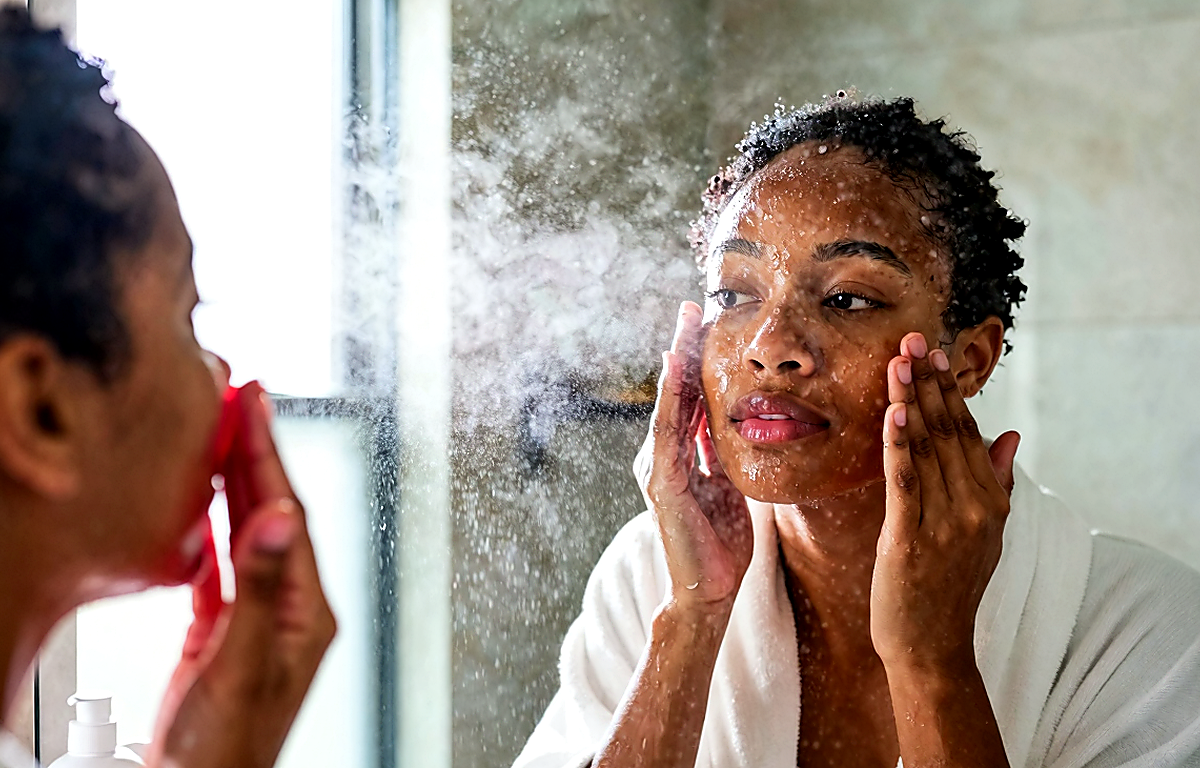
If visible pores bother you, choosing a toner simply because it is labeled “for problem skin” is too broad an approach. It is much more useful to check what the formula actually does: whether it exfoliates gently, helps regulate the feeling of oiliness, supports hydration, or, on the contrary, strips the skin too aggressively. With Eucerin, as with any pharmacy skincare brand, what matters more than the brand name is the logic of the product itself: which acids are used, whether alcohol is high on the ingredient list, and how well the toner works with your cleanser, serum, and cream.
The main practical takeaway is this: if your pores look noticeable but your skin also feels tight, sensitive, or flushes easily, an aggressive toner can make the situation look worse. Pores do not “close” or “disappear” permanently, but they can look neater if you reduce dehydration, lower the amount of dense sebum, and avoid triggering irritation. So before buying a Eucerin toner, it is worth checking not only the promises on the packaging, but also the type of actives, the formula base, tolerability, and the role this product will play in your existing routine.
Why pores can look more noticeable
Pores are a normal part of the skin, and they never become completely invisible. Usually, they stand out for several reasons at once. First, excess sebum: when skin oil mixes with leftover SPF, makeup, and dead skin cells, the surface looks less even. Second, dehydration: yes, even oily skin can be dehydrated, and then the texture can look rougher. Third, irritation and overly aggressive cleansing: the skin tries to compensate for discomfort, so the face may look shiny but not smooth.
That is why a good toner for skin with visible pores is not necessarily the strongest one. A formula that does three things at once often works better: gently clears away surface buildup, does not damage the protective barrier, and does not clash with the rest of your routine. If you are building a basic regimen from scratch, it helps to start with a clear minimum – cleansing, hydration, and sun protection – and only then add targeted products. For that, it can be useful to refer to how to build a basic skincare routine for your face.
What to check first in a Eucerin toner
When pores are the concern, it is not enough to rely on marketing phrases like “refreshes,” “mattifies,” or “for clear skin.” It is much more important to answer specific questions about the ingredient list and how the product behaves on your skin.
- Are there gentle keratolytics or acids? For pores, BHA, PHA, and sometimes AHA in a very moderate concentration can be helpful. They can help the skin surface look more even, but they need to fit into your routine without overloading it.
- How high is alcohol denat. on the ingredient list? If your skin reddens easily, flakes, or feels tight after cleansing, a high alcohol content may create a short-lived feeling of “cleanliness,” but then increase discomfort and uneven texture.
- Is there hydrating support? Glycerin, panthenol, hyaluronate, betaine, urea, and soothing ingredients make a toner more skin-friendly for skin that is prone to dehydration.
- Is the fragrance pronounced? Fragrance does not automatically make a product bad, but if your skin is sensitive and your routine is already active, it is better to minimize extra sensory irritants.
- How is the product positioned? If a toner promises deep cleansing, intensive renewal, and instant mattifying all at once, that is a reason to assess carefully whether it may simply be too active for your skin.
It is also useful to remember that Eucerin is often chosen for its pharmacy reputation and straightforward approach to caring for sensitive skin. But even in that category, one product may suit skin with oily shine and dense comedones, while another may suit skin that is more dehydrated and reactive to harsh formulas. So the focus should not be on the brand as a whole, but on the specific toner formula and its place in your routine.
Which ingredients can help if visible pores bother you
For pores to look visually neater, what usually matters is not “miracle ingredients,” but a well-balanced combination of actives. Below are the markers that are genuinely worth knowing before you buy.
Salicylic acid. One of the clearest ingredients for skin with visible pores and oily shine. It works on the surface and at the pore opening, helping the skin look cleaner and more even. But even a good BHA toner should not be paired with several other strong acid serums in the same evening.
PHA and gentle acids. If your skin is thin, reactive, or you are just starting with acids, gentler options are often the smarter choice. They act more delicately and are less likely to provoke sharp irritation.
Niacinamide. It is popular for a reason: it helps support the barrier, reduce the feeling of imbalance, and make the overall look of the skin more even. For pores, it is a good background ingredient, especially if you do not need strong acids every day.
Glycerin, panthenol, betaine, hyaluronate. These ingredients do not “clean out” pores directly, but they help prevent the skin from looking over-dried. As a result, texture often appears smoother.
Urea in low concentrations. It can be helpful if the skin is dehydrated but also rough or uneven. In a toner, it can feel very comfortable if the formula overall is not aggressive.
Antioxidant and soothing support. Licochalcone, thermal water, extracts with a mild soothing effect, and allantoin are not essential, but they are a welcome plus for skin that often reacts to actives.
A good rule of thumb: if a toner promises to help with pores but contains neither gentle renewal, nor oil-balancing logic, nor hydrating support, then its role will most likely be purely refreshing. That is not bad, but it is best not to expect a noticeable effect on skin texture.
When a toner can make things worse
Sometimes a product is chosen “to tighten pores,” but the result is skin that looks shinier, more irritated, and more uneven. This is a common scenario when the toner does not match the skin’s actual needs.
- Too much stripping. If the formula gives that squeaky-clean feeling and instant dry freshness, that is not always a sign of good cleansing. Often, it means the barrier will be uncomfortable.
- Too many actives at once. A toner with acids plus a retinoid, plus an acid serum, plus harsh cleansing is a classic path to irritation rather than smoother skin.
- Ignoring sensitivity. If there is burning that lasts more than a few minutes, pronounced redness, sheet-like flaking, or soreness, that is not “adjustment” – it is a signal to rethink the routine.
- Relying on toner alone. The look of pores is affected not by one step, but by the whole routine: cleansing, SPF, cream texture, the habit of touching your face, and the quality of makeup removal.
You should be especially careful with active formulas if you already use retinoids, benzoyl peroxide, strong acids, or medicated topical products. In those cases, an additional active toner may simply be too much. With persistent burning, pain, increasing swelling, inflammatory skin conditions, and also during pregnancy, it is better to discuss active skincare with a doctor; with retinoids and acids in particular, experimenting on your own is especially undesirable.
How to tell whether a Eucerin toner will suit you
Instead of asking, “Is this a good toner?” it is more useful to ask, “What exactly should it do for my skin?” Broadly speaking, the situations can be divided like this.
If your skin is oily, dense, and quickly loses its fresh look. It makes sense to look for a more oil-balancing or gently renewing formula. BHA, niacinamide, gentle keratolytics, and the absence of a greasy film after application matter most here.
If your skin is combination but dehydrates easily. Toners with balance will suit you better: a little renewal plus a good hydrating base. When skin is both shiny and tight, pores often look worse precisely because comfort is impaired.
If your skin is sensitive and reddens from actives. It is better to start not with the most aggressively pore-focused acidic formula, but with a gentle supportive toner without sharp sensory irritants. Sometimes against that calmer background, texture already looks more even after a few weeks.
If you have closed comedones and inflammation. A toner can be part of the plan, but not the only solution. Here it is especially important not to overload the skin and not to try to solve everything with one aggressive bottle.
A good practical habit is to look not only at the ingredient list, but also at the brand’s instructions: how often the product is meant to be used, which skin type it is designed for, and whether the brand suggests pairing it with gentle cleansing and a basic cream. If the formula is intended for daily use but your skin reacts by the second evening, rely not on the promises, but on actual tolerability.
How to fit toner into your routine so pores look neater
Even a good toner will not work to its full potential if you use it chaotically. The most common mistake is applying an active product after overly harsh cleansing and then giving the skin no support afterward. A more sensible routine looks like this.
- Gentle cleansing. No aggressive squeaky-clean feeling. If you wore SPF or heavy makeup, proper evening makeup removal matters.
- Task-based toner. If it is an active toner, apply it to dry skin and do not combine it the same evening with too many other strong products.
- Serum or straight to cream. If the toner is already active, the next step is better kept supportive: hydrating, soothing, or barrier-focused.
- SPF in the morning. Without sun protection, attempts to improve skin texture often lose their point, especially if your routine includes acids.
If pores bother you a lot but your skin is sensitive, start with a frequency of two or three times a week rather than every day. Track not only shine, but also other signs: whether there is burning, increased redness, papery dryness, or sudden flaking around the nose and mouth. A good result is not maximum mattness at any cost, but a more even, calmer-looking skin surface without constant discomfort.
One more important point is compatibility with makeup. Sometimes the skin gets over-dried specifically from the combination of an active toner at night plus a mattifying primer and heavy powder in the morning. As a result, the texture gets emphasized more. If you use SPF and then set your face with powder, this article on how to apply powder over SPF without patchiness may be useful: sometimes the problem of visually enlarged pores is worsened not by skincare, but by the way textures are layered.
Which marketing promises are best viewed critically
In the toner category, claims often sound convincing, but they do not always reflect what the product can realistically do. So it helps to dial down expectations a little.
- “Tightens pores.” It is more accurate to say that a product can make pores look less noticeable visually by helping the skin surface look smoother and reducing excess sebum.
- “Instantly cleans pores.” If the effect is visible right away, it is more often a feeling of freshness and temporary degreasing than a long-term change in texture.
- “Suitable for everyone.” Skin with oiliness, sensitivity, acne, rosacea, dehydration, and a damaged barrier all reacts differently. There is no true universality here.
- “Can be combined with any routine.” In practice, an active toner does not always pair well with retinoids, strong acids, and medicated topical products.
The brand’s pharmacy image does not cancel out individual reactions either. Eucerin is often associated with thoughtful, calm formulas, and that is a real strength of the brand. But even a toner that looks mild on paper may be unnecessary if you already have an active serum, an acid cleanser, and a nighttime retinoid. In pore-focused care, the win usually comes not from the number of steps, but from fine-tuning the routine.
Practical checklist before buying
To avoid buying a toner on impulse, it helps to run through a short checklist. It is especially useful if you are considering Eucerin as a pharmacy-style option and want to choose thoughtfully.
- Define the main goal. Do you need shine control, a more even texture, comfort after cleansing, or support for skin with occasional breakouts?
- Check the actives. Does it contain salicylic acid, niacinamide, gentle acids, or hydrating ingredients?
- Assess the risk of over-drying. How high is the alcohol? Is the fragrance pronounced? Does the product promise too much “deep cleansing” all at once?
- Compare it with your current routine. If you already use a retinoid or an acid serum, an active toner may be redundant.
- Plan the frequency in advance. You do not have to use a toner twice a day. Sometimes the best schedule is just a few times a week.
- Watch your skin’s reaction, not your expectations. If your face becomes drier, redder, and more sensitive, the product is not doing its job for you.
And one more nuance: sometimes noticeable pores are not a sign to buy increasingly strong formulas, but a sign to simplify your routine. Gentler cleansing, one well-tolerated toner or serum, a basic cream, and daily SPF can deliver a better-looking result than a long shelf full of actives.
Conclusion
If visible pores bother you and you are looking at a Eucerin toner, check not the volume of the promises, but the balance of the formula. The best choice is the one that helps your skin look cleaner and more even without burning, dryness, or overload. Look for clear actives, assess the amount of alcohol and fragrance, take your retinoids and acids into account, and do not expect one toner to “remove” pores forever.
The most effective approach is calm and systematic: gentle cleansing, a well-chosen toner for the specific task, a supportive cream, and SPF during the day. Then pores usually do not become “perfectly invisible” – they simply become less noticeable, and the skin looks more cared for, more even, and more predictable in everyday life.