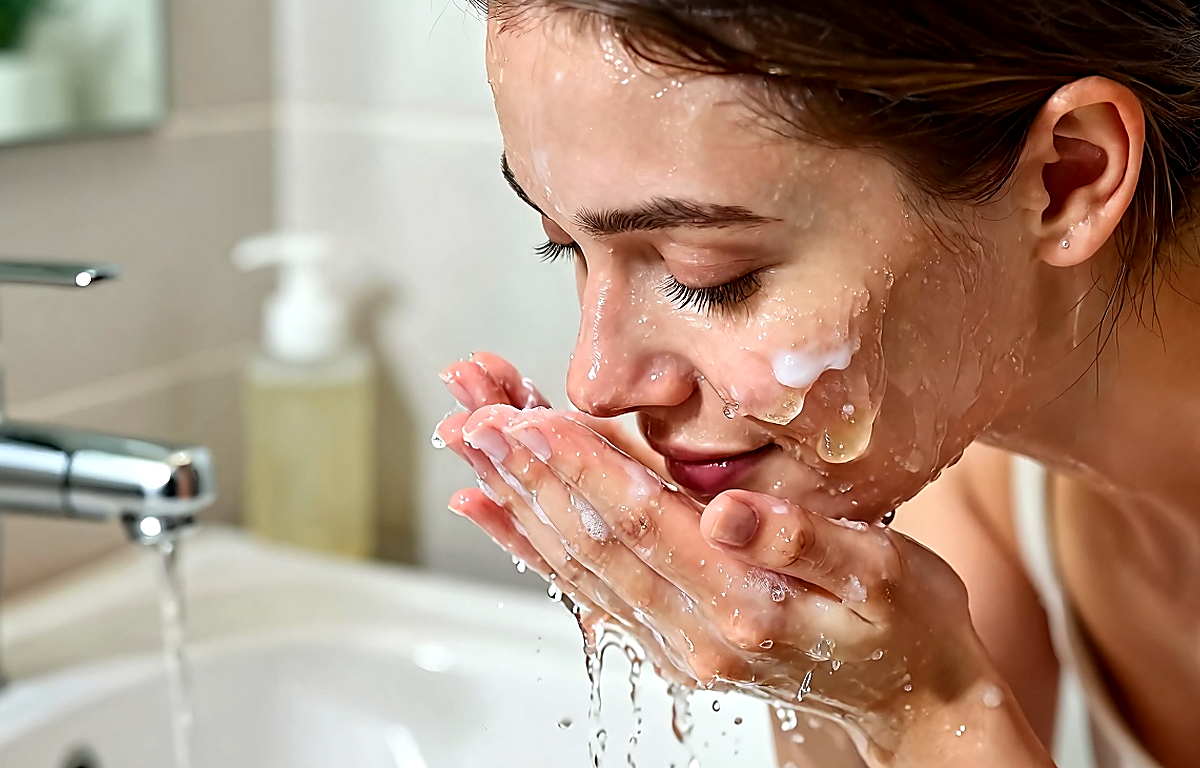
In summer, skin gets covered more quickly with sweat, sebum, dust, and leftover SPF, so it is tempting to reach for a gel that leaves the skin “squeaky clean.” But that is exactly what most often leads to tightness, dullness, and the feeling that you need to put something rich on your face right away. The main principle of summer cleansing is simple: the gel should wash away impurities and sunscreen without damaging the skin’s protective barrier. If your face feels dry, hot, starts to sting, or turns red after washing, the product is most likely too harsh for you.
It is better to choose a summer cleansing gel not by promises of “deep detox” and “all-day mattifying,” but by a combination of gentle cleansing ingredients, a comfortable texture, and a clear purpose. Oily and combination skin need control of excess sebum without over-drying, normal skin needs steady comfort, sensitive skin needs as few irritating factors as possible, and dry skin needs especially delicate cleansing, sometimes only in the evening. Below is a practical guide to help you buy a gel without falling for marketing traps and adjust your cleansing routine so your skin stays clean in summer without becoming dehydrated.
Why skin is more likely to feel tight in summer
Tightness after washing does not always mean your skin has been “properly cleansed.” Much more often, it is a sign that along with sweat, dust, and excess sebum, you have removed too many lipids from the skin’s surface. In summer, the risk is higher for several reasons.
- We wash more often. In hot weather, you want to freshen up in the morning, after being outside, after exercise, and before bed. Even a mild cleanser can become drying if used too often.
- We use long-wear products. Sunscreens, tints, primers, and waterproof makeup require more thorough cleansing, and it is easy to overdo it.
- We add actives. Acids, retinoids, benzoyl peroxide, and some serums increase skin sensitivity, so an ordinary gel may suddenly start to sting in summer.
- There is environmental contrast. Heat outside, air conditioning indoors, and dry air on transport all make the skin more reactive.
If it seems like your face is both getting oily and drying out at the same time, that is not unusual. Skin may produce more sebum in response to harsh cleansing, and a person may take that as a sign that they need an even “stronger” gel. This creates a vicious circle: the harsher the product, the more discomfort and instability you get.
Summer cleansing should work differently: it should remove what has built up during the day while leaving the skin feeling calm and supple, not like it is covered with a tight film.
What a good summer cleansing gel should be like
The ideal gel for summer is not necessarily the most expensive one, and not necessarily the lightest in texture. A few characteristics matter much more.
- A gentle cleansing base. The milder the formula, the greater the chance your skin will stay comfortable after washing.
- Low risk of irritation. If your skin is sensitive, it is better to choose products without a strong fragrance and without harsh cooling additives.
- Comfort after rinsing. The right gel should not leave a greasy film, but your skin should not feel squeaky after it either.
- The right cleansing intensity. What you need from a morning cleanse and from removing SPF in the evening may be different.
- Compatibility with the rest of your routine. If your routine includes acids, retinoids, or drying anti-blemish products, cleansing should be especially gentle.
A useful guideline is how your skin feels 10–15 minutes after washing, before you apply any cream. If your face is not burning, turning red, or begging for “something richer” right away, the product is probably a good match.
If you are rebuilding your routine for the warm season, you may also find it helpful to read about how to build a basic face care routine: cleansing always works better alongside suitable hydration and SPF.
Which ingredients to look for in the formula
You do not need to analyze the entire INCI list down to the last line, but a few ingredient groups really can help you understand the character of a product.
1. Cleansing ingredients.
In summer, milder surfactants that cleanse without aggressively stripping the skin tend to work especially well. Formulas that do not rely on a single harsh cleansing agent but instead use a combination of gentler components are often more comfortable. Even if you do not remember ingredient names, you can go by the product’s reputation: for sensitive and dehydrated skin, formulas described as gentle, pH-balanced, and barrier-friendly are usually a better fit.
2. Hydrating and softening additives.
Glycerin, betaine, panthenol, allantoin, hyaluronic acid, amino acids, ceramide complexes, and ectoin do not turn a gel into a cream, but they can help make cleansing feel more comfortable. It is a good sign when these ingredients are not all the way at the very end of the list.
3. Ingredients for oily and combination skin.
Niacinamide, zinc, gentle forms of salicylic acid, and green tea can be helpful if your skin gets oily quickly and is prone to clogged pores. But cleansing should not turn into a constant attack with actives. If your gel already contains acids and you are also using an acid toner, a serum, and an active cream, irritation becomes more likely.
4. What may be less suitable in summer.
Very strong fragrance compositions, alcohol in a noticeable role, harsh scrub particles, and intense cooling additives that create a “frosty clean” sensation can all increase discomfort, especially against a background of sun, heat, and actives.
Acids and retinoids deserve a separate mention. If you use them at home, your skin may react more sharply even to a neutral gel. During pregnancy, when taking or applying retinoids, and in the presence of dermatological conditions, it is better to coordinate active skincare with a specialist. If persistent burning, soreness, noticeable swelling, or inflammation that does not go away appears after washing, you need an in-person consultation with a doctor.
How to choose a gel for your skin type in summer
The same product may be perfect for one person in summer and irritating for another. The easiest approach is to look not only at your skin type “on paper,” but also at its current condition.
Oily skin.
You need a gel that removes sebum, SPF, and city dust well without over-drying. Look for balance: a light gel texture, gentle cleansing, and, if needed, niacinamide or sebum-regulating additives. It is not a good idea to choose a product only for its promise of “maximum mattifying”: that often hides overly aggressive degreasing.
Combination skin.
The most common mistake is choosing a cleanser based only on the T-zone and ignoring dry cheeks. Universal gentle gels that do not leave a squeaky feel work especially well here. If your forehead and nose get oily while your cheeks dry out, it is better to support balance with a lightweight hydrating product afterward than to use a harsh gel.
Normal skin.
In summer, gentle gels for everyday use without pronounced actives usually work well. The main goal is to maintain stability. If your skin suddenly becomes more sensitive on vacation or in the heat, that is a reason to simplify your routine.
Dry and dehydrated skin.
The gentlest possible formula matters most. In the morning, washing with water alone or with a very mild product may sometimes be enough, while a full cleanse can be left for the evening. You do not necessarily need a thick cream-gel, but the product definitely should not leave your face feeling “tight.”
Sensitive skin.
The shorter and calmer the formula, the better. Minimal fragrance, minimal harsh actives, and no strong cooling or tingling sensation presented as a sign that the product is “working.” If your skin is prone to rosacea, eczema, dermatitis, or other conditions, it is better to keep self-experimentation to a minimum and discuss cleansing with a doctor.
When one gel is enough and when double cleansing is needed
In summer, cleansing often comes down to SPF. If you wear a lightweight sunscreen without heavy makeup, one good gel can often cleanse the skin well enough, especially if you wash not in a rush but for 30–60 seconds. But there are situations when it is worth thinking about two-step cleansing.
- If you are wearing waterproof makeup or long-wear foundation.
- If your SPF is dense, very tenacious, or layered.
- If you reapplied sunscreen several times during the day.
- If your skin still feels coated or not fully clean after a regular wash in the evening.
In that case, the first step can be an oil, balm, or micellar product, and the second step a gentle gel. That does not mean the second step should be strong. On the contrary, when the main load has already been removed by the first cleanser, the gel can be even gentler.
If you wear makeup over SPF during the day, you may also find this article useful on how to apply powder over SPF without patchiness. This kind of makeup also affects evening cleansing: the more layers there are on the skin, the more important it is not to rub the face, but to dissolve products step by step.
At the same time, double cleansing is not necessary for everyone. If you do not wear long-wear textures and your skin is sensitive and prone to dryness, two daily cleansing steps may be unnecessary. The benchmark is clean skin without irritation.
Mistakes that can make even a good gel dry out your skin
Sometimes the problem is not the product itself, but how you use it. This is especially noticeable in summer.
- Water that is too hot. It increases dryness and redness. It is better to wash with cool or slightly warm water.
- Washing for too long. If the gel stays on your face for several minutes, it can dry the skin out. Usually 30–60 seconds of gentle massage is enough.
- Using too much product. A lot of foam does not always mean better cleansing. A small amount is often enough.
- Washing too often during the day. After exercise or heat, it is tempting to wash your face again, but if you do that constantly, the barrier suffers. Sometimes it is better to blot the skin, rinse with water, or use thermal water, and leave full cleansing for the evening.
- Combining it with aggressive skincare. A gel with acids plus an acid toner plus a retinoid at night is a common routine that sounds logical but in practice often leads to burning and flaking.
- Ignoring hydration. Even in summer, the skin often needs a light cream or fluid after cleansing. Without it, the feeling of tightness may become stronger.
If not only your face but also the skin on your body gets dry in hot weather, the reason is often the same: cleansing that is too intensive and not enough lightweight hydration. With that logic in mind, you may also find helpful this article on a light body cream for summer without stickiness.
How to tell a gel suits you: a quick checklist
Buying a face cleanser rarely feels complicated, but it can either stabilize your skin or throw off your whole routine. Here are the signs that a product suits you.
- Your skin feels clean after washing, but not squeaky.
- There is no strong tightness after 10–15 minutes.
- You do not get pronounced redness that lingers for a long time.
- There is no burning around the nose, lips, cheeks, or eyelids.
- Your skin does not start getting even oilier within an hour after washing.
- The gel works calmly alongside your SPF and evening skincare.
And on the other hand, it is better to reconsider the product if:
- you regularly feel dryness and discomfort right after washing;
- flaking appears even though you did not have it before;
- oiliness during the day has increased rather than decreased;
- your skin has become more sensitive to your usual serums and creams;
- persistent burning, pain, noticeable swelling, or inflammation occurs.
These last symptoms should not be dismissed as “adjustment.” If the reaction is pronounced, persists, or is accompanied by a skin condition, it is better to stop using the product and see a doctor. During pregnancy and when using retinoids, it is especially important to avoid self-prescribing aggressive actives and to discuss questionable products with a specialist.
A practical summer cleansing routine for morning and evening
To keep your skin clean without tightness, you often do not need to search for the “perfect all-purpose product for every situation,” but rather to build a clear routine.
In the morning:
- if your skin is oily or you sweat at night, use a gentle gel;
- if your skin is dry, sensitive, or dehydrated, water alone or very delicate cleansing may sometimes be enough;
- afterward, use a hydrating product according to your skin’s condition and SPF.
In the evening:
- if you only wore a light SPF, one gentle gel is enough, but use it thoroughly and without rushing;
- if you wore makeup, dense SPF, or reapplied protection several times, use two cleansing steps;
- afterward, choose restorative rather than drying skincare, especially if your skin is already tired from heat and sun.
In summer, it helps to watch your skin week by week. If you have traveled to a humid climate, started using sunscreen more heavily, begun outdoor workouts, or introduced a new active, your skin’s needs may change quickly. It is normal to change not only your cream but also your cleanser: for example, keeping one milder gel at home and another for periods of intense heat and heavy SPF use.
Even hair and the scalp react in summer to humidity and changes in routine, which shows up as frizz and lack of manageability. By analogy with facial skin, aggressive cleansing rarely helps for long, so you may also connect with this article on how to keep hair frizz-free after humidity.
Conclusion: the best summer cleansing gel is the one that leaves your skin calm
When choosing a cleansing gel for summer, it is better not to follow the logic of “the stronger it cleanses, the better,” but to pay attention to how your skin reacts afterward. A good product removes sweat, sebum, dust, and SPF without leaving your face feeling tight. Look for a gentle formula, take your skin type and the actives in your routine into account, avoid overdoing frequent washing, and do not ignore hydration after cleansing.
In short, the summer guideline is this: less aggression, more balance. When the right gel is chosen, the skin does not just look cleaner, but calmer, more even, and more predictable throughout the day. And if persistent burning, pain, swelling, pronounced inflammation appear after washing, or if pregnancy, retinoids, and skin conditions are involved, it is better not to keep experimenting and to discuss your skincare with a doctor.