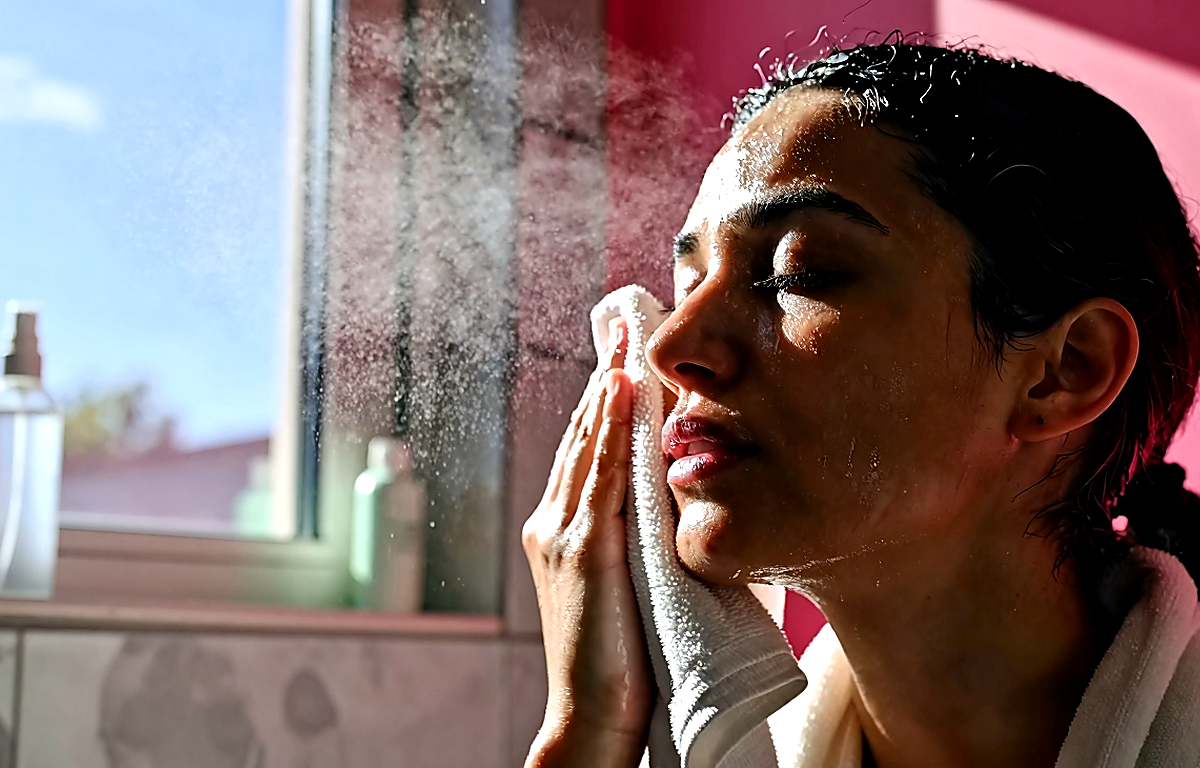
If your pores look more noticeable than usual and you find yourself reaching for a La Roche-Posay mist as a “quick refresh,” it helps to understand one key point right away: a mist does not literally “shrink pores” on its own. It can temporarily improve the look of the skin, reduce the feeling of overheating, relieve tightness after cleansing, and make sebum less noticeable visually — but only if the formula does not overload the skin, trigger extra friction, or clash with the rest of your routine. That is why, when choosing one, it makes more sense to look beyond big promises and check very specific things instead: the formula, the spray pattern, whether it contains fragrance, how your skin looks 15–30 minutes after application, and whether shine becomes more noticeable in the T-zone.
For skin with visible pores, a mist is useful not as a “magic step,” but as a careful supporting format. A good option should not leave a sticky film, collect into droplets, soften makeup in patches, or make you touch your face more often. When it comes to La Roche-Posay, it is better to focus not on the brand itself as a guarantee of results, but on whether the specific product suits your situation: sensitive skin, dehydration, hot weather, active ingredients in your routine, or a tendency toward oiliness or reactivity. Below is what is worth checking before buying and during the first few days of use if visible pores are what concern you.
Why pores can look more noticeable — and where a mist fits in
Pores are a normal part of the skin’s texture. What usually bothers us is not that they exist, but that they look enlarged, fill with sebum more quickly, or become especially obvious by the middle of the day. Several factors can contribute to this at once: active oil production, dehydration, leftover heavy SPF and makeup, improper cleansing, a habit of touching the face, and irritation from overly aggressive skincare.
That is exactly why a mist can either help or make things worse. It may help if the product:
- reduces the feeling of dryness after cleansing, which can make the skin look rougher;
- refreshes without leaving an oily or sticky film;
- does not contain ingredients that increase discomfort in sensitive skin;
- gives a fine mist instead of large droplets that make you want to spread them with your hands.
Problems begin when a mist is used in place of proper skincare or when it simply “wets the face” without addressing the real reason pores look more noticeable. For example, dehydrated skin can look uneven and dull, and after water without a follow-up cream, it may in some cases feel even tighter. So a mist is not an alternative to a basic routine, but an addition to it. If you are still building your skincare system, it helps to start with a calm base: cleansing, moisturising, and SPF. For that, you can refer to the article how to build a basic skincare routine for the face.
What to check first in the formula of a La Roche-Posay mist
When pores are the concern, people often start looking for “acids,” “mattifying” effects, or strong oil-control action in a mist. But in real life, for everyday use, something else matters more: how gentle the formula is and whether it triggers extra reactivity. This matters especially for sensitive skin, which can be oily and dehydrated at the same time.
Look at the formula from a practical point of view:
- A minimal formula. The simpler the ingredient list, the easier it is to understand how your skin reacts to it. If what you want is specifically a refreshing product, the calmest option is often the best one.
- Fragrance. For reactive skin, a noticeable scent is not always desirable. If, right after spraying, you feel the urge to wash the product off, that is already a signal.
- Film-forming and emollient ingredients. They are not bad in themselves, but what matters is whether they leave behind a heavy finish that makes pores look more obvious.
- Alcohol and irritating additives. They can create a feeling of instant freshness, but for some people they increase dryness and the sebum production that follows.
If a specific La Roche-Posay mist is positioned as soothing or thermal, it makes sense to expect comfort from it, not active pore correction. This is an important expectation to set: a gentle soothing format works well after cleansing, in hot weather, after a long day in air conditioning, or as an in-between step to reduce the feeling of overheated skin. But if your goal is to address clogged pores, blackheads, and a dense, uneven texture, the key factor will not be the mist but the routine as a whole.
Spray pattern, finish, and skin feel: the three criteria that decide almost everything
Even a good formula may still not suit you if the product’s delivery is off. For skin with noticeable pores, this matters especially because extra friction and uneven application quickly affect the final result.
Here are three things worth checking within the very first uses:
- How fine the spray cloud is. A fine mist distributes more evenly and does not force you to spread droplets with your fingers. Large droplets often sit on the surface, mix with sebum and SPF, and leave the skin looking not refreshed but simply wet.
- What the finish looks like after 5, 15, and 30 minutes. Right after application, almost any mist feels pleasant. The real test is what happens later: does stickiness appear, does shine increase, do you want to powder the T-zone earlier than usual?
- How the skin behaves throughout the day. If after using the mist you want to blot your face more often, and the pores on the nose and around the cheeks start to look darker or more obvious, the product is probably not for you.
For oily and combination skin, balance matters most: do not dry it out, but do not overload it either. A product that feels too “watery” without follow-up care does not always bring comfort, while one that is too rich shows texture more quickly. The point of a mist is for the skin to look fresher, not heavier.
When a mist actually makes sense if visible pores are your concern
The most common mistake is using a mist where another step is really needed. For example, instead of evening cleansing after a heavy SPF, or instead of a light cream when the skin is dehydrated. For a mist to work in your favour, it is important to understand in which situations it is actually a logical choice.
Good situations for using one include:
- After cleansing, if the skin feels tight and you want to gently relieve discomfort before the next skincare step.
- During the day in hot weather, when you want to refresh your face without adding extra layers of product.
- After time spent in dry air, such as in an air-conditioned office, if the skin looks tired and dull.
- Before makeup, if the specific product does not conflict with cosmetics or cause pilling.
Less successful situations include:
- instead of cleansing after a workout or an active day;
- over a dense, shiny SPF if the mist makes the finish look even oilier;
- many times in a row if each layer stays sticky;
- as an attempt to “treat pores” without rethinking the whole routine.
If you notice that your skin looks better right after spraying but becomes shinier an hour later, what you probably need is not an extra mist but an adjustment to your basic textures — a lighter cream, a different SPF, or gentle but effective evening cleansing.
How to combine a mist with acids, retinoids, SPF, and makeup
Skin with visible pores often already has active skincare in the routine: acids, retinoids, oil-regulating serums, and during the day SPF and sometimes makeup. In that kind of system, a mist should be a neutral participant, not a source of chaos.
With acids and retinoids. If your evening routine includes active ingredients, a soothing mist can be a comfortable in-between step, but it is important to watch whether it increases stinging. Do not spray a product onto already irritated skin just because it feels “light.” If you have persistent burning, pain, marked redness, swelling, or suspect a skin condition, it is better to see a dermatologist. During pregnancy and when planning care that includes retinoids, it is especially important to check active products with a doctor.
With SPF. A mist does not replace sun protection and should not be used as a way to “refresh” it if that makes the layer uneven. If the protective product starts to streak after spraying, that pairing is not a good one. By the way, if you want to understand how to combine an SPF finish carefully with makeup products, this article may help: how to apply powder over SPF without patchiness.
With makeup. When pores are visible, mists can be tricky: they either settle foundation beautifully or instantly emphasise texture. Check how your base behaves on the nose, around the nostrils, and on the centre of the cheeks — those are the areas where everything shows up fastest. If foundation starts sinking into pores more than usual, the issue is not your skin but the combination of formulas.
Signs that a mist is not right for you, even if you like the brand
With well-known brands, it is easy to fall into the trap of trust: if a brand is associated with sensitive skin, it can seem as though any product from it will automatically be “safe.” But skin reactions are always individual, and visible pores are very honest about showing when a product does not work well with your routine.
Pay attention to these signals:
- after a few uses, oily shine increases exactly where pores are most visible;
- a sticky layer stays on the skin and you want to wipe it away;
- there is stinging that does not go away quickly;
- your face seems to get “dirty” faster;
- makeup starts applying in patches or breaks down more quickly;
- you touch your face more often because the product feels uncomfortable.
There is also a subtler sign: you like the mist only at the moment of spraying, but not the result over time. This is very common. The sensation of coolness and freshness can be pleasant, but do not confuse it with real benefit for the skin. If your face looks worse half an hour later than it did before application, the product is not doing its job.
How to tell when the problem is not the mist, but the rest of your routine
Sometimes the mist becomes the “suspect” simply because its effect is noticeable right away. But the real cause of visibly enlarged pores may lie elsewhere. It is worth assessing your overall routine and everyday habits.
A checklist worth going through:
- Evening cleansing. If dense layers of SPF, foundation, and sebum regularly stay on the skin, pores will look darker and more textured no matter what mist you use.
- Overly aggressive products. Harsh cleansing, frequent acids, and attempts to “dry out” the T-zone often produce the opposite effect.
- An unsuitable cream. A texture that is too heavy may be no more comfortable for your skin than heavy makeup.
- Too many layers. Serum, essence, mist, cream, SPF, primer, foundation — sometimes the issue is not one product but overall overload.
- Not enough hydration. Dehydrated skin often looks more uneven, and pores stand out more clearly on it, especially in daylight.
If you want to assess a mist fairly, remove extra variables for a few days. Keep gentle cleansing, a straightforward cream, your usual SPF, and the mist itself. That makes it easier to understand exactly what is changing: comfort, shine, texture, or makeup wear.
A practical approach: how to test a La Roche-Posay mist if pores are your main concern
The most useful approach is not to guess based on the brand’s reputation, but to do a short at-home test. It is simple, but far more useful than reading marketing promises.
- Apply it to clean skin 1–2 times a day for 3–4 days. It is better to start without complicated combinations so you can see the basic reaction.
- Do not spread the product with your hands after spraying unless it is necessary. That lets you understand how good the product’s delivery is on its own.
- Look at your skin in daylight. This shows best whether the texture looks visually softer or, on the contrary, the pores stand out more.
- Track three indicators: stickiness, how quickly shine appears, and comfort in the nose and cheek area.
- Check compatibility with SPF and foundation separately. Do not combine every scenario in a single day.
- Do not expect a “pore-shrinking” effect. Judge it by more realistic criteria: does it soothe, does it avoid overloading the skin, and does it help the skin look fresher?
If the mist behaves calmly, does not clash with your basic routine, and does not make the T-zone feel heavier, it may be a good supportive product. But if persistent irritation, pronounced burning, soreness, swelling, or worsening breakouts appear, it is better to stop using it and discuss the situation with a specialist.
In the end, what matters more than the brand: the formula or your expectations?
When pores are the issue, mists are often bought in the hope of a quick visible effect — almost like a skin filter. But the reality is calmer and more useful: a good La Roche-Posay mist can refresh, reduce the feeling of tightness, and help the skin look more comfortable and tidy throughout the day. However, it does not replace proper cleansing, light hydration, a thoughtful approach to actives, and a comfortable SPF.
So the main question before buying is not “is this brand right for me?” but “is this specific format right for me?” If visible pores are your concern, check the formula for gentleness, the spray for evenness, the finish for the absence of stickiness, and the compatibility with the rest of your skincare and makeup. In that case, a mist really can earn its place in your routine: not as a promise of the impossible, but as a clear, convenient, and appropriate step.
In short: for skin with visible pores, the best mist is the one that does not try to look like a treatment, but honestly does one job well: refreshes, soothes, and does not make texture worse. Everything else depends not on the spray format, but on the skincare system as a whole.