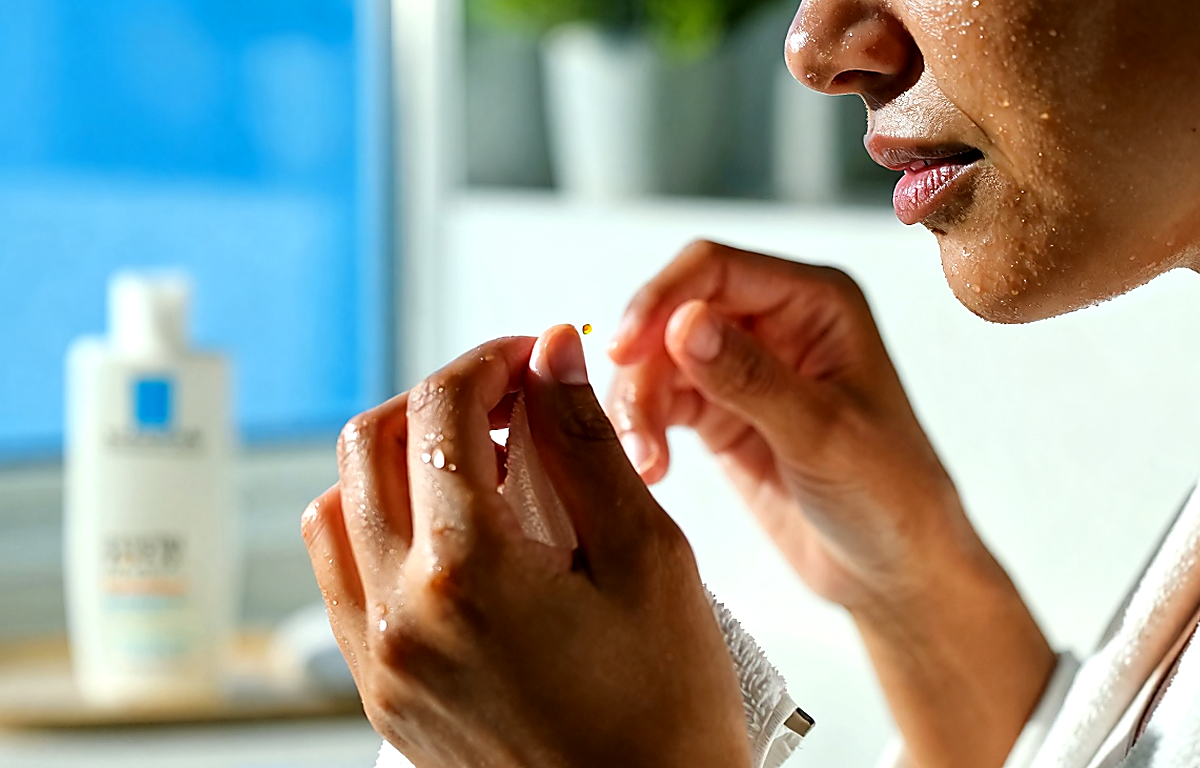
If your skin flushes quickly, stings from new skincare, or reacts to sunscreen with a sensation of heat, you should choose SPF not by a loud “for sensitive skin” promise, but by a few specific markers. With La Roche-Posay, the most important thing is to check not only the protection level, but also the type of filters, the presence or absence of noticeable fragrance, the amount of denatured alcohol in the formula, the texture, and how the product behaves within your existing routine. These details are usually what determine whether sunscreen feels comfortable every day or turns into yet another irritation trigger.
The good news is that SPF for sensitive skin does not have to be heavy, sticky, and obvious on the face. But the opposite extreme—a very fluid formula, lots of volatile components, rapid evaporation, a strong scent—also often causes discomfort. That is why, when choosing La Roche-Posay, it helps to look at the product like a beauty editor: not by searching for the “perfect cream for everyone,” but by checking whether a specific formula suits your level of reactivity, your climate, and the way you apply it.
Why sensitive skin often clashes with SPF products
Sunscreens are more complex than a basic cream: they contain more functional components that have to do more than care for the skin—they also need to provide stable protection against UVA and UVB rays. For sensitive skin, that means more possible points of contact it may react to.
In practice, discomfort is more often linked not to the mere presence of SPF, but to a combination of factors:
- a high amount of alcohol in very lightweight fluids;
- fragrance or scented components;
- stinging on a compromised skin barrier;
- conflict with acids, retinoids, or harsh cleansing;
- overly vigorous rubbing and too many layers;
- the product migrating into the eye area.
So sensitivity to SPF is not always a sign that sunscreen “doesn’t suit you in principle.” Sometimes your skin simply dislikes a specific texture, the way you apply it, or how it interacts with the serum underneath. If you are also building a calm, basic routine, it helps to review the general principles of gentle skincare: how to build a basic facial skincare routine.
What exactly to check in La Roche-Posay before buying
La Roche-Posay is a large brand, and even within one range you can find very different formulas, from ultralight fluids to creamier, more occlusive options. If sensitivity is your concern, you should focus not only on the line name, but on how the specific product behaves.
Here is a checklist that is genuinely useful:
- Texture type. Fluid, gel-cream, cream, milk, stick—this is not just a format, but a potential comfort level for your skin.
- The presence of alcohol high up in the ingredient list. This is not always a problem for oily skin, but for reactive or dehydrated skin it can be a source of burning.
- Fragrance. Even a pleasant scent does not make SPF better, and sensitive skin often does better without it.
- Finish. Overly mattifying formulas can sometimes emphasize dryness and increase the feeling of tightness.
- Area of application. Some products are easier to tolerate on the whole face, while others feel more comfortable only outside the eyelid area.
- Compatibility with makeup. If SPF pills, you will most likely start applying less than you actually need.
One more important point: do not confuse “didn’t cause new breakouts” with “suited sensitive skin.” A formula may work well for oil-prone skin and still sting when the barrier is weakened. For reactive skin, the success criteria are broader: the product should protect, avoid triggering burning, and feel comfortable enough for regular reapplication.
Which ingredients and formulas deserve the closest attention
Sensitive skin does not require panic over every long ingredient list, but it does benefit from a more careful approach. In La Roche-Posay SPF and similar products, it makes more sense to assess not one “scary” ingredient, but the overall architecture of the formula.
1. Denatured alcohol.
It often appears in lightweight sunscreen fluids and helps make the texture thin and quick-absorbing. For some people, that is convenient, especially in hot weather. But if your skin stings even from water after cleansing, is flaky, or you use retinoids, a high percentage of alcohol may feel too harsh.
2. Fragrance.
Not every fragranced formula will necessarily trigger a reaction, but if you are prone to redness and burning, it is better to start with the most neutral options possible. The fewer extra sensory “effects,” the easier it is to judge real tolerance.
3. Modern chemical filters.
On their own, they do not mean a product will be irritating. On the contrary, many modern filters provide high protection and elegant cosmetic wear. The question is how the formula is built around them: whether there are irritating volatile components, how comfortable the base feels, and whether the finish is drying.
4. Emollient and hydrating components.
Glycerin, emollients, a soothing base, and a creamier texture often make SPF more comfortable for sensitive skin, especially if it tends to be dry.
5. Mattifying powders and a distinctly dry finish.
This can be convenient for oily skin, but reactive skin with a compromised barrier may do better with a soft natural finish rather than a hard matte effect.
If your skin is very sensitive, do not look for the “most high-tech” formula—look for the most predictable one. In everyday life, predictability is what gives you a real chance of wearing SPF every day, not just on vacation.
Which texture is usually better tolerated: fluid, cream, or stick
La Roche-Posay, like many pharmacy skincare brands, offers different texture formats. For sensitive skin, texture is not a minor bonus but one of the main selection criteria.
Fluids are convenient if you cannot stand rich textures, get oily quickly, and live in a warm climate. But ultralight formats are also the ones that more often contain a higher amount of volatile components and may feel harsher on skin with a weakened barrier. If you like fluids, test them especially carefully during the first 2–3 days.
Cream formulas are often better suited to dry, reactive, redness-prone skin. They spread more slowly, but they often feel gentler, highlight flaking less, and tend to work more easily with barrier-supportive skincare.
Gel-creams can be a compromise for combination skin when you want lightness without a strong alcohol-like feel.
Sticks are convenient for touch-ups on specific areas, but they are not always the best first choice as the main product for the entire face. On sensitive skin, repeated friction from a stick across the cheeks and nose can sometimes cause more irritation than a standard hand application.
A useful general guide is this:
- dry, reactive skin often tolerates cream SPF better;
- combination skin may prefer gentle fluids or gel-creams without an aggressive evaporating feel;
- oily but sensitive skin may like lightweight textures, though you should not automatically rule out more comfortable creams if the barrier is weakened.
Sometimes it is more useful to have two formats: one that feels more comfortable for everyday use, and another that is as lightweight as possible for hot weather or reapplication.
How to tell whether the problem is not the brand, but your barrier or product combination
Very often, people decide they are “allergic to SPF,” when in reality the skin is reacting to the sum of several factors. For example, in the morning there was an acid toner, then a serum with actives, then a lightweight alcohol-based SPF—and the sunscreen gets all the blame because the stinging started after that. In fact, the barrier had already been irritated.
Check a few scenarios:
- apply SPF to calm skin after a day without acids, scrubs, or strong actives;
- use only a basic moisturizer underneath it, or nothing at all if your skin feels comfortable;
- do not rub for too long or layer too many silicone-heavy products if they often pill on you;
- do not apply the product too close to the eye mucosa;
- assess the reaction not only during the first 5 minutes, but also after 2–3 hours.
If burning appears only when you are using retinoids, acids, or after intense cleansing, the issue may not be the specific SPF itself, but a temporarily impaired barrier. During this period, it is often better to switch to a simpler, more emollient formula and cut back on irritating steps in your routine.
Pay special attention during the adjustment period to retinoids. If you are pregnant, planning a pregnancy, or using prescription-strength actives, it is wise to discuss any skincare and sun protection questions with a doctor as well.
How to test SPF safely if your skin reddens and stings easily
Even a good formula can seem “too active” if you test it the wrong way. Sensitive skin benefits not from a dramatic full-face experiment before an important day, but from a calm step-by-step approach.
- Do a local patch test. Apply a small amount to your jawline or the side of your neck for 2–3 days in a row.
- Move on to half of the face. This makes it easier to tell whether it is a general skin reaction or a problem with a specific formula.
- Test against a calm background. No peels, harsh masks, or new active serums.
- Watch for more than redness. Heat, itching, increased dryness, and soreness during cleansing can also be warning signs.
- Evaluate the eye area separately. Sometimes the face tolerates a formula well, while the eyelids and under-eye area do not.
A normal reaction is a slight awareness that the product is there, especially during the first few minutes. An abnormal reaction is persistent burning, pain, noticeable swelling, increased redness, or watery eyes. In such cases, it is better to stop using the product. If symptoms persist, worsen, or you have a skin condition, you need an in-person consultation with a dermatologist.
How to apply and reapply SPF without making sensitivity worse
Even a suitable SPF can turn into an irritant if you apply it too aggressively. Sensitive skin likes gentleness and predictability—and that includes technique.
What helps:
- Apply without strong friction. It is better to distribute the product across different areas and smooth it in gently rather than rubbing intensely.
- Let your skincare set. If you wear a cream underneath SPF, wait a few minutes to reduce the risk of pilling and extra friction.
- Do not overload the face. The more layers you apply, the higher the chance that the skin will feel stressed and the product will start migrating into the eyes.
- Pay attention to reapplication. If you spend a long time outdoors, protection needs to be reapplied, but that should also be done gently.
If you wear makeup, choose a reapplication method that does not force you to rub your face with tissues and brushes until it turns red. Sometimes it is easier to blot away excess sebum with a soft tissue first and then carefully refresh protection with a suitable format. If combining SPF with makeup matters to you, this guide may also help: how to apply powder over SPF without patchiness.
And one more important nuance: if your SPF consistently stings only by the end of the day, the issue may be dry air, heat, sweat, salt water, or overall barrier fatigue—not just the product itself. Sometimes it makes more sense to adjust your entire summer skincare routine rather than endlessly switching sunscreens.
When La Roche-Posay may be a good choice—and when it is better to look for another format
The brand has a strong reputation in the sensitive-skin segment, but that does not mean automatic compatibility with every type of reactivity. La Roche-Posay may be a good choice if you want modern high protection, a pharmacy-style approach to formulas, and a fairly wide range of textures. This is especially convenient if you want different options for the city, the beach, sports, and reapplication during the day.
But there are situations when it is worth looking even more carefully—or considering alternatives:
- your skin clearly reacts to alcohol-based fluids;
- you have rosacea, active irritation, or a compromised barrier after procedures;
- the eye area is very sensitive and almost any liquid SPF makes your eyes water;
- you use retinoids and are currently in a phase of marked dryness and burning;
- you are psychologically uncomfortable with any very fluid or fast-evaporating textures.
In these cases, do not try to “get used to it at any cost.” Sunscreen works only when you can apply enough of it and reapply it without fear of discomfort. Sometimes a denser but calmer formula is far more practical than a trendy weightless fluid.
If sensitivity is accompanied by persistent burning, pain, swelling, rashes, pronounced flaking, or you already have a diagnosed skin condition, do not limit yourself to choosing products based on reviews. You need a dermatologist’s advice, and during pregnancy or while using retinoids, an especially careful approach to any active routine is important.
Brief conclusion
When choosing a La Roche-Posay SPF for sensitive skin, focus first not on the brand name, but on how the specific formula behaves: comfort level, presence of fragrance, alcohol tolerance, texture, and compatibility with your skincare. The most common reasons for a bad experience are a damaged barrier, a fluid that is too lightweight and drying for your skin’s current condition, and improper pairing with active products.
The best guideline is simple: the product should provide high protection while feeling comfortable enough that you actually use it every day. For sensitive skin, that is the main sign of a successful SPF—not promises on the packaging, but a calm, predictable reaction from your face in real life.