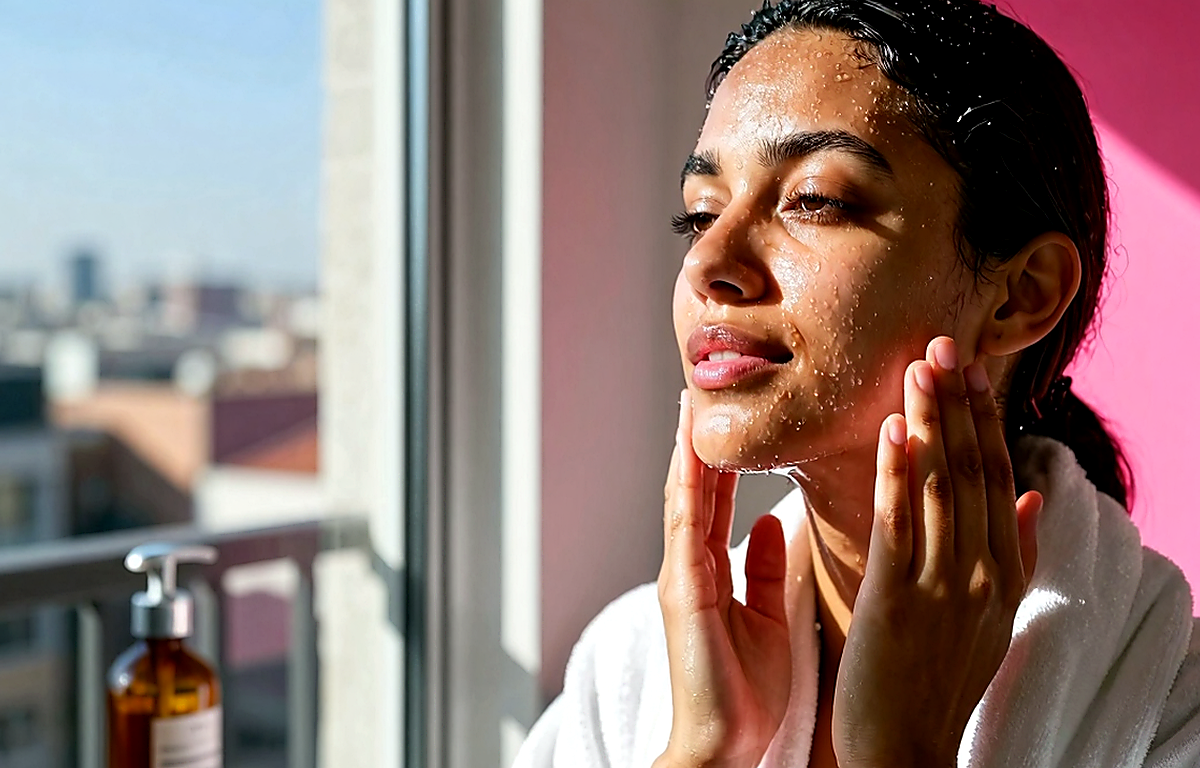
If your skin does not feel soothed after a mist and instead feels tighter, the issue is not always the spray format itself. With dryness, the four most important things to check are what exactly is in the formula, what kind of skin you are applying it to, what you use to “seal in” moisture after spraying, and whether your skin barrier is already weakened. Even a well-conceived mist may not work as expected if your routine lacks cream, the air indoors is very dry, or your skin is irritated by acids, retinoids, or overly aggressive cleansing.
If we use a The Ordinary mist as a familiar reference point, it makes more sense to look not at the brand itself but at the logic of the formula. A hydrating spray works best as a quick extra step: to slightly soften the feeling of dryness, reduce discomfort after cleansing, prepare the skin for serum, or refresh the face during the day. But on its own, it rarely solves dehydration. If your skin feels comfortable for only a couple of minutes after spraying and then the dryness returns, that is a sign to reassess not just the mist but the entire routine.
Why a mist sometimes does not hydrate and instead highlights dryness
The main misconception is that any product in spray form automatically “fills the skin with moisture.” In practice, a mist usually works as a light watery layer. If it contains good humectants, it may quickly relieve tightness. But if you do not apply anything on top afterward, the water and light water-soluble components will evaporate, and dry skin may end up feeling even worse, especially in a room with air conditioning, heating, or low humidity.
There is also a second point: dryness does not always mean a lack of water. Sometimes it reflects skin reactivity, a compromised barrier, irritation from actives, or cleansing too often. In that case, a mist with potentially irritating ingredients, heavy fragrance, or a high amount of active substances may not soothe the skin and can instead increase discomfort.
That is why it is better to focus not on claims like “refreshing” or “hydrating,” but on how the product fits into your real skincare routine. For dry and dehydrated skin, one bottle is not enough; what matters is the full combination: gentle cleansing, hydrating layers, cream, and daytime sun protection. If you are currently rethinking your basic routine, it may help to review how to build a basic facial skincare routine.
What to check in a The Ordinary mist or any similar spray formula
If dryness is your concern, it helps to read the ingredient list without overcomplicating it, using a few clear reference points. You do not need to know every molecule. What matters more is whether the formula supports hydration and comfort or focuses on effects your skin does not need right now.
What to look at first:
- Humectants. Glycerin, hyaluronic acid, betaine, panthenol, amino acids, aloe, sodium PCA, and trehalose help retain water in the upper layers of the skin and are usually a good fit when the skin feels dehydrated.
- Soothing ingredients. Allantoin, centella, oat, beta-glucan, ectoin, thermal water, and panthenol can be helpful if dryness comes with sensitivity.
- Overly active additives. Acids, high concentrations of vitamin C in acidic form, retinoids, and aggressive exfoliants are not the best choice if what you want is a comfortable mist for already dry skin.
- Fragrance and essential oils. They are not a problem for everyone, but with reactive, over-dried, or irritated skin, the risk of discomfort is higher.
- A high percentage of alcohol. Not every alcohol in a formula is automatically problematic, but if your skin is already flaky and stings, such a product should be evaluated especially carefully.
It is also important to understand the difference between a “hydrating mist” and an “active spray.” If dryness is bothering you, the formula should be more supportive than stimulating. In that situation, a simple, calm formula is often more useful than trendy multifunctionality.
How to tell when the problem is not the mist but a damaged skin barrier
Sometimes it seems as if a certain spray is “drying out” the skin when in reality it is only the first product to reveal an existing problem. If the skin barrier is weakened, almost any water-based product can cause stinging, redness, or rapid moisture loss. Then the goal is not to find the perfect mist, but to simplify and soften the whole routine for a while.
Signs that the barrier may be the real issue:
- a burning sensation even from neutral products;
- flaking in areas where it usually does not appear;
- skin that is both dry and sensitive at the same time;
- your face feels very tight right after washing;
- the reaction became stronger after acids, retinoids, scrubs, frequent masks, or aggressive cleansing;
- even a rich cream does not provide lasting comfort.
In that case, it is better for a few days or weeks to reduce the number of actives, switch to gentle cleansing, focus on a cream with lipids, ceramides, cholesterol, and fatty acids, and use a mist only as an extra soft layer if it does not sting. If dryness comes with marked redness, pain, swelling, weeping, or symptoms of a skin condition, you need an in-person consultation with a dermatologist rather than experiments with new skincare formats.
How to use a mist properly so it helps instead of disappointing you
Even a good product is easy to “devalue” with the wrong application. The most common mistake is to spray it on and leave the skin as it is, especially when the skin is already dehydrated. It is better to think of a mist as an in-between step rather than a complete final solution.
A practical routine usually looks like this:
- Apply the mist to clean skin or between skincare steps while the face is not fully dry.
- Do not wait until it has fully evaporated and the skin feels squeaky or tight.
- Follow with a serum or cream that will help retain moisture.
- If your skin is very dry, choose not a single light layer but a combination such as “mist + serum + cream.”
- During the day, do not overdo constant spraying in dry office air if there is no protective skincare layer on top: sometimes it gives brief comfort but does not improve the condition long term.
There is also a practical nuance: the finer the mist and the gentler the formula, the more pleasant the product usually feels on sensitive skin. Large droplets, a sharp scent, and a sticky finish often make it less comfortable to use, especially if you want to refresh hydration during the day.
If you wear SPF and makeup, the mist should be compatible with them in texture. Otherwise it may disrupt the finish or cause patchiness. On that topic, this article may be useful: how to apply powder over SPF without patchiness, because issues with layering skincare and makeup are often linked to too much product or incompatible textures.
When a mist suits dry skin and when it is better to choose a cream or essence right away
A mist is convenient when you want a quick feeling of freshness and a light extra hydrating layer. It works well after cleansing, before serum, while traveling, in a hot room, or as a way to make your routine feel a little more comfortable. But it should not be expected to deliver the same effect as a rich cream.
A mist is most helpful in these situations:
- the skin is mildly dehydrated but not irritated;
- you want to relieve tightness after washing;
- you like layered hydration without a heavy texture;
- thicker products feel uncomfortable during the day;
- you want to prep the skin for the next skincare step.
And here is when it is better to go straight for a richer format:
- there is obvious flaking and roughness;
- the skin reacts painfully to almost everything;
- the discomfort does not go away even after several hydrating layers;
- the dryness appeared while treating the skin, using retinoids, or after aggressive procedures;
- the indoor air is very dry and the relief from a spray is too short-lived.
In other words, a mist is not a replacement for cream. For dry skin, it is more often an add-on that improves comfort but does not cover the skin’s basic barrier-repair needs.
Which skincare combinations matter most if you use The Ordinary and are afraid of over-drying your skin
Many people know The Ordinary primarily for active serums: acids, retinoids, vitamin C, and formulas designed to improve texture and tone. That is exactly why, when talking about a mist, it is important to consider the neighboring products in your routine. The spray itself may be fairly neutral, but if the skin is already exposed to many actives, any extra product will feel different.
Check whether one of these situations applies to you:
- Actives every day without breaks. If you use a lot of acids, retinoids, or strong brightening products morning and evening, the dryness may be the result of overload.
- Not enough emollients and lipids. Hydrating serums without a cream do not always provide a lasting result.
- Cleansing that is too harsh. Foaming cleansers that leave the skin “squeaky clean,” hot water, and frequent washing can cancel out the benefits of even good hydration.
- Applying actives to already irritated skin. If your face already stings after a mist, the issue may go deeper than one product.
A useful rule of thumb: if you are introducing a new mist, do not change your whole routine at the same time. That way it is easier to understand whether the product truly does not suit you or whether the problem comes from how it interacts with acids, retinoids, benzoyl peroxide, or other actives.
During pregnancy, while breastfeeding, when treating acne, or when using retinoids, any changes to an active skincare routine are best discussed with a doctor. This is especially important if dryness is accompanied by marked sensitivity and inflammation.
How to assess the result over 7-10 days without fooling yourself
Mist-format skincare products are often appealing because of the immediate sensation, but what matters is not the first few seconds after spraying. What matters is how the skin feels several hours later and over the course of a week. Otherwise, it is easy to mistake a pleasant cooling sensation for real improvement.
Here is a simple way to test it:
- use the mist under the same conditions for 7-10 days;
- apply it the same way each time, for example after cleansing and before cream;
- do not add new actives during this period;
- watch not only for comfort immediately after application, but also for whether there is less flaking, tightness, and reactivity overall;
- notice whether stickiness, stinging, redness, or a feeling that the skin is drier an hour later begins to appear.
A good mist for dry skin usually gives three clear results: it reduces tightness, does not trigger irritation, and makes the next skincare layers feel more comfortable. If all you see is a brief cosmetic “wow” moment followed by a need for even more hydration, the product may simply be too light for your skin’s needs.
Which signals deserve an immediate response
Even if a product seems popular and generally successful according to reviews, your individual reaction matters more. Stop using it if the mist causes noticeable burning, increased redness, persistent itching, swelling, or soreness. These signs should not be dismissed as the skin “getting used to it.”
Be sure to see a doctor if:
- burning and pain do not go away;
- pronounced swelling or inflammation appears;
- you suspect dermatitis, rosacea, eczema, or another skin condition;
- the dryness comes with cracking, weeping, or rashes;
- you use prescription products or retinoids and are not sure how to combine them safely with skincare.
Cosmetics can support skin comfort, but they should not replace proper diagnosis if the problem goes beyond ordinary dehydration.
Conclusion: what to check first
If dryness is bothering you and you are considering a The Ordinary mist or any similar spray, start with a simple checklist. Check whether the formula contains hydrating and soothing ingredients, whether your routine is overloaded with actives, whether you apply the mist to slightly damp skin, and whether you seal it in with cream. Then assess whether your skin is signaling a damaged barrier through stinging, redness, flaking, and constant tightness.
For dry skin, a mist is not a miracle product but a supportive step. It can make skincare more comfortable and pleasant, but the best results usually come only when it is paired with gentle cleansing, sufficient hydration, and barrier repair. If the dryness does not go away or is accompanied by painful symptoms, it is more sensible not to keep searching for the “perfect spray,” but to discuss the situation with a dermatologist.