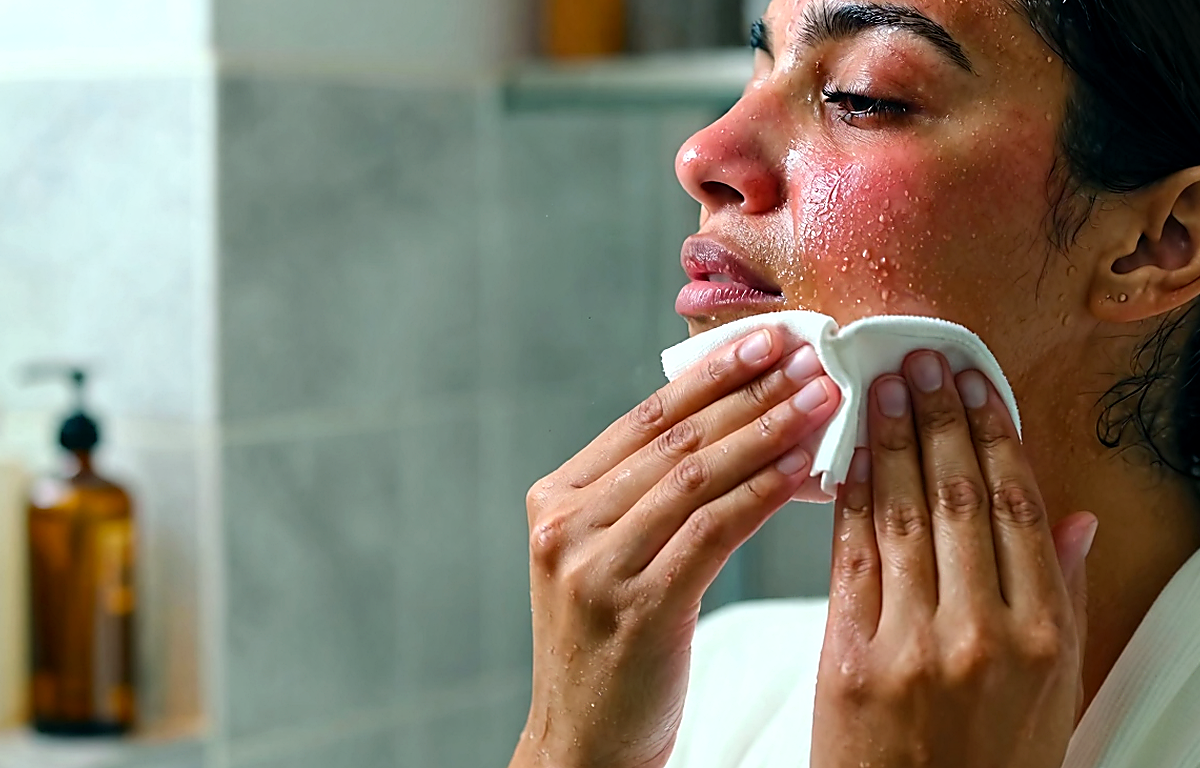
If your skin turns red after a Vichy toner, or the redness is already there and you are afraid of making it more noticeable, you need to look not at the brand name but at the specific formula and the current condition of your skin. The same toner can feel comfortable on resilient, balanced skin and cause stinging on sensitive, dehydrated, or recently overworked skin. So the key question is not “Is Vichy right for me in general?” but “Which ingredients, texture, and usage pattern are safe for my skin right now?”
When redness is a concern, it is especially important to check five things: whether the formula contains alcohol and noticeable fragrance, how high the acid load is, whether the toner is being combined with an already irritating routine, whether the skin barrier is compromised, and whether you are trying to cover up a reaction that should be stopped rather than tolerated. If you get persistent stinging after application, the heat intensifies, your skin becomes blotchy, or it starts to peel, this is not something you should “push through until your skin gets used to it” — that is a bad strategy for sensitive skin.
Vichy is a popular pharmacy skincare brand, and that is exactly why it often creates a false sense of automatic safety: it can seem as if a well-known brand associated with sensitive skin must make every product in the line gentle. In reality, the specific ingredient list, concentrations, and the rest of your routine around this step are what matter. Below is a clear checklist to help you assess a Vichy toner if redness is worrying you and avoid common mistakes.
Why a toner can make redness worse, even if the brand is considered gentle
Redness is not a diagnosis but a visible skin reaction to irritation, overheating, a damaged barrier, active ingredients, friction, or several factors at once. Toners are often underestimated because they seem like “just a light liquid,” but products like this can quickly show how vulnerable your skin is right now.
Reasons a toner may make redness worse:
- the formula contains denatured alcohol, which can increase the feeling of stinging and dryness when the barrier is weakened;
- there is noticeable fragrance or essential-oil content that makes sensitive skin react with warmth and blotchiness;
- acids or exfoliating ingredients are being used at a time when the skin is already irritated;
- the toner is applied after overly aggressive cleansing;
- the same routine includes retinoids, acids, scrubs, an active vitamin serum, and other irritating steps all at once;
- the product is applied with a cotton pad and friction rather than with the palms, which by itself can increase reactivity.
If the redness appeared suddenly, first assess not only the toner itself but also everything in your routine over the past 7–10 days: a new cleanser, frequent washing with hot water, a heavily fragranced SPF, retinol, acid masks, peels, or scrub powders. Very often, the toner is not the only cause but simply the last straw in an already overloaded routine.
What to check first in a Vichy toner formula
When redness is the concern, it is better to read the ingredient list by risk groups rather than by marketing promises. Even if you do not know INCI like a professional, a basic screening already greatly lowers the chance of a mistake.
Start by looking for potentially irritating factors:
- Alcohol Denat. If your skin is reactive, dehydrated, or stings after cleansing, alcohol high on the ingredient list is a reason to be cautious.
- Fragrance/Parfum. Fragrance is not necessarily bad for everyone, but when redness and stinging are already present, it is an unnecessary risk.
- AHA, BHA, PHA, exfoliating acids. Acids can be useful, but not when the barrier is already impaired and not during active irritation.
- Menthol, cooling agents, essential oils. A fresh sensation is not the same as soothing the skin: sometimes it is simply a sensory effect with irritation potential.
Then look for ingredients that sensitive skin usually tolerates better:
- glycerin and other humectants;
- panthenol;
- allantoin;
- gentle moisturizing sugars and amino acids;
- soothing and barrier-supportive ingredients in general, especially if they are not included only at the very end of the list for marketing purposes.
One more important point: do not confuse “hydrating” with “soothing.” A toner can leave the skin feeling pleasantly moist and still trigger redness because of alcohol, fragrance, or acids. Comfort in the first seconds after application does not always mean good long-term tolerance.
If you are not sure which ingredient is irritating your skin, do not test several new products at once. It is far more useful to introduce one product and observe it for 4–7 days than to try to decode your skin’s reaction in the chaos of five new launches.
It is not only the formula: the toner format and application method matter too
On sensitive skin, INCI is not the only thing that matters. How you apply a toner and what you pair it with often matters more than the big promises on the packaging. For example, the same toner applied with a cotton pad after squeaky-clean washing can feel completely different from that same toner gently pressed in with the palms on slightly damp skin after mild cleansing.
When redness is a concern, these rules usually work better:
- apply toner with your palms rather than rubbing the skin with a cotton pad;
- use one thin layer instead of a multilayer “toner pack” approach;
- do not apply the product right after a hot shower or intense exercise, when vascular reactivity is already increased;
- do not combine it on the same evening with acids, retinoids, or harsh cleansers if your skin is already turning red;
- seal the toner in right away with a basic cream if your skin tends to become dehydrated.
Sometimes the problem is not the toner itself but the expectation that it will replace the whole routine. When redness is present, toner is only a supportive step. Its job is not to “treat” the redness but not to make the situation worse and, at best, to help support skin comfort.
How to tell that your skin is not ready for an active toner right now
Even a good product can arrive at the wrong time. If the skin barrier is already compromised, formulas with acids, strong fragrance, or a high alcohol content are usually tolerated worse. And on the other hand, when the skin is calm, resilient, and not dehydrated, it may be more tolerant of more active formulas.
Signs that it is better to choose the most neutral toner possible right now—or to skip this step for a while entirely:
- stinging even from water or a regular cream;
- a tight feeling immediately after cleansing;
- fine flaking around the sides of the nose, on the cheeks, or around the mouth;
- redness that gets worse by evening;
- a reaction to almost any new product;
- recent use of retinoids, acid pads, scrubs, or professional procedures;
- flare-ups in wind, sun, after exercise, or after hot food.
During a period like this, it is better to simplify the routine: gentle cleansing, if needed a very neutral hydrating toner without obvious irritants, a basic cream, and daily sun protection. If you are currently rebuilding a calmer routine, it helps to focus on the principles of a basic regimen rather than the number of bottles: how to build a basic skincare routine for your face.
It is important to understand that your skin does not have to “get used to” stinging. Adaptation is sometimes possible with actives such as retinoids, but persistent discomfort from a toner is not one of those cases where patience usually pays off.
Which combinations with toner most often cause an unwanted reaction
When redness is involved, it is risky to judge a product in isolation. There is rarely only one product in the bathroom, and combinations are what most often cause the problem. This is especially noticeable in people who like multistep routines or introduce several actives in quick succession.
The most common conflicting scenarios:
- an acid toner plus a retinoid on the same evening;
- a toner with alcohol after cleansing with a harsh gel or foam that strips the skin strongly;
- a fragranced toner after a peel, gommage, or scrub;
- an active toner in the morning plus acids or retinoids at night without recovery days;
- trying to layer toner many times for “glass skin” when the skin is already irritated;
- using several products against breakouts, oiliness, and texture at once when the main problem at that moment is inflamed sensitivity.
If you like a specific Vichy toner but have doubts because of redness, try honestly removing competing irritants for a week. This is the simplest way to understand whether the product itself is the issue or whether the overall routine is simply too active. A good test setup looks like this: gentle cleansing, one toner, one cream, and SPF during the day. Everything else goes on pause.
How to test a toner safely if redness comes and goes
Testing only makes sense when the skin is relatively calm, not in the middle of an active reaction. Applying a new product to skin that already feels hot and irritated just to test it is a bad idea: you will not get a clean result, and you risk making the discomfort worse.
A practical way to test it:
- Take a break from scrubs, acids, retinoids, and aggressive masks for at least a few days if they have been part of your routine.
- Do a local test on a small area near the jawline or on the side of the neck if you usually tolerate patch testing well in that area.
- Use the product once a day or every other day for 3–4 applications instead of applying it morning and night right away.
- Evaluate not only the immediate sensation but also how your skin looks and feels the next morning: is it drier, hotter, more blotchy, or more sensitive to water and cream?
- If everything stays calm, start using the toner on the full face, but still without adding extra actives on the same day.
You should stop the test immediately if you develop pronounced stinging that lasts longer than a few minutes, persistent redness, itching, swelling, soreness, or a rash. This is not the kind of reaction you should try to “work through with routine consistency.”
What kind of toner is usually more appropriate for redness: practical guidelines, not marketing
If your goal is not to intensify redness, the best-performing toners are often not the “most high-tech” ones but the most predictable ones. In that sense, it helps to think less about bold promises and more about the tolerance profile.
When redness is a concern, it is usually more sensible to choose a toner that:
- does not sting even on slightly damp skin;
- does not have a strong perfumed trail;
- does not promise exfoliation, glow, and pore care all at once in one bottle;
- supports hydration rather than the feeling of “perfectly clean” skin;
- pairs well with a simple cream and SPF without requiring a complicated compensation system.
If we use Vichy as a brand reference point, it makes more sense for sensitive skin to look at calmer, hydrating, barrier-friendly formulas and to be cautious with versions focused on renewal, acidity, intensive cleansing, or noticeable fragrance. The specific choice should always be confirmed by reading the ingredient list and watching how your own skin responds, not by the brand’s reputation.
One more important point: redness often looks worse against a backdrop of dehydration. So sometimes the best result comes not from a new “anti-redness” toner but from reducing the number of actives and keeping hydration more stable for 2–3 weeks.
When to stop experimenting and see a doctor
Cosmetic skincare can support skin comfort, but it should not replace diagnosis. If redness persists, gets worse, or is accompanied by pain, the task is no longer to find the “perfect toner.”
Reasons not to delay a dermatologist consultation:
- constant stinging or pain;
- swelling, marked inflammation, or oozing;
- flaky patches that do not go away;
- a sharp reaction to almost any skincare product;
- suspected rosacea, dermatitis, or another skin condition;
- a situation in which the redness is accompanied by itching, heat, or noticeable discomfort for weeks.
Extra caution is needed during pregnancy, when using retinoids, after procedures, and during any period when the skin has unexpectedly become hypersensitive. In these situations, it is especially important to check ingredient lists carefully and not introduce several new products at once. Cosmetics should not promise treatment, and significant symptoms require medical evaluation.
Short takeaway: how to decide on a Vichy toner when redness is the issue
If redness is worrying you, a Vichy toner should be assessed with a very practical checklist: does the formula contain factors that often irritate sensitive skin, is the routine overloaded with actives, is the barrier compromised, and are you trying to use toner as a solution to a problem that actually needs a calmer, more minimalist routine? The priorities are a gentle formula, careful application, moderation, and watching your skin’s reaction over several days.
The easiest way to remember the main point is this: when redness is present, the clearest and most neutral toner is usually better than the most promising one. If a product causes persistent stinging, increases heat, or makes the face more blotchy, it is not right for you at this moment—regardless of how popular the brand is. And if your skin has been reacting strongly for a long time, it makes more sense to discuss the situation with a doctor than to continue cosmetic experiments.