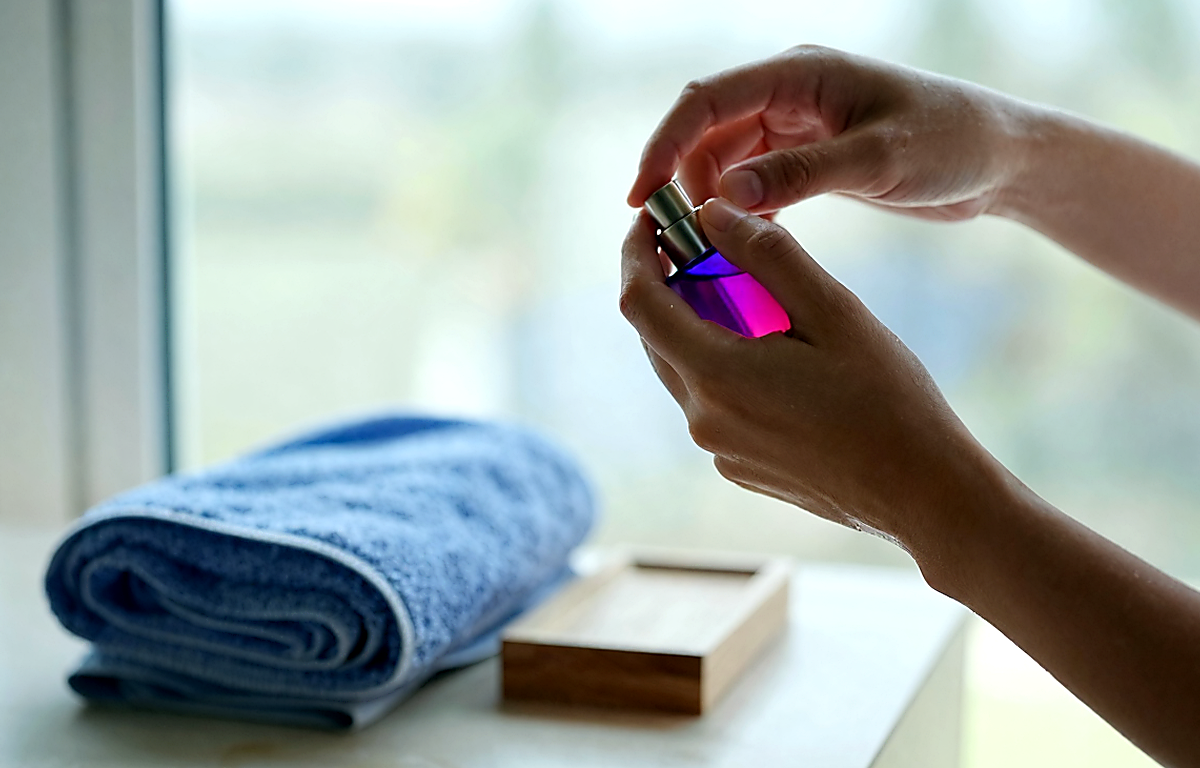
After a shower, many people want to smell “clean” — fresh, calm, and well-groomed. But in practice, this is exactly where it is easy to miss the mark: instead of the feeling of skin, cotton, and cool air, you get a scent that is too soapy, powdery, or even “hotel-like.” If you want a light fragrance after a shower, do not choose every random “fresh” option, but specific directions: citrus with soft musk, tea notes, neroli, transparent white florals, watery accords, rice powder without vintage density, and light woody bases. By contrast, sharp aldehydes, aggressive lily of the valley, overly dry white musk, and dense “cleaning-product” accords are what most often create that soapy effect.
The main principle is simple: a clean fragrance without soap is not the smell of foam, but the impression of fresh skin after water and light care. That is why it matters to look not only at the pyramid, but also at the texture of the composition, the concentration, and how you apply it. The same perfume in eau de parfum form may feel too insistent after a shower, while as a hair mist, body mist, or eau de toilette it may smell almost perfect. Below, we will look at which notes to seek out, what to avoid, and how to build that exact “after-shower” aura that does not suffocate or clash with body lotion.
What a “clean fragrance” really means — and why it so often turns soapy
When people talk about a clean fragrance, they usually do not mean sterility, but associations with being well cared for: fresh linens, a warm towel, cool skin, a light cream, air from an open window. Perfumery can convey this in different ways, and not all of them will feel pleasant right after a shower.
A soapy effect usually appears for several reasons:
- the composition contains a lot of sharp aldehydes that create the effect of foam and “crisp” cleanliness;
- the white musks are too dry, cold, or powdery;
- lily of the valley, neroli, or jasmine are built in an overly hygienic, almost shampoo-like way;
- the fragrance was applied generously to hot, damp skin and started projecting more strongly than expected;
- it was layered with a scented shower gel, lotion, and deodorant — so the total number of layers became too much.
That is why “clean, but not soapy” is usually about balance. You want freshness, but with a skin-like feel; airiness, but not sterility; softness, but without a sweet trail. A good guideline is this: if the fragrance reminds you not of a bar of soap, but of your own skin “on its best day,” you are probably moving in the right direction.
Which notes and accords most often create freshness without soapiness
If you are choosing a fragrance online or reading the note pyramid before going to a store, it helps to know which note families most often create an “after-shower” effect without turning into the smell of foam.
Look for these directions:
- Soft citrus notes. Bergamot, mandarin, yuzu, lemon leaf, and petitgrain. They give the impression of water, light, and a freshly washed shirt, but it is important that the citrus not feel too sharp or cologne-like.
- Tea accords. Green tea, white tea, mate, and transparent herbal tea notes. They create cleanliness without a “bathroom” effect and smell especially good in summer and after sports.
- Neroli and orange blossom. When handled well, this is one of the most beautiful expressions of cleanliness. It can feel sunny, slightly bitter, with the impression of cool white fabric. But if the neroli smells too soapy, it is better to skip it.
- Transparent musk. Not the kind that smells like powder or fabric softener, but a creamy, skin-like, almost weightless musk. This is what creates the impression of “clean skin.”
- Watery accords. Aquatic notes, cucumber freshness, a drop of dew, damp petals. They work well in small amounts and are especially appropriate after a shower in hot weather.
- Light woody bases. Cedar, transparent sandalwood, cashmeran in a minimal dose, and sheer woody molecules. They give a polished background and keep the fragrance from falling apart after half an hour.
- Rice powder and soft iris. Not a dense vintage style, but a modern, dry, and delicate one. This kind of accord can smell very clean and calm.
These are the notes to approach more carefully if you particularly dislike soapiness:
- bright aldehydes;
- overly loud white musk;
- harsh lily of the valley;
- dense jasmine in a shampoo-like style;
- powder with a retro effect;
- very sweet “clean” compositions where sugar clashes with freshness.
An important nuance: the same note can smell very different from one brand to another. For example, neroli can be sunny and airy, or it can smell like literal “soap in beautiful packaging.” So the pyramid is useful as a guide, but what really matters is how the fragrance settles on your skin.
Which concentration is best after a shower: mist, eau de toilette, or parfum?
For an “after-shower” scenario, the density of the fragrance often matters more than the scent itself. Even a very beautiful clean perfume can feel like too much if it has a high concentration and a dense base. After warm water, the skin is heated, humidity increases diffusion, and the composition smells brighter than it does under normal conditions.
These formats usually work best:
- Body mist. The lightest option. It suits anyone who wants a feeling of freshness for 1–2 hours without a pronounced trail.
- Hair mist. Convenient if you do not want to apply an alcohol-based fragrance to your body immediately after a shower. Hair creates a soft cloud when you move.
- Eau de toilette. One of the best compromises: noticeable enough, but not too dense. It is especially good for citrus, tea, and musk fragrances.
- Eau de cologne. A good fit for people who love very light freshness. It often smells beautiful in hot weather, but fades quickly.
Eau de parfum can work too if the composition itself is transparent. But it is better to apply it sparingly: one spray on the chest or the nape of the neck, not a full “cloud.” Clean fragrances are especially easy to overload, and then instead of expensive-looking polish, you get the effect of overly scented body care.
If you use a body cream, make sure it is not strongly fragranced. Neutral textures work well for this purpose. If you are currently choosing light care for warm weather, you may find it helpful to read our guide on how to choose a light body cream for summer without stickiness: the calmer the skincare base, the cleaner and more refined the fragrance develops.
How to test a fragrance if you want that exact “just stepped out of the shower” effect
A major mistake is testing these fragrances in a rush, on dry skin, and among a dozen other blotters. Clean compositions are subtle: on paper they may seem boring, while on the body they may open up as the perfect everyday perfume. Or the opposite may happen: they smell fresh on a blotter, but suddenly turn soapy on the skin.
To make the test useful, do this:
- Come without a heavy fragrance on your skin or clothes.
- Start with blotters to filter out obviously soapy or overly sweet options.
- Keep only 2–3 favorites for skin testing, no more.
- Apply one fragrance to the wrist or inner elbow, and another to the other arm.
- Evaluate not only the opening, but also what remains after 30–90 minutes: the base is what will show whether this becomes “clean skin” or powdery soap.
- If possible, repeat the test at home after a shower: some fragrances develop differently on slightly moisturized, warm skin.
Ask yourself not just “Do I like it or not?” but more precise questions:
- does the fragrance remind you of clean skin, linen, air, tea, or water;
- or does it immediately suggest soap, laundry powder, or shower gel;
- does it become drier and harsher after an hour;
- are you comfortable sensing it close to the body, not only in the trail.
A good “after-shower” fragrance rarely impresses through loudness. Its strength is that you want to stay with it a little longer, one on one.
Popular fragrance families and formats that often work for this purpose
If it is easier for you to choose by overall style rather than by individual notes, here are a few families that most often give the desired result.
1. Citrus-musky fragrances.
This is probably the most universal option. At the top, there is bright citrus; in the base, soft musk and a little wood. These compositions suit people who want to smell clean, but not obviously “perfumed.”
2. Tea-based and airy green fragrances.
They create the impression of freshness without shower-gel soapiness. They are especially successful for the office, for summer, and for people who get tired of sweet or powdery bases.
3. White florals in a transparent style.
Neroli, orange blossom, and sometimes jasmine sambac or freesia can smell very clean and elegant if the composition does not contain heavy sweetness.
4. Skin scents, or fragrances that smell “like your skin, but better.”
This is the group that does not shout about itself, but creates an effect of polish. They often contain musk, ambrette, a little iris, light woods, and molecular notes.
5. Watery florals and fresh aquatics.
They suit people who love a feeling of coolness. But here it is important not to drift into an overly “blue” fragrance with a gel-like character.
In editorial discussions, many people look to popular clean fragrances and skin scents not as a mandatory shopping list, but as a search direction. Among frequently discussed examples, you will often see compositions with musk, cotton, iris, tea, neroli, or soft aldehydes. But it is better to focus not on the name, but on the impression on your skin: even a widely loved “clean” fragrance may turn out too soapy specifically for you.
How to apply fragrance after a shower so it smells clean, not intrusive
Even an ideal composition can lose all its charm because of the wrong application. After a shower, it is tempting to “lock in” the freshness right away, but that is exactly when it is easy to overdo it.
A working approach looks like this:
- first, gently pat the skin dry with a towel and let it dry completely;
- if you use cream, let it absorb for 5–10 minutes;
- apply the fragrance from a distance and in a small dose;
- choose 1–2 points, not every point at once.
The best areas for a light after-shower effect are:
- the nape of the neck;
- the upper chest;
- the forearms;
- the hair, if you have a dedicated hair mist or a formula suitable for that purpose.
What often causes overload:
- spraying onto very hot skin immediately after leaving the bathroom;
- layering shower gel, scented cream, deodorant, and perfume from one or several lines;
- applying too much on the neck, especially in hot weather;
- trying to “add longevity” with a few more sprays after 10 minutes.
If you want a clean fragrance to last longer, it is not necessary to increase the dose. Neutral moisturizing products and applying the scent to homewear fabric or to the hair in a dedicated format work much better. Another option is to keep the perfume very close to the body and let it stay personal rather than trail-heavy. For this kind of fragrance, that is usually the most refined way to wear it.
Common mistakes when choosing a “clean” fragrance
This category has its own pitfalls. Because of names like fresh, pure, clean, cotton, shower, and linen, it is easy to think they will all be equally pleasant after water. But in reality, exactly those words on the bottle can sometimes be a warning sign of pronounced soapiness.
The most common mistakes are:
- Choosing a fragrance only by its description. “Clean laundry” means cozy comfort to one person, and fabric softener and detergent to another.
- Chasing maximum longevity. For an after-shower scenario, extreme longevity is not always a plus. Sometimes a delicate fragrance that lasts 3–4 hours is better than intrusive cleanliness all day.
- Confusing freshness with coldness. Very cold musks and aldehydes can feel sterile and distant.
- Ignoring the season. What works well in winter may feel stuffy or powdery after a summer shower.
- Not taking your body care into account. If you use a scented cream, body oil, and fragrant shampoo, the final impression may differ greatly from the store test.
- Applying too much out of habit. In this category, less is almost always better.
Sensitive skin deserves a separate note. If fragranced care or perfumes cause persistent burning, pain, noticeable redness, or swelling, do not try to “get used to” the product: wash it off and consult a doctor. During pregnancy, with highly reactive skin, and with skin conditions, it is especially wise to choose the gentlest possible formulas and, if needed, discuss your routine with a doctor.
How to build your ideal scenario: shower, body care, and fragrance within one logic
The most beautiful after-shower feeling comes not when the fragrance tries to overpower everything, but when the whole ritual works in harmony. This matters especially if you like the aesthetic of “clean, expensive, but not loud” polish.
Here is a simple algorithm:
- Choose neutral cleansing. A gentle gel without a strong perfumed scent is best.
- Add light hydration. A cream or lotion without a bright fragrance will give the perfume a more even development.
- Decide what cleanliness means to you. Citrus? Tea? Cotton? Skin? Neroli? These are different styles, even though all of them can read as “after shower.”
- Choose one format for each day-to-day scenario. For example, a body mist for home, an eau de toilette for the office, and a skin scent for meetings.
- Leave some space. This kind of fragrance should not enter the room before you do.
If you like a calm, thoughtfully built beauty routine that does not feel chaotic in layers, it helps to keep the whole system balanced. For example, the basic principles of product compatibility are easy to see in our guide on how to build a basic skincare routine for the face: the same logic works for fragrances too — the less chaos there is in the system, the cleaner the final effect.
For many people, the ideal “after-shower” fragrance turns out to be not the trendiest one and not the most long-lasting one, but the one the body understands best. It may be a soft musk with bergamot, a watery tea, a light neroli, a transparent iris, or an almost imperceptible skin scent. And that is exactly its charm: it does not play the role of soap, but simply highlights the feeling of fresh skin, clean hair, and calm polish.
Short conclusion
To choose a light after-shower fragrance without a soapy effect, look not for literal “foam,” but for the freshness of skin: soft citrus, tea, neroli, transparent musk, watery accords, and light woods. Test on the skin, pay attention to the base, do not overload the application, and pair the perfume with neutral body care. The best option in this category smells not like a bathroom product, but like you — only fresher, cleaner, and just a little more beautiful.