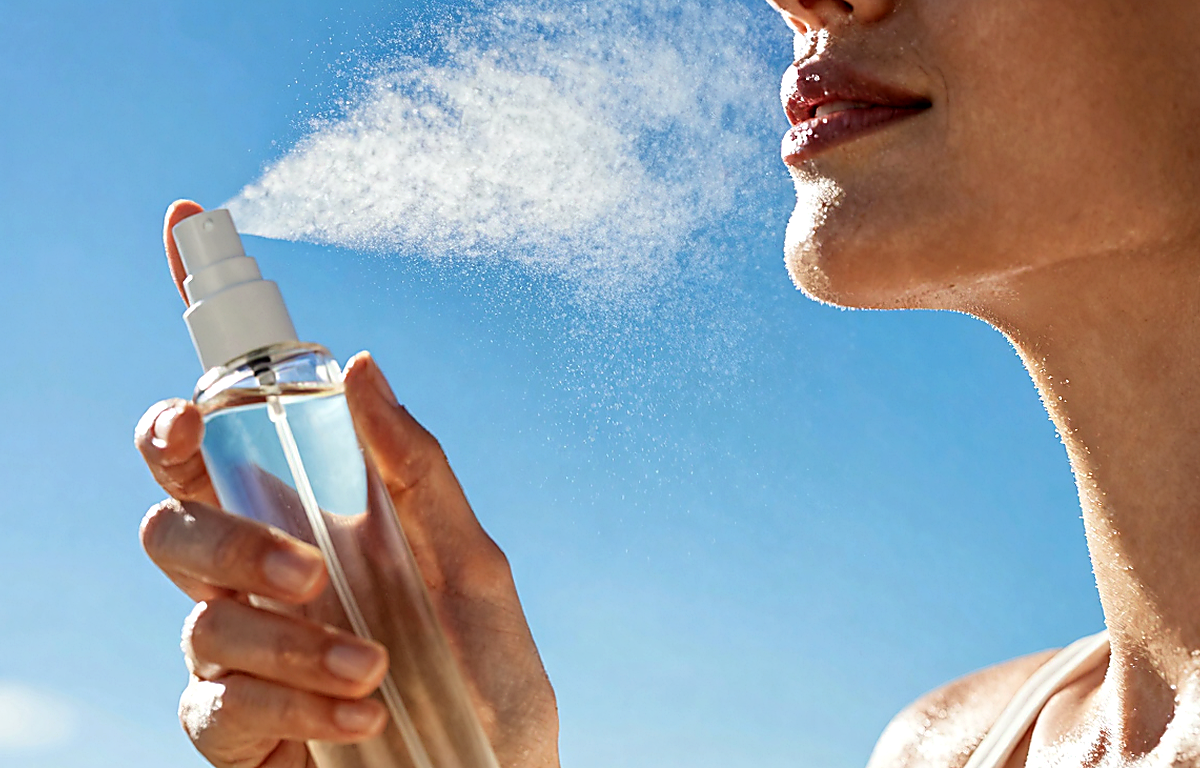
Perfumed body mist and eau de toilette serve a similar purpose—they give your skin and overall image a scent—but they work differently. If you want a light, airy, close-to-the-skin fragrance that is easy to refresh throughout the day and safe to apply generously, a mist usually wins. If you want a more polished scent, a more noticeable trail, and better longevity with fewer sprays, eau de toilette is usually the better fit. Put simply: mist is about softness, freshness, and ritual, while eau de toilette is about definition, composition, and staying power.
The key difference is not just which one lasts longer. These formats differ in fragrance concentration, how they sit on the skin, how they are used, and even the mood they create. Mist is often chosen for summer, the office, sports, home, travel, and days when you do not want your fragrance to enter the room before you do. Eau de toilette is more often chosen when you want a clearer fragrance character: for work, meetings, evenings, or situations where the perfume composition itself matters more than the effect of clean, well-cared-for skin.
What is a perfumed body mist?
A perfumed body mist is a light scented spray that is usually applied to the body and sometimes also to hair or clothing if the manufacturer allows it. Unlike classic perfume formats, a mist is often perceived as a hybrid of body care and fragrance: it has a more watery, refreshing feel, and the formula may include moisturizing or softening ingredients. That is why a mist often feels less like something you wear and more like something you use to refresh your skin throughout the day.
That is exactly why mists are so popular in hot weather and after a shower. They give a quick feeling of freshness, do not overwhelm the space around you, and are often easier to layer. This kind of product is convenient to keep on your desk, in a gym bag, or to take on a trip. For many people, it is not a substitute for perfume but a separate category: a scented accessory for situations where you want to smell pleasant, but not too intense.
It is important to understand that mists can vary a lot. Some are closer to refreshing sprays with a barely-there scent, while others are almost like perfume veils that smell richer and more noticeable. That is why you should not rely on the word “mist” on the bottle alone: the character of the scent, its intensity, and how it behaves on the skin all depend on the specific formula.
How eau de toilette differs in essence, not just in name
Eau de toilette is a classic fragrance format. It usually contains a higher concentration of aromatic composition than a mist, and the composition itself is built more clearly: the opening, heart, and base notes unfold more distinctly, the fragrance character is easier to read, and the trail is more noticeable. Even when an eau de toilette smells light, it usually still has a sense of structure and a recognizable perfumery signature.
Because of that, eau de toilette is often seen as the more universal choice when what you want is an actual fragrance rather than just a pleasant haze on the skin. It suits people who like a recognizable scent trail, want to reapply less often, and prefer one or two sprays to create a complete effect. At the same time, eau de toilette is not necessarily heavier: citrus, green, aquatic, and tea compositions in this format can still smell very fresh.
In short, the difference looks like this:
- mist is lighter, softer, closer to the skin, and usually needs refreshing;
- eau de toilette is richer, more structured, more noticeable in the trail, and usually lasts longer;
- mist is more often associated with bodily comfort and a freshness ritual;
- eau de toilette is more often perceived as the main fragrance of the day.
Longevity, sillage, and intensity: what it feels like in real life
In daily life, this is where the difference is most noticeable. A perfumed body mist usually stays close to the skin and becomes a delicate background more quickly. It may seem bright in the first few minutes, especially if you apply it generously, but then it often fades into a soft veil. This is convenient if you are sensitive to intense scents, work in a close space, or simply do not like fragrance to dominate.
Eau de toilette, by contrast, more often gives a clearer development and keeps its shape longer. The transition from the top notes to the heart and base is more noticeable, so the fragrance changes more interestingly throughout the day. For people who like perfume to feel like part of their image, this is an important advantage. But in hot weather, on public transport, or in the office, that same expressiveness can become a drawback if you overapply it.
The longevity of both formats is also affected by general factors:
- skin type: fragrances often fade faster on dry skin;
- temperature and humidity: in heat, a fragrance opens more actively, but it may also evaporate faster;
- application area: scent usually performs better on moisturized skin;
- composition: musky, woody, vanilla, and amber notes often last longer than light citrus notes;
- friction from clothing and your activity level during the day.
That is why you cannot say that every mist is short-lived and every eau de toilette is long-lasting. But if you compare the categories as a whole, eau de toilette almost always wins in longevity and trail, while mist wins in lightness and ease of control.
When it is better to choose a mist and when eau de toilette makes more sense
It is easier to choose between them based not on the status of the product, but on the situation. Mist is especially good when fragrance should feel like part of cleanliness and body care rather than a standalone statement. After a shower, before bed, before a workout or walk, in hot weather, on a plane, during a beach holiday, or simply for comfort at home—in all of these situations, a light scented veil often feels more appropriate.
Eau de toilette is more convenient when you want a polished result without constant reapplication. A workday, meetings, city outings, dinner, events, cool weather, or a more layered look with clothes and accessories—these are situations where you may want the scent to hold its line longer and read more clearly. Especially if the composition has a character you want to show: crisp citrus restraint, woody cleanliness, cool tea notes, or floral elegance.
You can use this quick guide:
- if you do not like heavy scent projection, start with a mist;
- if you want one fragrance to last through most of the day, eau de toilette is often the better choice;
- if you want an after-shower scent, mist is almost always more successful;
- if you are looking for an office fragrance, it is best to evaluate both formats, but apply them moderately;
- if you need fragrance for summer and are willing to refresh it, mist is very practical;
- if you value sillage and note development, it makes more sense to look at eau de toilette.
Sometimes the best option is not to choose one forever, but to keep both formats for different needs. That is not duplication—it is a practical system: one product for freshness and body comfort, the other for a finished perfumery accent.
How to apply them properly so the scent performs better
One common mistake is applying mist and eau de toilette in exactly the same way. With a mist, a broader and more generous spray over the body usually works best: shoulders, neck, arms, the décolleté area, and sometimes the legs. It is designed to create a soft cloud of freshness around you. It is especially good to apply a mist right after a shower on clean skin, and even better after a light cream or lotion. If your skin tends to be dry, the fragrance will last noticeably better on a moisturized base. In that sense, it helps to first choose comfortable body care, for example a light option for warm weather, which we have already covered in our article about a lightweight body cream for summer without stickiness.
Eau de toilette is usually applied more sparingly: on pulse points, the neck, the wrists, and sometimes on clothing if the fabric will not be damaged and the manufacturer allows it. The point is not the quantity, but the precision. If the composition is vivid, a couple of sprays are enough. Rubbing your wrists together after application is not a good idea: it can distort the opening of the fragrance and simply breaks down the top notes mechanically faster than necessary.
What else helps:
- do not apply fragrance to irritated, damaged, or freshly shaved skin;
- do not combine too many strongly scented products at once if you want to understand the fragrance itself;
- test on a small area first if your skin is sensitive;
- in hot weather, reduce the amount even with lighter compositions;
- refresh mist as needed, and reapply eau de toilette only if the scent has truly faded.
If you experience persistent burning, pain, noticeable swelling, a rash, or irritation that does not go away after application, it is better to stop using the product and consult a doctor. During pregnancy, with active dermatological conditions, and while using retinoids or other products that increase skin sensitivity, new scented products should be introduced with particular caution and, when possible, in consultation with a doctor.
How to read the composition and fragrance description without fooling yourself
Marketing language often creates false expectations. Words such as “perfumed,” “refreshing,” “with a scented veil,” “radiant,” or “clean” say almost nothing about the actual intensity. It is much more useful to look at the fragrance family and imagine how those notes usually behave in the air and on the skin.
For example, if a mist lists citrus, green tea, neroli, aquatic accords, aloe, cotton, or white musk, you can expect a transparent, everyday scent. But if the composition includes vanilla, amber, sandalwood, coconut, praline, patchouli, or dense white florals, even a light format may feel warmer and more noticeable. In eau de toilette, those same notes often unfold even more expressively.
It helps to evaluate descriptions soberly:
- “fresh” does not always mean short-lived;
- “floral” does not always mean heavy;
- “musky” can be almost weightless or very diffusive;
- “for the body” does not mean the fragrance is automatically softer than any perfume;
- “summer” does not guarantee that the composition will not feel cloying in the heat.
If possible, it is better to test a fragrance not only on a paper blotter but also on your skin. Paper shows the direction, but not your real compatibility with the formula. This is especially important for mists: some smell simple on a blotter, but on the skin create a beautiful effect of cleanliness and fresh body care. And the opposite is also true: a striking store opening does not always mean the product will feel comfortable all day.
Can you layer a mist and eau de toilette?
Yes, and it is one of the most practical ways to use both formats. Mist can be applied as a base on the body to create a scented background, while eau de toilette can be used as the main accent on the neck or clothing. This approach is especially convenient if you want to prolong the feeling of freshness without making the fragrance too loud. A mist base can soften how eau de toilette sits on the skin and make the overall effect feel more cohesive.
But here it is important not to turn layering into chaos. The easiest route is to combine scents from the same family: citrus with citrus, floral with soft musk, coconut with sunny or vanilla notes, tea with clean woody accents. A contrast can also work, though it is more difficult—for example, a fresh mist with a drier woody eau de toilette. The main thing is that one scent should not compete with the other for attention.
Layering works especially well in three cases:
- when eau de toilette feels too sharp to you at the start;
- when the mist has the right mood but lacks depth;
- when you want the fragrance to feel more skin-like rather than just trail-focused.
If you enjoy complex beauty routines, remember that body scent is perceived within the overall context of your care routine. A strongly scented cream, hair oil, styling products, deodorant, and perfume can overload the impression. Sometimes it is better to build a calm body-care base and leave the expressiveness to one product. The same principle makes sense for care in general: first a clear, understandable base, then targeted additions—an approach we discussed in the article how to build a basic skincare routine.
What mistakes most often get in the way of understanding what suits you
The first mistake is choosing based on other people’s reviews without considering your own use case. One person wants a fragrance for the office, another for after a workout, and a third for a seaside holiday. Their impressions of a product being too weak or too intrusive may have nothing to do with your needs. The second mistake is testing fragrance in the wrong conditions: after several other scents, in a stuffy room, on overly dry skin, or in a rush.
The third mistake is expecting a mist to behave like eau de toilette, and vice versa. If you buy a mist and feel disappointed that it does not last all day like a classic perfume, the problem is not always the quality—it may simply be a different format with a different purpose. In the same way, eau de toilette may feel too serious if what you really wanted was the effect of barely noticeable cleanliness.
A few more common missteps:
- applying too much eau de toilette in hot weather;
- assuming that the more expensive format is automatically more appropriate;
- ignoring skin condition and air humidity;
- buying based only on beautiful notes in the description without testing how it sits on the skin;
- judging longevity by the first ten minutes.
If you like clean, light, understated fragrances, you should not automatically assume that eau de toilette is too strong for you. There are many transparent and fresh compositions in this format. And on the other hand, if you love sweet, cozy, skin-like scents, you can also find rich mists that do not smell juvenile at all.
So what should you choose in the end? A short guide before buying
If you want one simple conclusion, it is this: a perfumed body mist is the best choice for soft everyday scenting, a feeling of freshness, and the ability to refresh your fragrance without overload. Eau de toilette is the best choice when you want a more defined perfumery effect, noticeable note development, and better longevity. Neither format is universally better—they simply answer different needs.
Before buying, it helps to ask yourself three questions. First, where will you wear the fragrance most often: at home, in the office, on the go, or on vacation? Second, do you want the scent to stay close to the skin or to be noticeable to other people? Third, are you willing to refresh it during the day? The answers usually point you in the right direction right away. If you want a comfortable and unobtrusive companion, start with a mist. If you want one main fragrance for the day, look toward eau de toilette.
For many people, the ideal option is not to oppose these products, but to use them as different tools. Mist covers the need for bodily freshness and the light pleasure of body care, while eau de toilette brings mood, character, and a finished image. Once you understand that difference, choosing becomes much easier—and fragrance starts to work with your rhythm of life, not against it.