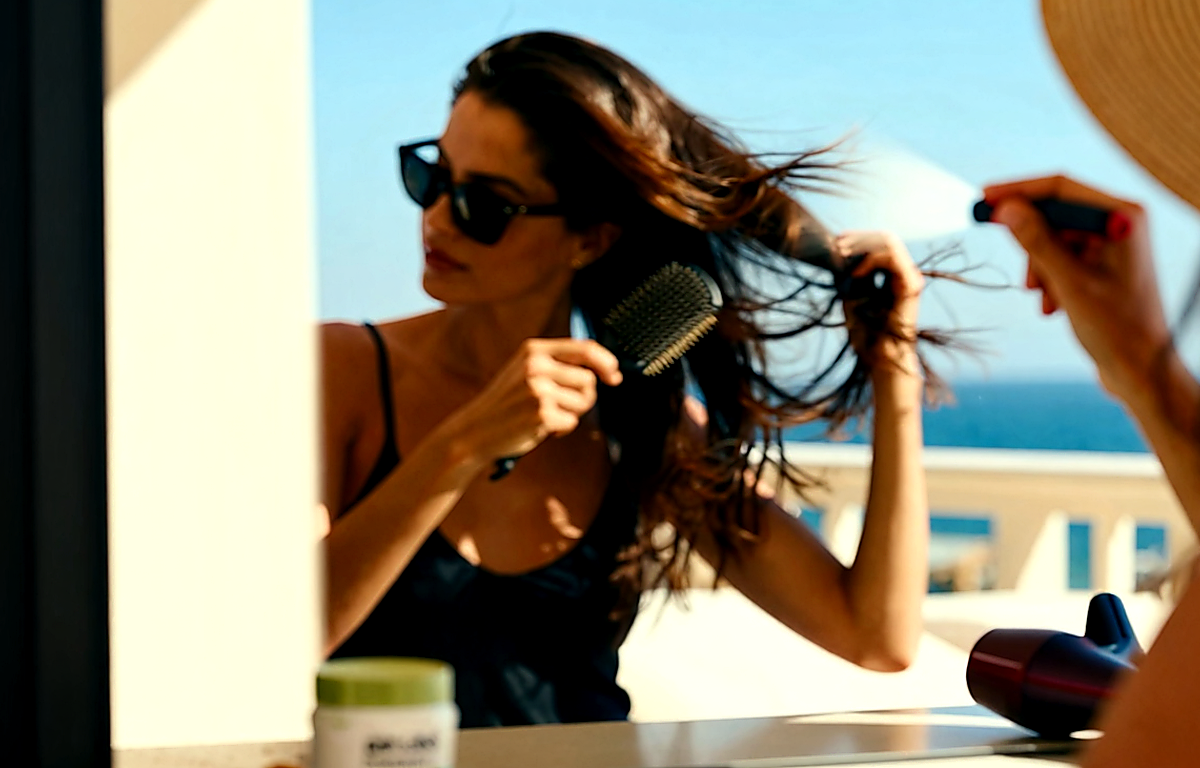
If your hair gets frizzy, an oil for the ends can help, but only in one case: when you use it as a finishing step to smooth and protect the lengths, not as an attempt to “cure” dryness with a single product. The most important thing to check with Davines or any similar product is whether the formula suits your specific lengths, how much you apply, and at what stage of your routine you use it. With frizz, the problem is often not the ends themselves, but a combination of porosity, air humidity, cuticle damage, heat styling, and a finish that is either too heavy or too light.
In practice, the main useful takeaway is this: if your hair feels softer after the oil but looks even puffier an hour later, you need to rethink not the brand itself, but the product format, the dosage, and the application technique. Davines is a brand people often choose for comfortable textures and a salon reputation, but even a good oil will not work if you apply it to overly damp lengths, to the roots, in excess, or without a basic leave-in underneath. Below is a clear checklist to help you assess an oil for the ends without marketing noise and understand whether it really works against frizz in your specific case.
Why hair gets frizzy and what an oil for the ends has to do with it
Frizz is not a separate “hair type,” but the visual result of hair whose surface is not smooth enough. The cuticle scales lift, the hair absorbs moisture from the air unevenly, becomes static, catches on itself, and starts to look fluffy even right after styling. This is especially common with lightened lengths, wavy and curly hair, and hair that is often blow-dried, flat-ironed, or cleansed too aggressively.
An oil for the ends does not change the hair structure from the inside, but it can do three useful things:
- smooth the surface and reduce visible frizz;
- reduce friction between strands so the lengths catch less and build up less static;
- create a thin protective layer that helps the hair cope with dry air, humidity, and mechanical damage.
But there is an important nuance: not all frizz is caused only by a lack of oils. Sometimes the hair needs more moisture, sometimes it needs a film-forming finish, and sometimes it needs gentler drying. That is why it is better to see an oil for the ends as part of a system, not as a universal solution. If you want a deeper look at everyday reasons for frizz, it is worth reading the article on how to handle hair in humid weather: hair without frizz after humidity.
What to check first in a Davines oil
If frizz is your concern, choose an oil not by promises of “shine and nourishment,” but by a few practical criteria. These are usually what determine whether you get smooth ends or hair that feels greasier while still sticking out.
- Texture. A light, dry texture is usually better for fine, straight hair that loses volume quickly. A richer texture is better suited to thick, porous, lightened, and coarse lengths.
- The presence of silicones. This is a debated point for many people, but silicones in finishing products are often what provide a fast anti-frizz effect: they create slip, visual smoothness, and shine. If you avoid silicones, it is important to understand that purely oil-based formulas can be less predictable in humid conditions.
- How the product is positioned. If the product is presented specifically as a finish for lengths and ends rather than as a universal oil “for everything,” that is usually a good sign. Finishing products are generally thought through better in terms of dosage and distribution.
- Fragrance and comfort. A strong scent does not affect frizz, but it does affect whether you will use the product regularly and in the right amount instead of leaving it on the shelf.
- Dispenser format. A pump is more convenient for controlling the dose than a bottle that pours freely. When frizz is the issue, too much oil almost always makes the result worse.
Davines has products across different lines and textures, so it is more useful to look not only at the brand name, but at the specific goal: do you want to smooth flyaways through the lengths, add shine after styling, protect dry lightened ends, or reduce breakage while detangling? The same oil may be loved by someone with dense, porous hair and be completely wrong for fine Slavic hair.
Formula: which ingredients matter if the goal is less frizz
Reading an ingredient list does not require a chemistry degree. It is enough to understand which groups of ingredients usually help with smoothness and which are responsible for sensory feel and nourishment. For an anti-frizz effect, it is especially useful to pay attention to the balance between oils, silicones, and additional softening agents.
What most often helps with frizz:
- Volatile and smoothing silicones. They spread quickly through the lengths, reduce tangling, and create a more even surface. For damaged ends, this is often a plus rather than a minus.
- Light emollients. They make the texture slip easily and do not always feel like a classic oil. Thanks to them, the hair looks more controlled without heaviness.
- Plant oils in moderate amounts. Argan, seed, nut, and other oils can soften the lengths, but the key is not the oil name itself, it is the formula as a whole. Natural does not always mean better for fighting frizz.
- Antioxidant and conditioning additives. They do not create an instant wow effect, but they help maintain a more cared-for look with regular use.
What may be a warning sign:
- a very heavy formula that quickly causes fine hair to separate into strands;
- a sticky or damp feeling on the hair after application;
- a result that depends too heavily on perfect styling, without which the product does not work.
If you notice that your hair gets especially frizzy in a humid climate, purely oil-based products sometimes lose out to more modern finishing serums and hybrid oils. They may hold visible smoothness better. So with Davines, it is reasonable to compare not only whether a product is “an oil or not,” but how it behaves in real life: after a walk, in an air-conditioned office, or on the second day after washing.
Whether the oil actually suits your hair type
One of the most common mistakes is choosing an oil based on reviews from people with a completely different hair texture. For fighting frizz, this is especially critical because the result depends heavily on strand thickness, density, porosity, and styling habits.
Fine and soft hair. It usually needs a minimal amount of product and the lightest possible texture. If the oil is too rich, frizz may look reduced for half an hour, but then the hair will become limp, lose volume, and start to look unfresh. In this case, it is better to look for slip and control rather than nourishment.
Porous, lightened, and coarse lengths. They often do well with denser products, especially if the ends are brittle and rough. But even here, it is important not to overdo it: porous hair responds better to layered care in small amounts than to one heavy layer of oil.
Wavy and curly hair. An oil for the ends can be very helpful if you apply it precisely to the lengths and over an already formed curl pattern. If you rub in too much before styling, you may lose wave definition and end up with separate frizzy strands.
Straight but frizz-prone hair. It often needs drying technique and humidity protection more than nourishment as such. Oil works better after gentle top-down drying and in a minimal dose.
That is why, when choosing Davines, it is useful to answer honestly: what do you want to see in the mirror in ten minutes, and what do you want to see in six hours? If you need an immediate polished effect, finishing smoothness comes first. If the goal is to reduce breakage and tangling at the ends, you can be more tolerant of a more nourishing texture.
How to apply oil without making frizz worse
Even a good oil is easy to ruin with the wrong application. From an editorial point of view, this is one of the most underrated points: people often blame the product when the real problem is the amount used and the order of layers.
A working routine usually looks like this:
- Wash your hair with a mild shampoo and use a conditioner or mask through the lengths.
- Blot the hair with a towel without rubbing it.
- If needed, apply a basic leave-in product: a cream, milk, or heat protectant.
- Dry the hair completely or almost completely.
- Only then spread 1-3 drops of oil between your palms and work it through the lengths and ends.
Why does this matter? If you apply a lot of oil to very wet hair, it often distributes unevenly and seals in a chaotic texture. As a result, once the hair dries, some strands look smooth while others still frizz. On dry or almost dry hair, it is easier to see exactly where the finishing step is needed.
A few more rules that really help:
- do not apply oil to the roots or root area unless the product is specifically meant for that;
- rub the product between your palms first, then transfer it to the hair;
- start with the smallest dose and add more only if needed;
- do not press the oil too high up if the frizz is only at the ends;
- after applying, smooth through the hair with your hands like a brush or with a wide-tooth comb, if that does not ruin your styling.
It is also worth mentioning reapplication during the day. If your hair has already started to frizz, adding another layer of oil on top of the old one does not always help. Sometimes it is better to lightly smooth the lengths with damp palms, let them dry, and only then add literally one drop of finish.
Mistakes that make an oil seem useless
When people say, “oil for the ends does not help me,” there is almost always a repeating pattern behind it. A product does not have to be perfect, but there are mistakes that make it impossible to judge it fairly.
- Too much product. The hair becomes heavy, separates into strands, and the frizz remains even more visible between them.
- Applying it to damaged lengths without conditioner. Oil alone may not be enough if the hair needs a basic softening step after washing.
- Trying to replace leave-in care with it. An oil cannot always do the job that should be done by a cream or conditioning spray.
- Using it before a hot tool without a separate heat protectant. Not every oil is designed for that role, and heat damage only makes frizz worse.
- Expecting an instant healing effect. Oil improves appearance and manageability, but it does not “seal” the hair forever.
- Ignoring humidity in the air. If your styling does not hold up at all in damp weather, oil alone may not be enough.
If you suspect the issue is the overall routine rather than just one product, it is useful to rebuild the basics: cleansing, conditioning, a leave-in layer, and only then the finish. Just as it is important to put together a sound basic skincare routine, hair also needs not one “hero” product but a sequence of steps. That is exactly why articles that explain the logic of a care system work so well, for example how to build a basic skincare routine: the same principle applies to the lengths of your hair.
How to tell that a Davines oil suits you
A good product shows itself not only by the shine in the first five minutes. With frizz, it is useful to judge the result by several markers over at least a week of regular use.
Signs that the oil suits you:
- the ends look more controlled and softer without greasy strands;
- the hair is easier to comb and catches less on clothing;
- the lengths build up less static during the day;
- on the second day, the hair does not look dirtier just because of the finish;
- the product helps exactly in the areas where you have frizz: through the lengths, on the ends, or around the face.
Signs that it is worth looking for a different format:
- the lengths quickly lose volume and shape after application;
- the frizz is reduced only visually, but the hair still feels dry;
- the product works only in a very tiny dose, and half a drop more is already too much;
- by evening there is a feeling of buildup or oversaturation;
- without an extra cream or spray, the oil does not cope at all.
In the last case, this does not necessarily mean the product has failed. Your hair type may simply respond better not to an oil used alone, but to a combination: a light hydrating leave-in plus one drop of finish on the ends. For many people, this is more consistent than trying to solve everything with one product.
When the problem is not only the oil: what else to pay attention to
Frizz rarely appears because of a single factor. So if even a good Davines oil gives only a partial effect, it is worth looking more broadly. Sometimes these details radically change the way the hair looks:
- Water temperature and shampoo. Cleansing that is too aggressive can leave the lengths rougher and more prone to frizz.
- Towel and friction. Vigorous rubbing after washing is a direct route to a fluffy texture.
- Blow-dryer and airflow direction. If you dry the hair chaotically, the cuticle lifts more.
- How often you lighten and heat-style. Any accumulated damage increases the need for smoothing care.
- Water hardness and the season. In winter, hair may become more static; in summer, it may absorb moisture from the air and puff up differently.
It is also important to keep reasonable caution in mind. If, together with frizz, you have developed marked scalp burning, pain, noticeable redness, swelling, weeping, severe flaking, or hair shedding that worries you, it is better not to keep experimenting endlessly with oils and to see a doctor. During pregnancy and in the presence of dermatological scalp conditions, any new active or strongly fragranced product should also be introduced especially carefully. An oil for the ends is a cosmetic product, not a treatment for disease.
Takeaway: how to choose and use an oil for the ends without unrealistic expectations
In short, with Davines and any other oil for the ends, there are four things to check if frizz is the issue: how light or rich a formula you need, whether the product contains ingredients that truly create a smoothing finish, whether you know how to dose it, and whether you are trying to make it solve every care problem at once. The best oil is not the one that promises the most, but the one after which your lengths look calmer, softer, and cleaner in texture on your own hair.
The best approach is simple: start with the smallest dose, apply the oil to dry or almost dry lengths, judge the result not only immediately but throughout the day, and, if needed, combine it with a leave-in product and gentle drying. That way, an oil for the ends becomes not a random purchase, but a genuinely useful tool against frizz, especially if you choose it not by loud promises, but by how your hair behaves in real life.