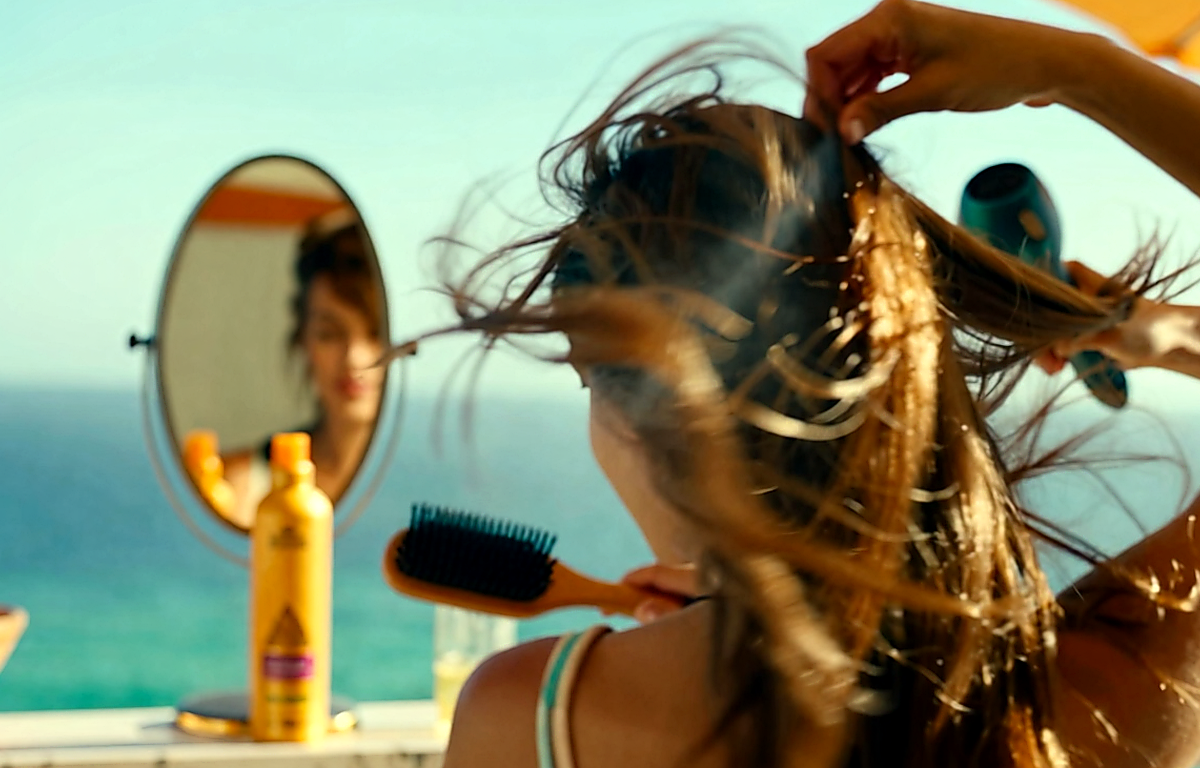
If your hair feels stiff, dull, and tangles more easily after blow-drying, brushing, or flat ironing, the problem is not always that the heat protectant is “bad.” More often, dryness appears because of a combination of factors: heat that is too high, the wrong product format, using too much, applying it at the wrong level of dampness, and hair that is already damaged along the lengths. When it comes to popular Wella lines, it is important to judge not only the promise of heat protection, but also how a specific product behaves on your own hair length: whether it adds slip, whether it leaves a lacquer-like feel, whether it increases breakage at the ends, and whether it makes hair feel drier the next day.
If dryness is your concern, the first five things to check are these: what hair type the product is made for, whether the formula combines film-forming ingredients with softening components, whether a spray or cream format suits you better, whether your tool is running too hot, and whether you are relying on heat protectant as your only care step. Put simply, even a good heat protectant will not make up for styling at maximum heat on a regular basis, skipping conditioner, or running a flat iron over the same section five times. Below, we will look at what to pay attention to if you are considering Wella or already use the brand but the dryness is not going away.
Why hair can still become dry even if you use a heat protectant
A heat protectant does not “treat” hair or make it invulnerable. Its job is to reduce heat damage, improve how heat is distributed through the hair, reduce friction, and sometimes add slip, shine, and frizz control. But if your hair is already porous, bleached, color-treated, or often exposed to hot tools, temperature protection alone may not be enough.
The most common reasons dryness persists are:
- the temperature of your dryer, styler, or flat iron is higher than your hair actually needs;
- the product was not chosen for your hair type, for example, it is too light for dense, dry lengths or too heavy for fine hair;
- the heat protectant is applied unevenly, leaving part of the hair without coverage;
- too many styling products are already on the hair, making the lengths feel stiff;
- there is no basic moisturizing and conditioning care underneath the heat protectant;
- the tool is being used on damp hair when the product is intended only for use on dry hair;
- the ends have needed a trim for a long time, and the dryness is being blamed on the “wrong bottle.”
Wella offers different styling and protective formats, and how they feel on the hair can vary a lot. Some formulas are designed for smoothness and control, others for volume, and others for texture. If your hair is already lacking softness, a texturizing or more fixing product can sometimes make dryness look more pronounced, even if it technically performs the function of heat protection.
What to check in a Wella heat protectant itself: format, finish, and behavior on the hair
When dryness is the main concern, do not choose a product only because the brand is popular or because it was recommended in short videos. What matters more is understanding how the product will work on your lengths. Broadly speaking, heat protectants can be divided into a few categories: light mist sprays, richer creams and lotions, and multifunctional styling products that include heat protection.
In practice, it helps to assess the following:
- Format. Fine hair is often more comfortable with a light spray, while dense, porous, curly, and lightened hair may do better with a cream, milk, or more softening lotion.
- Finish. If the hair already feels coated and stiff before styling, the product may be too fixing for your lengths.
- Slip. When blow-drying with a round brush or passing a flat iron through the hair, the section should move relatively easily. If it catches and seems to “resist,” that is a warning sign.
- Next-day result. The right heat protectant for you should not turn your hair into straw a few hours after styling.
- Compatibility with the rest of your routine. Some formulas work better over a leave-in conditioning product, while others start to weigh the hair down if there are too many layers.
For dry hair, the better option is often not the driest-feeling texturizing format, but a more caring one with a smoothing effect. If you like Wella as a brand, focus not on the brand as a whole but on the specific task: smoothing, blow-dry protection, straightening protection, frizz control, or softness at the ends. That matters more than the name on the bottle itself.
Which signs in the formula and product description usually matter when dryness is an issue
Without obsessively analyzing every ingredient, it still helps to understand the general logic. For dry hair, what usually helps in a heat protectant is not one or two “trendy” actives, but a combination of several types of components. Some create a thin protective film, others reduce tangling, and others add softness and shine.
What is usually worth paying attention to:
- Film-forming components. They help distribute heat and reduce direct harsh impact on the hair surface.
- Softening additives. Oils, esters, conditioning agents, and silicones in a balanced amount often make the lengths feel smoother and less fragile.
- Anti-frizz effect. If your hair frizzes and loses moisture in humid weather, frizz control can indirectly help the hair feel more cared for. On this topic, you may also find our guide on how to achieve hair without frizz after humidity useful.
- Alcohol high on the ingredient list. This is not an automatic deal-breaker, but for very dry and brittle hair, very light fast-evaporating formulas can sometimes feel less comfortable.
- Strong hold. If a product promises both heat protection and firm styling, it may feel stiffer on dry hair than you want.
It is important to understand that silicones in heat protectants are not always the enemy. For dry lengths, they often provide the slip you need and help reduce mechanical damage. The problem is usually not the fact that they are there, but that a formula may be too heavy or, on the contrary, too alcohol-based and dry-feeling. That is why the main test is not ingredient ideology, but how your hair behaves after several uses.
How to tell when the problem is not the brand, but the application technique
Even a good product is easy to “ruin” with the wrong technique. This is especially noticeable with heat protectants: if you spray too closely, apply only to the top layer, forget the underneath sections, or start using a flat iron on hair that is still slightly damp, dryness is almost inevitable.
Check your basic technique:
- After washing, gently blot the hair with a towel instead of rubbing the lengths.
- If your hair is very dry and porous, first apply a light leave-in or conditioning product through the lengths, then the heat protectant, if that approach suits your hair.
- Distribute the heat protectant section by section, not just over the top layer.
- If it is a spray, comb through with your fingers or a wide-tooth comb after spraying for more even coverage.
- Do not apply too much to the roots unless the product is designed for that area: otherwise you may get stickiness and a less-fresh feel rather than moisture.
- Before using a flat iron or curling tool, make sure the hair is completely dry.
A very common mistake is using too little product out of fear of “weighing the hair down.” As a result, part of the hair receives heat without enough protection. But the opposite extreme is not better: if the lengths are literally wet with product, styling takes more time and more heat, and the hair can end up feeling dense and brittle. The right amount usually feels like a light, even coating without sticky patches.
Temperature and tools: the half of success people forget about
When people say that a heat protectant “dries out” the hair, sometimes what is really drying it out is a flat iron at 230 degrees being passed several times over a fine, lightened section. No brand can fully neutralize that kind of styling routine. So if your hair feels drier after Wella or any other product, review the temperature and how often the hair comes into contact with hot tools.
A useful guideline may be:
- fine, weakened, or lightened hair — the lowest effective temperature;
- normal and color-treated hair — a medium range, without automatically going to maximum;
- dense and coarse hair — the temperature may be higher, but it still should not become a “just in case” habit.
With a blow-dryer, not only the heat but also the distance, nozzle, and drying time matter. A hot airflow aimed very closely at one area quickly overdrys the top layer of the hair. For dry lengths, a directed but not scorching airflow is usually safer, followed by finishing with cooler air. If you use a round brush, make sure the hair is not pulled too aggressively: mechanical tension combined with heat also increases breakage.
Another point is the condition of the tool itself. Worn plates, poor coating, uneven heating, or buildup from styling residue can make styling more damaging. Sometimes replacing the tool, or at least cleaning it properly, has a bigger effect than changing the bottle.
When it makes sense to change formats: spray, cream, or a two-step routine
If you tried a Wella heat protectant in one format and noticed dryness, that does not mean the brand is simply “not for you.” Often it is enough to change the type of product itself. For hair, this matters more than it may seem.
A light spray is usually convenient if your hair is fine, gets oily quickly, and does not have pronounced porosity. It weighs the hair down less, but it may not give dry ends the nourished feel they need.
A cream or milk is often better for porous, color-treated, wavy, and lightened hair that needs more softness and control. These formats may settle frizz better and reduce roughness.
A two-step routine can be helpful if the lengths are very dry: first a light leave-in conditioning product, then a heat protectant focused specifically on heat defense. But it is important not to turn the hair into a multilayer stack of styling products.
You can tell it is time to switch formats by a few signals:
- the ends look drier immediately after drying;
- the hair shines only for the first 30 minutes and then turns dull;
- there is a squeaky feel when you touch it;
- the lengths catch more during brushing than usual;
- the product helps style the hair, but does not make it look visually healthier.
In that situation, it makes more sense not to chase the “strongest” heat protectant, but to choose one that is more compatible with your level of dryness and damage. Sometimes the best result comes not from stronger hold, but from a softer, more conditioning format.
Which care mistakes make dryness worse even if the heat protectant is chosen fairly well
A heat protectant is only one step. If the rest of your care routine is weak or unbalanced, it often gets blamed for all the discomfort. In reality, dry hair usually needs a combination of gentle cleansing, conditioning, an occasional richer mask, and careful styling.
Dryness is made worse by habits like these:
- overly aggressive shampooing that leaves the hair “squeaky clean”;
- not using conditioner regularly after every wash;
- using a mask instead of conditioner, but without consistency and without understanding what the hair needs at that moment;
- frequent hot styling without breaks;
- sleeping with damp hair and friction against fabric;
- ignoring protection from sun, wind, and dry indoor air;
- trying to solve every problem with one single product.
If you notice that your lengths are constantly losing softness, it can help to simplify your routine for a couple of weeks: keep a gentle shampoo, conditioner, one straightforward heat protectant, and minimize the temperature. This kind of “reset” often helps you see whether the problem is one specific Wella product or a routine that is overloaded and full of conflicting steps.
Also remember: if your scalp reacts with burning, intense itching, redness, or noticeable breakouts along the hairline, this is no longer just a matter of “dry ends.” With persistent burning, pain, swelling, signs of skin disease, as well as during pregnancy or while using active topical products such as retinoids in nearby areas, it is better to discuss the reaction with a doctor and not continue experimenting blindly.
How to test a product sensibly and draw a conclusion without fooling yourself
Wella’s popularity is easy to understand: the brand has been well known for a long time, and expectations for these products are usually high. But to judge honestly whether a specific heat protectant suits you when dryness is a concern, you need a small home test, not one emotional conclusion after a rushed bad styling day.
A useful way to assess it:
- Use the same shampoo and conditioner for at least several washes in a row.
- Apply the heat protectant the same way and in a similar amount each time.
- Do not sharply change the temperature of your tools between tests.
- Look not only at how the hair looks immediately after styling, but also at its condition in the evening and the next day.
- Assess roots, lengths, and ends separately: the product may work well on the main lengths but feel too heavy around the face, or the other way around.
Writing down your observations can be more useful than trying to remember them by feel. For example: softness after drying, shine, level of frizz, how easy the hair is to comb, and whether you feel the urge to apply oil to the ends right away. After 3 to 4 uses, the overall picture usually becomes clear.
If a product gives you a beautiful style but your hair consistently feels drier, that alone is a good enough reason to change the format or the routine. There is no need to wait for breakage before admitting it is not a good match. At the same time, do not expect a heat protectant to work like a nourishing mask: its role is different.
Bottom line: what really matters to check if the dryness does not go away
In short, when choosing a Wella heat protectant against a background of dryness, what matters most is not how loud the promises are, but how well the product matches your specific hair type and your styling technique. First check the format of the product, then the temperature of your tools, your application method, and the overall level of care your lengths are getting. For dry, porous, and damaged hair, more softening options and moderate heat usually work better than universal sprays used in a rush and followed by a flat iron at maximum temperature.
A good benchmark is this: after using a heat protectant, your hair should be easier to style, less frizzy, still movable, and not feel stiffer the next day. If that is not happening, do not rush to blame the whole brand — you may simply need a different format, a lower temperature, or a more thoughtful basic routine. That approach is usually what brings the most noticeable result without unnecessary purchases and disappointment.