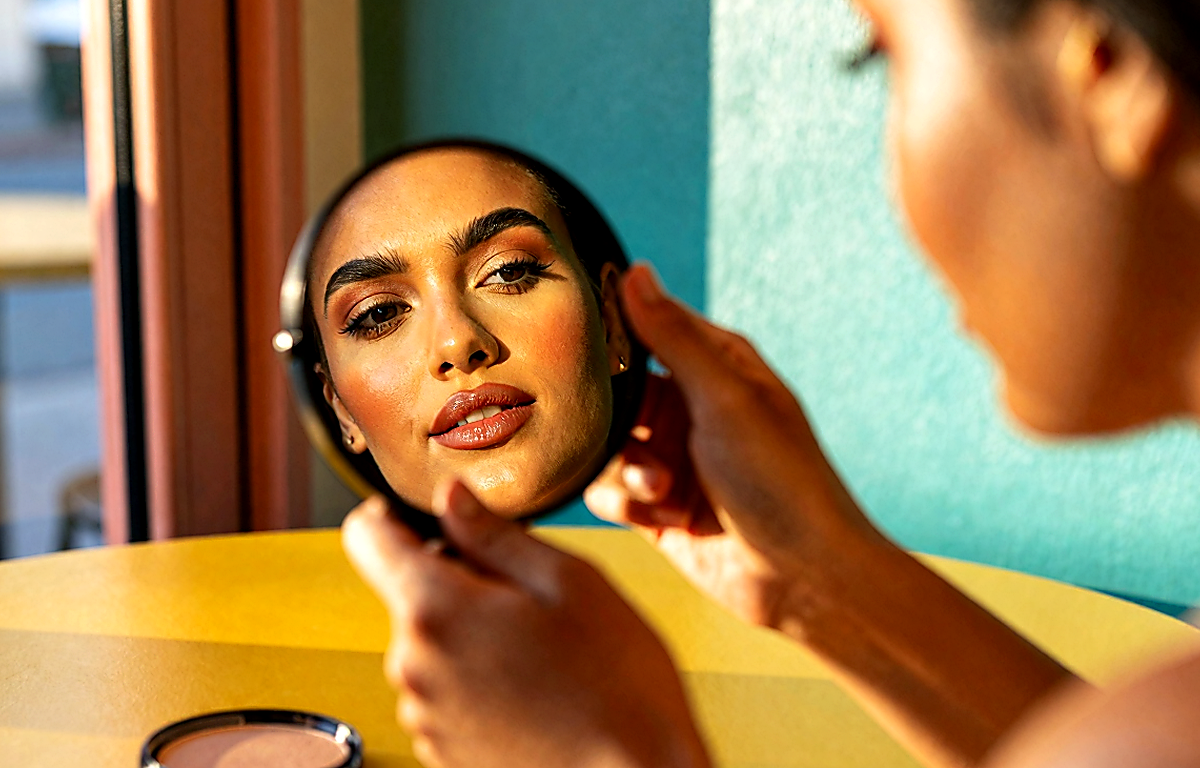
If you’re concerned about spots, a makeup primer should not be just a “smoothing step before foundation.” It is important to check whether it makes post-acne marks, pigmentation, and uneven skin tone more visible, whether it conflicts with your skincare and SPF, and whether it can trigger new issues because of an overly heavy, silicone-rich, or irritating formula. With popular products such as a L’Oreal Paris makeup primer, the main question is not “will it hide everything,” but “will it sit evenly without emphasizing spots and flaking, and will my skin stay comfortable in it all day?”
A good primer for skin with spots works gently: it visually softens the contrast between different areas of the skin, helps foundation spread in a thinner, neater layer, does not gather around dry patches, and does not turn coverage into a heavy mask. That is why, before buying or reusing one, it is worth assessing not only the claims on the packaging, but also the finish, compatibility with your moisturizer, the formula’s tendency to pill, and how your skin looks after 3–6 hours. Below is a practical breakdown of what to check first if you are interested in a L’Oreal Paris makeup primer and also tend to deal with spots, post-acne marks, or uneven tone.
Why a primer can help with spots — and why it sometimes makes them look worse
Spots on the face are not all the same. For some people they are post-acne marks, for others surface pigmentation after sun exposure, and for others localized redness after inflammation. All of these concerns react differently to makeup. A primer can improve the result if it:
- creates a more even surface for foundation;
- slightly blurs pores and microtexture so spots draw less attention because of texture contrast;
- reduces the risk that foundation will cling to dry areas around spots;
- helps you use less foundation while keeping the skin looking more natural.
But the same primer can make things worse if it is too mattifying and drying, too dense, too slippery, or poorly compatible with the products underneath. In that case, instead of a smoother complexion, you may get emphasized flaking, patchiness around pigmented areas, or a noticeable boundary between covered and uncovered skin.
What to check in a L’Oreal Paris makeup primer if you are concerned about spots
1. Texture and finish
If your spots are accompanied by dryness, flaking, or uneven texture, an overly matte primer can make the situation more obvious. A softer, more flexible texture is usually easier to distribute evenly and less likely to catch on rough areas. If your skin is oilier, the goal is still not maximum dryness, but a balanced finish that helps makeup last without tightening the skin.
2. How it works with skincare and SPF
One of the most common reasons makeup looks worse on skin with spots is poor layering. If the primer conflicts with your moisturizer or sunscreen, it may pill, separate, or shift during the day. This matters especially when you use SPF every morning: even a good primer can become problematic if it is applied over a sunscreen that has not set properly or if the textures do not work well together.
Do not skip SPF just because you want makeup to sit better. If spots are related to post-acne marks or pigmentation, sun protection remains important, and makeup should be adjusted around it rather than replacing it.
3. Density of the formula
A very dense primer may seem attractive if you want a stronger blurring effect, but on skin with spots it can easily create the opposite result. Heavy texture often makes the complexion look overloaded, and any foundation applied on top may become thicker and more visible. In practice, a lighter layer usually looks cleaner and more natural.
4. Skin comfort during the day
Check not only the first impression in the mirror, but also how your skin feels and looks later. If after several hours the primer makes the skin feel tight, accentuates roughness, or causes makeup to gather around problem areas, that is an important sign. For skin with spots, long-wear comfort matters just as much as the immediate visual effect.
How to test a primer before regular use
If you are considering a L’Oreal Paris makeup primer and your skin is prone to spots, it is better not to judge it from a quick swatch on the hand. Test it in conditions closer to real wear:
- apply your usual skincare and SPF first;
- wait until the layers settle;
- use a small amount of primer on part of the face or on the area where spots are most noticeable;
- apply foundation in your usual thin layer;
- check the result immediately and again after 3–6 hours.
This helps you see whether the product really improves the look of the skin or only gives a good first impression for a short time.
Application mistakes that can make spots look more visible
Even a suitable primer can disappoint if it is applied the wrong way. The most common mistakes are:
- using too much product in an attempt to “smooth everything out” at once;
- rubbing the primer aggressively over areas with dryness or post-acne marks;
- applying foundation before the primer has settled;
- layering too many silicone-heavy products together.
Usually, a thin and carefully distributed layer works better than a dense one. On uneven areas, it is especially important not to overload the skin, otherwise the texture becomes even more noticeable.
When extra caution is needed
If spots are accompanied by active irritation, burning, painful inflammation, pronounced peeling, or a disrupted skin barrier, it is better to be especially cautious with any primer. In this situation, the issue is not only the visual result but also skin comfort. If a product stings, increases redness, or makes the skin feel worse, it is better not to force continued use. If the condition of the skin is persistent or severe, seeking advice from a dermatologist is the safer step.
Bottom line
If you are choosing a L’Oreal Paris makeup primer while concerned about spots, focus less on promises of perfect masking and more on how gently and evenly the product behaves on the skin. The best option is one that does not emphasize dryness or uneven texture, works well with your skincare and SPF, and helps foundation look lighter rather than heavier. A careful test in real wear conditions will tell you more than any label claim.