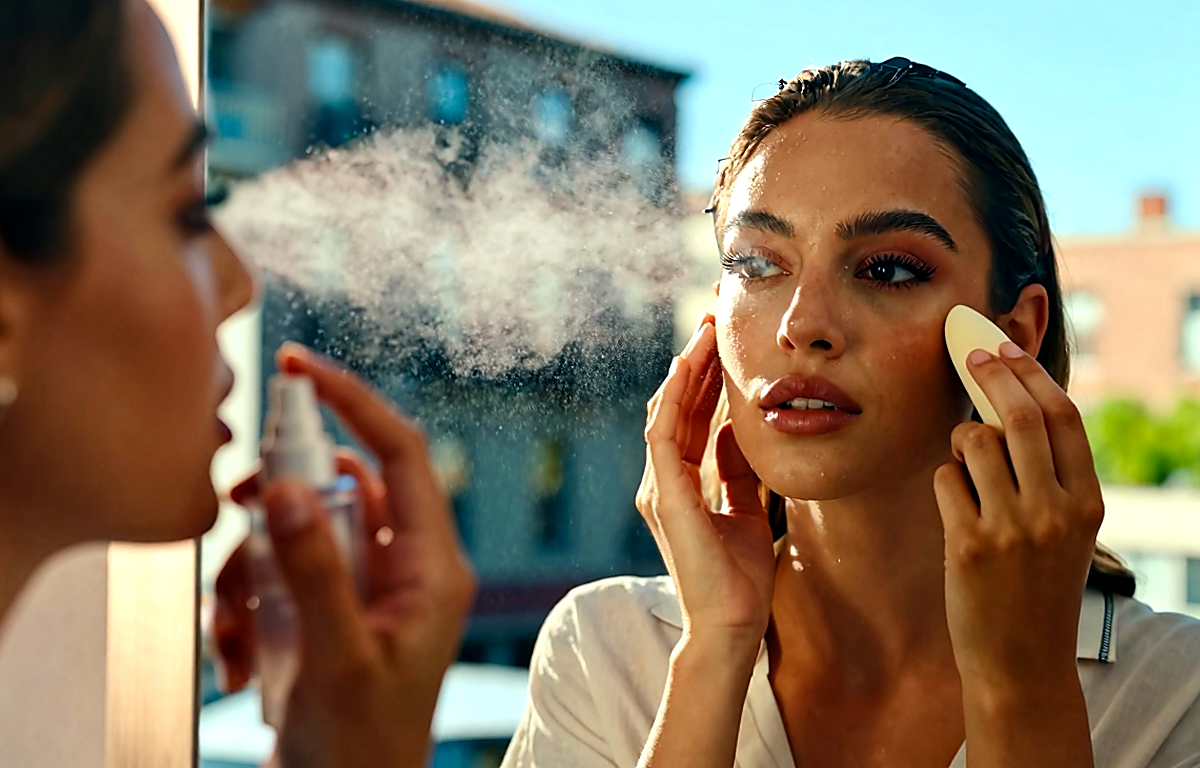
If your makeup primer is pilling, the problem is usually not one “bad” product but a combination of three factors: incompatible textures, too heavy a skincare layer, and the wrong pause between steps. This is especially noticeable when a routine includes primers and foundations with different bases: for example, a dense silicone-rich product is applied over a cream or sunscreen that has not fully absorbed yet. As a result, the coverage starts to gather into little rolls as you spread it, and by midday the makeup looks uneven.
If you are concerned about pilling with a L’Oreal Paris makeup primer or any similar product, start by checking not the advertising or the promises on the packaging, but your own application routine. The most important thing is to understand how many layers you have already applied before primer, what finish they have, what you are using to blend the product, and exactly where the pilling appears—across the whole face, only in the T-zone, around the nose, or on dry areas. Those details usually point to the solution fastest.
Why makeup primer pills in the first place
Pilling is a mechanical and textural conflict. One product does not “settle” onto another and, instead of adhering, starts to shift on the skin’s surface. With primers, including popular mass-market options like L’Oreal Paris, this often happens for several reasons at once.
- Too many layers before makeup. A serum, a rich cream, SPF, primer, then foundation—and every layer remains slightly mobile.
- Incompatible bases. For example, a very silicone-heavy primer over an oily cream or a sticky SPF.
- Not enough pause between steps. Products do not have time to set and start mixing directly on the skin.
- Too much product. You only need a very small amount of primer, but it is often applied like a cream.
- Too much rubbing. The more you move your fingers, brush, or sponge across the skin, the higher the chance that the top layer will start to ball up.
- Uneven skin texture. Flaking, dehydration, residue from skincare that was not properly removed, and rough areas can all trigger clumping.
It is also important to remember that pilling is not always visible right away. Sometimes the primer looks fine at first, but the conflict shows up after you apply foundation, concealer, or powder. That is why you should evaluate a primer not on its own, but as part of your entire makeup routine.
What to check in your skincare before primer: this is often where the cause is hiding
The first thing to check is not the primer itself, but what you apply before it. Even a good primer can start to pill if the skin is overloaded with products that have different finishes. This happens especially often in the morning, when you want to moisturize well, protect the skin from the sun, and still get long-lasting makeup.
Review your sequence. If in the morning you use cleanser, toner, several serums, a rich cream, and SPF, the primer may simply be one layer too many. In that situation, primer does not improve wear; instead, it makes the coverage more mobile. Sometimes the best result comes not from adding another step, but from removing one.
- If your skin is normal or combination, try reducing pre-makeup skincare to a lightweight moisturizer and SPF.
- If your skin tends to be dry, let your cream absorb fully, then blot away excess with a tissue before applying primer.
- If your SPF is very dense or shiny, check whether you really need a separate illuminating primer on top of it.
- If your face gets oily quickly, avoid overly nourishing textures in the T-zone.
It is also worth assessing whether the pilling is caused by flaking. Primer alone will not “fix” dehydrated skin: it may visually smooth the surface, but with friction dry areas will quickly reveal the problem. If you are still putting together a clear skincare system, this article on how to build a basic facial skincare routine may be helpful so you do not overload the skin with unnecessary layers.
How to tell whether the texture of a L’Oreal Paris primer suits you
L’Oreal Paris is, above all, a reference point for popular mass-market formats: lightweight smoothing primers, blurring products, and options with either glow or a more matte finish. But you should choose a primer not by brand, but by the task you expect it to do. When expectations do not match the texture, people start applying the product incorrectly—too much, on the wrong areas, or in the wrong order.
Check what function you are actually trying to get from the primer:
- Smoothing pores and texture. This usually calls for more slip-heavy, silicone-rich textures. They should be applied very thinly and locally, not like a full face cream.
- Glow. These primers can clash with dense SPFs and radiant foundations if there are too many layers.
- Mattifying. If the product is drying, it may emphasize flaking and gather on dehydrated areas.
- Extending wear. Here, not only the primer matters, but also its compatibility with foundation, concealer, and powder.
If you use primer only because “makeup should last better that way,” you may not need a separate primer every day at all. For many daytime looks, well-chosen skincare, appropriate SPF, and a suitable foundation are enough. Primer is useful when there is a specific goal: smoothing pores, reducing shine, softening visible texture contrast, or helping coverage grip better in certain areas.
The main application mistakes: why even a good primer starts to pill
Even a suitable primer can behave badly if it is applied like a skincare cream. This is one of the most common mistakes. Primer usually needs only a minimal amount: a thin veil or just a few dots on the areas where you want the effect. When the product is spread generously, it does not have time to adhere to the skin and starts to gather during further blending.
Here is what to check in your technique:
- Amount. Start with a very small amount and add more only locally if needed.
- Application method. With smoothing primers, gentle spreading with your fingertips or pressing motions often works better than prolonged rubbing.
- Pause. After skincare and after primer, it helps to wait at least a few minutes so the layer can stabilize.
- Application zones. You do not always need to cover the entire face. Often the T-zone, the area around the nose, or cheeks with noticeable texture are enough.
- Foundation tool. Some primers work less well with a dense brush than with a slightly damp sponge.
If the primer starts to pill under your fingers right away, try not to keep spreading it. Stop, gently remove the excess with a dry tissue, and apply less product. If the little rolls appear only after foundation, test the pairing separately: one day use primer and foundation, another day use foundation alone without primer. That makes it easier to understand where the conflict is happening.
Compatibility with foundation, SPF, and powder
In everyday practice, it is usually the combination of primer with SPF and foundation that causes pilling. Sunscreens often create either a grippy film or, on the contrary, a very slippery one. If you add another active layer on top, the makeup starts to move. So when a primer seems to “fight” with your face, suspect the combination first, not the brand.
What to pay attention to:
- SPF finish. A very sticky or very oily finish is a common cause of problems with primer.
- Foundation density. The heavier the foundation, the finer the primer layer needs to be.
- Powder. Too much powder over an unset creamy layer can intensify clumping, especially around the sides of the nose and on the chin.
- Layered correction. If you apply foundation, concealer, cream contour, and blush over primer, every next layer needs to be very thin.
If you are familiar with the problem of patchy powder setting over sunscreen, it is also useful to look at a related topic—how to apply powder over SPF without patches. That is often where it becomes clear that the issue is not “difficult skin,” but an overloaded texture routine.
A good practical rule is this: the more layers with a decorative function you use, the lighter each one should be. If the primer already promises smoothing and longer wear, the foundation does not also need to be as full-coverage as possible. And vice versa: if you love a long-wearing, full-coverage foundation, it is better to choose a neutral primer and apply it very sparingly.
How to adapt by skin type and by area of the face
The same primer can behave differently on different parts of the face. That is why a universal application “from forehead to chin” is not always successful. On combination skin, the T-zone may need mattifying and a light blur, while the cheeks may need a completely different approach—softer and more hydrating.
If your skin is oily or combination:
- apply primer only where you really need it—usually in the center of the face;
- avoid overly nourishing cream under makeup in the T-zone;
- do not layer a radiant primer with a very dewy foundation;
- set makeup with a minimal amount of powder rather than several rounds of heavy powdering.
If your skin is dry or dehydrated:
- the main goal is not to disguise flaking, but to soften it in advance and let skincare absorb;
- use primer only where needed if it is meant to address texture, rather than across the whole face;
- avoid mattifying products on dry areas;
- do not rub foundation over the skin for too long.
If your skin is sensitive:
- introduce new products one at a time, not several at once;
- do not combine too many active, fragranced, or potentially irritating textures on the same day;
- if you have persistent burning, soreness, swelling, pronounced redness, or a flare of a skin condition, it is better to stop using the product and consult a dermatologist;
- during pregnancy, and also if your skincare includes retinoids, it is especially important to check how well you tolerate cosmetics and the formulas of active products used around your makeup routine.
If your makeup consistently pills only in one area, look for a local cause. Around the sides of the nose, it is often a combination of sebum, dense SPF, and active facial movement; on the cheeks, dryness or too many mattifying products; on the chin, too many layers and the habit of touching your face often.
A quick algorithm: how to test a primer over 3 days and decide whether to keep it
Instead of guessing whether a specific L’Oreal Paris primer suits you, it is better to do a short at-home test. It is more useful than randomly changing everything at once.
Day 1. Apply your usual skincare and SPF, but no primer. Then use foundation only. Assess whether pilling happens on its own.
Day 2. Repeat the same skincare, but add primer only to one half of the face or only to the T-zone. That way you can see the difference without extra variables.
Day 3. Keep the primer, but change one parameter: use less, wait longer, or switch the tool you use for foundation.
During the test, pay attention to four things:
- exactly when the little rolls appear—immediately or later;
- which areas show the problem more strongly;
- how your skin behaves without primer;
- whether a specific foundation, concealer, or powder makes the situation worse.
This approach helps you understand whether you need a primer in your daily routine at all, or whether the problem can be solved by simplifying skincare and using a lighter makeup scheme.
When it is better to replace the primer, and when adjusting the routine is enough
Not every case of pilling means the product is bad. Sometimes it is enough to use it differently: less often, only locally, in a smaller amount, or paired with a different foundation. But there are signs that the primer most likely just is not right for you.
Consider replacing it if:
- the product consistently pills even in a minimal amount and with a “clean” skincare routine;
- it emphasizes dryness that is barely visible without it;
- foundation sits worse over the primer than without it;
- you constantly have to fix the coverage during the day;
- the texture feels uncomfortable, heavy, or leaves a noticeable film.
Adjusting the routine is usually enough if:
- the problem appears only after a very rich cream or a certain SPF;
- pilling is noticeable only in one area of the face;
- the product works better when applied only to targeted areas;
- the result clearly improves after you reduce the amount and leave more time between layers.
In other words, a successful primer is not necessarily the one that gives the strongest visual effect in the first few seconds. What matters much more is that it does not clash with your skincare, does not make the coverage heavier, and helps makeup look even after several hours, not only right after you leave the mirror.
Conclusion: what is really worth checking first
If your L’Oreal Paris makeup primer is pilling, start with the basics: reduce the number of layers before makeup, let your skincare and SPF absorb, apply only a minimal amount of primer, and use it only where needed. Then check its compatibility with your foundation and powder. In most cases, those steps solve the problem faster than an endless search for the “perfect” new product.
Good makeup does not depend on the number of products, but on how well they work together. When the textures suit one another and application stays thin and careful, primer really can help—smoothing texture, making coverage look more polished, and reducing the risk of that frustrating pilling that can make the whole look seem tired by midday.