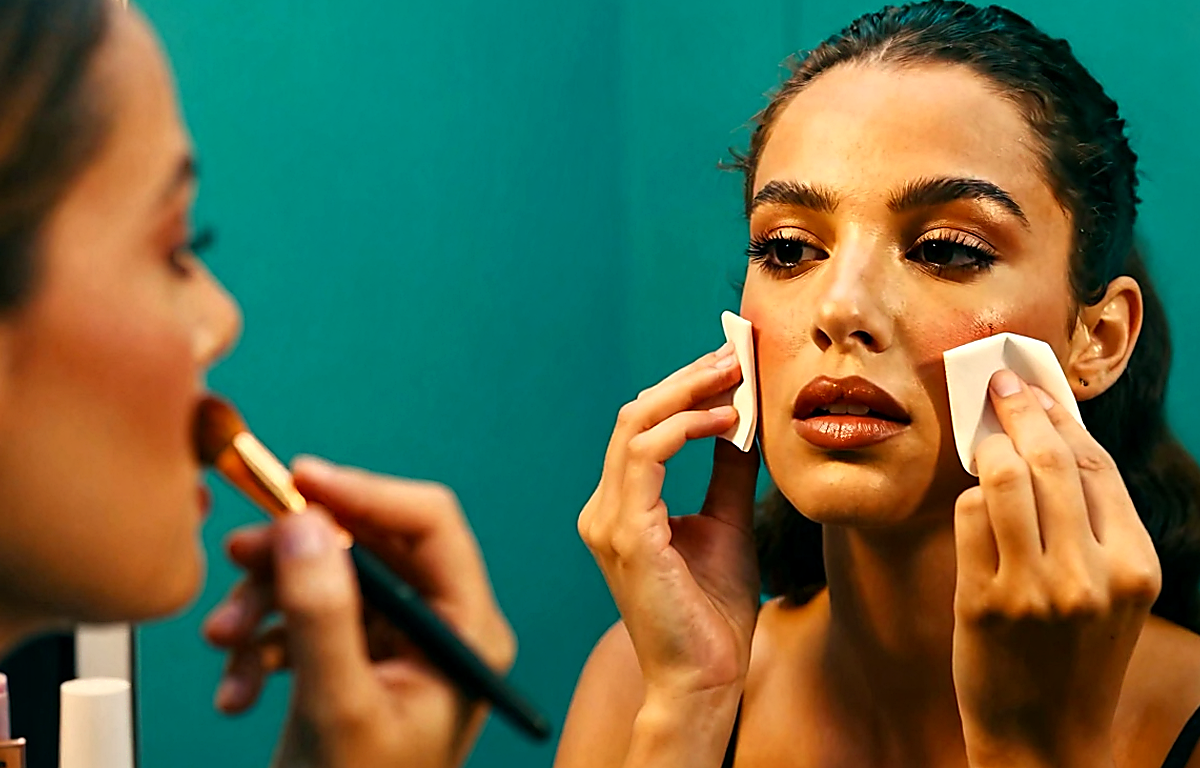
If concealer makes dryness more noticeable, the problem is usually not one specific product but a combination of three factors: texture, skin preparation, and application technique. Even a popular product from L’Oreal Paris can look neat and natural if the formula suits your skin type, the under-eye area is not noticeably dehydrated, and you are not trying to “layer to perfection” over an unprepared surface. The main test is simple: after application, the concealer should not make the skin feel tight, gather in dry creases within 10–15 minutes, or sharply emphasize flaking in daylight.
If dryness concerns you regularly, it is better to start not by looking for the fullest-coverage or longest-wearing option, but by assessing how the product behaves on your skin in a thin layer. For the under-eye area and flaky patches, more flexible, thin, creamy textures with medium coverage usually work better than matte, fast-setting formulas. It is also important to honestly ask yourself: do you really need a new concealer, or should you first build a calmer skincare routine. A basic guide to facial skincare can help with that: how to build a basic facial skincare routine.
Why concealer emphasizes dryness even when the formula is good
Dryness under makeup can show up in different ways. For some, it is a barely visible mesh under the eyes; for others, it is active flaking around the nose, on the chin, or in areas affected by acids, retinoids, and overly aggressive cleansing. In these conditions, concealer works like a magnifying glass: it settles where the skin lacks smoothness and moisture and makes the texture more visible.
With both mass-market and luxury products, the same rule applies: the drier the surface, the more carefully pigmented products need to be used. A brand’s popularity or good reviews do not change the fact that the same formula can behave differently on normal, dehydrated, and sensitive skin. So if you are interested in a L’Oreal Paris concealer, it is important to judge not only how it looks on your hand or in the store, but also how it wears after several hours in real life.
- A texture that is too matte can quickly emphasize microtexture.
- Too much product makes the coverage heavier and makes dry areas more obvious.
- Unprepared skin “absorbs” moisture from creamy formulas more readily.
- A shade that is too light visually emphasizes creases and dry patches.
- A dense powder on top of concealer can intensify the feeling of tightness.
That is why the main goal is not simply to cover an imperfection, but to keep the skin looking alive. In most cases, this looks more beautiful than a dense matte patch under the eyes.
What to check in a L’Oreal Paris concealer formula if your skin tends to be dry
When dryness is the issue, look not only at marketing promises but at the character of the texture itself. For comfortable wear, formulas that spread thinly, do not set instantly, and give you at least a little time to blend are usually better. If a concealer already feels too thick during application, dries down quickly on the skin, and requires active rubbing, that is a warning sign for dry areas.
Generally, these are favorable signs for dry and dehydrated skin:
- a creamy or serum-like texture;
- a natural, satin, or soft-matte finish instead of a flat matte one;
- medium coverage that can be built up in specific spots;
- good glide without a sticky, heavy film;
- the ability to meld with the skin instead of sitting on top as a separate layer.
If you are choosing within the L’Oreal Paris range, focus first on the visual result in daylight: does the product immediately emphasize dry creases, does it break apart in the under-eye area, and does the area around the nose look even rougher. Sometimes a less dense concealer works better than a high-coverage formula because the skin’s texture ultimately looks softer and more even.
One more important point: dryness and sensitivity often go together. If your skin reacts with stinging, itching, or noticeable redness, test a new product cautiously and do not introduce many new products at once. If there is persistent burning, pain, pronounced swelling, signs of a skin condition, or if you are pregnant or using active products with retinoids, it is better to discuss your skin’s reaction with a doctor.
How to tell when the problem is not the concealer but skin preparation
Very often, someone changes concealer after concealer when the real issue is the basic prep. Dry skin does not respond well to harsh cleansing, too many acids, vigorous rubbing with a towel, or trying to cover flaking immediately with a thick layer of complexion product. If the skin is dehydrated, concealer will cling to dry areas regardless of the brand.
Before makeup, check your prep routine:
- Cleansing should be gentle, without a “squeaky clean” feeling.
- It helps to apply a light moisturizer to slightly damp skin and let it absorb.
- It is better to blot away excess skincare so the product does not pill.
- If there is active flaking, do not immediately apply a lot of concealing product — first soften it as much as possible with skincare.
Good preparation does not mean a greasy, slippery base. On the contrary, too much cream can weaken concealer wear, and a dense silicone primer can sometimes emphasize dry texture even more. What you need is balance: the skin should be replenished, but not overloaded. If you are not sure what exactly in your routine is interfering with makeup, it is useful to revisit your basic system of products and cleansing: a detailed guide to basic skincare.
Another common scenario is when dryness becomes more noticeable not only on the face but also on the body, especially during the season of air conditioning, sun, and frequent showers. This is an indirect sign that the skin overall may need gentler barrier support. In that case, it is useful to review your general care habits too, for example the topic of light, comfortable textures for warm weather: a lightweight body cream for summer without stickiness.
Best concealer application techniques for dryness
With dryness, technique can sometimes matter more than the formula itself. The most common mistake is drawing a large triangle under the eye and blending it out to full coverage. In photos, this may seem effective, but in real life, excess product quickly gathers in creases and makes the skin look tired.
A much safer approach is this:
- apply concealer only where there is actual darkness or redness;
- use small dots rather than dense stripes;
- blend with your fingertip, a soft brush, or a slightly damp sponge without pressing hard;
- leave the thinnest layer in areas with active facial movement;
- if needed, add a second thin layer only in targeted spots, not over the whole area.
For dry skin, the “stretch first, then add” technique works especially well. In other words, you apply the minimum amount of product, spread it into a semi-sheer layer, and only then decide whether more coverage is needed. This gives a more expensive-looking, natural, editorial result.
If concealer is used not only under the eyes but also around the nose, on the chin, or on individual inflamed areas, it is important to consider the texture of each zone. Where there is flaking, it is better not to rub the skin with a brush in circular motions. Instead, gently press the product in. The less mechanical impact, the lower the chance of lifting dry flakes.
Sometimes it helps to mix a micro-drop of concealer with a drop of moisturizer on the back of your hand, but only if the formula tolerates that technique well and does not start to pill. This is not a universal solution, but on some dry areas it gives a more skin-like finish.
Do you need powder over concealer if your skin is dry
Not always. This step is often exactly what turns comfortable makeup into something that emphasizes dryness. If a L’Oreal Paris concealer already sets well and does not migrate during the day, you may simply not need powder in the under-eye area. For many dry and mature skin types, the best result comes from partial setting — for example, only at the inner corners of the eyes or in places where the product actually tends to gather.
If makeup smudges quickly without powder, choose the thinnest possible layer and a soft texture. Heavy powdering with a fluffy brush all over the under-eye area often makes the coverage look chalky. It is better to pick up only a tiny amount of powder, tap off the excess, and press it in precisely with a small brush or puff.
It also matters which powder you are using. The drier the skin, the more carefully you should approach formulas with a strong mattifying effect. And if you wear SPF and worry about patchiness from layers applied afterward, it helps to understand texture compatibility in advance: how to apply powder over SPF without patchiness. This principle also helps with concealer: less friction, thinner layers, more attention to the finish.
How to choose a shade and finish so dryness is less noticeable
When you want to brighten the look of the eye area, it is tempting to choose a concealer one or two shades lighter. But on dry skin, a shade that is too light often works against you: it emphasizes creases more strongly, makes texture more visible, and creates the effect of dry “highlighting.” A shade close to your skin tone, or only slightly lighter if the goal is to brighten the under-eye area, looks much more natural.
The finish also plays a key role. When dryness is a concern, the most flattering options are usually:
- a natural finish that looks neither too wet nor too matte;
- a light satin effect that visually softens microtexture;
- a soft-focus effect without heavy powderiness.
Extremely matte textures, on the other hand, should be tested especially carefully. They may look beautiful in the first few minutes, but after an hour they can dry the area out and make the makeup look harsher. The same goes for overly radiant products: if the formula contains a lot of light reflection, uneven texture can also become more noticeable.
A good test is simple: step over to a window or assess your makeup outside. If the concealer looks alive, does not divide the face into dry and smooth areas, and the skin keeps its natural movement, then the shade and finish are right.
When it is better to take a break from makeup and focus on restoring the skin
Sometimes the honest answer is this: no concealer will give an ideal result right now because the skin is irritated or the barrier is compromised. This can happen after aggressive peels, retinoids, wind exposure, active sun, a habit of rubbing the eye area often, or a general lack of gentle care. During such a period, even a good L’Oreal Paris concealer will look worse than usual.
Signs that it is better to simplify makeup temporarily:
- burning or tingling when applying almost any product;
- visible dry plates that cannot be gently smoothed with skincare;
- soreness of the skin around the eyes;
- redness and irritation that worsen by evening;
- a feeling that any pigmented product only makes the problem worse.
On days like these, it is better to limit yourself to gentle skincare, SPF, and minimal spot makeup where it does not conflict with the skin’s texture. If discomfort persists, there is pain, swelling, persistent burning, cracks, signs of dermatitis, or another skin issue, it is worth seeing a dermatologist or ophthalmologist, especially when the area around the eyes is involved. This is particularly important during pregnancy and when using retinoids or other active ingredients, when the skin may react more intensely.
Practical checklist before buying and before applying
To avoid being disappointed in a concealer simply because your skin is dry right now, it helps to keep a short checklist in mind. It lets you assess realistically whether the product suits you at the moment and how to improve the chances of a beautiful result.
Before buying, check:
- whether the texture is too thick and fast-setting;
- whether you like the result on the face, not only on the back of the hand;
- how the product behaves in a thin layer;
- whether the shade works without strong whitening;
- whether the product emphasizes dry areas within the first few minutes.
Before applying at home, check:
- whether there is active flaking that should be softened first;
- whether your skincare has absorbed and no overly greasy film remains;
- whether you are ready to apply less product than usual;
- whether you need powder over the whole area or only in specific spots;
- how the makeup looks not only in the bathroom mirror but also in daylight.
If the concealer still feels noticeably drying after these steps, you do not necessarily need to give up on the brand altogether. A specific format may simply not suit you: too matte, too dense, or too light. Within one brand, different textures can feel very different, and for dry skin it is almost always more beneficial to look for a more flexible, thinner, and more adaptable option.
Conclusion
If dryness is a concern, the most important thing when choosing a L’Oreal Paris concealer is to check not the loudness of the promises, but how the formula behaves on your skin: flexibility, thinness of the layer, comfort after several hours, and the absence of emphasis on flaking. Dry skin is usually flattered most by moderately creamy textures, a natural finish, a close shade, and careful spot application without overload.
A beautiful result here is almost always built on a combination of three things: gentle skin preparation, a reasonable amount of product, and delicate setting. And if dryness is accompanied by burning, pain, swelling, or persistent irritation, makeup should take second place while you first address the condition of the skin with a specialist.