If your skin feels tight after setting spray, flaking becomes more noticeable, and by evening your makeup looks less “set” than over-dried, the problem is not always the product itself. More often, dryness comes from a combination of several factors at once: alcohol high on the ingredient list, a heavy matte foundation, dehydrated skin, active skincare the day before, and simply spraying from the wrong distance. So the key question is not “is Maybelline right for me at all,” but “what exactly in this combination is triggering dryness for me?”
The good news is that a setting spray does not have to be drying. Even if you look at popular Maybelline products as an easy, familiar category, it is worth judging not the brand on the bottle but the specific formula, finish, application method, and your skin’s condition on the day you use it. Below is a practical checklist that helps you figure out whether you need to change the spray itself, rethink your makeup base, or adjust your technique so your skin looks fresh rather than tired and tight.
Why setting spray can make dryness feel worse
Dryness after setting spray rarely appears out of nowhere. Usually, the product simply makes more visible what was already happening to the skin before makeup: not enough hydration, a weakened barrier, active acids or retinoids in your routine, very dry air, or harsh cleansing. In that case, the spray becomes the final step after which the problem is no longer easy to ignore.
There are several common reasons:
- A high amount of denatured alcohol in the formula. It helps the spray dry quickly and can improve wear time, but on sensitive or dehydrated skin it often causes tightness.
- A mattifying formula. If the product is designed to control oil and create a very dry set, it can emphasize texture and flaking on dry skin.
- A base that is too light or simply not suitable. When there is not enough hydration under makeup, any setting step can make that more obvious.
- Texture incompatibility. For example, a very matte foundation, several layers of powder, and then a setting spray with fast-evaporating solvents on top.
- Application mistakes. Spraying too close creates wet patches, followed by localized dryness and an uneven finish.
So the first rule is simple: do not rush to blame the brand or a single bottle. People often replace the spray when in reality they only need to change one step, such as their skincare or the amount of powder.
What to check in the formula if tightness is your main concern
If you are considering a Maybelline setting spray or already use a popular option in this category, start by reading the ingredient list. You do not need to analyze the formula like a chemist, but a few reference points are genuinely useful.
What to look at first:
- Alcohol Denat. If it appears near the top of the list, the spray may dry down quickly and give a more “dry” set. For oily skin this can sometimes be a plus; for dry and sensitive skin it is a common cause of discomfort.
- Glycerin, butylene glycol, propanediol, panthenol, aloe, sodium hyaluronate. These do not guarantee perfect comfort, but the presence of hydrating ingredients usually makes the formula feel gentler.
- Fragrance and essential-oil components. If your skin is reactive, fragranced products can sometimes increase stinging and irritation, especially alongside active skincare.
- Film-forming polymers. These are what create the wear-extending “mesh.” Their presence alone is not the issue; what matters is the overall balance of the formula, because a film that feels too rigid on dehydrated skin can come across as drying.
It is important to understand that you should not judge an ingredient list in isolation, but in the context of your own skin. The same alcohol-based spray may work beautifully in summer on combination skin and feel uncomfortable in winter, after an acid toner, or during heating season. So rely not only on reviews but also on how your skin reacts at different times.
Dry skin or dehydrated skin: this changes your spray choice more than it seems
Many people say “I have dry skin” when they mean any feeling of tightness. But for makeup and setting sprays, there is an important difference between a dry skin type and a dehydrated skin condition. Dry skin naturally lacks lipids and comfort, while dehydrated skin lacks water and may still be oily in the T-zone.
Why this matters:
- Dry skin usually tolerates softer, more hydrating sprays with a natural or satin finish better, and tends to do worse with strongly mattifying formulas.
- Dehydrated skin may look shiny at first, but after spraying it quickly starts to emphasize microtexture, pores, and fine lines.
- Sensitive skin often reacts not with dryness alone but with stinging, redness, and discomfort from alcohol, fragrance, or overly active skincare under makeup.
If you are not sure what the real issue is, watch how your skin behaves without makeup. If it always feels tight after cleansing and you want to apply cream immediately, your skin is more likely lacking comfort all the time. If your skin can look normal or combination in the morning but dryness appears after actives, flights, air conditioning, or heavy makeup, that points more toward dehydration.
In that case, it makes sense not only to rethink the spray but also to build a calmer base underneath. For that, it helps to rely on basic skincare principles: how to build a basic skincare routine for your face.
How to tell when the problem is not the spray but the rest of your makeup routine
Very often, setting spray gets blamed last even though it is only finishing a chain of already dry textures. For example, a full-coverage foundation, a mattifying concealer, powder all over the face, and then a setting spray—and the skin looks older within an hour. In that kind of combination, even a neutral spray will not save the result.
Check the following points:
- Foundation. If it is drying on its own and sets quickly, the spray will not compensate for that effect.
- Amount of powder. Too much powder almost always makes dryness more noticeable. Sometimes it is better to powder only the T-zone rather than the whole face.
- Cream under makeup. A very light gel may feel nice in the morning, but it may not be enough as a base for long-wear makeup.
- Timing between layers. If you do not let skincare absorb and then layer complexion products on top right away, the surface can apply unevenly and show dryness later.
- Finish compatibility. A very matte foundation, mattifying powder, and an anti-shine setting spray are not the best combination for skin prone to tightness.
A useful test: one day wear your usual makeup without spray, another day wear the same makeup with spray, and on the third reduce the powder but keep the spray. That makes it easier to see what is really triggering the issue. If dryness improves as soon as you cut back on powder, the setting spray may not be the real cause at all. By the way, the interaction between layers and textures is also easy to see in the topic of powder over SPF: how to apply powder over SPF without patchiness.
Application technique: small mistakes that greatly change the result
The same spray can give different results depending on your technique. This is especially noticeable on skin prone to dryness: too much product or spraying too close turns a fine setting layer into an uneven film.
Here are the practical rules:
- Hold the bottle 20–30 cm away. If you bring it closer, instead of a fine mist you get localized oversaturation in certain areas.
- Use 2–4 sprays, not half the bottle. More is not always better. Too much spray can disturb the top layer of makeup and then emphasize dryness in patches.
- Do not touch your face right after spraying. Let the product settle and dry on its own.
- Use the spray as a final step, not as a substitute for skincare. It should not function as a hydrating mist during the day unless the formula is specifically designed for that.
- If needed, soften the finish with a sponge. A few seconds after spraying, you can very lightly go over the skin with a clean, slightly damp sponge if the makeup looks overloaded.
If your face feels papery specifically after the spray, try using less powder and applying the setting spray not with circular movements close to the face but with short crosswise sprays from a distance. Sometimes that alone is enough to get rid of the film-like feeling.
When a comfortable finish is better than a mattifying one
Setting spray is often chosen for its promise of wear time, while the finish gets overlooked. But the finish is one of the main factors that determines whether the skin will look fresh. If dryness is your concern, a matte result is not always the best guide. In photos and in real life, a satin or natural finish usually looks calmer and softer.
Signs that a less mattifying option may suit you better:
- flaking around the nose, on the chin, or on the cheeks becomes visible quickly after makeup;
- fine lines under the eyes look deeper by the middle of the day;
- your skin feels fine without makeup but gets “tired” specifically under long-wear textures;
- you often use acids, retinoids, or acne treatment products;
- you like skin to look naturally alive rather than completely “sealed.”
That does not mean you have to give up wear time altogether. Often, a more comfortable strategy looks like this: a moderately long-wearing foundation, minimal powder only where it is truly needed, and a spray with a natural finish instead of aggressive mattifying hold. For everyday makeup, that balance is usually more practical and more flattering than maximum dry-lasting wear.
What to do if you already own the spray and do not want to buy a new one yet
You do not always need to replace the product right away. If you already have a Maybelline setting spray or another popular spray from the same category, first try lowering the risk of dryness by adjusting the products around it. Sometimes you can get a good result without any new purchases.
Practical options:
- Rework your morning skincare. Apply a more comfortable cream and let it absorb properly for 10–15 minutes before makeup.
- Use less powder. Especially if you usually powder your whole face automatically.
- Use less foundation. A thinner layer looks fresher and handles setting better.
- Apply the spray only where you need wear time. For example, on the T-zone and around the cheeks if that is where makeup fades first.
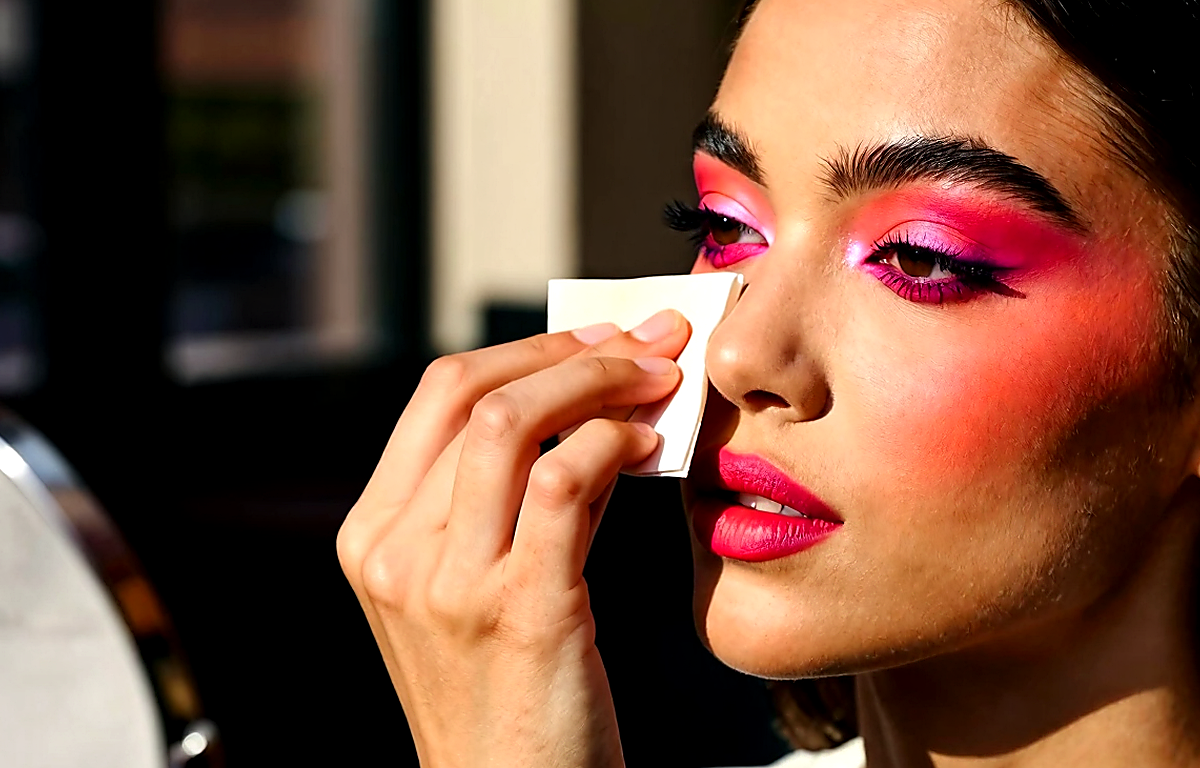
- Do not refresh your face during the day with the same spray. If you want to revive your makeup, it is better to blot away oil with a tissue and, if needed, touch up lightly rather than layering setting spray over an already dry surface.
There is also the opposite situation: the skin feels dry only in winter or during heating season. In that case, it may make sense to keep your usual spray for warmer months and switch to a gentler formula, or use it less often, in cold weather.
When it is better to pause and not look for the answer in cosmetics alone
Sometimes stinging, pronounced redness, and persistent discomfort after spraying are no longer a matter of whether the finish suits you, but a sign of irritation. It is especially important to be cautious with setting sprays if your skin barrier is compromised, you have active dermatitis, eczema, rosacea, or you have recently started an aggressive skincare routine.
Pay attention to warning signs:
- strong stinging that does not go away within a few minutes;
- pain, swelling, or persistent redness;
- flaking and sensitivity that get worse after every makeup application;
- a reaction to several different sprays, especially those with alcohol or fragrance.
In these cases, it is better to pause, remove potentially irritating products, and assess your skin without decorative cosmetics for a few days. If burning, pain, swelling, pronounced irritation, or signs of a skin condition persist, it is worth seeing a dermatologist. Extra caution is also important during pregnancy, as well as if you use retinoids or other active skincare that increases skin sensitivity: during this period, it is best to pay especially close attention to formulas and reactions.
How to choose a setting spray if you have already experienced dryness: a short checklist
When you have already had a negative experience, it is easier to choose your next spray using specific criteria rather than popularity. Use this short editorial checklist:
- Define the goal: do you need maximum hold for an evening out, or comfortable everyday makeup?
- Assess your current skincare: are there acids, retinoids, over-drying cleansers, or not enough hydration?
- Check the formula: how high is the alcohol listed, and are there soothing or hydrating ingredients?
- Look at the finish: matte, natural, or radiant. If dryness is an issue, it is usually safer to start with a natural finish.
- Test it with your usual foundation, not on bare skin alone. What matters is how the full routine works together.
- Pay attention to how your skin feels after 10 minutes and after 6 hours. Some sprays feel pleasant at first but become drying later.
In short, if your skin is prone to dryness, do not choose a setting spray only because of the brand’s reputation or a promise of “super-long wear.” In the case of Maybelline and similar popular sprays, the three most important things to check are how alcohol-heavy and mattifying the formula is, whether your makeup is already drying before the spray goes on, and whether you are applying it correctly. Those factors are what usually determine whether your face looks fresh or tired.
The conclusion is simple: if a setting spray causes dryness, do not rush to give up on the whole category. First, look at the formula, your skin condition, your skincare, and your application technique. Very often, the issue is solved not by changing brands but by using a gentler base, less powder, and a more comfortable finish. That way, wear time and skin comfort no longer work against each other.