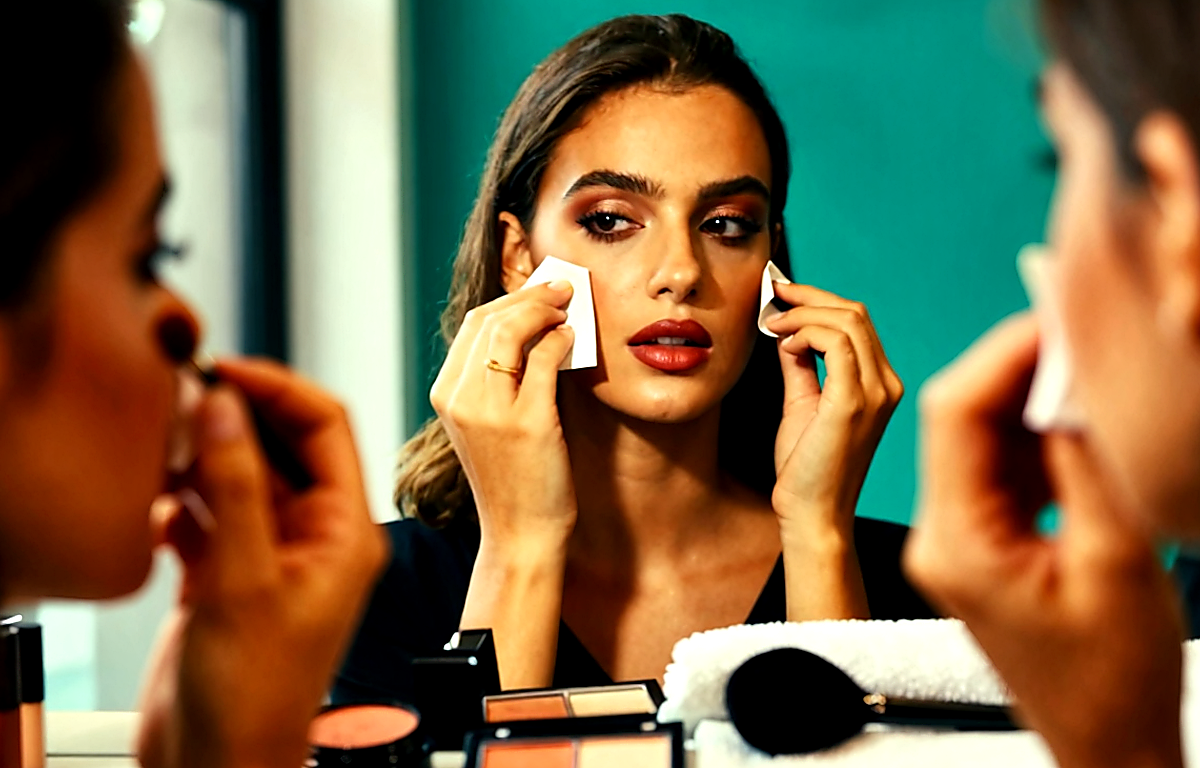
If fine lines become more noticeable after setting spray, the issue is often not setting itself but the combination of the formula, the spray pattern, and how the makeup underneath was applied. When it comes to popular NYX sprays, it is important to look not only at the long-wear promise, but also at whether the product increases dryness, makes the skin feel tight, or emphasizes texture on the forehead, under the eyes, and around the mouth. For skin that already shows signs of creasing or dehydration, the deciding factors are the finish, the amount of alcohol in the formula, the droplet size of the mist, and how well it works with foundation and powder.
The most useful guideline is simple: if your face looks drier after the spray, pores and fine lines stand out more, and smile lines crease quickly, then you need to check not only the product itself but the entire application routine. A good setting spray should not turn the skin into a stiff film. It should lightly pull the makeup together, soften powderiness, and extend wear without a shrunken, tight effect. That is exactly what you should evaluate first if you are considering NYX or have already noticed that it makes your skin texture look older than it does without it.
Why setting spray can emphasize fine lines
Setting spray does not create wrinkles on its own, but it can make existing texture more visible. This usually happens for one of four reasons: the skin is dehydrated, the makeup has been applied too heavily, the spray formula evaporates too quickly and tightens the surface, or the mist lands in large droplets and shifts the base in patches.
- Dehydrated skin. When the skin barrier lacks moisture, any setting product is more likely to highlight a network of fine lines.
- Too many mattifying layers. Full-coverage foundation, concealer, powder, and then a setting spray on top can create the effect of an over-dried mask.
- A high amount of volatile solvents. Some formulas make makeup look beautifully melded at first, but start to dry it out after half an hour.
- An unsuitable mist. If the droplets are large, the product can land unevenly and collect in creases.
So when choosing a NYX spray, the more useful question is not “is it suitable for wrinkles,” but “how does it behave on skin that is prone to creasing and dry patches?” That is much more precise and practical.
What to check in the formula if your skin becomes dry quickly
The first thing to look at is not the marketing name but the ingredient list. With setting sprays, it often explains a lot. If fine lines become a concern during the day, the formula matters more than the pretty first impression right after application.
It makes sense to pay especially close attention to the following groups of ingredients:
- Alcohol high on the list. It does not always mean a bad formula, but on dry, reactive, or mature skin it can increase tightness and visually emphasize lines.
- Film-formers. These are what provide wear time. The point is not whether they are present, but whether they feel comfortable on your skin and whether they create a tightening effect.
- Humectant and moisturizing additives. Glycerin, propanediol, betaine, panthenol, and similar ingredients usually make the finish feel softer.
- Fragrance and potential irritants. If the eye area is sensitive, extra fragrance can become a problem.
For skin with fine lines, it is usually better to choose not the harshest option in pursuit of extreme wear, but a formula that balances hold and comfort. If you notice burning, watery eyes, pronounced redness, or swelling, stop using the product. If burning persists, if there is pain, swelling, skin disease, or if you are pregnant or actively using retinoids, it is worth discussing skin reactivity with a dermatologist.
It is also useful to remember that setting spray does not replace basic skincare. If your skin feels tight even without makeup, it makes sense to rethink hydration first. In this context, our guide on how to build a basic skincare routine for the face may be helpful: sometimes skincare solves the problem of “emphasized fine lines” better than the search for a new spray.
What texture and finish usually look softer
When fine lines are a concern, not only the formula matters, but also the visual result. The hardest combinations to wear are an ultra-matte finish and a mattifying foundation paired with a lot of powder. In that kind of setup, even a good spray may not save the look, because the surface is already overloaded with dry textures.
What usually looks softer:
- sprays with a natural or slightly satin finish;
- formulas that reduce powderiness rather than cement it in place;
- options with a very fine mist;
- products that can be applied in 1–2 light layers instead of 5–6 sprays in a row.
If a particular NYX spray gives beautiful wear but makes the face look flatter and drier, that does not always mean the product is bad. It may simply work better for combination or oily skin without noticeable dehydration. For skin where fine lines become more visible by midday, products with less aggressive mattifying are usually more flattering.
Lighting is another important detail. In a bathroom with diffused light, the finish may seem perfect, while side daylight reveals every dry patch. That is why it is better to test any setting spray, including NYX, near a window or outside, not only in front of a mirror with warm lighting.
How to tell the issue is not NYX itself but the rest of the makeup combination
Very often the setting spray gets blamed unfairly. A spray only “seals in” what has already been applied. If there is heavy concealer under the eyes, a matte foundation on the forehead, and dense powder on top, any setting product is likely to emphasize texture more than you would like.
Check the following combinations:
- Foundation + powder + spray. If each step is heavy, fine lines will almost inevitably look more obvious.
- Silicone primer + water-based foundation. Incompatible textures sometimes start separating only after the spray is applied.
- Heavy concealer under the eyes. This is one of the most common reasons it seems like the spray is at fault.
- Powder that is too dry. If it has already emphasized texture, the spray may not be able to melt it back into the skin.
A useful test is this: one day wear your usual makeup without spray, another day wear the same products but skip powder, and on the third day use the spray but apply a thinner layer of foundation. That lets you quickly see what is actually making fine lines stand out more. Very often, reducing the amount of powder or changing your concealer technique is enough for the setting spray to stop looking problematic.
If you are specifically interested in how powder behaves in difficult combinations, our guide on how to apply powder over SPF without patchiness may also be useful. It clearly shows how much the final result depends on layering, not just on one product.
How to test a setting spray if under-eye creasing and lines around the mouth are a concern
The most sensitive areas are under the eyes, the nasolabial folds, the frown line area, and the forehead. These are the first places to show whether a setting spray works well with your facial movement. To make the test fair, do not apply a new spray at maximum intensity right away. Over-spraying often creates the false impression that a product “ruins the skin,” when in reality there is simply too much of it.
A practical testing routine:
- Do your usual skincare and let your cream absorb fully.
- Apply foundation in the thinnest possible layer, especially in the areas where fine lines are more visible.
- Use the minimum amount of concealer under the eyes, only where correction is needed.
- Apply powder only where necessary instead of covering the whole face with a dense veil.
- Spray the product from a comfortable distance in a light cloud, without creating a wet layer.
- Do not touch your face until it has dried completely.
- Check the result right away, after 30 minutes, and after 3–4 hours in daylight.
During the test, look not only at wear time, but also at three signs: tightness, product settling into creases, and changes in the finish by midday. A spray that works for your skin does not have to make the face look perfectly smooth, but it should not make the makeup look suddenly older within an hour.
If you develop noticeable stinging, watery eyes, or redness around the eye area during the day, that is no longer just an aesthetic issue but a question of tolerance. Reactions like that should not be ignored.
What application technique helps avoid emphasizing fine lines
Even a good NYX formula can look worse if you spray it too close or too heavily. For skin with fine lines, technique is often just as important as the product itself.
- Keep the bottle at a distance. The closer the spray, the greater the risk of large wet droplets.
- Use 2–4 light sprays instead of one long “shower.” An excessive layer can tighten the makeup after it dries.
- Do not respray over creases that have already started to dry. This can make creasing worse.
- If the spray lands too wet, try spraying it into the air first and stepping only partly into the mist. This is not a universal technique, but sometimes it gives a softer result.
- Do not rub your face after it dries. If you need to remove a droplet, gently blot it with a clean sponge instead.
There is another nuance as well: many people try to offset fine lines with extra moisturizer under makeup, but over-moisturizing can also work against you. If the base stays too slippery, foundation and spray start to move, gather in folds, and break down faster. So balance matters: the skin should feel comfortable, but the layers should not slide over one another.
For anyone who often notices their makeup behaving differently because of the weather, it is also useful to track environmental factors. Humidity, heat, and sudden temperature changes affect how any setting spray performs. In that sense, our article on how to manage hair texture in humidity is also interesting: the mechanism is different, but the effect of the environment on cosmetic products is very similar.
When NYX may work well and when it may be better to look for another type of spray
NYX is popular for a reason: the brand is often seen as an accessible point of reference in makeup, especially when people want a noticeable setting effect. But when fine lines are a concern, the issue is not popularity but the use case.
This type of spray may work well if:
- you have normal or combination skin without pronounced dryness;
- you prefer makeup that looks more locked in and long-wearing;
- your foundation and concealer are lightweight and you use only a little powder;
- you want better makeup control through a long day without the feeling of heavy lacquer on the face.
It makes sense to look for an alternative if:
- your skin is thin, dehydrated, and quickly reacts with tightness;
- any mattifying products make fine lines look sharper;
- the under-eye area often becomes dry by midday;
- you can see that after the spray, the makeup does not melt together but instead breaks into dry patches and creases.
In these cases, softer finishing mists or routines built around thin makeup layers and targeted setting may work better than the most long-wearing options. The wear time may be slightly lower, but the face often looks fresher and more alive for longer. For everyday makeup, that is often a better compromise than maximum endurance at any cost.
Checklist before buying or trying again
If you want to understand whether a NYX setting spray is worth trying when fine lines are a concern, use this short checklist. It helps you assess real compatibility with your skin rather than advertising.
- Look at the formula. Is there a risk of over-drying for your skin specifically?
- Check the finish. Do you really want an ultra-matte effect, or would a natural finish suit you better?
- Think about your foundation. Is it already on the dry side by itself?
- Evaluate how much powder you use. Could that be the main source of emphasized texture?
- Check the mist quality. A fine cloud almost always works better than large droplets.
- Test on expressive areas of the face. Forehead, under the eyes, nasolabial folds.
- Check the result after several hours. The first five minutes do not tell the full story.
- Do not ignore discomfort. Burning and irritation are not normal just for the sake of wear time.
And one more important rule: if a product behaves beautifully only on perfectly prepped skin and in an ultra-thin professional makeup look, but in real life consistently emphasizes fine lines, then it is simply not the best fit for your routine. From an editorial point of view, a good product is not one that looks striking for a second, but one that works predictably in a real day.
Conclusion
If fine lines are a concern, there are four things worth checking when choosing a NYX setting spray: whether the formula over-dries the skin, what kind of finish it gives, how fine the mist is, and how it behaves with your foundation, concealer, and powder. Most often, the issue is caused not by one factor but by a whole combination: slightly dry skin, too many layers, and overly aggressive setting.
The final guideline is simple: a good spray should make makeup look more polished, not stiffer; reduce powderiness, not emphasize creases; extend wear, not make the face look drier and older. If fine lines become more visible after using it, it is better not to push through, but to reconsider the formula, the application technique, and the condition of the skin under the makeup.