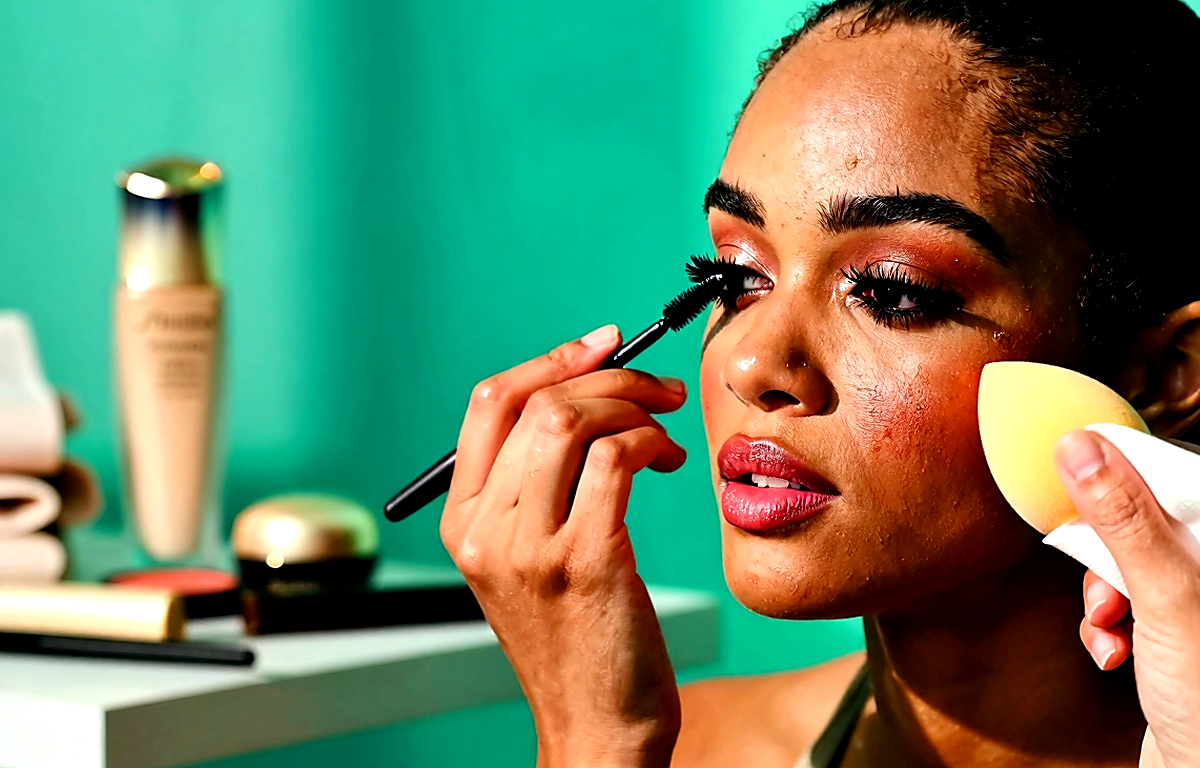
If a Shiseido makeup primer pills, the issue is usually not one specific product but a combination of factors: skincare that is too heavy under makeup, incompatible textures, excess SPF, rushing between layers, and mechanical rubbing. The most useful test is not to blindly hunt for the “perfect primer,” but to look step by step at what is underneath it, how much product you apply, and how foundation behaves on top. In most cases, pilling can be reduced noticeably once you adjust skin prep and application technique.
This matters especially with popular products like Shiseido: the brand offers primers and foundations with different finishes, levels of hydration, and grip on the skin. Because of that, the expectation that “one primer will fix everything” often does not match reality. If makeup gathers into little flakes around the sides of the nose, on the chin, in expression lines, or over pores, first check not ads or ratings, but the basic compatibility of the formulas, the number of layers, and the condition of your skin itself. Below is a clear checklist that can help you figure it out without unnecessary purchases.
Why makeup primer pills in the first place
Pilling is not just a case of a “bad primer.” Usually, it is what a conflict between several layers on the skin looks like. One layer did not have time to set, another softened it too aggressively, a third was applied in excess, and then everything was rubbed further with fingers, a brush, or a sponge. As a result, the products start to shift and gather into tiny clumps or a film.
Most often, the reason is one of these:
- too much skincare before makeup, especially rich creams, balms, and dense serums;
- SPF did not have time to settle on the skin before primer was applied on top;
- a silicone-heavy primer clashes with a watery or very emollient foundation;
- the skin is dehydrated and has micro-flaking that the texture catches on;
- the product is rubbed in instead of spread in a thin layer;
- too much primer is applied in an attempt to “smooth” the skin better;
- the layers are being placed over skincare that has not fully absorbed.
When pilling is linked specifically to Shiseido, it is important to remember this: the brand is often chosen for beautiful finish, smooth-looking skin, and a skincare-like feel in makeup. But those comfortable textures require more care with amount and order of application. If you already have a rich cream, SPF, and a glowy serum underneath, the overall layer can become excessive.
The first thing to check: skincare under the primer
The most common cause of pilling is not the primer, but overloaded skin prep. Morning skincare for makeup should almost always be lighter than evening skincare. If you already have an acid toner, a sticky serum, a rich cream, sunscreen, and another glow product underneath the primer, any additional layer may start to move.
Check your routine honestly: do you really need every morning step right before makeup? Often, gentle cleansing, a light hydrating serum or cream, and SPF are enough. If your skin is not dry, a separate rich cream under primer may be unnecessary. If you want to rebuild your core routine more rationally, it can help to review this guide on how to build a basic facial skincare routine.
What to pay attention to in skincare before makeup:
- does your skin still feel very sticky 5 to 10 minutes after cream;
- does an obvious film remain when you touch it with your fingers;
- does the skincare itself already start to pill when you spread SPF;
- are there flaky areas around the nose, on the chin, or between the brows;
- are you using several products at once that are rich in oils and silicones.
If your skin tends to be dry, the answer is not always adding another heavy layer. Sometimes it is better to replace a rich cream with more flexible hydration and give it time to absorb. If you have persistent burning, pain, marked redness, swelling, a flare of a dermatological condition, or if you are pregnant or using actives such as retinoids and your skin has become especially reactive, it is safer to discuss skincare and makeup with a doctor.
SPF and primer: a common cause of pilling people forget about
Sunscreen is one of the most common “invisible culprits” behind pilling. Even a good SPF can clash with primer if it is too silicone-heavy, too nourishing, or applied in a rush. The issue is not that SPF “cannot” be combined with primer, but that it needs time to set and the skin itself should not be overloaded.
If you apply SPF generously and correctly, that is already a full layer. After it, you do not always need a smoothing primer over the entire face as well. In many cases, primer is only needed locally, for example around the pores near the nose, on the T-zone, or on an area where makeup fades faster. This approach reduces the thickness of the coverage and lowers the risk of pilling.
A useful algorithm:
- Apply your morning skincare in only the minimum amount you actually need.
- Let it absorb.
- Spread SPF evenly without vigorous rubbing over skin that has already dried down.
- Wait a few minutes.
- Assess whether you need primer all over the face or only in specific areas.
If you often wear makeup over sunscreen, you may also find this guide helpful on how to apply powder over SPF without patchiness: it helps explain why some textures start to lift the layer underneath.
How to tell when the textures themselves are clashing
When people talk about product “compatibility,” it is not magic and not a strict formula of “silicone with silicone, water with water.” In practice, what matters more is how the texture behaves on the skin. One primer may pair well with a light foundation but clash with a rich glowy base. Another may smooth pores beautifully, but only when applied very thinly and without a rich cream underneath.
With Shiseido products, this is especially noticeable because the brand often makes tactile, smooth textures that spread beautifully but can start to gather if there is already too much slip above or below them. So instead of judging a product in isolation, it is better to test the full combination: skincare + SPF + primer + foundation + application method.
Signs that the textures themselves are clashing:
- foundation sits better without primer than with primer;
- pilling appears only with one specific SPF;
- everything looks fine with fingers, but a sponge starts gathering flakes;
- the problem does not happen immediately, but starts when layering foundation or concealer;
- makeup looks beautiful on one area of the face, but gathers on another where there is more skincare or oiliness.
The most practical way to check compatibility is a short at-home test on different days. One day, leave only SPF and foundation. Another day, add primer only to one half of the face or only to the problem area. That makes it easier to see whether the primer helps, is neutral, or is what triggers pilling in your specific routine.
Application mistakes that especially often cause pilling
Even products that suit each other can pill because of technique. Primer is not a layer that benefits from generosity and prolonged rubbing. On the contrary, the more you try to “polish” the skin before foundation, the higher the risk of disturbing the layers underneath.
What most often goes wrong:
- primer is applied too thickly over the entire face even though it is only needed in certain areas;
- the product is rubbed in actively with circular motions;
- foundation is applied while the primer is still wet or slippery;
- the same area is gone over several times with a brush, lifting the lower layers;
- texture is being covered with more product instead of a targeted technique.
A more reliable method looks like this: apply a small amount of primer in a thin layer, pressing more than rubbing. Then give it a minute to grip. After that, do not rub in foundation, but apply it in thin layers, ideally from the center of the face outward, layering carefully only where it is truly needed. If you like using a sponge, it should be barely damp, not wet: excess moisture can disrupt adhesion.
One more important point: do not try to fix an area that has already started pilling by adding another portion of foundation right away. That almost always makes the problem worse. It is better to gently remove the flakes with a dry tissue or a clean brush, let the area settle, and then restore coverage only where needed.
Do you need primer all over the face if only one area is the problem
No, and this is one of the most underrated tips. If pilling only bothers you in the T-zone, around the nose, or on the chin, primer all over the face may be excessive. That is especially true if your cheeks are normal or dry and the main issue is pores, texture, or wear in the center of the face.
Targeted application often gives a better result for three reasons. First, there is less overall product on the skin. Second, it is easier to choose a different finish for different parts of the face. Third, there is less chance that comfortable areas become overloaded and start looking heavier than necessary.
Try dividing the face into zones:
- T-zone — a mattifying or smoothing primer in a thin layer;
- cheeks — only skincare, SPF, and foundation, with no extra primer;
- the area around the nose — a minimal amount of primer applied with pressing motions;
- mobile expression-prone areas — less product and more flexibility in the finish.
This approach is especially helpful if you want to keep the skin looking natural and “alive” rather than creating the feel of a multi-layer mask. For editorial-style makeup, it usually looks more modern and refined than full-face priming.
What to check in your skin condition if primer pills all the time
Sometimes the problem looks like makeup incompatibility, but in reality the main cause is the condition of the skin’s surface. Dehydration, micro-flaking, a weakened barrier, reactivity after active skincare, over-exfoliation, or aggressive cleansing make any primer less predictable. The product catches on uneven areas, gathers around flakes, and emphasizes texture it was supposed to smooth.
Things to look at closely:
- do you feel tightness after cleansing;
- do tiny dry flakes appear during the day;
- has irritation increased after acids, retinoids, scrubs, or brushes;
- has your skin become oily and dehydrated at the same time;
- are there areas where makeup goes on patchy even without primer.
If you notice these signs, it can be more sensible to simplify makeup for a while instead of layering new products. Restoring comfort to the skin often gives a more noticeable visual improvement than trying to “cover” the issue with an additional primer. If you also have persistent burning, pain, swelling, cracks, a pronounced rash, or a flare of a skin condition, it is better to see a dermatologist. This is especially relevant during pregnancy, when using retinoids, and with any pronounced sensitivity.
How to test a Shiseido primer without unnecessary mistakes or disappointment
If you are interested specifically in a Shiseido primer or a similar product from the brand, the best approach is to test it as part of a real routine, not as a separate “magic” step. In store or at home, it is important to assess not only the first impression of smoothness, but also how the product behaves after several hours, in areas of facial movement, over SPF, and under your usual foundation.
A practical testing method:
- On the test day, do not change your entire skincare routine at once.
- Use your usual SPF and usual foundation so you can understand the primer’s contribution specifically.
- Apply primer only to problem areas or to one half of the face.
- Compare how the coverage behaves after 10 minutes, after 2 to 3 hours, and at the end of the day.
- Note what exactly happens: flakes, streaks, oily shine, settling into pores, or a feeling of dryness.
If the result is uncertain, do not rush to conclude that the product is “bad.” First, try reducing the amount, removing one heavy skincare layer, or allowing more time between steps. Very often, a primer that seems unsuccessful on day one starts working much better after this kind of adjustment. But if the product still pills consistently even with a minimalist routine and careful technique, it is simply not the best option for your skin and your texture combinations.
One more thing matters: do not expect a primer to deliver maximum pore smoothing, strong hydration, mattifying power, extreme wear, and complete invisibility on the skin all at once. The more jobs one layer is expected to do, the higher the risk of compromises in feel and compatibility.
A working checklist: what to change tomorrow so makeup stops pilling
If you want quick, practical steps, start with the simplest ones. Do not change all your products at once, or it will be hard to understand what actually helped. Move through one point at a time.
- Reduce your morning skincare to the true minimum you need.
- Give each layer 3 to 10 minutes if the texture is dense or film-forming.
- Apply primer only where you need it instead of automatically using it all over the face.
- Cut the amount of primer in half and see whether it improves.
- Do not rub the product for too long; press and spread it thinly.
- Try applying foundation with a brush or a barely damp sponge, without polishing the skin.
- If there is flaking, do not camouflage it with layers — first focus on skin comfort.
- Check whether one specific SPF or an overly nourishing cream is to blame.
- Test products in combinations, not one by one.
This is exactly the approach that most often helps explain why a Shiseido makeup primer, or any other popular primer, behaves differently from what a beautiful first swatch seems to promise. In makeup, not only the product itself matters, but the whole environment it goes into: the skin, skincare, sun protection, foundation, tools, and even the pace of application.
The conclusion is simple: if primer pills, first check skin prep, the number of layers, texture compatibility, and technique. In most cases, the issue is solved not by replacing your entire makeup set, but by fine-tuning your routine more precisely. And if your skin has also become painfully sensitive, irritated, or inflamed, it is better to pause experiments and discuss the situation with a specialist.